
Jump to Recipe
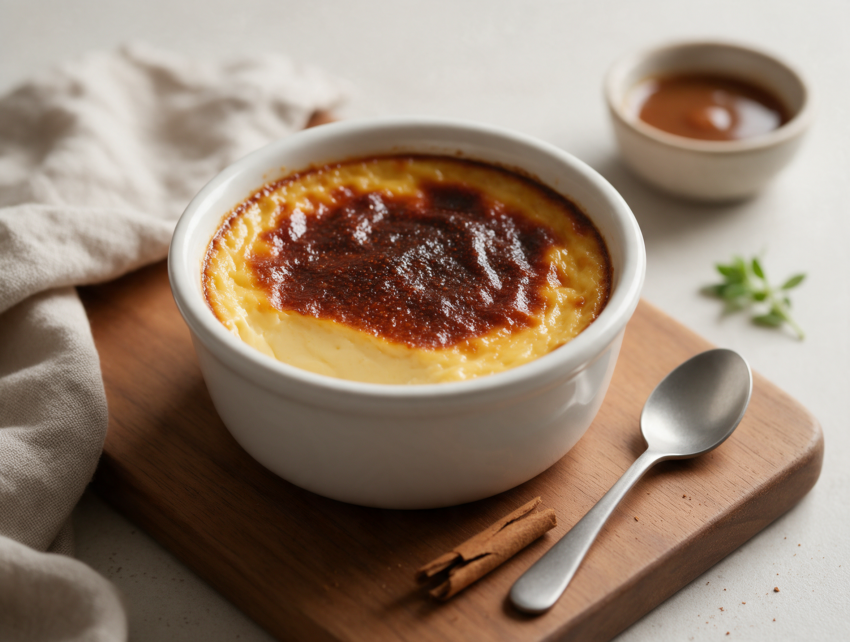
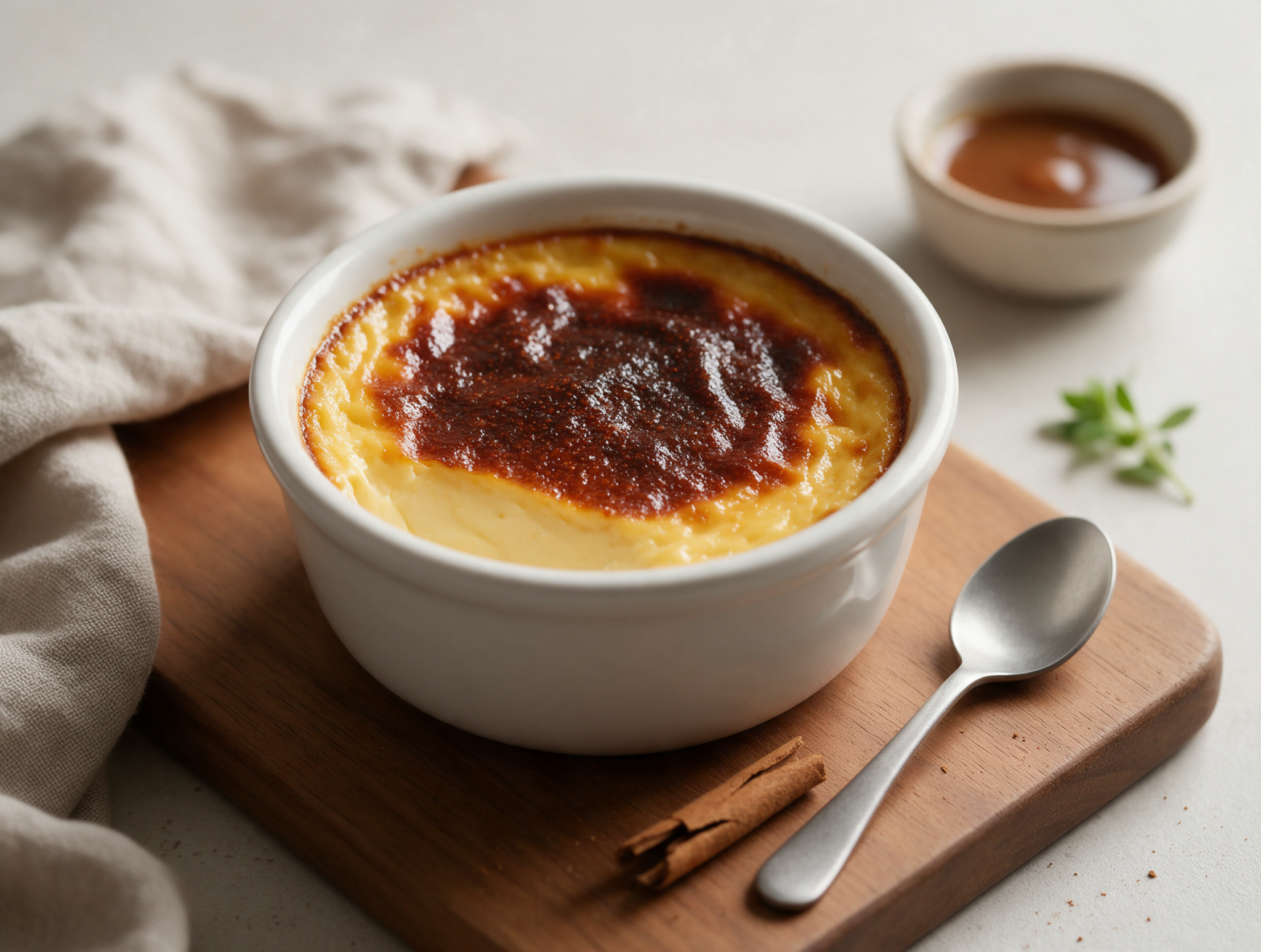
Jericalla is a baked milk custard from Guadalajara, Mexico, made with whole eggs, sugar, and cinnamon, then baked hot and uncovered until the top turns deep golden brown and slightly bitter at the edges.
I first had it at a market stall in Tlaquepaque, served cold in a clay cazuela straight from a cooler. The top looked almost burnt. That’s exactly the point.
Unlike flan, jericalla skips the caramel sauce and the water bath entirely, setting it apart from other baked custards like Bonet Piemontese’s custardy chocolate pudding. The oven’s dry heat does the work, toasting the sugar right on the surface while the custard underneath stays smooth and set.
It takes about 15 minutes of hands-on work. The rest is the oven and the fridge doing the job.
Why You’ll Love This Recipe
- No water bath and no fussy caramel sauce to pour
- Ready with about 15 minutes of hands-on prep
- Toasted brown top forms right in the oven
- Make-ahead dessert that chills overnight without fuss
Ingredient Notes
- whole milk: Use whole milk for a custard that sets creamy. Lower-fat milk works but the finished texture is thinner and less rich.
- eggs and egg yolks: The mix of whole eggs and extra yolks gives a dense, silky set. All whole eggs alone bakes up springier, closer to a sponge.
- cinnamon stick: Mexican canela is softer and sweeter than the cassia sticks sold as plain cinnamon. Either works, but canela is closer to traditional.
- vanilla extract: Mexican vanilla has a deeper, slightly boozy edge. Any pure vanilla extract works fine here.
- granulated sugar: Plain white sugar dissolves clean into the milk and browns evenly on top. Raw or brown sugar will darken the top faster and taste more molasses-like.
Jericalla: Guadalajara’s Baked Cinnamon Custard Cups
Ingredients
Method
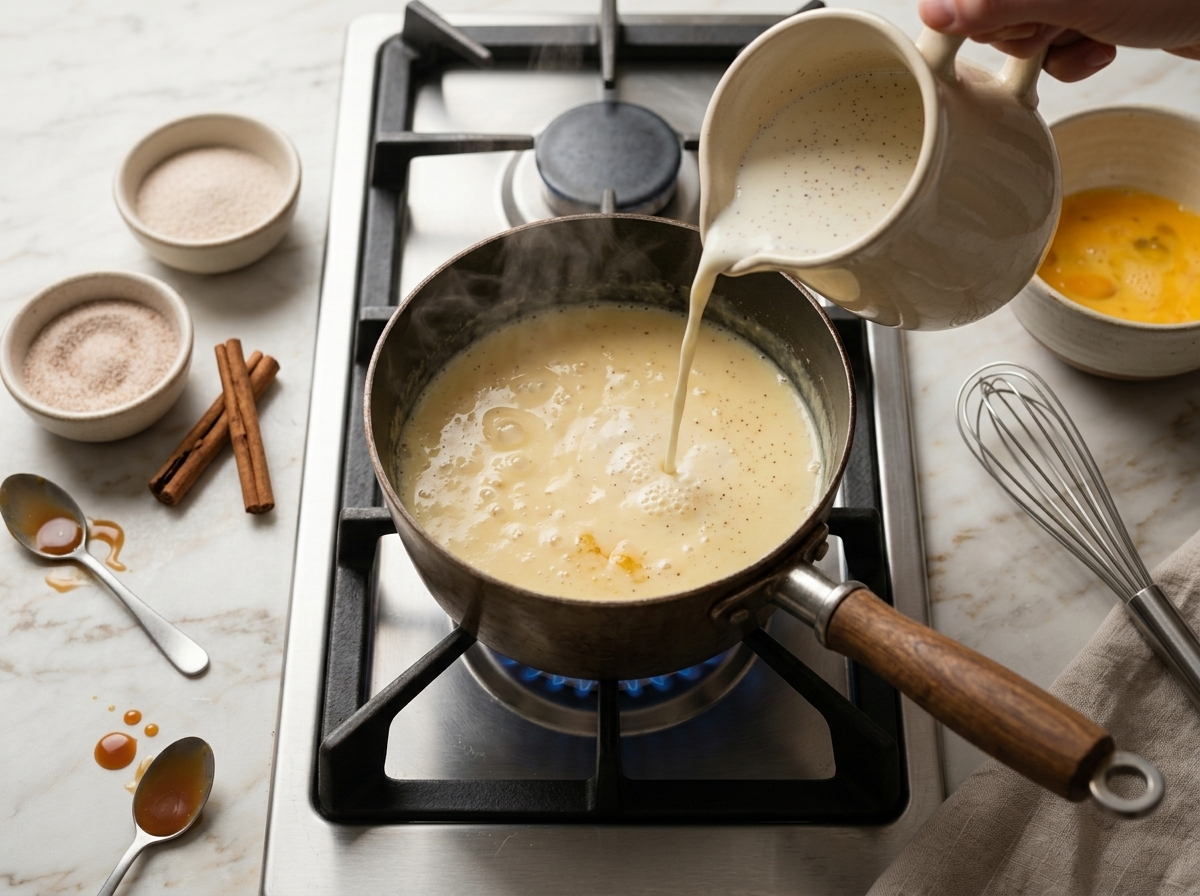
- Pour the milk into a 2-quart / 1.9L saucepan, add the cinnamon stick, and warm over medium heat until steaming, about 5 minutes. Don't let it boil.
- Remove from heat, cover, and let the milk steep for 15 minutes so it picks up the cinnamon flavor. Discard the cinnamon stick.
- Heat the oven to 350 F / 175 C.
- In a mixing bowl, whisk the eggs, egg yolks, sugar, vanilla, and salt together until just combined and smooth, not foamy.
- Slowly pour the warm milk into the egg mixture in a thin stream, whisking constantly, to temper the eggs without scrambling them.
- Strain the mixture through a fine-mesh sieve into a spouted bowl to catch any cooked egg bits.
- Divide the custard among six 150 ml / 5 oz ramekins, filling each about 3/4 full. Set the ramekins on a sheet pan.
- Bake uncovered, without a water bath, for 40 to 45 minutes, until the tops are deep golden brown and the custard jiggles slightly in the center but no longer looks liquid.
- Cool the ramekins on a rack for 30 minutes, then chill in the fridge for at least 3 hours, or overnight, before serving cold.
Notes
- Temper the eggs slowly with warm milk to avoid a grainy, scrambled texture.
- Strain the custard base through a fine-mesh sieve for the smoothest set.
- Bake uncovered on purpose. Covering the ramekins stops the top from browning.
- Chill at least 3 hours before serving; the custard firms up as it cools.
Tips for Success
- Warm the milk until steaming but not boiling so it doesn’t scramble the eggs when combined.
- Pour the warm milk into the eggs in a thin stream while whisking to temper them slowly.
- Check the ramekins at 35 minutes since a hot oven can burn the top in the last 5 minutes.
- Chill the custards uncovered for the first hour so condensation doesn’t soften the toasted top.
- Use shallow, wide ramekins instead of tall narrow ones for more toasted surface per serving, much like the wide shell in Torta della Nonna’s baked custard tart.
Variations
- Swap half the milk for evaporated milk for a denser, more custardy texture closer to Mexican flan.
- Add a strip of orange zest along with the cinnamon stick for a citrus note underneath the spice.
- Torch the tops with a kitchen torch after chilling if your oven didn’t brown them enough on its own.
Storage and Reheating
Jericalla is meant to be eaten cold, so it stores well as a make-ahead dessert. Cover the ramekins tightly and keep them in the fridge for 4 to 5 days.
Don’t reheat it. Warming the custard melts the toasted top and turns the smooth texture grainy. If you’re prepping ahead for a party, bake and chill everything up to 2 days out, then let the ramekins sit on the counter for 10 minutes before serving so the custard isn’t ice cold.
Serving Suggestions
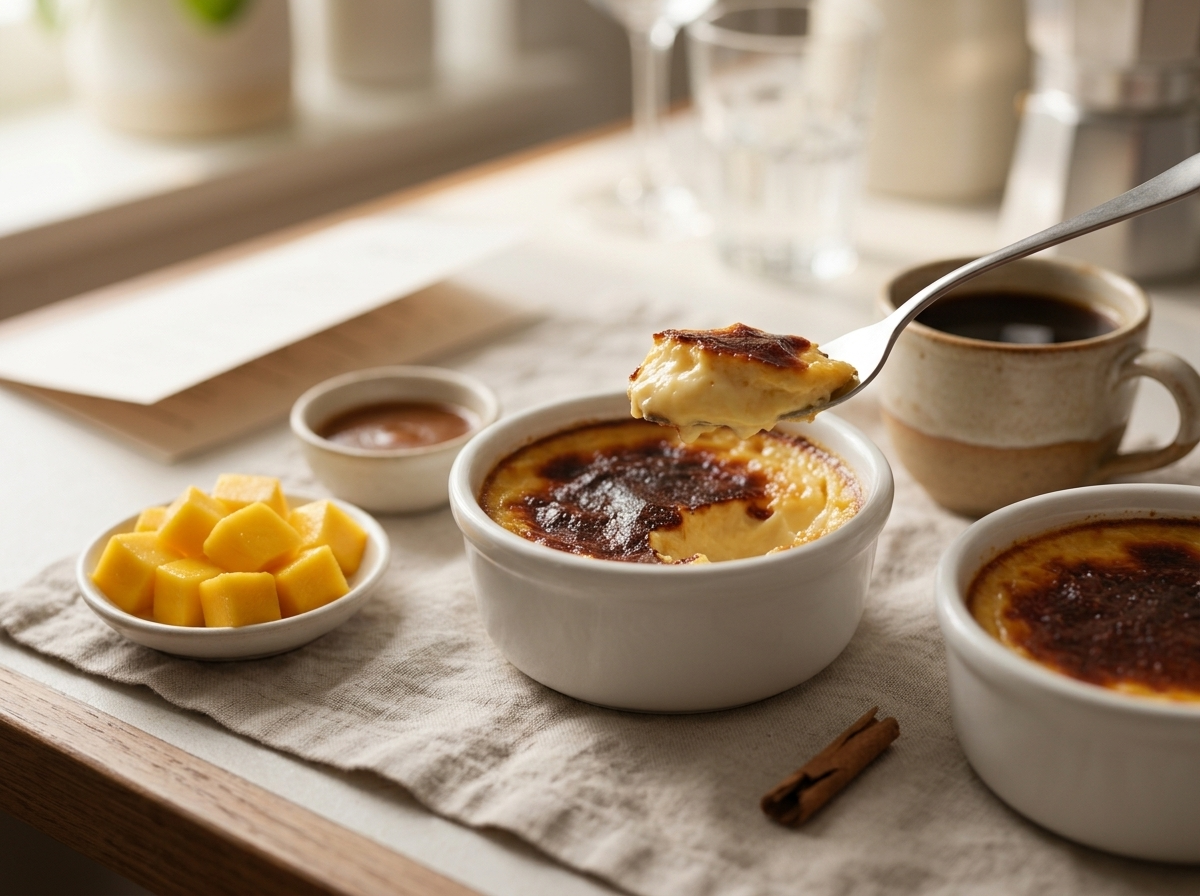
Serve jericalla straight from the fridge in its ramekin, with fresh mango or strawberries spooned on top for brightness.
A cup of café de olla, Mexican coffee simmered with cinnamon and piloncillo, echoes the spice in the custard.
For a gathering, set out a tray of ramekins with small spoons so people can grab one straight from the fridge without any plating.
FAQ
Why didn’t my jericalla custard get a caramelized top?
It usually means the oven wasn’t hot enough or the ramekins were filled too deep. Jericalla needs dry, direct heat around 350 F / 175 C with nothing covering the top. If your oven runs cool, try a shallower ramekin or finish briefly with a kitchen torch.
Can I use half-and-half instead of whole milk for jericalla?
Yes, half-and-half works and gives a richer, denser custard than whole milk. The texture ends up closer to a crème caramel and sets a bit firmer, similar to the rich layers in Zuppa Inglese’s vanilla-chocolate custard. Whole milk is the more traditional choice and keeps things lighter.
How long does jericalla last in the fridge?
Jericalla keeps for 4 to 5 days covered in the fridge. It’s meant to be served cold, so this is really a make-ahead dessert by design. Just don’t reheat it, since warming ruins the toasted top and the silky texture underneath.
What goes well with jericalla custard?
Fresh mango, strawberries, or a splash of citrus juice cut through the richness nicely. A cup of café de olla, cinnamon-spiced Mexican coffee, is a classic pairing at the table. Both keep the spice notes in the custard front and center.
Is jericalla gluten free?
Yes, jericalla is naturally gluten free since it’s just milk, eggs, sugar, and cinnamon with no flour or thickener. Always check your vanilla extract label if you’re strict about gluten, since some blends use grain alcohol as a base.
What’s the difference between jericalla and flan?
Jericalla skips the caramel sauce and the water bath that flan relies on. It bakes hot and uncovered so the sugar on top toasts directly into a brown skin, while flan bakes gently in a water bath and gets unmolded with caramel poured over the top.
If you enjoyed this, try
- Pets de Soeur: Quebec’s Baked Cinnamon Pastry Rolls
- Torta della Nonna: Baked Custard Tart with Pine Nuts
