
Jump to Recipe
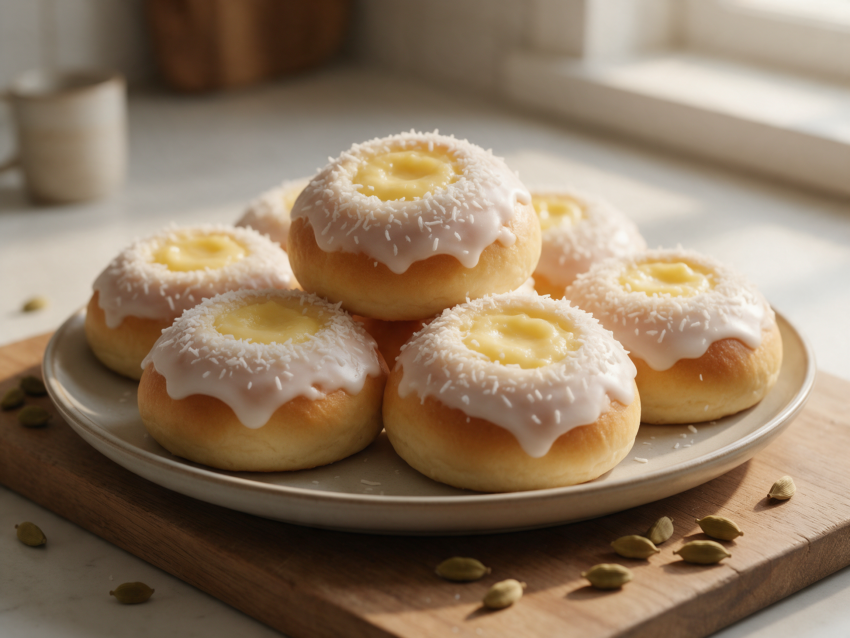
There’s something about skolebrod that sets it apart from every other sweet roll on a bakery counter. It’s a Norwegian classic: a soft, cardamom-scented bun baked with a deep dip in the center, filled with real vanilla custard, then glazed and dusted with shredded coconut.
I first had one in Bergen, standing under a bakery awning with rain coming down outside. The bun was still warm, the custard barely set, coconut sticking to my fingers. I went back the next morning for another.
This version bakes the custard right into the dough instead of piping it in cold, much like the baked custard technique in Guadalajara’s baked cinnamon custard, so the center stays soft without turning runny. The glaze sets up firm enough to hold the coconut in place, not sticky.
None of this is complicated. You need a basic yeast dough, a stovetop custard, and about 20 minutes of patience while the buns cool before glazing.
Why You’ll Love This Recipe
- Real vanilla custard baked right into the center
- Soft cardamom dough with a tender, pillowy crumb
- Glaze and coconut set up firm, not sticky
- Dough freezes unfilled for baking one batch later
Ingredient Notes
- cardamom: Use freshly ground if you can, it fades fast once ground. This is the flavor that makes the dough taste Norwegian instead of just sweet.
- instant yeast: Instant yeast goes straight into the flour, no proofing needed. If you only have active dry, dissolve it in the warm milk first and let it foam for 5 minutes.
- whole milk: Whole milk gives the dough and custard more body. Low-fat milk works but the custard will be thinner.
- egg yolks: Yolks alone give the custard a richer color and firmer set than whole eggs would. Save the whites for scrambled eggs the next morning.
- shredded coconut: Unsweetened works best since the glaze already carries plenty of sugar. Toast it lightly in a dry pan if you want a deeper, nuttier note.
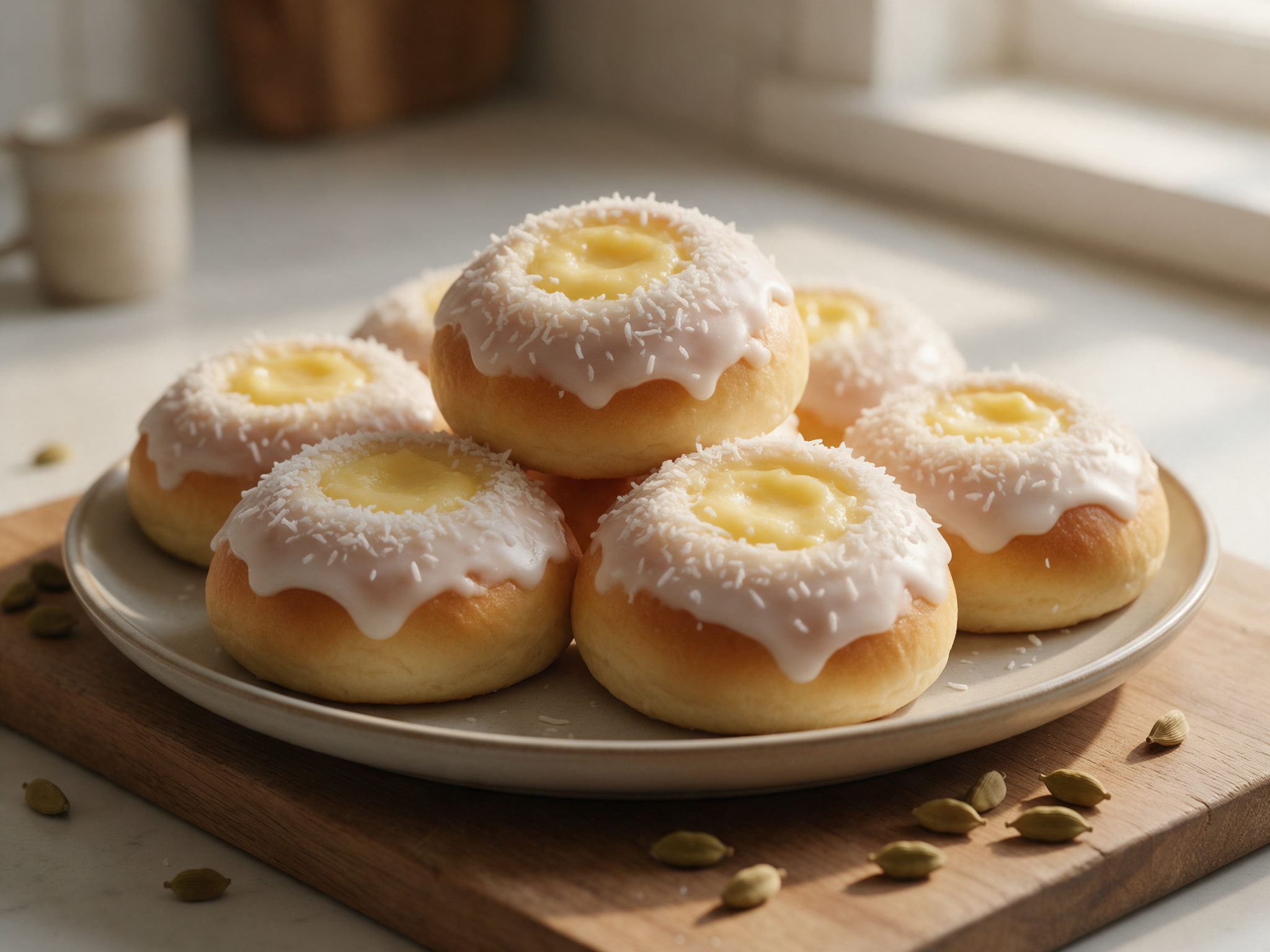
Norwegian Skolebrod Buns Filled with Vanilla Custard
Ingredients
Method
- Warm the milk to 43 C / 110 F in a small saucepan. Stir in the yeast and 1 tbsp of the sugar, let it sit for 5 to 10 minutes until foamy.
- In the bowl of a stand mixer, combine the flour, remaining sugar, cardamom, and salt. Add the yeast mixture, egg, and softened butter.
- Knead with the dough hook for 8 minutes until the dough is smooth and pulls away from the sides of the bowl.
- Transfer the dough to a greased bowl, cover, and let rise for 45 minutes until doubled in size.
- While the dough rises, whisk the egg yolks, sugar, and cornstarch together in a bowl until smooth.
- Heat the milk in a 2-quart saucepan until steaming, then pour it slowly into the yolk mixture, whisking constantly.
- Return everything to the saucepan and cook over medium heat, whisking, for 3 to 4 minutes until it thickens and coats the back of a spoon.
- Off the heat, stir in the vanilla and a pinch of salt. Press plastic wrap directly onto the surface and chill until fully cool, at least 20 minutes.
- Punch down the dough and divide it into 10 pieces, about 90 g each. Shape into smooth balls and place on a parchment-lined 13 x 18-inch sheet pan, spaced 2 inches apart.
- Cover loosely and let proof for 30 minutes until puffy.
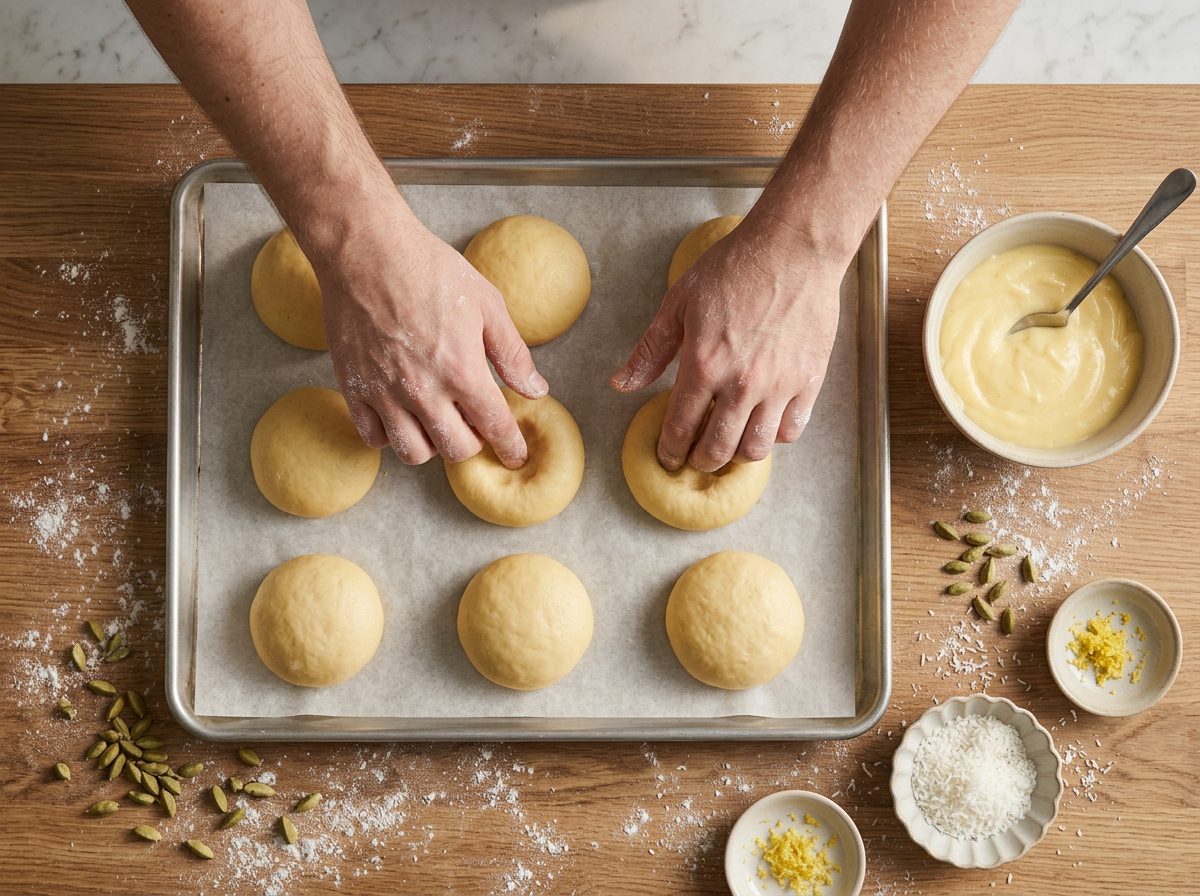
- Press a deep indent, about 4 cm wide, into the center of each bun using your fingers or the back of a spoon.
- Brush the edges of each bun with beaten egg. Spoon 1 to 2 tbsp of the cooled custard into each indent.
- Bake at 190 C / 375 F for 14 to 16 minutes, until the dough is golden brown and the custard looks set but still glossy.
- Cool the buns on the pan for 5 minutes, then transfer to a wire rack and let cool for 15 minutes more before glazing.
- Whisk the powdered sugar with 2 to 3 tbsp milk until smooth and thick enough to coat a spoon.
- Brush or drizzle the glaze over the cooled buns, avoiding the custard center.
- Press the shredded coconut onto the wet glaze right away, before it starts to set. Serve once the glaze firms up, about 10 minutes.
Notes
- Press the indent deep, the dough puffs during baking and can swallow a shallow well.
- Chill the custard fully, warm custard melts into the dough instead of sitting on top.
- Bake one sheet pan at a time if your oven runs uneven, buns near the edges brown faster.
- Glaze while the buns are still warm, not hot, for better absorption without melting the coconut.
Tips for Success
- Press a deep indent, about 4 cm wide, into each bun before the second rise so the custard has somewhere to sit.
- Cool the custard to room temperature before filling, or it will melt into the dough instead of holding its shape the way Korean hotteok’s brown sugar filling is meant to.
- Bake until the dough is golden and the custard looks set but still glossy, about 14 to 16 minutes at 190 C / 375 F.
- Brush the glaze on while the buns are still warm so it soaks in slightly instead of sitting like a shell.
- Toast the coconut a few minutes in a dry pan for deeper flavor before pressing it onto the wet glaze.
Variations
- Swap the vanilla custard for a chocolate pastry cream by whisking 30 g cocoa powder into the base while it cooks.
- Use almond extract instead of vanilla in the custard for a marzipan-like note that plays well with the cardamom.
- Skip the coconut and finish with toasted sliced almonds for a different crunch and a less sweet top layer.
Storage and Reheating
Store baked and glazed skolebrod in an airtight container in the fridge for up to 4 days, since the custard filling needs cold storage once fully cooled. Let them sit at room temperature for 10 minutes before eating if you want the dough soft again.
To warm one up, put it in a 150 C / 300 F oven for 5 to 6 minutes, loosely tented with foil so the glaze doesn’t scorch. The glaze may soften slightly during reheating, which is normal and not a problem.
Baked buns also freeze well without the coconut topping for up to 6 weeks. Wrap individually, thaw overnight in the fridge, then glaze and top with coconut fresh before serving.
Serving Suggestions
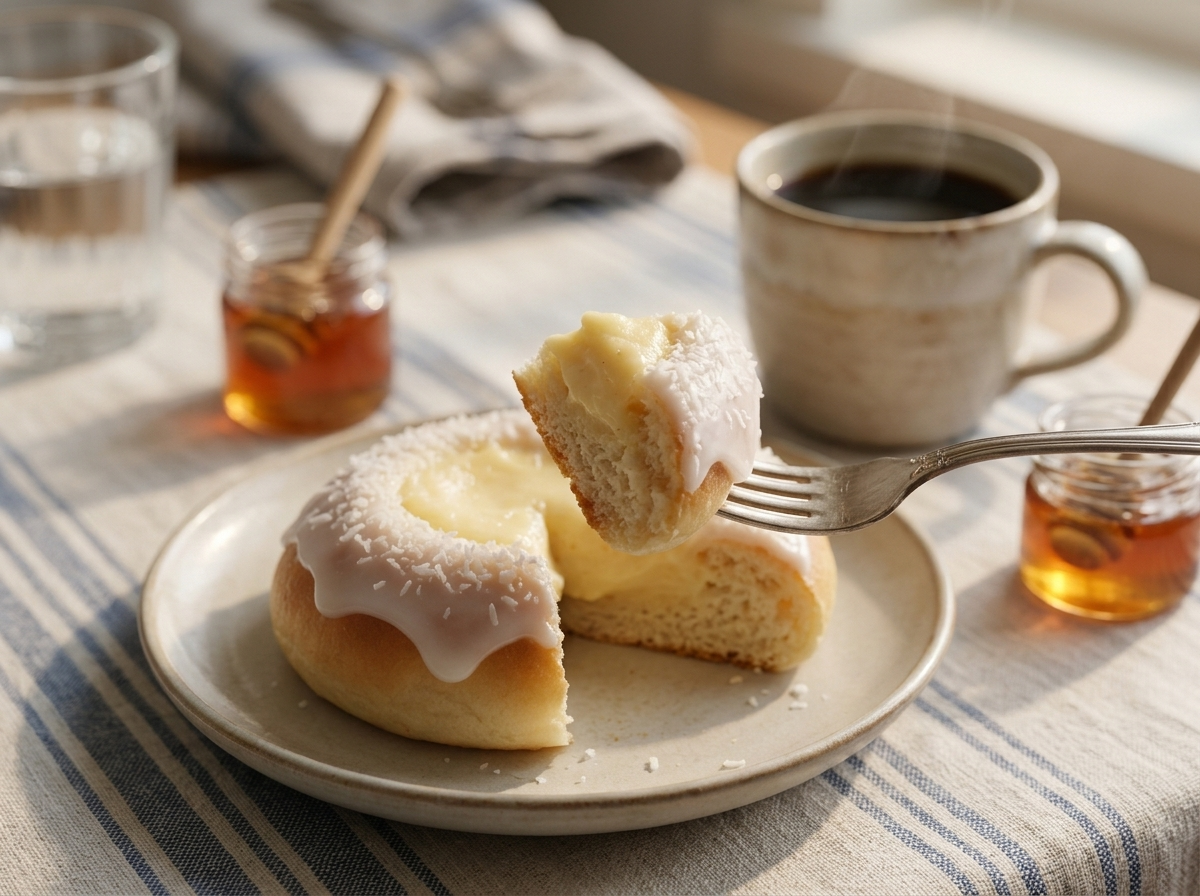
Skolebrod is a morning or midday bake in Norway, usually eaten with black coffee that cuts through the sweetness of the glaze. Kids traditionally get theirs with skolemelk, a small carton of milk, around 10am at school.
At home, I like setting a plate of them out with fresh berries on the side. The tartness balances the cardamom dough and the custard.
They also hold up well on a brunch spread next to eggs and something savory, since the custard center keeps them from tasting like plain sugar.
FAQ
Why is the custard in my skolebrod runny instead of set?
Runny custard usually means it wasn’t cooked long enough or was added while still warm. Cook the mixture over medium heat, whisking, until it coats the back of a spoon, about 3 to 4 minutes after it starts to thicken, then chill fully before filling. Warm custard melts into the dough during baking instead of holding its shape.
Can I use store-bought custard instead of making it from scratch?
Yes, a thick store-bought vanilla pudding or pastry cream works, similar to the custard base used in Egypt’s warm bread pudding, though the flavor will be milder. Pick a firm, spoonable version rather than a pourable one, since the custard needs to hold in the indent without running off during baking. Homemade only takes about 10 minutes on the stove.
Can I freeze skolebrod dough before baking it?
Yes, freeze the shaped dough balls after the first rise for up to one month. Thaw overnight in the fridge, let them come to room temperature, then proof for 30 minutes before pressing in the indent and adding custard. Baked and glazed buns also freeze well without the coconut for up to 6 weeks.
What goes well with skolebrod besides coffee?
Black coffee is the classic pairing since it cuts through the sweetness of the glaze and custard. Fresh berries on the side work too, the tartness balances the cardamom dough. In Norway, kids traditionally have theirs with skolemelk, a small school milk carton.
Is skolebrod dairy free?
No, skolebrod is not dairy free. The dough uses milk and butter, and the custard filling is made with whole milk and egg yolks, so there’s no simple swap without changing the texture. For a dairy-free version, try oat milk and vegan butter, though the custard will turn out thinner.
What’s the difference between skolebrod and a classic custard danish?
Skolebrod is a yeasted bun with cardamom-spiced dough and a coconut-topped glaze, while a custard danish uses laminated, buttery pastry with no coconut. The Norwegian version is softer and closer to a sweet roll than a flaky pastry. Skolebrod also has a wider, shallower custard well.
If you enjoyed this, try
