
Jump to Recipe
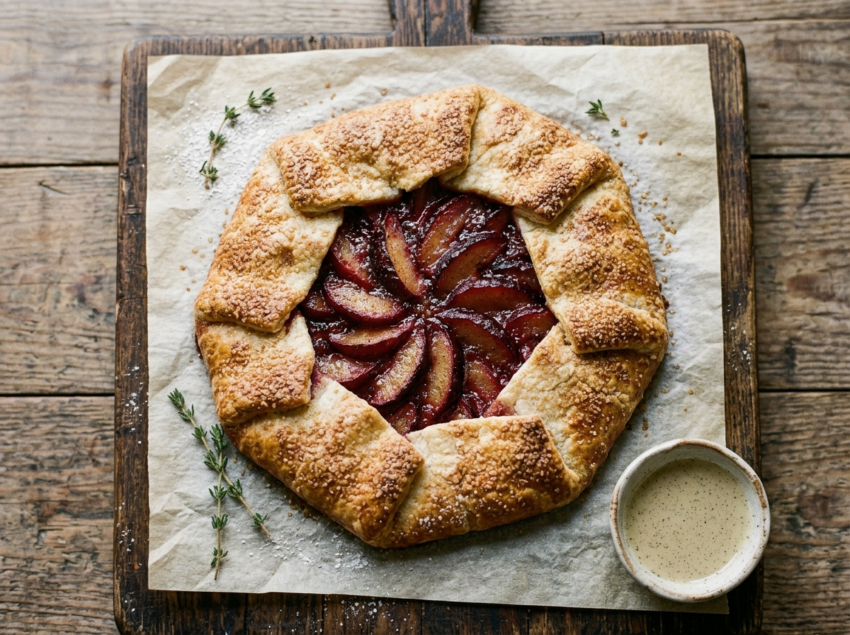
A plum vanilla galette is a free-form tart, no pie pan required. You roll the dough into a rough circle, pile sliced plums in the center, and fold the edges over by hand. What comes out of the oven looks intentionally imperfect and tastes like someone’s grandmother made it.
I started making these in late summer when plums show up cheap at the farmers market—the same fruit that goes into a Polish plum yeast cake—and I don’t want to fuss with a lattice top. The vanilla bean paste does more work here than it does even in Danish vanilla cream pastries. It turns plain stewed fruit into something that smells like a bakery.
The crust is the part people worry about. It’s just flour, cold butter, and ice water, much like the crust in a classic sugar cream pie, and I’ll walk you through the one mistake that turns a flaky crust into a tough one.
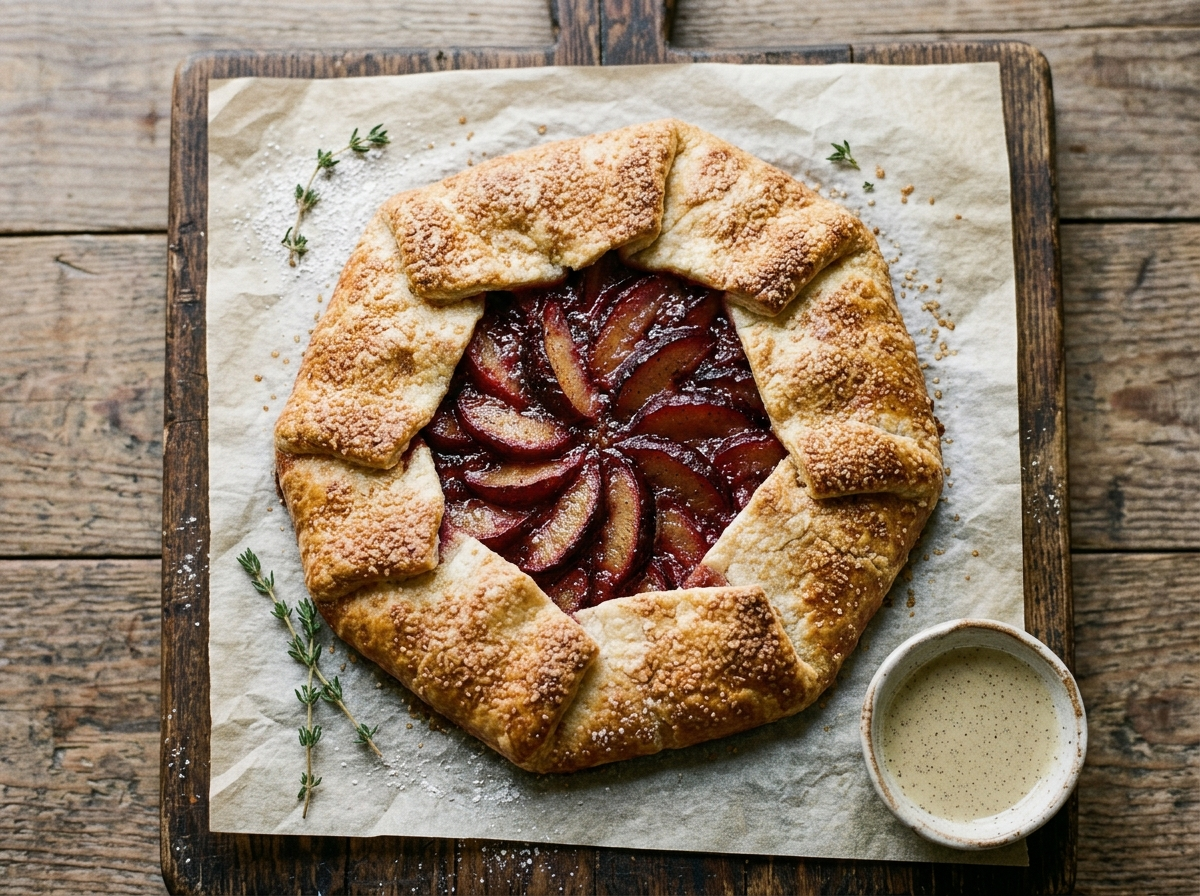
Expect a deep golden crust and thick, jammy filling that holds its shape when you slice it.
Why You’ll Love This Recipe
- No pie dish or fluted edges to fuss over
- Vanilla bean paste turns plums into a bakery-style filling
- Dough can be made a day ahead and chilled
- Rustic folds mean it never has to look perfect
Ingredient Notes
- All-purpose flour: Standard AP flour gives the crust structure. Swap 30g for whole wheat flour if you want a nuttier edge, but don’t go further or the dough turns crumbly.
- Cold unsalted butter: Keep it in the freezer for 10 minutes before cutting it in. Warm butter is the main reason galette crusts turn tough instead of flaky.
- Plums: Use firm-ripe black or red plums, unpeeled, pitted and sliced into wedges. Underripe plums stay tart even after baking, so pick ones that give slightly when pressed.
- Vanilla bean paste: Paste gives you visible flecks and a rounder flavor than extract. Pure vanilla extract works as a 1:1 swap if that’s what you have.
- Cornstarch: This thickens the plum juices so the filling doesn’t run out during baking. Arrowroot starch works the same way in the same amount.
- Lemon juice: A small splash balances the sweetness and keeps the fruit color bright. Skip it if your plums are already on the tart side.
- Turbinado sugar: Sprinkled on the egg-washed crust before baking, it gives a light crunch. Regular granulated sugar works too, just with less sparkle.
Rustic Plum Vanilla Galette with Golden Crust
Ingredients
Method
- Whisk flour, sugar and salt together in a large bowl.
- Cut in cold cubed butter with your fingers or a pastry cutter until pea-sized clumps remain.
- Add ice water 1 tablespoon at a time, mixing until the dough just comes together and holds when pressed.
- Shape into a disk, wrap in plastic, and chill in the fridge for 30 minutes.
- Toss sliced plums with sugar, cornstarch, vanilla bean paste, lemon juice and a pinch of salt in a bowl.
- Let the mixture sit for 5 to 10 minutes so the sugar draws out some juice, then drain off any excess liquid.
- Heat the oven to 200 C / 400 F and line a sheet pan with parchment paper.
- Roll the chilled dough into a rough 12-inch circle on a floured surface, about 1/8 inch thick.
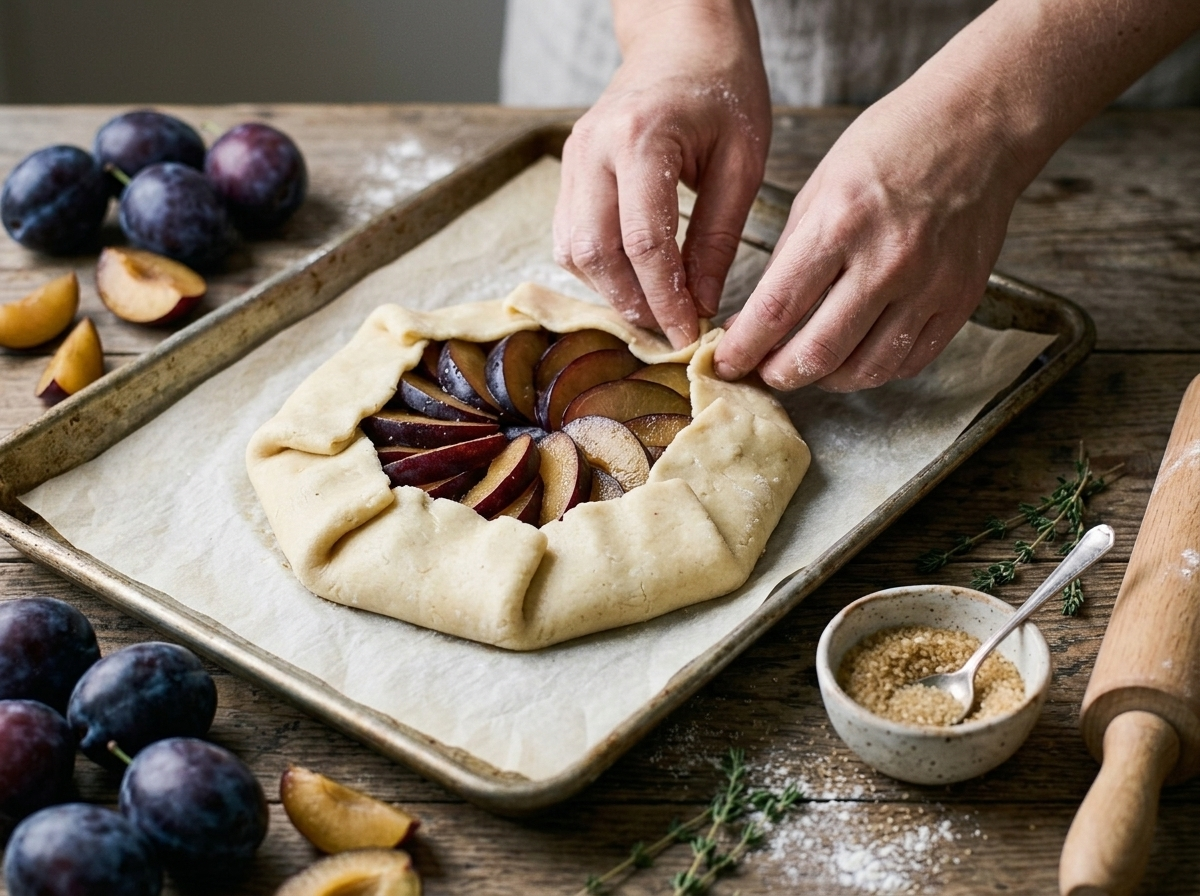
- Transfer the dough to the lined sheet pan and pile the plum filling in the center, leaving a 2-inch border.
- Fold the border of dough over the fruit, pleating loosely as you go around the edge.
- Brush the folded crust with egg wash and sprinkle with turbinado sugar.
- Bake for 38 to 40 minutes until the crust is deep golden brown and the juices bubble thick at the center.
- Cool on the pan for 15 minutes before slicing, so the filling has time to set.
Notes
- Rest the dough a full 30 minutes, not less, or the butter melts too fast in the oven
- Don't skip drying the plum slices, it's the main fix for a soggy bottom crust
- Fold the edges loosely, tight folds crack when the fruit juices bubble up
- Bake until the juices bubble thick at the center, not just at the edges
Tips for Success
- Chill the dough for a full 30 minutes before rolling so the butter stays in visible streaks.
- Pat sliced plums dry with a paper towel before tossing with sugar to avoid a soggy crust.
- Leave a 2-inch border of dough uncovered so you have enough to fold over the fruit.
- Brush the folded edges with egg wash right before baking, not earlier, so it doesn’t dry out.
- Bake on the lowest oven rack for the last 10 minutes if the bottom crust looks pale.
Variations
- Swap plums for sliced apricots or nectarines when plums are out of season, keeping the same sugar amount.
- Add 1/2 teaspoon of ground cardamom to the filling for a warmer, slightly floral edge.
- Scatter 2 tablespoons of almond flour under the plums to soak up extra juice before it hits the crust.
Storage and Reheating
Store leftover galette loosely covered at room temperature for one day, or in the fridge for up to 3 days. The crust softens a bit in the fridge but the flavor holds fine.
Reheat individual slices in a 160C / 320F oven for 8 to 10 minutes to bring the crust back to a crisp. A microwave works in a pinch but leaves the bottom soft.
To freeze, wrap the fully cooled, baked galette tightly in foil and freeze for up to 2 months. Thaw overnight in the fridge, then reheat in the oven at 160C / 320F for 15 minutes.
Serving Suggestions
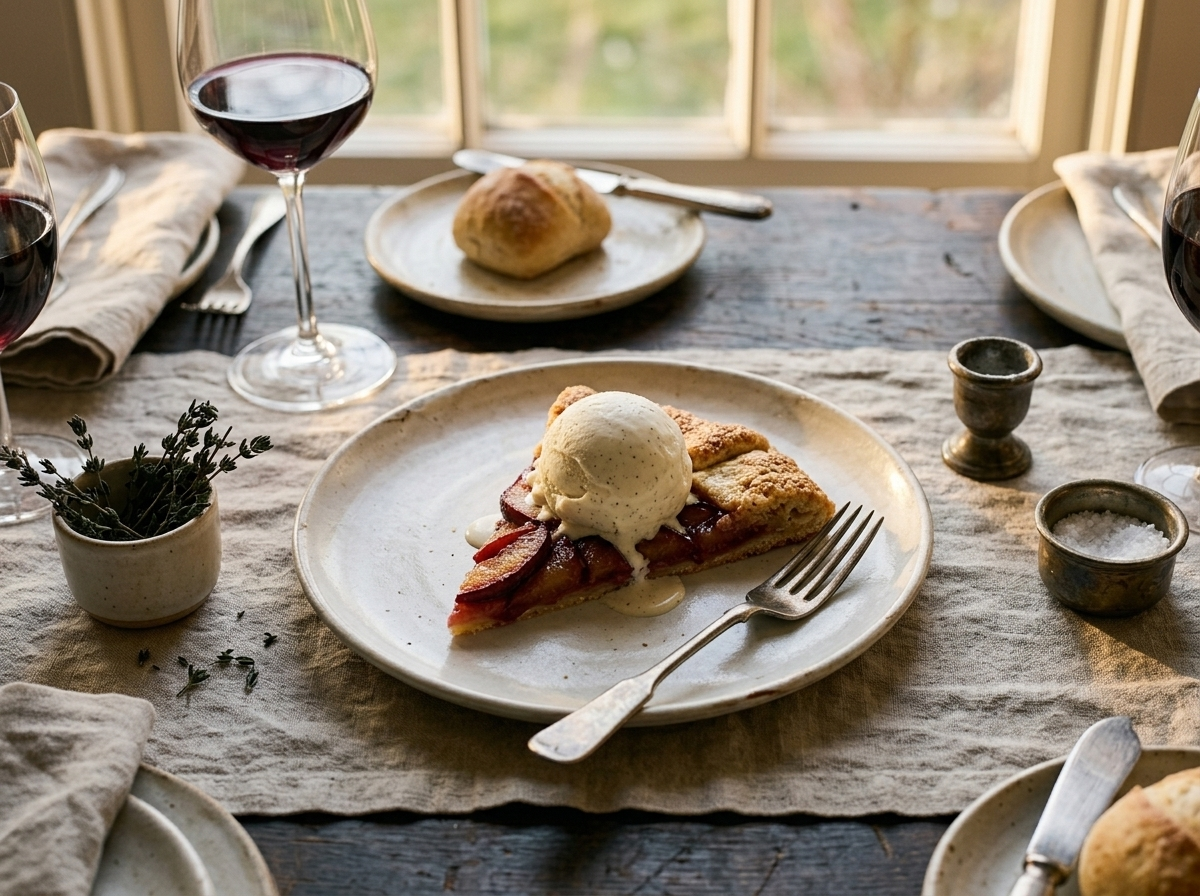
Serve the galette warm, about 20 minutes out of the oven, with a scoop of vanilla ice cream melting into the crust. A dollop of creme fraiche or plain Greek yogurt works too if you want something less sweet.
For breakfast leftovers, I cut a cold slice and eat it alongside a strong cup of coffee. It’s not too sweet for a morning plate.
If you’re serving it after dinner, a small glass of late-harvest wine or a chilled sweet Riesling pairs well with the tart plum edge.
FAQ
Why is my plum vanilla galette filling watery instead of jammy?
This usually means the plums released too much juice before the cornstarch could thicken it. Pat sliced plums dry before tossing with sugar and cornstarch, and let any excess liquid drain off in the bowl rather than pouring it onto the crust. A 10-minute rest before assembling helps too.
Can I use frozen plums instead of fresh in this galette?
Yes, but thaw them fully first and drain off the extra liquid, or the filling turns soupy. Frozen plums release more juice than fresh ones, so add an extra teaspoon of cornstarch to compensate. The texture is slightly softer but the flavor holds up fine.
Can I make the galette dough ahead and freeze it?
Yes, the dough freezes well for up to 2 months wrapped tightly in plastic. Thaw it overnight in the fridge before rolling, since a fully frozen disk cracks when you try to work it cold. Chilled but unfrozen dough keeps for 2 days in the fridge.
What goes well with a plum vanilla galette for dessert?
Vanilla ice cream or lightly sweetened whipped cream are the classic pairings, since the cold contrast plays off the warm, jammy fruit. Creme fraiche or plain yogurt works if you want something tangier instead. A small glass of dessert wine rounds it out after dinner.
How do I make this plum galette dairy free?
Swap the butter for a solid vegan block butter in the same amount, and use a plant milk instead of egg wash if you skip the egg altogether. The crust turns slightly less flaky but still bakes up golden. Skip the egg wash sugar crust and brush with plant milk instead.
What’s the difference between this plum galette and a plum pie?
A galette is free-form and folded by hand with no pie dish, while a pie, like an old fashioned raisin pie, needs a pan and usually a top crust or lattice. The galette crust-to-filling ratio is higher, and it bakes faster since the fruit isn’t fully enclosed. Both use similar dough, just shaped differently.
Loved this? Try these next
