
Jump to Recipe
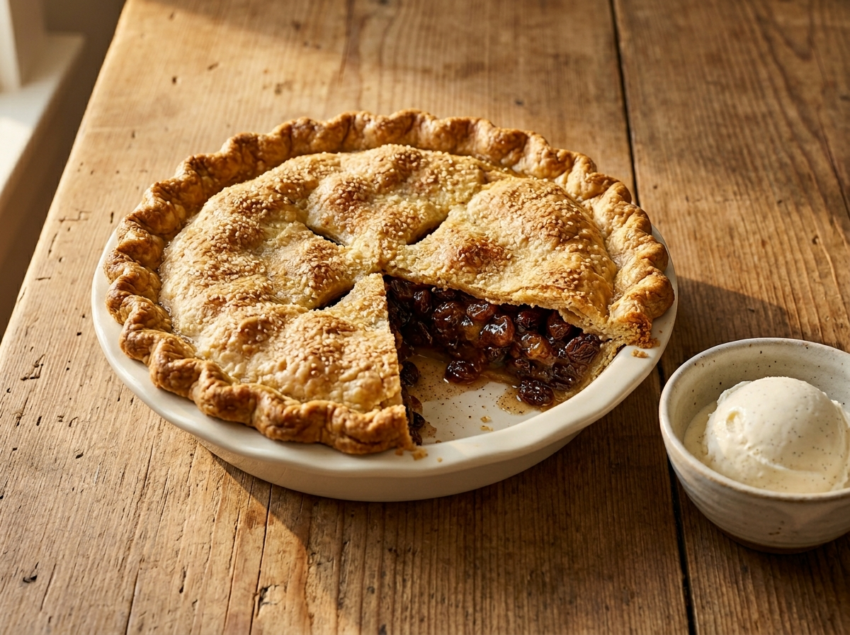
There’s something about a raisin pie that feels genuinely old. Not trendy-old. Actually old, like a recipe your grandmother kept on a handwritten index card.
Raisin pie was a staple long before fresh fruit sat on every store shelf year-round. Dried raisins meant you could bake a fruit pie in January. That practicality is part of the appeal.
The filling is simple. Raisins, brown sugar, vinegar for brightness, and warm spices. It cooks down into something almost jammy, with a clean sweetness that isn’t cloying.
You can use a store-bought crust if you want. But a homemade one – flaky, a little salty – makes a real difference here. The contrast with the sweet filling is the whole point.
Why You’ll Love This Recipe
- Uses pantry staples, no fresh fruit needed
- Filling comes together in one saucepan
- Slices cleanly thanks to a cornstarch-thickened filling
- Warm spices give depth without overpowering the raisins
Ingredient Notes
- Raisins: Dark raisins give a deeper, more robust flavor. Golden raisins work too and produce a slightly milder, fruitier filling.
- Apple cider vinegar: This cuts the sweetness and brightens the whole filling. White wine vinegar works as a substitute in the same amount.
- Brown sugar: Dark brown sugar adds a molasses depth that pairs well with the raisins. Light brown sugar is a fine swap.
- Cornstarch: This thickens the filling so it holds its shape when the pie is sliced. Don’t skip it or the filling will run.
- Ground cinnamon and cloves: Use a light hand with the cloves – they’re strong. Nutmeg or allspice can replace cloves if you prefer.
- Butter (for filling): A small amount stirred in at the end gives the filling a slight richness and sheen. Dairy-free butter works here.
- Double pie crust: Use your preferred homemade all-butter crust or a quality store-bought refrigerated crust. The crust needs to be cold before baking.
Old Fashioned Raisin Pie
Ingredients
Method
- Combine flour, salt, and granulated sugar in a large mixing bowl.
- Add the cold cubed butter and press it into the flour using your fingertips until the mixture resembles coarse crumbs with pea-sized butter pieces remaining.
- Add ice water 1 tablespoon at a time, mixing gently with a fork after each addition, until the dough just comes together and holds when pinched.
- Divide the dough in two equal portions, flatten each into a disk, wrap in plastic wrap, and refrigerate for at least 30 minutes.
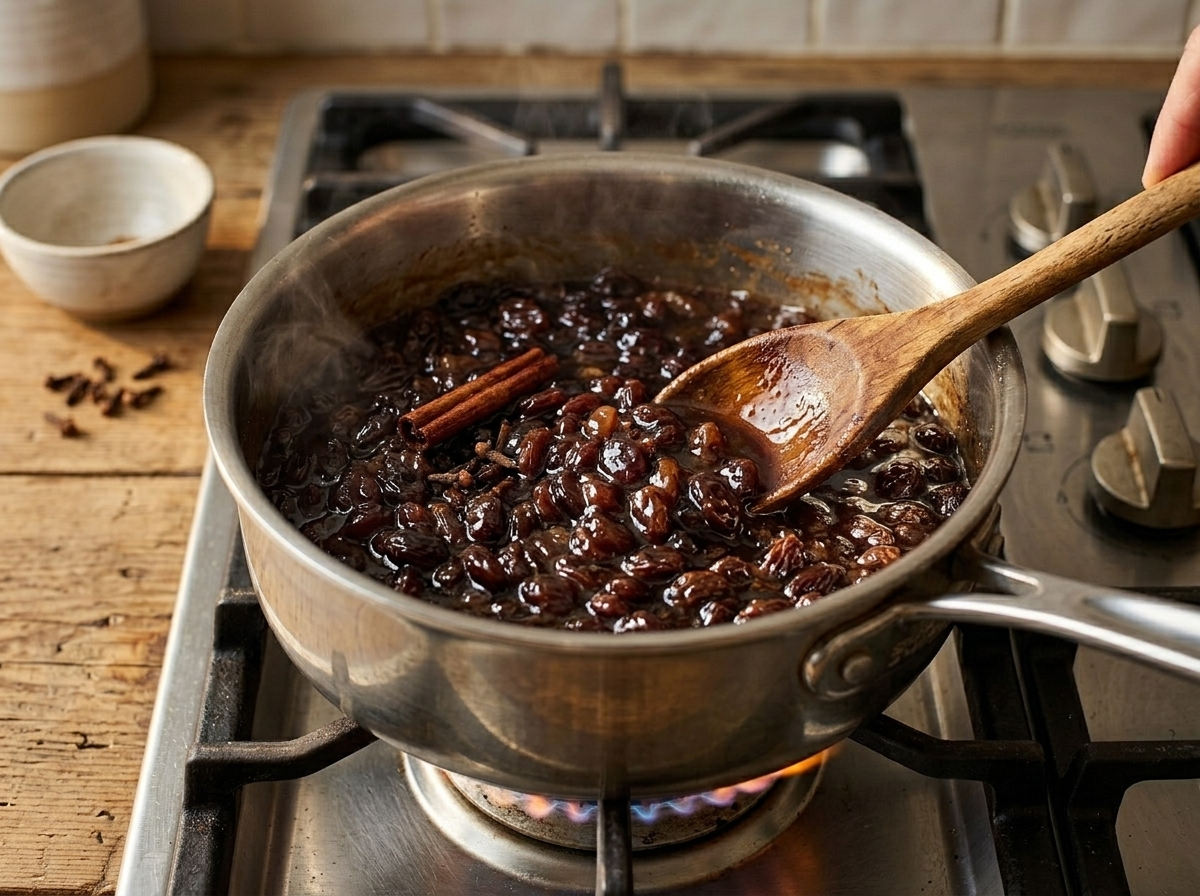
- Combine raisins and water in a medium saucepan over medium heat. Bring to a gentle simmer and cook for 5 minutes until raisins are plump.
- In a small bowl, whisk together the brown sugar, cornstarch, cinnamon, cloves, and salt. Stir this mixture into the simmering raisins.
- Add apple cider vinegar and stir continuously over medium heat for 6 to 8 minutes until the filling thickens noticeably and coats the back of a spoon.
- Remove from heat, stir in butter until melted, and let the filling cool completely to room temperature, at least 45 minutes.
- Heat the oven to 190 C / 375 F with a rack in the lower third.
- On a lightly floured surface, roll one dough disk into a 12-inch circle. Fit it into a 9-inch pie dish, pressing gently into the bottom and sides. Trim overhang to 1 inch.
- Pour the cooled raisin filling into the crust and spread evenly.
- Roll the second dough disk into a 12-inch circle. Lay it over the filling, trim to 1 inch overhang, then fold the edges of both crusts under together and crimp to seal.
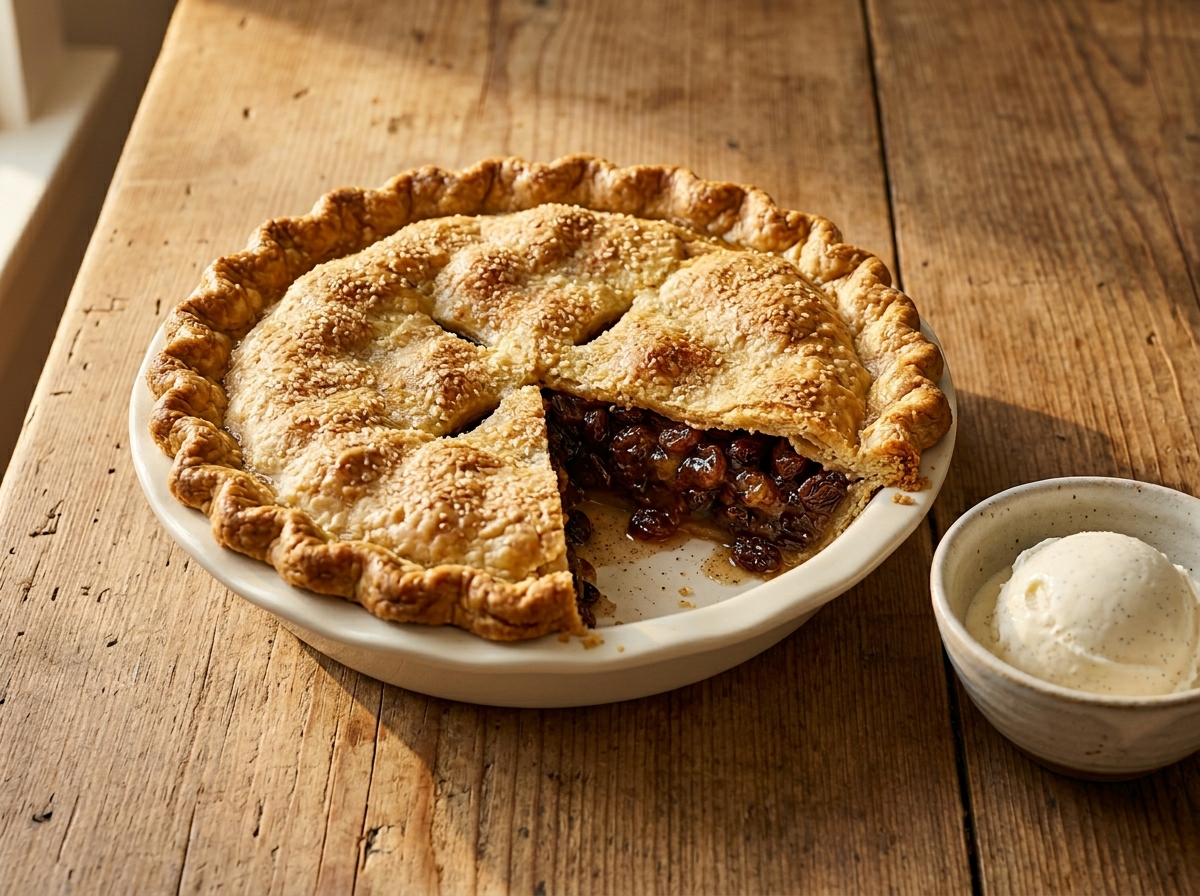
- Cut 5 or 6 steam vents in the top crust using a sharp knife.
- Beat the egg with 1 tablespoon of water and brush over the top crust. Sprinkle with coarse sugar if using.
- Place the pie on a foil-lined baking sheet to catch any drips. Bake for 45 to 55 minutes until the crust is deep golden and the filling is bubbling through the vents. Tent the edges with foil after 25 minutes if they brown too quickly.
- Transfer the pie to a cooling rack and cool for at least 2 hours before slicing so the filling sets.
Notes
Tips for Success
- Simmer the raisin filling until it coats a spoon thickly before pouring into the crust.
- Cool the filling to room temperature before adding to the crust to prevent a soggy bottom.
- Cut at least 5 steam vents in the top crust so filling pressure doesn’t split the edges.
- Brush the top crust with egg wash and a pinch of coarse sugar for a golden, slightly crisp finish.
- Let the baked pie cool for at least 2 hours before slicing so the filling sets completely.
Variations
- Add the zest of one orange to the filling for a citrus note that brightens the raisins.
- Swap half the raisins for dried cranberries to add tartness and a deeper red color.
- Use a lattice top crust instead of a solid lid for a more traditional visual presentation.
Storage and Reheating
Store the baked pie loosely covered at room temperature for up to 2 days. For longer storage, cover tightly and refrigerate for up to 5 days.
To reheat, place individual slices on a baking sheet at 160 C / 325 F for 10 to 12 minutes until the crust crisps back up. Microwaving works but softens the crust significantly.
The baked pie freezes well. Wrap it tightly in plastic wrap then foil and freeze for up to 2 months. Thaw overnight in the refrigerator, then warm in a 160 C oven for 15 minutes.
Serving Suggestions
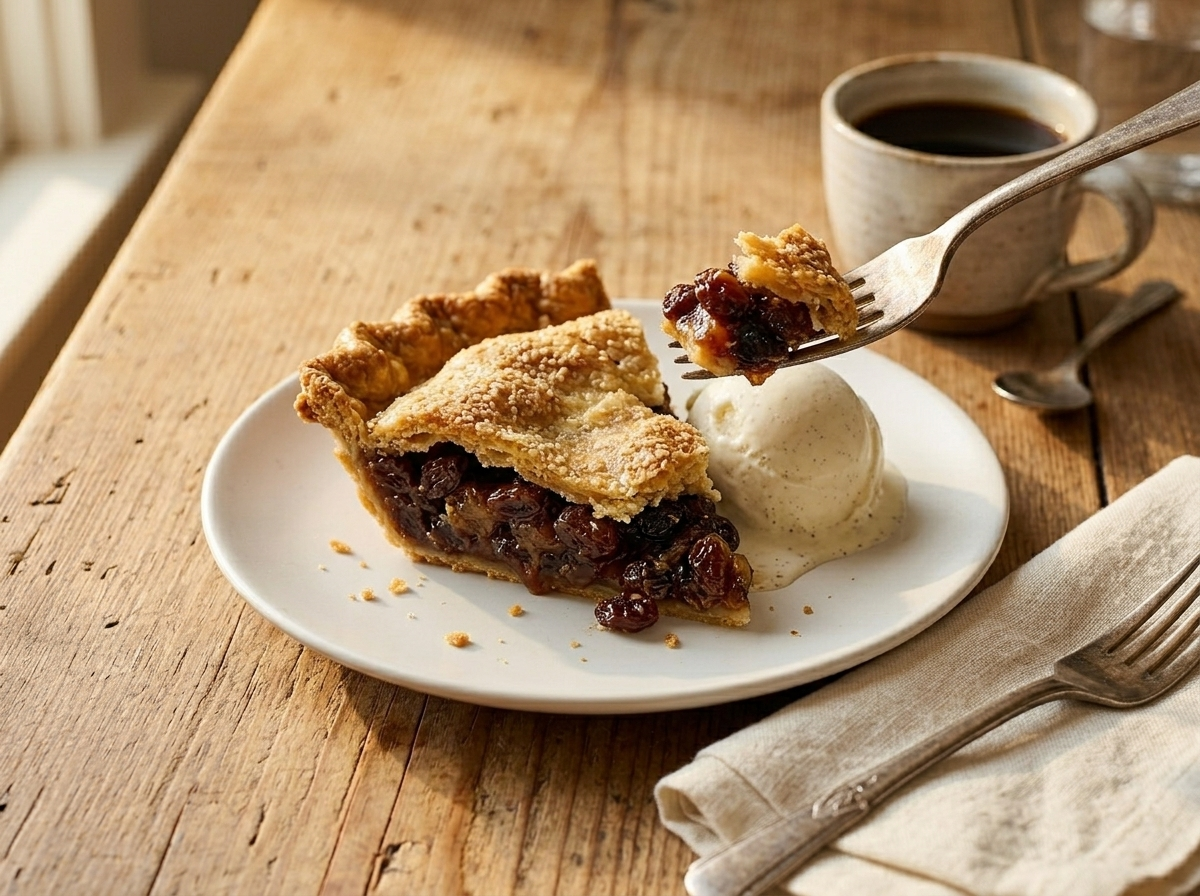
Raisin pie is good on its own but a scoop of vanilla ice cream alongside is the classic pairing. The cold cream against the spiced filling is a strong combination.
A dollop of lightly sweetened whipped cream also works well, especially if you want something lighter than ice cream, much like the cream finish on a slow-baked burnt sugar custard. A small pinch of cinnamon on top of the cream ties it back to the filling.
For a simple dessert spread, serve alongside a pot of strong black coffee or an Earl Grey tea, the same pairing that works beautifully with a warm caramel walnut bread pudding. The bitterness of both cuts through the sweetness cleanly.
FAQ
Why is my raisin pie filling runny after baking?
The most common cause is not cooking the filling long enough on the stovetop before adding it to the crust. The cornstarch needs to reach a full simmer to activate and thicken properly. Cutting into the pie before it has cooled at least 2 hours will also cause the filling to run.
Can I use golden raisins instead of dark raisins in this pie?
Yes, golden raisins work and give the filling a lighter color and slightly milder flavor. The texture and thickness of the filling will be the same. Some bakers use a mix of both for a more complex result.
Can I make the raisin pie filling a day ahead?
The filling can be made up to 2 days ahead and stored covered in the refrigerator. Let it come to room temperature before spooning into the pie crust so it spreads evenly without cracking the pastry.
What’s the difference between old fashioned raisin pie and funeral pie?
They’re essentially the same pie. Funeral pie is the Pennsylvania Dutch name for this style of raisin pie, traditionally baked for post-funeral gatherings because raisins kept well and the pie could be made quickly from pantry ingredients. The recipe is nearly identical across both names.
Is old fashioned raisin pie gluten free?
Not as written, since it uses a standard wheat flour pie crust. You can make it gluten free by using a certified gluten-free pie crust, store-bought or homemade with a 1-to-1 gluten-free flour blend. The filling itself contains no gluten.
How do I know when the raisin pie is fully baked?
The top crust should be deep golden brown and you should see the filling bubbling through the vents. If the edges brown too quickly, tent them with foil and continue baking until the center bubbles actively.
