
Jump to Recipe
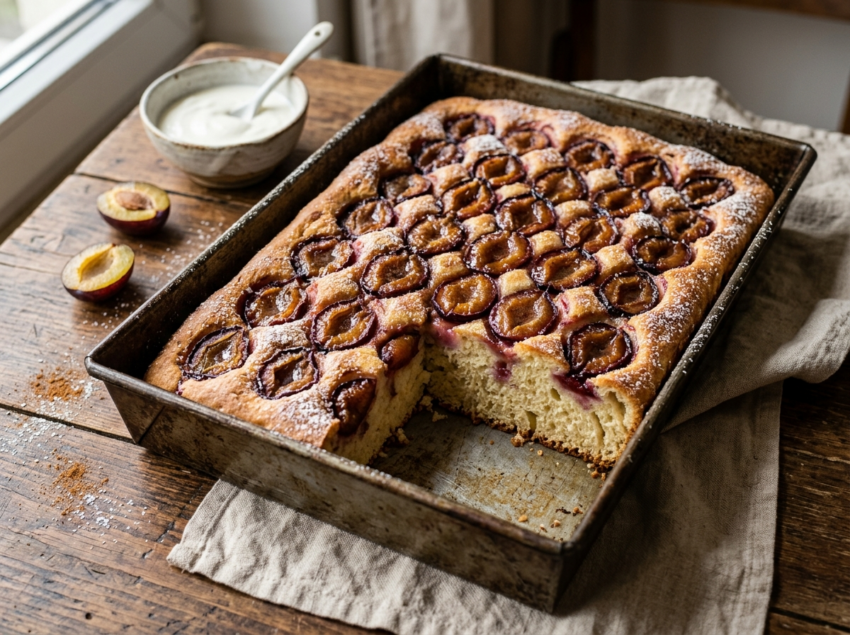
There’s something about the smell of this cake coming out of the oven in late summer that stops you mid-conversation. Stone fruit, warm cinnamon, yeasty dough. It’s unmistakably Polish.
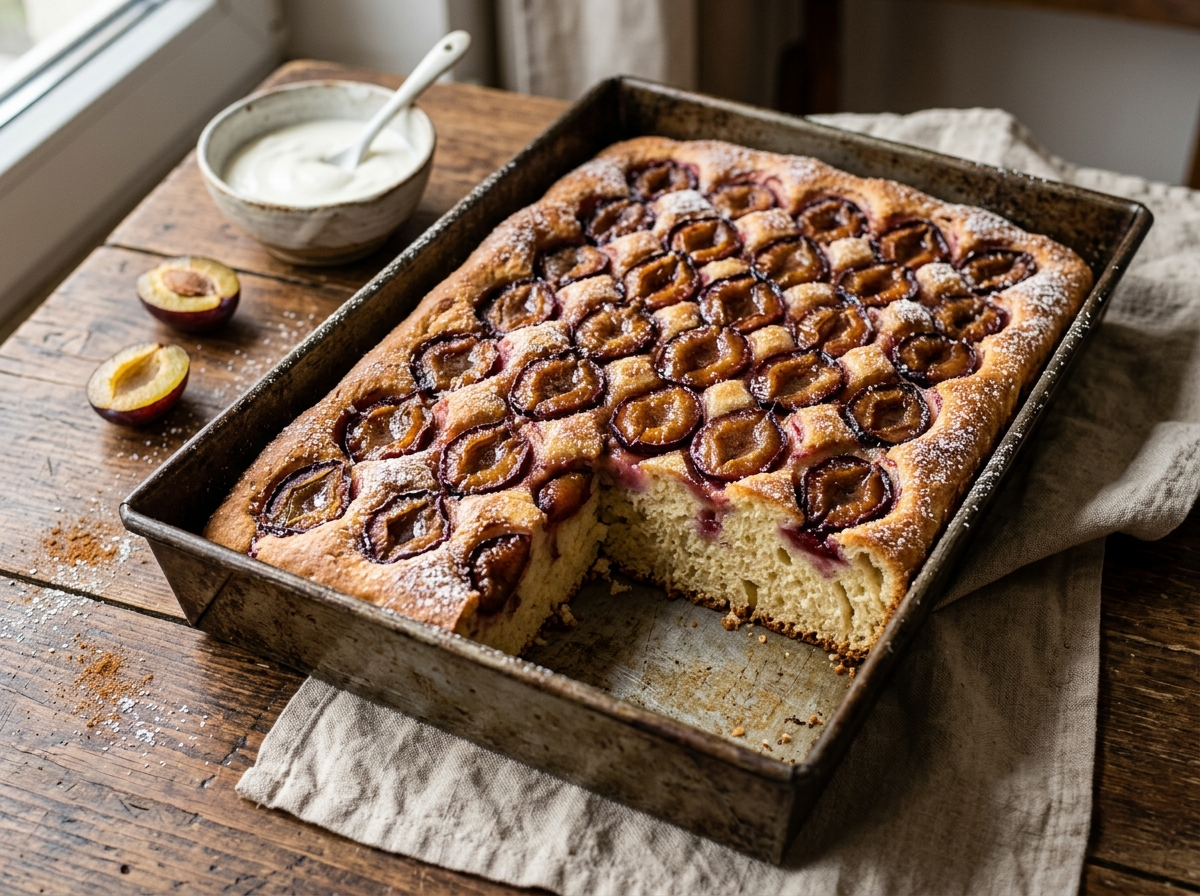
This is ciasto drożdżowe ze śliwkami, the plum yeast cake that shows up on Polish kitchen tables every August and September when Italian prune plums are everywhere. It’s not a delicate pastry. It’s a generous, honest bake – the kind that feeds a family and still leaves enough for breakfast the next morning.
The dough is enriched with eggs, butter, and a little milk, which keeps it tender rather than bready, closer in spirit to a buttery tender cake base than a lean bread dough. The plums sink slightly as they bake and release their juice into the crumb. A simple cinnamon-sugar topping finishes it off.
I use Italian prune plums here because they’re firm, not too watery, and their tartness cuts through the sweet dough. If you can’t find them, I’ll cover substitutes below.
Why You’ll Love This Recipe
- Enriched yeast dough stays soft and tender for two days.
- Italian plums add tartness that balances the sweet crumb.
- One bowl for the dough, minimal cleanup.
- Freezes well – bake now, slice later.
Ingredient Notes
- Italian prune plums: Firm, low-moisture plums that hold their shape during baking. If unavailable, use halved small red plums or fresh damson plums, but pat them dry first to avoid a soggy base.
- Active dry yeast: Proof it in warm milk (38-40 C / 100-104 F) for 10 minutes before using. If you use instant yeast, skip the proofing step and add it directly to the flour.
- All-purpose flour: Plain all-purpose flour gives a light crumb. You can swap up to half with bread flour for a slightly chewier texture.
- Unsalted butter: Softened to room temperature so it folds into the dough smoothly. Adds richness and keeps the cake moist after baking.
- Cinnamon sugar topping: Just granulated sugar mixed with ground cinnamon. Add a tablespoon of cold cubed butter and rub it in with your fingers for a light streusel effect.
- Whole milk: The fat in whole milk enriches the dough. Low-fat milk works, but the crumb will be slightly less tender. A plant-based milk like oat milk is a workable dairy-free swap.
Polish Plum Yeast Cake (Ciasto Drożdżowe ze Śliwkami)
Ingredients
Method
- Combine the warm milk, 1 tsp of the sugar, and the active dry yeast in a small bowl. Stir and leave for 10 minutes until the surface looks foamy and bubbly.
- If the mixture doesn't foam after 10 minutes, the yeast is inactive - discard and start again with fresh yeast.
- Place the flour, remaining sugar, and salt in a large mixing bowl. Make a well in the center.
- Add the foamy yeast mixture, eggs, softened butter, and vanilla extract to the well. Mix with a wooden spoon or stand mixer with a dough hook until a shaggy dough forms.
- Knead for 8-10 minutes by hand on a lightly floured surface, or 6 minutes on medium speed in a stand mixer, until the dough is smooth, soft, and slightly tacky but not sticky.
- Form the dough into a ball, place in a lightly oiled bowl, cover with a clean kitchen towel, and leave to rise in a warm spot for 60-90 minutes until doubled in size.
- Grease a 9x13-inch baking tin with butter and dust lightly with flour.
- Punch the risen dough down gently and transfer it to the tin. Use your fingertips to press and stretch it evenly to fill the tin without tearing.
- Cover loosely with a kitchen towel and leave to rest for 15 minutes.
- Heat the oven to 180 C / 355 F with a rack in the lower-middle position.
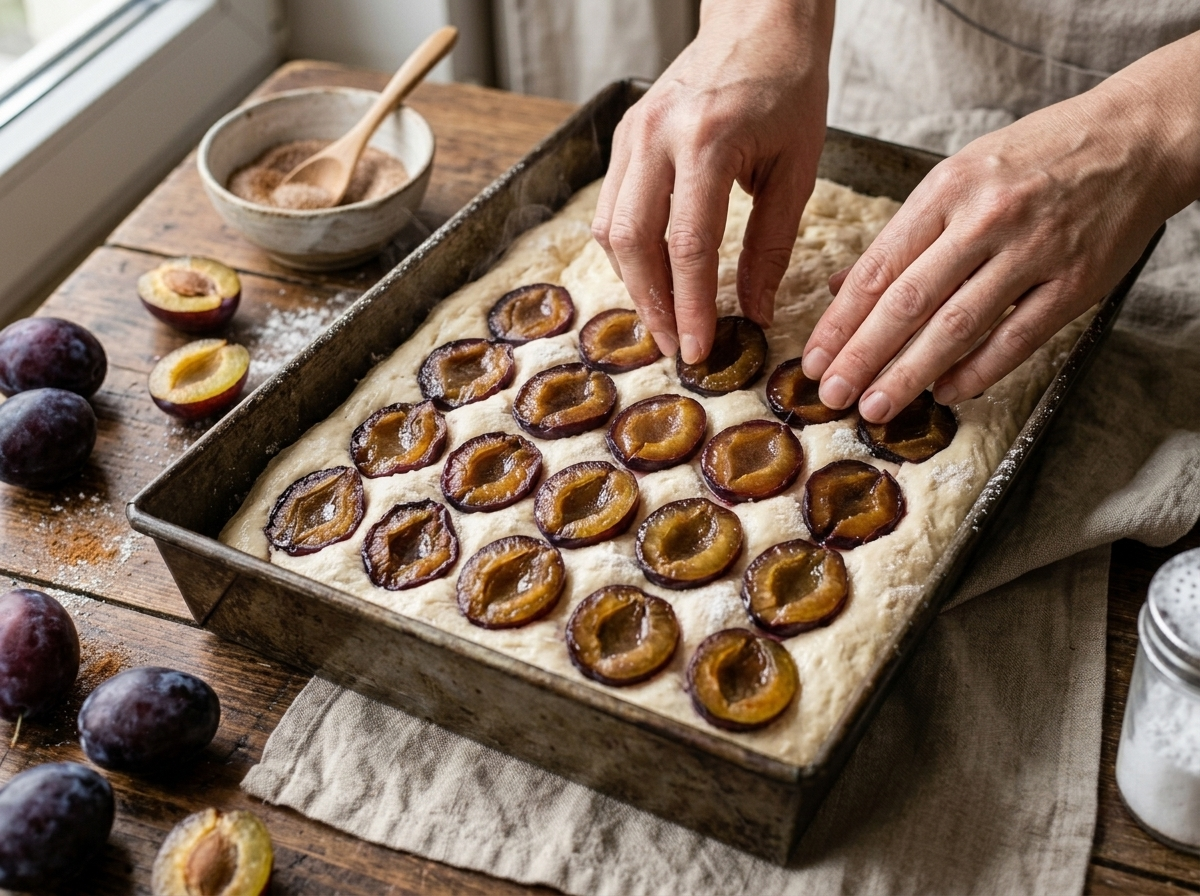
- Press the plum halves cut-side up firmly and snugly into the dough in rows, making sure they are packed close together.
- Mix the granulated sugar and cinnamon together in a small bowl. Scatter evenly over the plums. Distribute the cold butter cubes across the top.
- Bake for 32-35 minutes until the dough is golden at the edges, the plums are soft and bubbling, and a skewer inserted into the crumb between two plums comes out clean.
- Remove from the oven and let cool in the tin for 15 minutes. Transfer to a wire rack to cool completely. Dust with powdered sugar before serving if desired.
Notes
Tips for Success
- Proof the dough in a switched-off oven with a bowl of hot water underneath to speed up the rise.
- Press plum halves cut-side up firmly into the risen dough so they don’t slide off during baking.
- Check the cake at 30 minutes – the crumb should feel springy and the underside should sound hollow when tapped.
- Let the cake cool in the tin for 15 minutes before slicing so the plum juice sets slightly and doesn’t flood the cut edges.
- Dust with powdered sugar only after the cake is fully cool, otherwise it dissolves into the warm surface.
Variations
- Add 1 tsp vanilla extract and 1 tbsp rum to the dough for a richer, more aromatic flavor profile.
- Swap plums for halved apricots or tart cherries when Italian prune plums are out of season.
- Crumble a proper streusel (flour, sugar, cold butter, 1:1:1 ratio) over the plums before baking for extra texture.
Storage and Reheating
Store the cooled cake covered at room temperature for up to 2 days. The yeast dough keeps the crumb soft, but after day two the plums start to make the base a little wet.
For longer storage, refrigerate wrapped in plastic for up to 4 days. Bring slices to room temperature before eating, or warm them in the oven at 160 C / 320 F for 8 minutes.
This cake freezes well. Wrap individual slices in plastic wrap, then foil, and freeze for up to 2 months. Thaw overnight in the fridge and refresh in the oven before serving.
Serving Suggestions
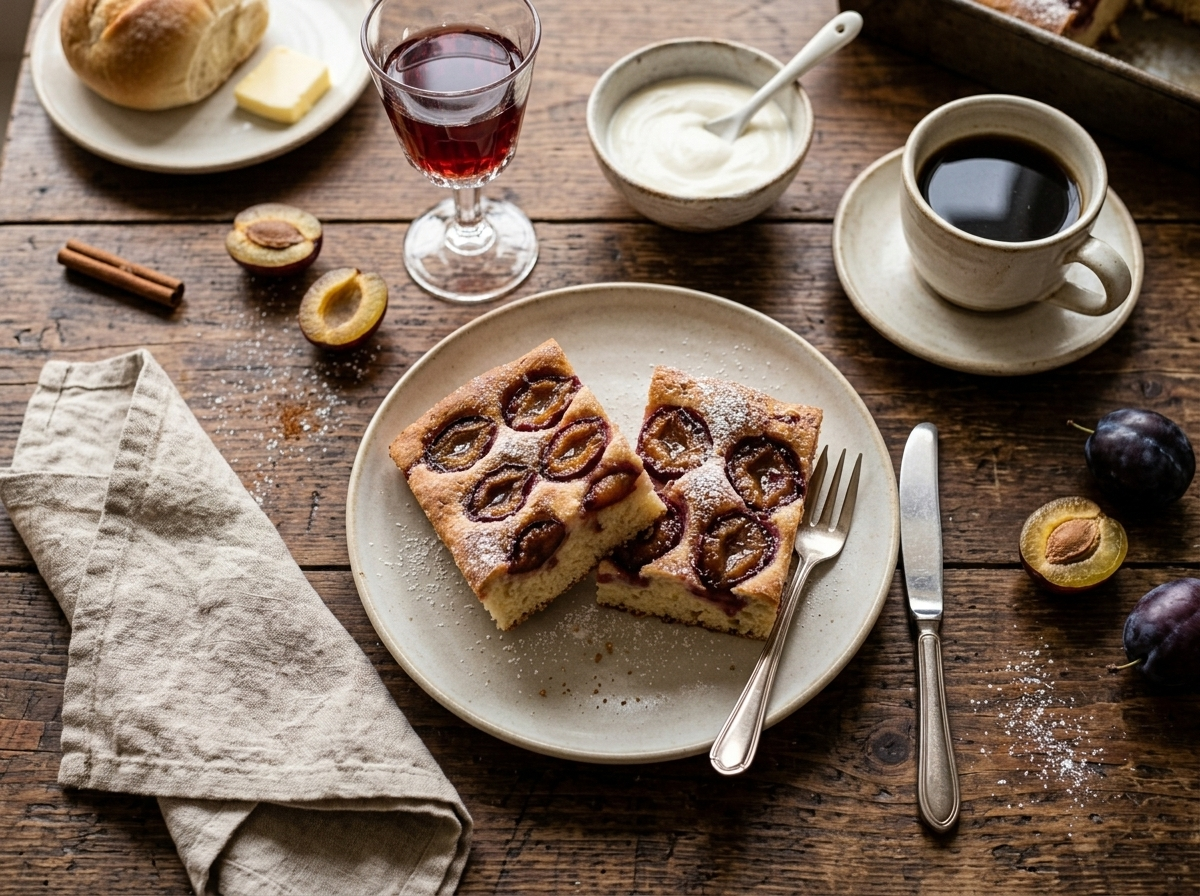
Serve slightly warm with a spoonful of cold sour cream or creme fraiche alongside, the way you might finish a toffee apple skillet cake. The tang cuts through the sweetness and complements the plums in a way that plain whipped cream doesn’t.
For breakfast or a mid-morning break, a thick slice with black coffee or a strong tea is the traditional Polish way to eat it. It’s filling enough to hold you through the morning.
Dust with powdered sugar just before bringing it to the table if you want it to look bakery-neat. A few fresh plum slices on the side make the presentation clear and honest.
FAQ
Why is the bottom of my Polish plum yeast cake soggy?
Soggy bottoms usually mean the plums were too ripe or too wet. Pat the plum halves dry with paper towel before pressing them into the dough. Baking on the lower-middle rack of the oven also helps the base set faster.
Can I use dried prunes instead of fresh plums in this yeast cake?
Dried prunes don’t work the same way here – they lack the moisture that steams into the dough during baking and creates that soft, jammy layer. Stick to fresh or frozen Italian plums, thawed and patted dry.
Can I make the yeast dough the night before and bake the next day?
Yes. After the first rise, punch the dough down, cover the tin tightly with plastic wrap, and refrigerate overnight. Let it sit at room temperature for 30 minutes before topping with plums and baking.
What is the difference between Polish plum yeast cake and German Pflaumenkuchen?
Both use plums on a yeast base, but Polish ciasto drożdżowe is thicker and more enriched with eggs and butter, giving a bread-like crumb. German Pflaumenkuchen typically uses a thinner, less enriched dough and is cut into smaller individual portions.
How do I make this plum cake dairy-free?
Replace the whole milk with oat milk or almond milk and swap the butter for a neutral plant-based block butter like Miyoko’s or Flora. The texture is slightly less rich but still holds together well.
Is Polish plum yeast cake best eaten warm or at room temperature?
At room temperature it slices more cleanly and the plum juice has time to settle into the crumb. Warm it slightly if you want the dough to feel softer, but straight-from-the-oven slices tend to fall apart.
