
Jump to Recipe
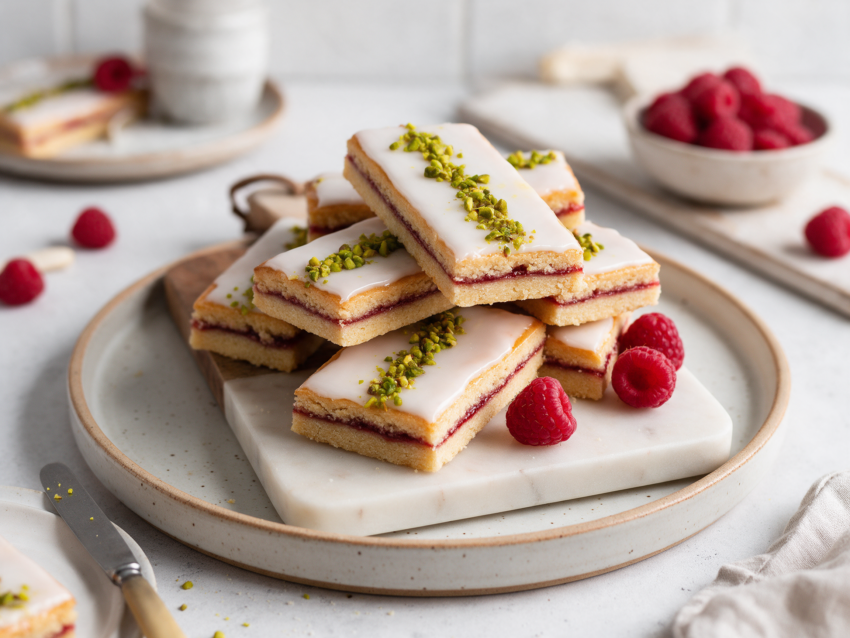
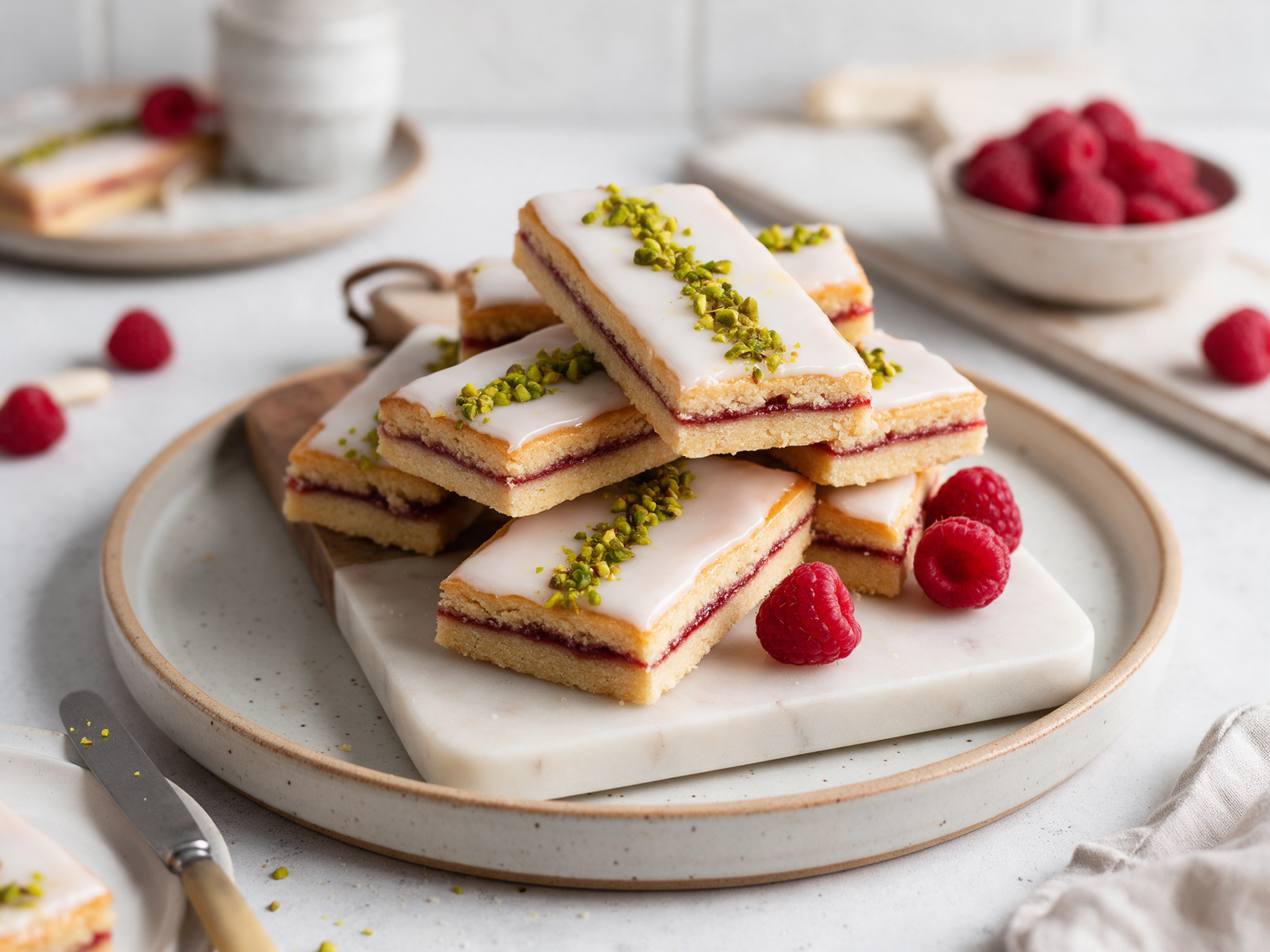
Hindbærsnitter are Danish raspberry bars built from two thin layers of shortcrust pastry with tart jam in between, topped with a lemon glaze and crushed pistachios.
I first had these at a bakery counter in Copenhagen, standing in line behind a woman ordering six of them for a Sunday coffee with her mother. That’s basically what these are for.
The pastry itself is closer to a cookie than a pie crust, sturdy enough to hold its shape but short and sandy when you bite in. Raspberry jam does the heavy lifting for flavor, so use one you’d actually eat off a spoon.
One thing that trips people up: rolling the dough too thin makes it crack when you cut the bars later. I roll to about 4 mm and no thinner.
Why You’ll Love This Recipe
- Two crisp pastry layers with tart raspberry filling
- Simple dough, no special equipment needed
- Lemon glaze sets firm for neat, stackable bars
- Keeps well for days, ideal for make-ahead coffee trays
Ingredient Notes
- flour: Standard all-purpose flour keeps the shortcrust sturdy without turning tough. Weigh it if you can, since scooping straight from the bag adds extra flour and dries out the dough.
- butter: Keep it cold and cubed straight from the fridge. Warm butter makes the dough sticky and hard to roll thin.
- egg yolk: Binds the dough and adds richness without the extra moisture a whole egg would bring, which would make the pastry chewy instead of short.
- raspberry jam: Use a thick, seedless jam so the layers slice cleanly. Thin jam runs out the sides once you stack and press the pastry sheets.
- powdered sugar: Sift it before whisking with lemon juice so the glaze goes on smooth instead of gritty.
- pistachios: Chop them finely by hand for a crumb texture that sticks to the wet glaze. Shredded coconut is a common bakery substitute.
Danish Hindbærsnitter Raspberry Bars with Pistachios
Ingredients
Method
- Whisk the flour, granulated sugar, and salt together in a large mixing bowl. Add the cold butter cubes and rub in with your fingertips until the mixture looks like coarse crumbs.
- Add the egg yolk and vanilla extract, mixing with a fork until the dough starts to clump together. Add ice water only if the dough feels dry, a tablespoon at a time.
- Bring the dough together into a ball, flatten into a disk, wrap, and chill for 30 minutes.
- Heat the oven to 180 C / 356 F and line a 33 x 23 cm / 13 x 9-inch sheet pan with parchment.
- Roll the chilled dough on a lightly floured surface into a rectangle about 33 x 23 cm, roughly 4 mm thick. Cut in half to make two equal rectangles and transfer both to the sheet pan, leaving space between them.
- Prick both pastry sheets all over with a fork. Bake for 14 to 16 minutes, until pale gold at the edges and still pale in the center.
- Cool completely on the pan for 10 minutes, then transfer to a wire rack.
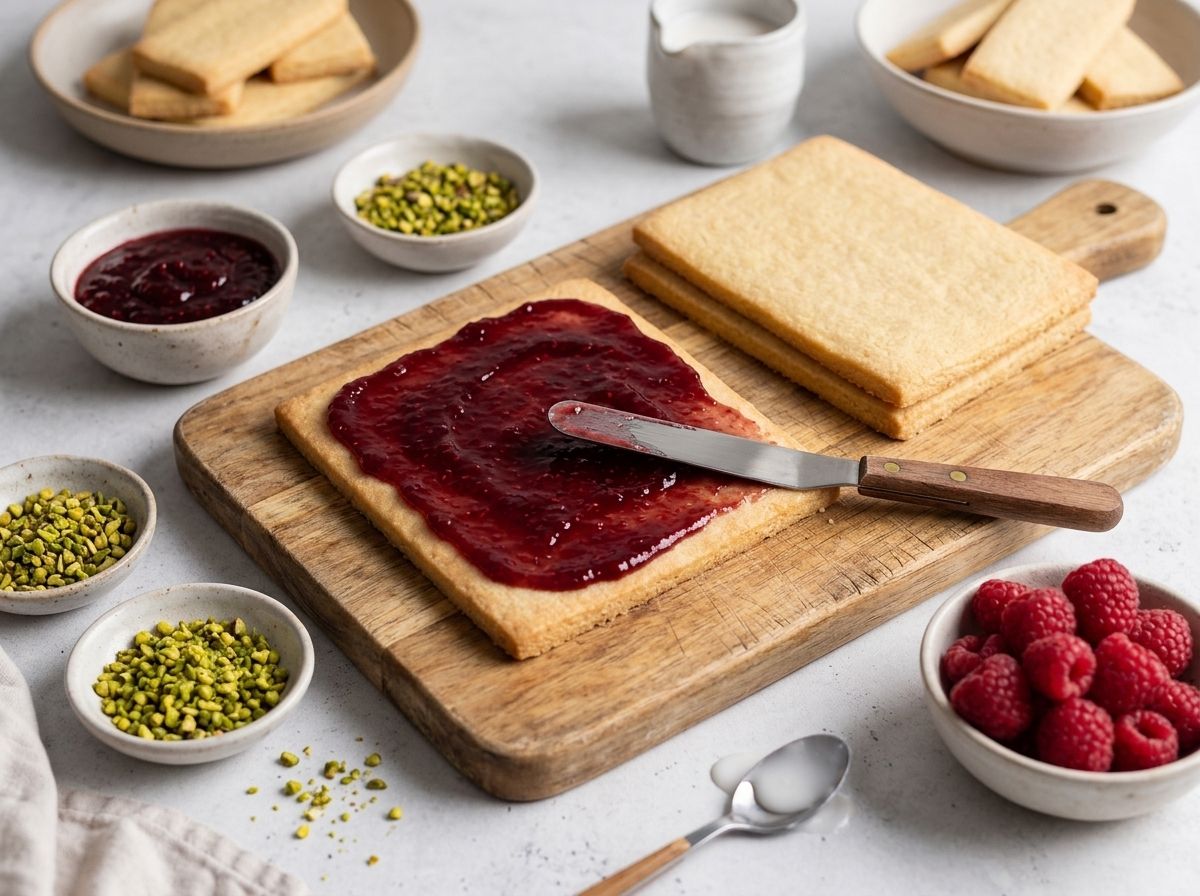
- Spread the raspberry jam evenly over one baked pastry sheet, leaving a small border. Top with the second pastry sheet, pressing gently to help them stick together.
- Whisk the powdered sugar and lemon juice together until smooth and thick enough to hold a ribbon shape for a few seconds. Spread over the top layer with an offset spatula.
- Sprinkle the chopped pistachios in a line down the center while the glaze is still wet. Let sit at room temperature for 15 to 20 minutes until the glaze is firm to the touch.
- Cut into 16 bars with a sharp knife dipped in hot water, wiping the blade clean between cuts.
Notes
- Chill dough a full 30 minutes or it will shrink while baking.
- Use a thick, seedless jam so it won't leak out the sides.
- Let glaze set before cutting or the bars will smear.
- Bake both pastry sheets on one pan for even color.
Tips for Success
- Chill the dough for 30 minutes before rolling so it doesn’t shrink in the oven.
- Use seedless raspberry jam so the layers slice cleanly without seeds catching in the knife.
- Bake the two pastry sheets on the same size sheet pan so they match up when stacked.
- Let the glaze set for at least 15 minutes before cutting so it doesn’t smear.
- Cut the bars with a sharp knife dipped in hot water for clean, straight edges.
Variations
- Swap the raspberry jam for black currant or strawberry jam for a different but equally traditional filling.
- Replace the pistachios with shredded coconut or rainbow sprinkles for the version bakeries sell to kids.
- Add a thin layer of marzipan under the jam for a nuttier, denser Danish-style bar.
Storage and Reheating
Hindbærsnitter store well at room temperature in an airtight container for 4 to 5 days, since the glaze keeps the pastry from drying out too fast. Keep them in a single layer or separate layers with parchment so the glaze doesn’t stick to itself.
These bars are best served at room temperature, not reheated. Warming them softens the crisp pastry and melts the glaze into a sticky mess instead of a clean, shiny top.
If you want to plan ahead, freeze the unglazed, unfilled pastry sheets for up to 2 months, wrapped tightly in plastic. Thaw, then fill with jam and glaze fresh the day you plan to serve.
Serving Suggestions
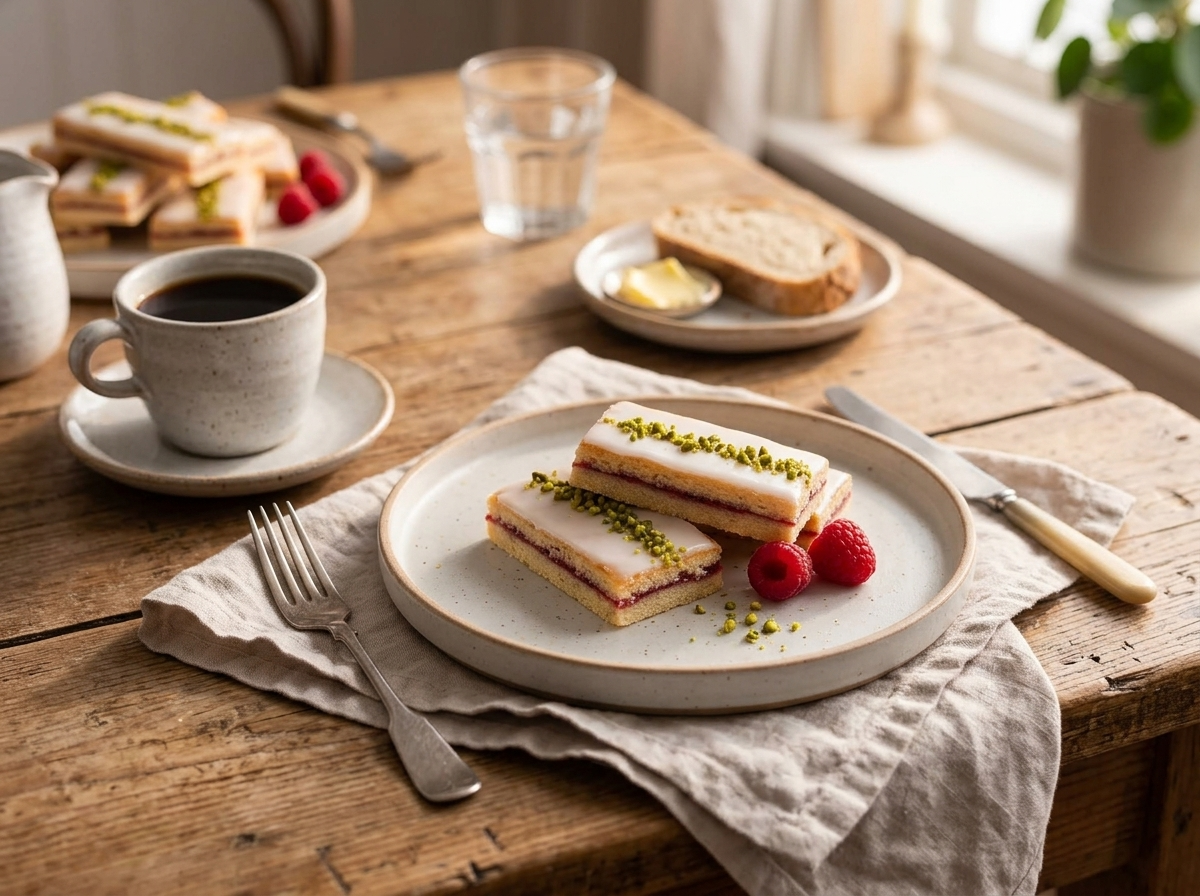
Hindbærsnitter show up on Danish coffee tables alongside a pot of strong coffee or black tea, cut into small squares for sharing.
Add them to a pastry platter with kanelsnegle or wienerbrød for a weekend brunch spread, or pack a couple in a tin for an afternoon picnic.
A few fresh raspberries or a wedge of lemon on the plate echoes the jam and glaze without needing anything else.
FAQ
Why did my hindbærsnitter crack when I cut the bars?
This usually happens when the pastry was rolled too thin or the bars were cut while the glaze and jam were still cold and firm. Roll the dough to about 4 mm and let the assembled bars sit at room temperature a few minutes before cutting. A sharp knife dipped in hot water also helps the layers separate cleanly instead of splitting.
Can I use strawberry jam instead of raspberry jam in hindbærsnitter?
Yes, strawberry jam works, though the bars won’t taste quite as tart. Black currant jam is actually more traditional in parts of Denmark than raspberry. Pick a seedless, thick jam so it doesn’t seep out between the pastry layers once you stack and cut them.
Can I freeze hindbærsnitter before adding the glaze?
Yes, freeze the baked pastry sheets, unglazed and unfilled, for up to 2 months wrapped tightly in plastic. Thaw at room temperature, then fill with jam and add the glaze and pistachios the same day you plan to serve. Glazed bars don’t freeze well because the icing turns sticky once thawed.
What goes well with Danish raspberry bars besides coffee?
A pot of black tea or a glass of cold milk both work well against the sweet glaze and tart jam. In Denmark these show up on a pastry platter alongside kringle or wienerbrød for weekend brunch. A few fresh raspberries on the side add a nice contrast.
Are hindbærsnitter gluten-free?
No, the classic dough is made with wheat flour, so it isn’t gluten-free as written. Swap in a 1:1 gluten-free baking flour blend and the bars will still hold together, though the texture turns more crumbly than the original. Check that your jam and pistachios are labeled gluten-free too.
What’s the difference between hindbærsnitter and Linzer bars?
Hindbærsnitter uses a plain shortcrust pastry with a lemon glaze on top, while Linzer bars use a nutty, spiced dough and usually skip the icing for a lattice top. Both sandwich raspberry jam between two layers, but hindbærsnitter is Danish bakery-style and leans sweeter and simpler.
You might also like
