
Jump to Recipe
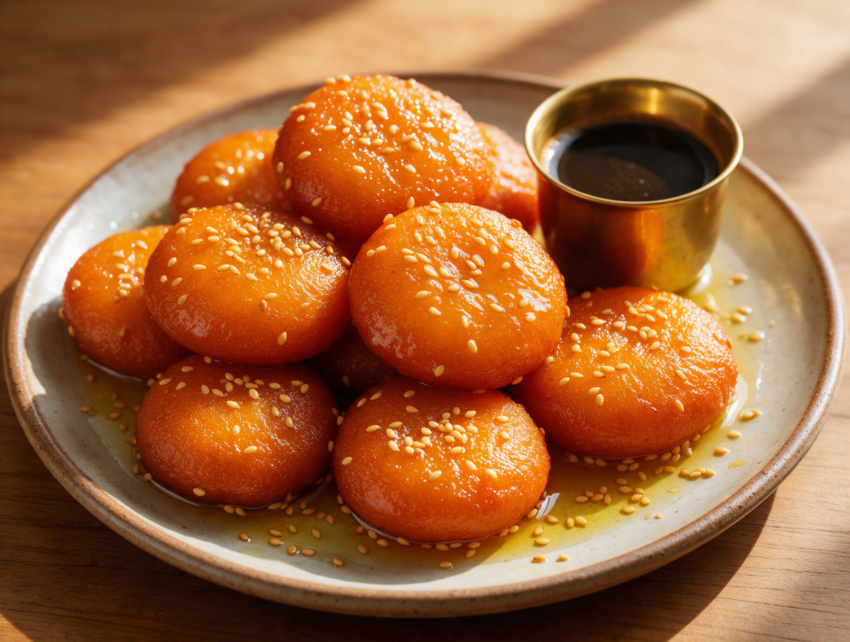
There’s something about the smell of saffron and cardamom hitting hot oil that pulls me straight back to a friend’s kitchen in Sharjah, where I first tried khanfaroosh.
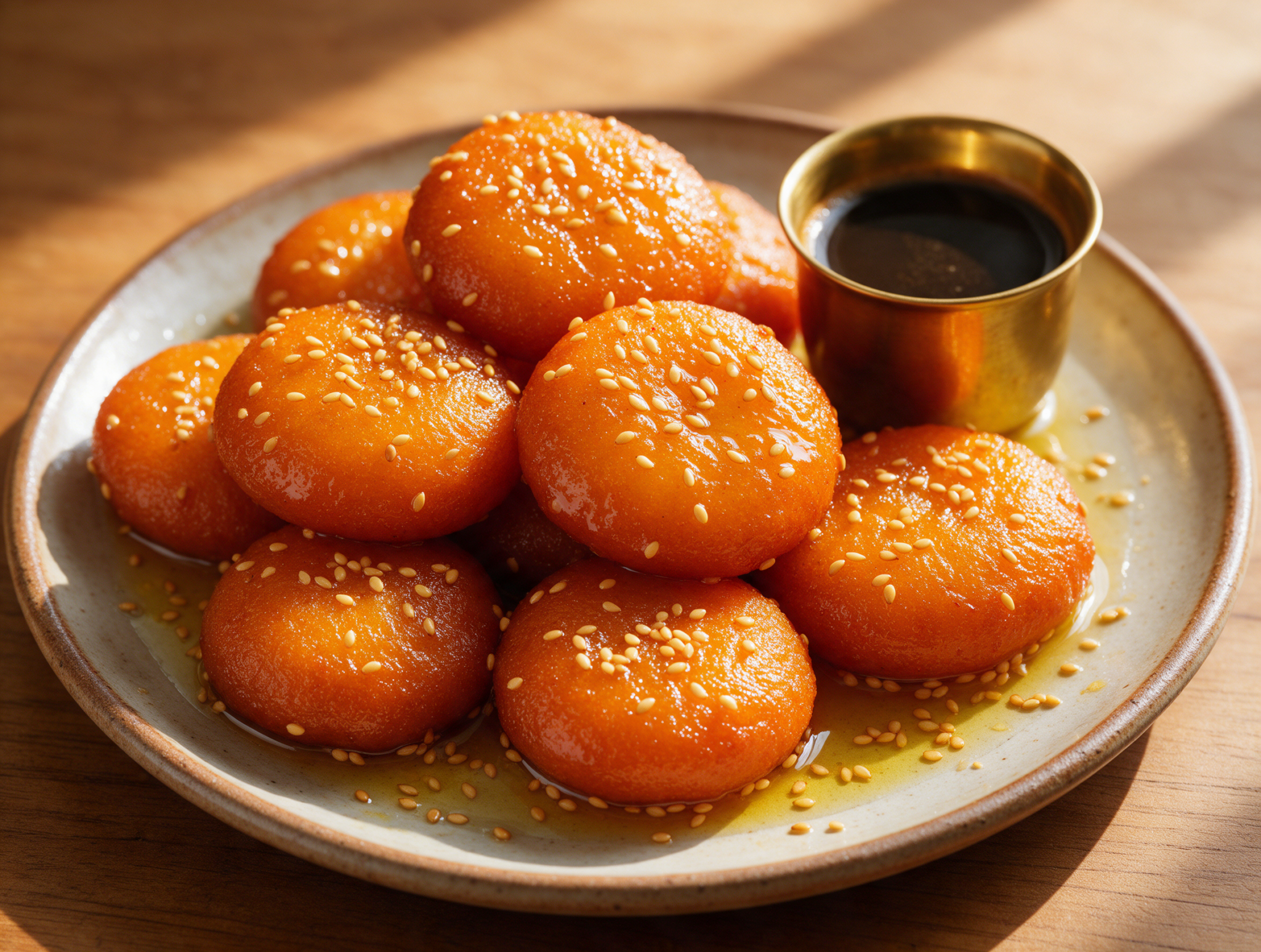
These Emirati saffron cakes are small, dense, and fried until the outside turns deep gold. Inside, they stay soft and a little chewy, somewhere between a doughnut and a spiced bread roll.
The batter gets its color and scent from saffron steeped in warm milk, much like the saffron-scented ricotta cakes of Sardinia, plus a good hit of ground cardamom and rosewater. Once fried, the cakes go straight into warm sugar syrup, not unlike fried rose pastries soaked in syrup, then get a scatter of sesame seeds on top.
I’ve made these for Eid mornings and for no reason at all. They’re not hard, but the oil temperature matters more than people expect. Get that right and everything else follows.
Why You’ll Love This Recipe
- Saffron and cardamom give the batter real depth, not just sweetness
- Made with pantry staples plus one spice splurge
- Syrup soak keeps every bite soft for days
- Small batch friendly, no special equipment beyond a deep pot
Ingredient Notes
- saffron threads: Steep in warm milk for 10 minutes until the milk turns deep orange. Don’t skip the steep, dry threads won’t release color or scent evenly.
- fine semolina: Gives the cakes a slightly grainy, dense bite instead of a purely fluffy one. Fine durum semolina works better here than coarse.
- rosewater: Adds a floral note typical of Gulf sweets. Swap for 1/2 teaspoon vanilla extract if rosewater tastes too perfumed for you.
- instant yeast: Gives the batter a light lift during the rest. Active dry yeast works too, just dissolve it in the warm milk first and let it foam 5 minutes.
- sesame seeds: Toast them dry in a small pan for a minute before using, they smell nuttier and stick better to the tacky syrup coating.
Khanfaroosh: Fried Emirati Saffron Cakes in Syrup
Ingredients
Method
- Warm 3 tablespoons of the milk and stir in the saffron threads. Set aside for 10 minutes until the milk turns deep orange.
- Whisk the flour, semolina, sugar, yeast, cardamom, and salt together in a large mixing bowl.
- Add the egg, saffron milk, remaining warm milk, and rosewater. Mix until you get a thick, sticky batter, closer to a heavy pancake batter than bread dough.
- Cover the bowl and set it somewhere warm for 45 to 60 minutes, until the batter looks puffy and slightly bubbly on top.
- While the batter rests, combine the sugar, water, cardamom pods, and a pinch of saffron in an 18 cm / 1-quart saucepan.
- Bring to a simmer over medium heat and cook for 5 to 6 minutes until slightly thickened. Stir in the lemon juice and keep the syrup warm over low heat.
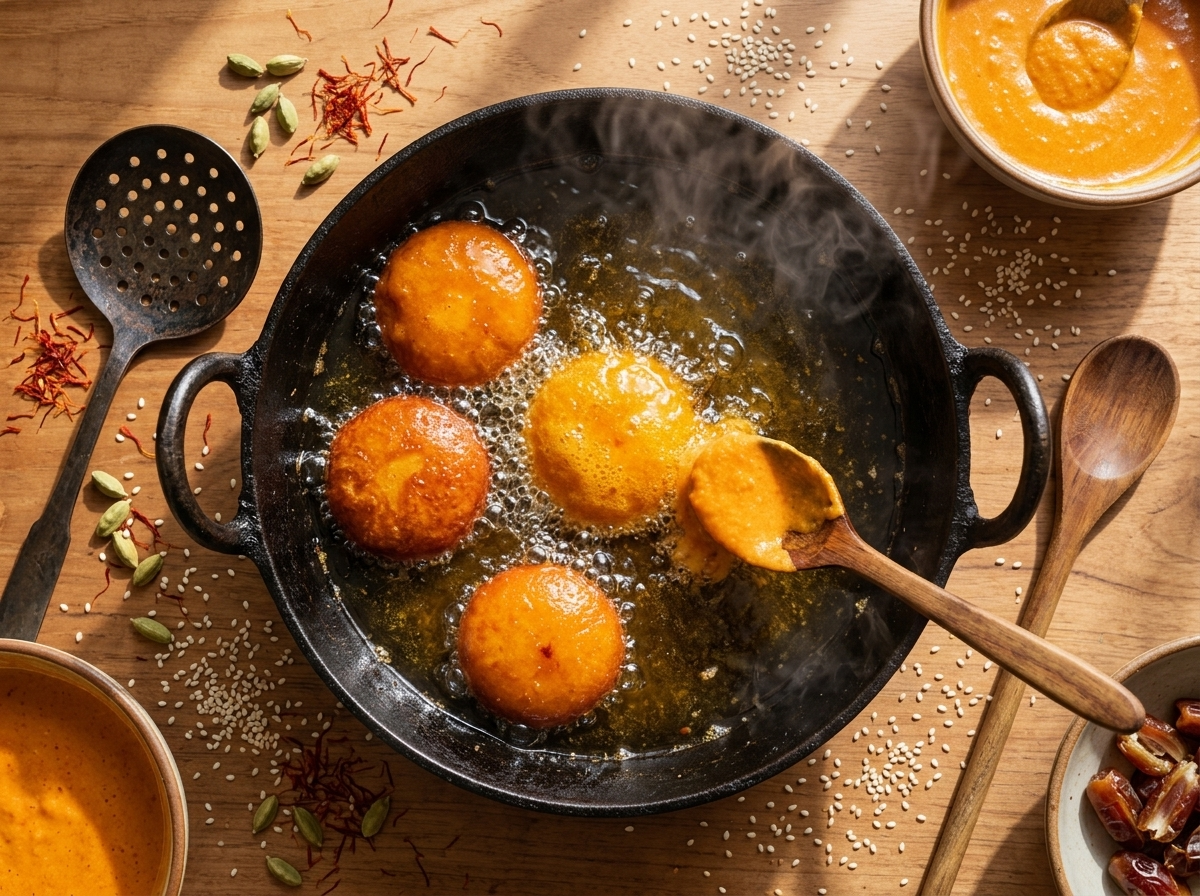
- Heat the oil in a 24 cm / 9.5-inch deep skillet or pot to 175C / 350F, checking with a thermometer.
- Using a spoon, drop rounded tablespoons of batter into the oil in batches of 5 to 6, giving them space to fry evenly without crowding the pot.
- Fry for 3 to 4 minutes per batch, turning occasionally, until deep golden brown all over. Break one open to check the center isn't doughy before continuing.
- Lift the cakes out with a slotted spoon and let excess oil drip off for a few seconds, then drop them directly into the warm syrup.
- Turn the cakes to coat and let them sit in the syrup for 1 to 2 minutes, then lift onto a serving plate.
- Sprinkle with toasted sesame seeds while the syrup is still tacky so they stick. Repeat frying and dipping with the remaining batter, letting the oil return to 175C / 350F between batches.
- Serve warm, or let cool to room temperature.
Notes
- Let the batter rest a full 45 to 60 minutes, a shorter rest gives denser cakes.
- Keep syrup warm on low heat while frying so cakes soak in immediately.
- Don't crowd the pot, 5 to 6 cakes per batch keeps oil temperature steady.
- Toast sesame seeds before garnishing for a nuttier finish.
Tips for Success
- Check oil temperature with a thermometer before the first batch, 175C / 350F is the sweet spot for cooked-through centers.
- Fry in batches of 5 to 6 cakes so the oil temperature doesn’t drop and the cakes brown evenly.
- Break one cake open after the first batch to check the center isn’t doughy before continuing.
- Dip cakes into syrup while they’re still hot, warm cakes absorb syrup faster and more evenly.
- Let the dough rest somewhere warm, near a slightly heated oven or a sunny counter, for a fuller rise.
Variations
- Add 1 tablespoon of toasted sesame seeds directly into the batter for extra crunch throughout.
- Use orange blossom water instead of rosewater for a citrus-forward version of the syrup and batter.
- Shape the batter into small diamonds with a knife instead of dropping spoonfuls, a more traditional Emirati cut.
Storage and Reheating
Khanfaroosh keep well in an airtight container at room temperature for 2 days, or in the fridge for up to 5 days once the syrup has cooled and set slightly.
To reheat, warm them in a 150C / 300F oven for 5 to 6 minutes, uncovered, until the outside softens and the syrup turns glossy again. A microwave works in a pinch, 15 to 20 seconds on medium power.
Avoid stacking them tightly while warm, the syrup coating can stick pieces together before it sets.
Serving Suggestions
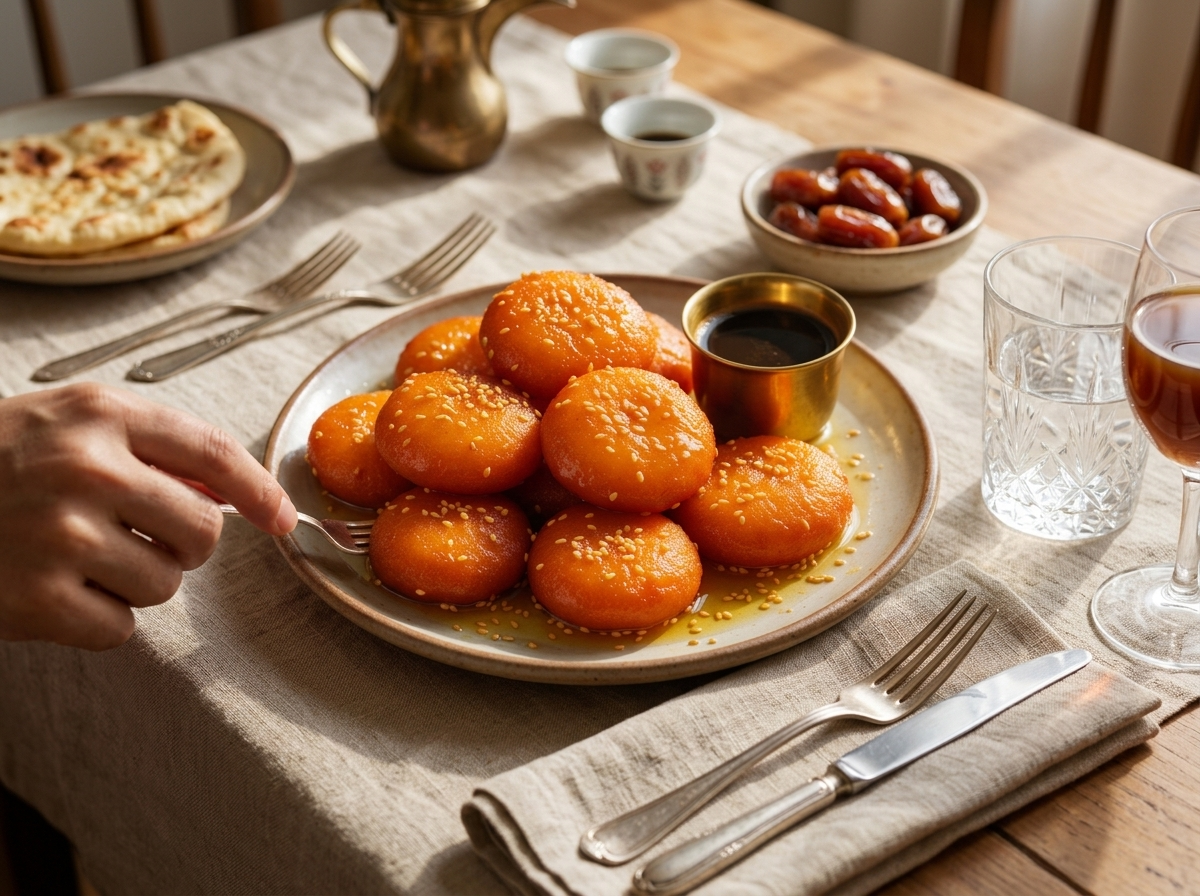
Khanfaroosh are traditionally served alongside Arabic coffee, gahwa, poured strong and unsweetened to balance the syrup. A plate of dates on the side rounds out the same flavors of cardamom and warmth.
For a bigger spread, add these next to other fried sweets like luqaimat and fried Sardinian seadas, or serve them with mint tea for an afternoon gathering.
They’re good warm from the fryer, but I also like them the next morning with coffee, once the syrup has soaked in fully.
FAQ
Why are my khanfaroosh cakes doughy in the middle?
This usually means the oil was too hot, so the outside browned before the inside finished cooking. Keep the oil at 175C / 350F, use a thermometer if you have one, and fry in small batches so the temperature stays steady. Break one open after the first batch to check.
Can I use vanilla extract instead of rosewater in khanfaroosh?
Yes, swap in 1/2 teaspoon vanilla extract for the tablespoon of rosewater if you don’t have it or don’t like the floral note. The cakes will taste more like a spiced saffron doughnut than a traditional Gulf sweet, but the texture stays the same.
Can I make khanfaroosh ahead of time and freeze them?
You can freeze the fried, undipped cakes for up to 2 months in a sealed bag. Thaw at room temperature, then warm them in a 150C / 300F oven for 8 to 10 minutes before dipping in fresh warm syrup and adding sesame seeds.
What goes well with khanfaroosh besides coffee?
Dates, mint tea, or a plate of other fried sweets like luqaimat all pair naturally with khanfaroosh. The syrup is sweet enough that a bitter drink, like unsweetened Arabic coffee, actually balances the whole plate better than another sweet drink would.
Is khanfaroosh gluten free?
No, khanfaroosh is not gluten free since the batter relies on all-purpose flour and semolina for its structure and chewy bite. Swapping in a gluten-free flour blend will change the texture significantly and hasn’t been tested in this recipe.
What’s the difference between khanfaroosh and luqaimat?
Khanfaroosh is a denser, yeasted saffron-cardamom cake dipped in syrup, while luqaimat is a lighter, crisper fried dumpling usually drizzled with date syrup instead of sugar syrup. Both are Emirati fried sweets, but khanfaroosh has more spice in the batter itself.
Related recipes
