
Jump to Recipe
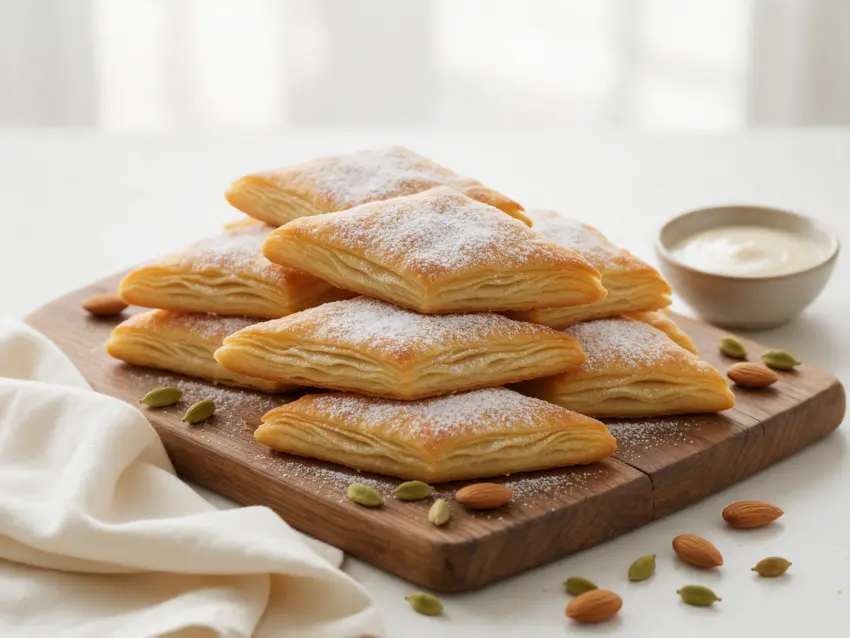
Azerbaijani badambura is a diamond-shaped almond pastry from Baku. Two thin sheets of sour cream dough sandwich a cardamom-scented almond filling, and the tray bakes in 30 minutes.
There’s something about almonds and cardamom baking together that pulls people into the kitchen. Warm and a little floral.
Badambura often sits beside shekerbura and pakhlava on Novruz tables, the spring new year spread in Azerbaijan. Black tea is never far away.
The dough is forgiving. Rub in cold butter, stir in sour cream, chill. Rolling is the only step that asks for patience, and the filling takes five minutes.
Plan on about 2 hours 15 minutes, most of it chilling.
Why You’ll Love This Recipe
- Flaky sour cream dough with no folding or yeast
- The almond filling comes together in one bowl in five minutes
- Baked pastries keep for days and freeze for two months
- Cardamom and almond taste right next to strong black tea
Ingredient Notes
- ground almonds: Blanched almond flour works 1:1. If you grind whole blanched almonds yourself, pulse them with 1 tablespoon of the powdered sugar so they stay sandy and don’t turn oily.
- sour cream: Use full-fat and keep it cold. Low-fat versions carry more water and make a sticky dough. Full-fat Greek yogurt works in a pinch, with a slightly tangier crumb.
- cardamom: Freshly ground seeds from about 10 green pods give you 1/2 teaspoon and a stronger aroma than pre-ground. Pre-ground is fine, just use it fresh.
- unsalted butter: Unsalted lets you control the salt. Keep the dough butter fridge-cold and cut it into small cubes so it rubs in quickly.
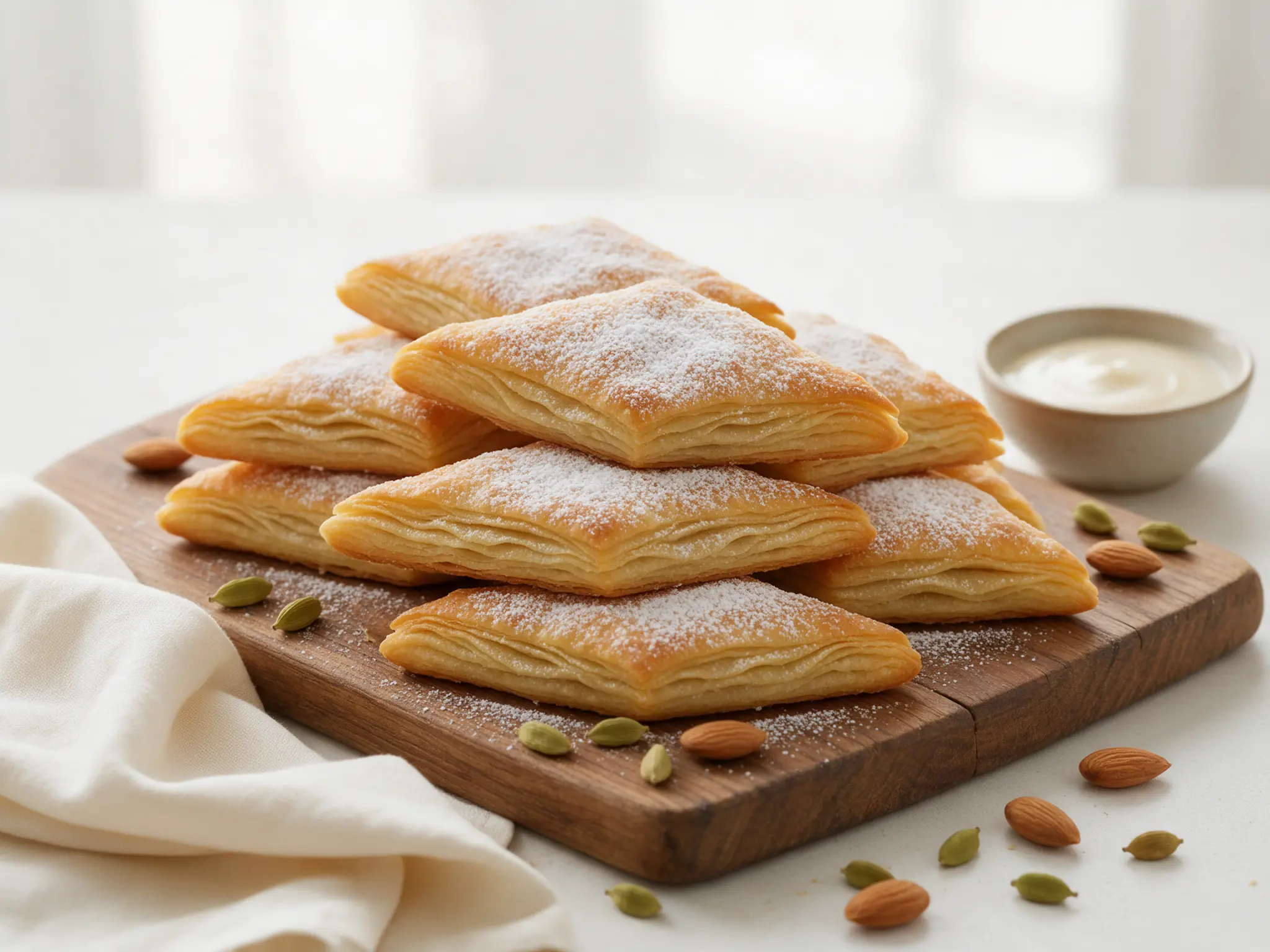
Baked Azerbaijani Badambura: Flaky Almond Pastries
Ingredients
Method
- Whisk the flour and salt in a 3-quart / 3 L bowl. Rub in the cold butter with your fingertips until the mixture looks like coarse crumbs with some pea-size flecks left. Stir in the sour cream and egg yolk, then press everything into a shaggy dough, adding 1 to 2 tablespoons cold water only if it won't come together.
- Divide the dough in two, flatten each half into a rectangle, and wrap tightly. Chill for 60 minutes, until firm.
- While the dough chills, mix the ground almonds, powdered sugar, and cardamom in a bowl. Stir in the melted butter and 2 tablespoons milk until you have a thick paste that holds its shape when pressed. Set aside at room temperature.
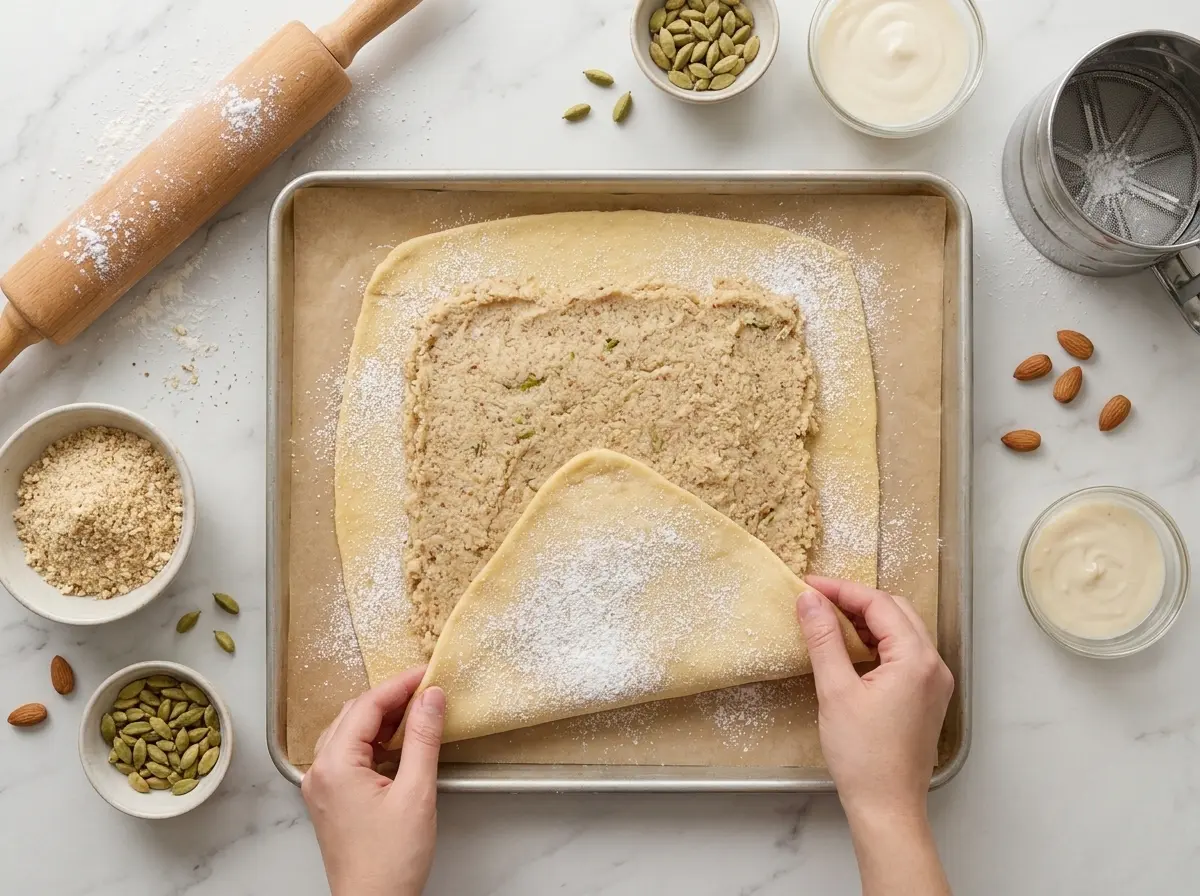
- Heat the oven to 190 C / 375 F and line a sheet pan, 33 x 46 cm / 13 x 18 inch, with parchment. Roll each dough half on its own sheet of parchment into a rectangle about 24 x 30 cm / 9.5 x 12 inch and 4 mm thick. Slide the first sheet, with its parchment, onto the pan.
- Spread the filling evenly over the first sheet, leaving a 1 cm border. Lift the second sheet by its parchment, flip it over the filling, and peel the paper away. Press the outer edges together firmly. Whisk the remaining egg yolk with 1 tablespoon milk and brush it over the top.
- Using a sharp knife, cut the sheet into diamonds about 6 cm wide, trimming the uneven edges first, which gives roughly 16 pieces. Press the cut edges of each diamond together with your fingertips. Open edges let the almond paste leak and scorch on the pan. Pull the diamonds apart by about 1 cm.
- Bake for 28 to 30 minutes, rotating the pan after 15 minutes, until the tops and edges are deep golden.
- Cool the pastries on the pan for 10 minutes. Dust with powdered sugar through a fine-mesh sieve and serve warm or at room temperature.
Notes
- Chill the dough for a full 60 minutes so the butter firms up and rolls cleanly.
- Leave a 1 cm border of dough around the filling so the edges seal.
- Bake until the tops and edges are deep golden, not just pale blond.
- Dust with powdered sugar only after the pastries have cooled for 10 minutes.
- Taste your ground almonds first, since stale nuts give the filling a flat, bitter note.
Tips for Success
- Keep the dough butter cold until it meets the flour, so pea-size flecks remain and the baked pastry flakes instead of turning dense.
- Roll each dough half on its own sheet of parchment, then flip the second sheet onto the filling by lifting the paper.
- Pulse whole blanched almonds in short bursts until sandy, and stop before they clump, or the filling turns oily and heavy.
- Cut with a sharp knife or pizza wheel using one firm downward press per line, rather than dragging, so the layers stay open.
- Rotate the sheet pan halfway through baking, since most home ovens brown the back corners faster than the front.
Variations
- Stir 1 teaspoon of rose water into the filling for a floral note that suits a cup of black tea.
- Add the zest of half an orange to the almond paste for a brighter, slightly citrusy filling.
- Replace 50 g of the almonds with finely ground pistachios for a greener filling with a nuttier edge.
Storage and Reheating
Badambura keeps for 3 to 4 days at room temperature in an airtight tin, with parchment between the layers. Skip the fridge, which makes the pastry firm and dry.
To refresh, warm the pastries on a sheet pan at 160 C / 320 F for 8 minutes. From frozen, give them 12 minutes with no thawing first. Dust with powdered sugar after warming, since sugar added earlier melts into the surface.
Baked, undusted badambura freezes for up to 2 months in an airtight container. You can also make the dough up to 2 days ahead and keep it wrapped in the fridge. Let it sit at room temperature for 15 minutes before rolling.
Serving Suggestions
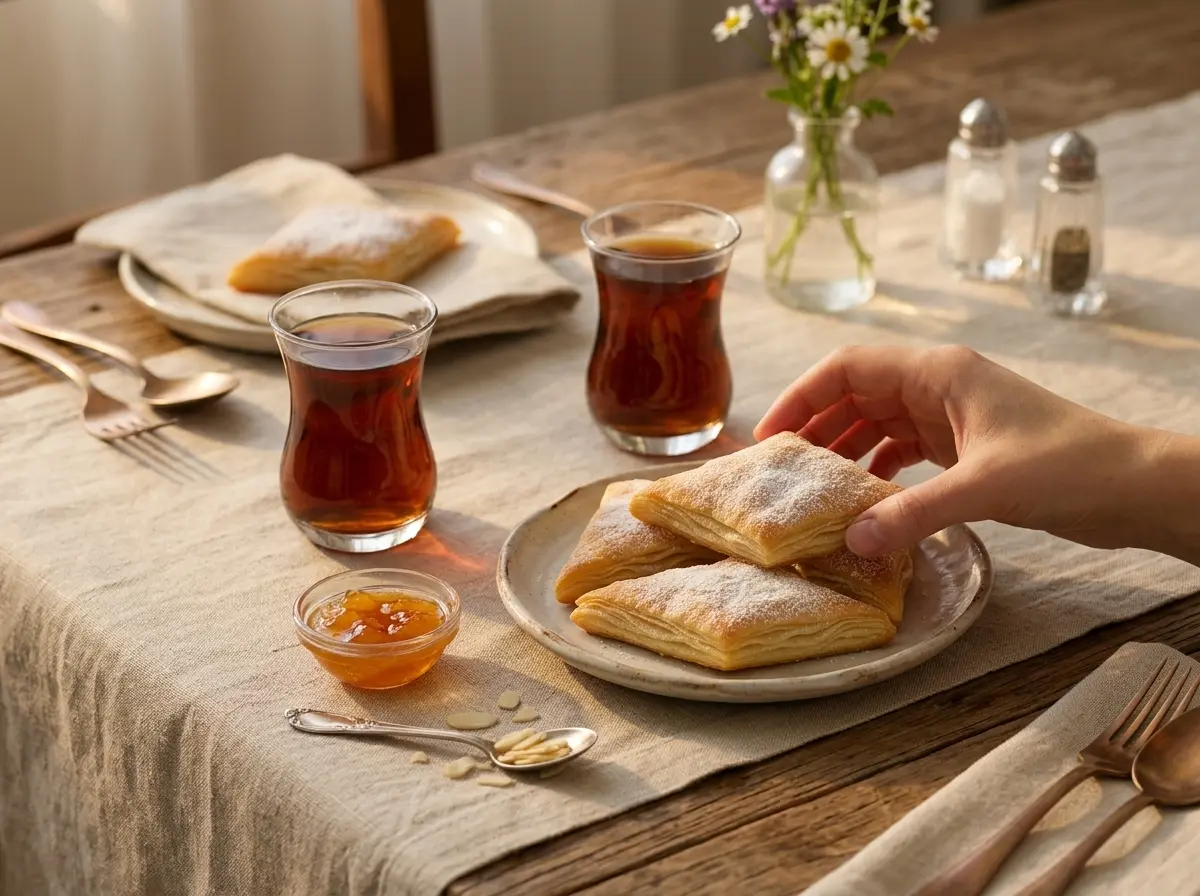
Badambura belongs next to a glass of strong black tea. In Azerbaijan that’s often served in a small pear-shaped armudu glass, with a dish of jam on the side.
For a Novruz-style platter, stack the diamonds beside shekerbura, pakhlava, and dried fruit. Dust the pastries with powdered sugar right before they go to the table.
They’re also good with a cup of Turkish coffee or unsweetened green tea. Both cut the sweetness of the almond filling.
FAQ
Why is my badambura filling leaking out while it bakes?
Leaking usually means the edges weren’t sealed or the filling was too wet. Press the outer border and every cut edge together with your fingertips, and keep the paste 1 cm from the border. The filling should hold a shape like thick marzipan. If it’s runny, stir in 2 tablespoons more ground almonds.
Can I use walnuts or hazelnuts instead of almonds in badambura?
Yes, swap them 1:1 by weight and grind them to the same sandy texture. Walnuts taste slightly bitter, so add 1 extra tablespoon of powdered sugar. Hazelnuts give a sweeter, toastier filling. Strictly, though, badambura is named for badam, the word for almond, so treat these as variations.
Can I freeze badambura, and how do I warm it back up?
Yes, baked badambura freezes for up to 2 months in an airtight container with parchment between layers. Leave it undusted. Warm it from frozen on a sheet pan at 160 C / 320 F for 12 minutes, with no thawing, then dust with powdered sugar just before serving.
What do you serve with Azerbaijani badambura?
Strong black tea is the classic match, served in a small pear-shaped armudu glass with a dish of jam on the side. Turkish coffee or unsweetened green tea also work. All of them balance the sweet cardamom almond filling, which is rich enough that one or two diamonds go a long way.
Is badambura gluten free, and can I make it that way?
No, the dough uses wheat flour, and the pastry also contains dairy, eggs, and almonds. A 1:1 gluten-free flour blend can replace the 300 g of flour. Expect a more fragile dough and a crumblier bite. Roll it between parchment sheets and handle the pieces gently.
What is the difference between badambura and shekerbura?
Shekerbura is a crescent-shaped pastry, usually patterned with decorative tongs and filled with ground nuts and sugar. Badambura is cut into diamonds and filled with almonds specifically. Both are Novruz sweets in Azerbaijan, and you’ll often find them on the same platter next to pakhlava.
More from the kitchen
