
Jump to Recipe
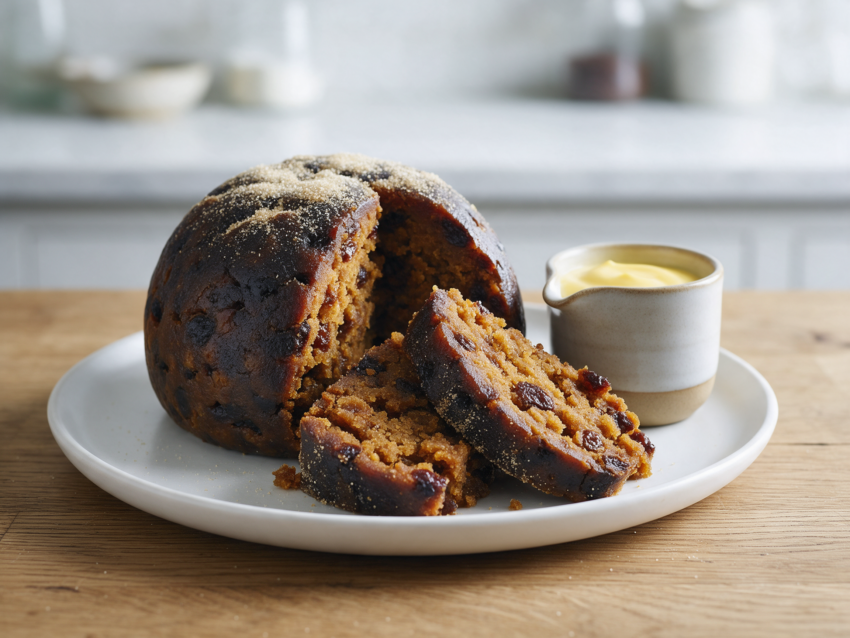
There’s something about a pudding that spends the afternoon wrapped in cloth, rumbling on the back of the stove. A Scottish clootie dumpling is a spiced fruit pudding of flour, suet, sugar and dried fruit, boiled in a floured cloth (the cloot) for 3 hours.
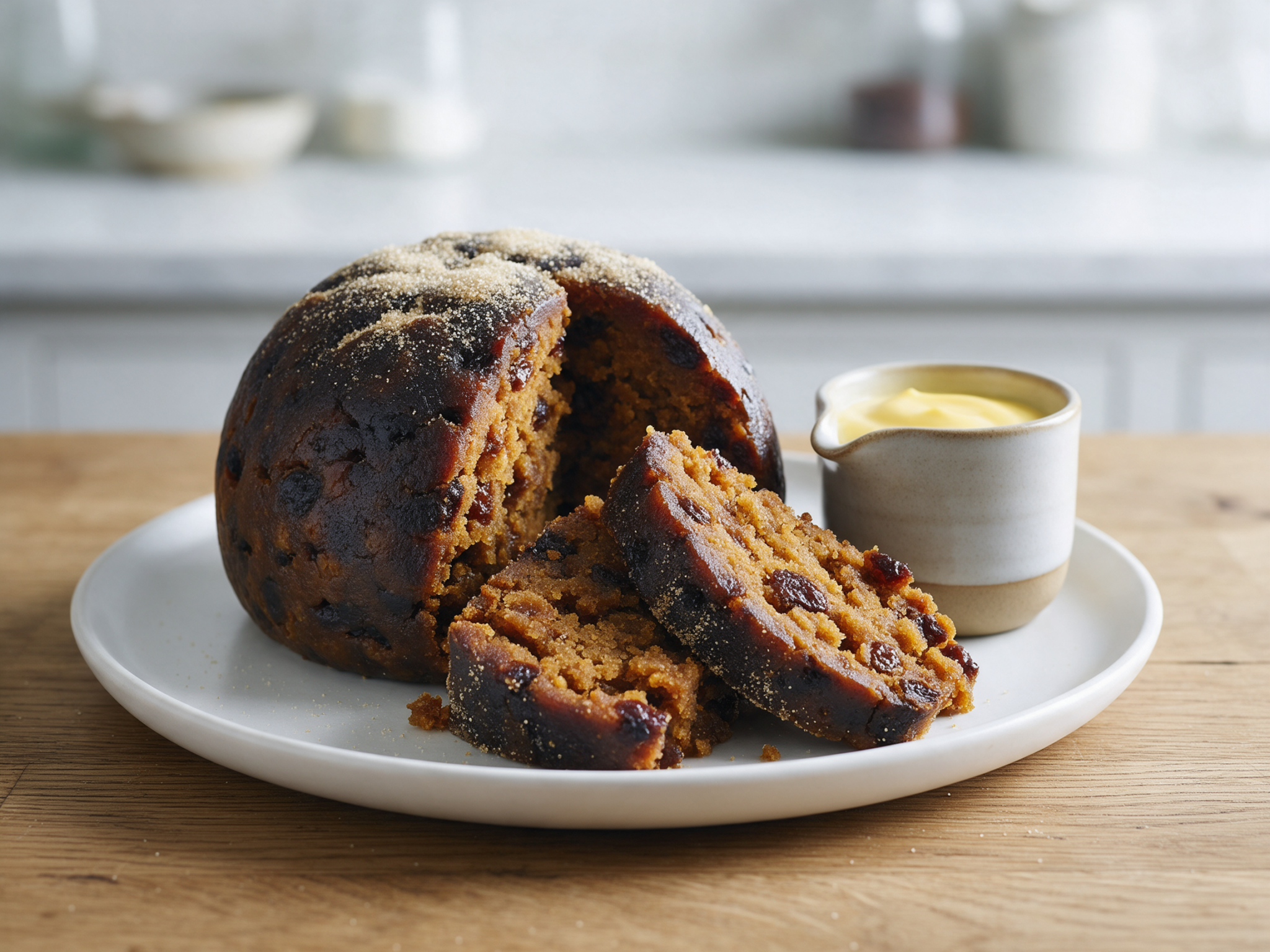
A final 10 minutes in a 150 C / 300 F oven dries the skin until it’s dark and slightly chewy. That skin is what separates it from any other boiled pudding.
I first ate one on a wet weekend in the Highlands. It had been going since lunch. Dense, moist, fragrant with cinnamon and ginger.
You don’t need special skills, just a clean cloth, a deep pot and an afternoon at home. The tips that actually matter are below: the cloth, the saucer, the slack in the string.
Why You’ll Love This Recipe
- Built from pantry staples: flour, suet, dried fruit, spices
- Simmers on its own, with one turn and a few water top-ups
- Slices keep for days and fry well in butter
- Dark, chewy skin you won’t get from a steamed pudding
Ingredient Notes
- suet: Shredded beef suet is traditional. Vegetable suet is the easy swap and keeps the crumb open. Cold grated butter works at 100 g but gives a denser slice.
- mixed dried fruit: I use 100 g sultanas, 75 g currants and 75 g raisins. Any mix totaling 250 g works, but chop large raisins so the slices hold together.
- golden syrup: Black treacle (molasses) gives a darker, slightly bitter note. Use 1 tbsp of either. Maple syrup works in a pinch.
- cotton cloth: Use a clean, plain cotton tea towel or a doubled 60 cm / 24-inch square of muslin. Wash it without fabric softener, which can leave a soapy taste.
- bicarbonate of soda: This is baking soda, not baking powder. It reacts with the syrup and brown sugar to give a little lift to a heavy batter.
Scottish Clootie Dumpling: Boiled in a Cloth, Sliced Warm
Ingredients
Method
- Fill a 24 cm / 9.5-inch, 6-quart / 5.7 L stockpot two-thirds full with water, set a heatproof saucer on the bottom, cover and bring to a boil. Meanwhile, whisk the flour, bicarbonate of soda, cinnamon, ginger, mixed spice and salt in a 28 cm / 11-inch bowl. Stir in the suet, brown sugar and dried fruit, breaking up any clumps with your fingertips.
- Whisk the egg, milk and golden syrup together, pour into the dry mix and stir until you have a soft batter that drops slowly off the spoon. If it feels stiff, add up to 3 tbsp more milk, 1 tbsp at a time.
- Using tongs, dip the cloth into the boiling water for 20 seconds. Lift it out, let it cool for a minute, then wring it out. Lay it flat and rub the 2 tbsp flour and 1 tbsp caster sugar into the middle in a circle about 30 cm / 12 inches wide, until it forms a pasty coating.
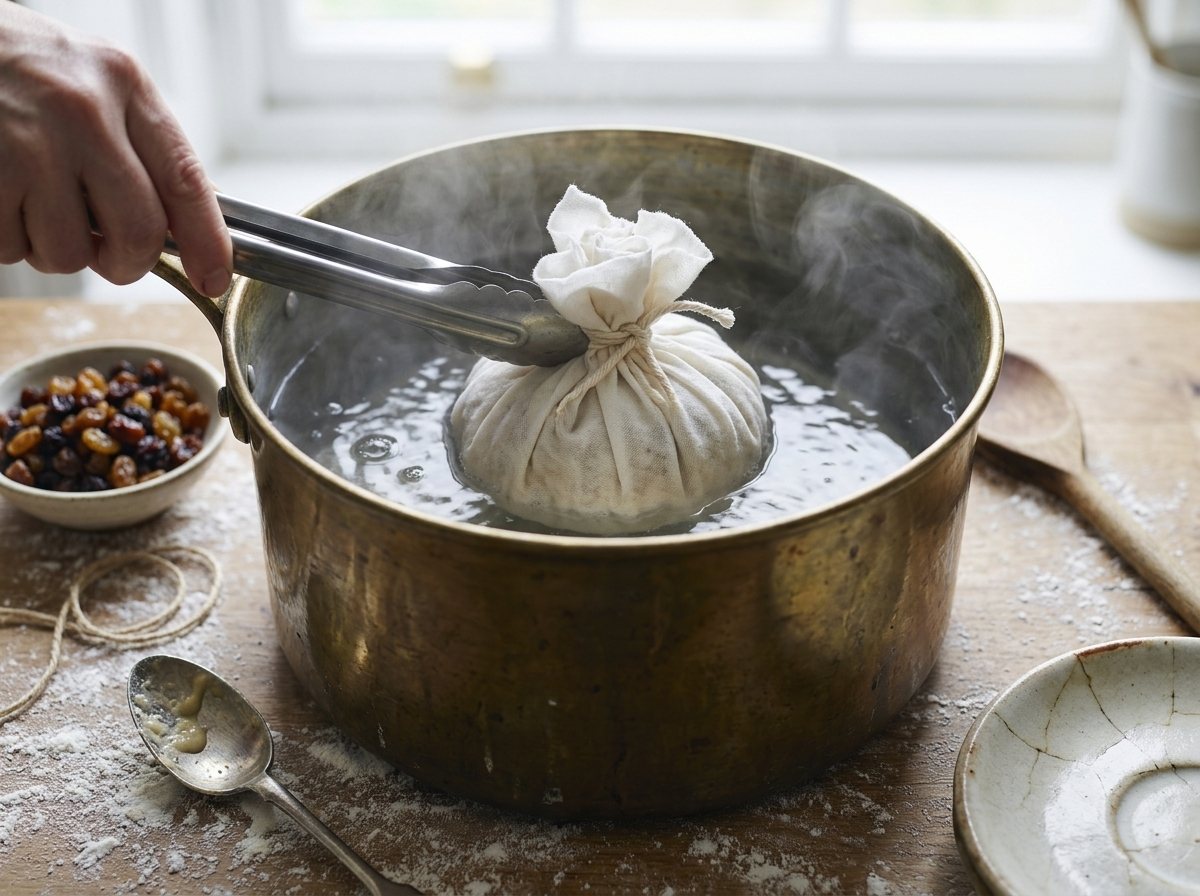
- Spoon the batter into the center of the cloth and gather the corners up. Tie it with kitchen string, leaving about 5 cm / 2 inches of slack above the batter so the dumpling can swell by a third. Tied too tightly, it cooks dense and gummy in the middle.
- Lower the bundle onto the saucer with the knot facing up, so the water comes at least two-thirds of the way up the dumpling. Cover, reduce to a gentle simmer and cook for 3 hours, turning the bundle over at the 90-minute mark and topping up with boiling water from a kettle whenever the level drops. Heat the oven to 150 C / 300 F about 15 minutes before the time is up.
- Lift the bundle out with tongs, dunk it in a bowl of cold water for 3 seconds to loosen the cloth, then set it on a 26 cm / 10-inch ovenproof plate. Cut the string, peel the cloth away and bake for 10 minutes, until the skin looks dry and dark and feels slightly chewy rather than tacky.
- Rest the dumpling on the plate for 10 minutes. Slice it into 8 wedges with a serrated knife and serve warm.
Notes
- Dip the cloth in boiling water first so the flour and sugar dusting turns into a skin.
- Leave 5 cm / 2 inches of slack in the cloth so the dumpling can swell.
- Top up with boiling water from the kettle so the simmer never stops.
- Dry the unwrapped dumpling for 10 minutes at 150 C / 300 F until the skin is dark.
Tips for Success
- Wash the cloth in hot water with no detergent or fabric softener, since residue can taint the flavor of the skin.
- Rub the flour and sugar into the damp cloth in a circle wider than the batter so the skin forms evenly.
- Keep the water at a gentle simmer with small bubbles, and top it up with boiling water from a kettle, never cold.
- Set a heatproof saucer under the dumpling so the cloth never touches the hot base of the pot and scorches.
- Rest the dumpling for 10 minutes before slicing, because hot slices smear and crumble under the knife.
Variations
- Swap 100 g of the flour for fine oatmeal for a nuttier, more traditional Scottish texture.
- Grate 1 small apple into the batter and cut the milk by 2 tbsp for a moister crumb.
- Soak the dried fruit in hot black tea for 30 minutes, drain well, then fold it in for plumper fruit.
Storage and Reheating
Clootie dumpling keeps for 5 to 7 days in the fridge, wrapped in parchment and then foil. Let it cool fully first so the skin doesn’t sweat.
Reheat a slice in the microwave for 30 to 40 seconds, or fry it in 1 tsp butter in a 20 cm / 8-inch nonstick skillet for 2 minutes per side until the edges crisp. A whole dumpling wrapped in foil goes back into a 150 C / 300 F oven for 30 minutes.
Freeze individually wrapped slices for up to 3 months and thaw them overnight in the fridge. For make-ahead, boil and dry the dumpling a day early, keep it wrapped, and warm it before serving.
Serving Suggestions
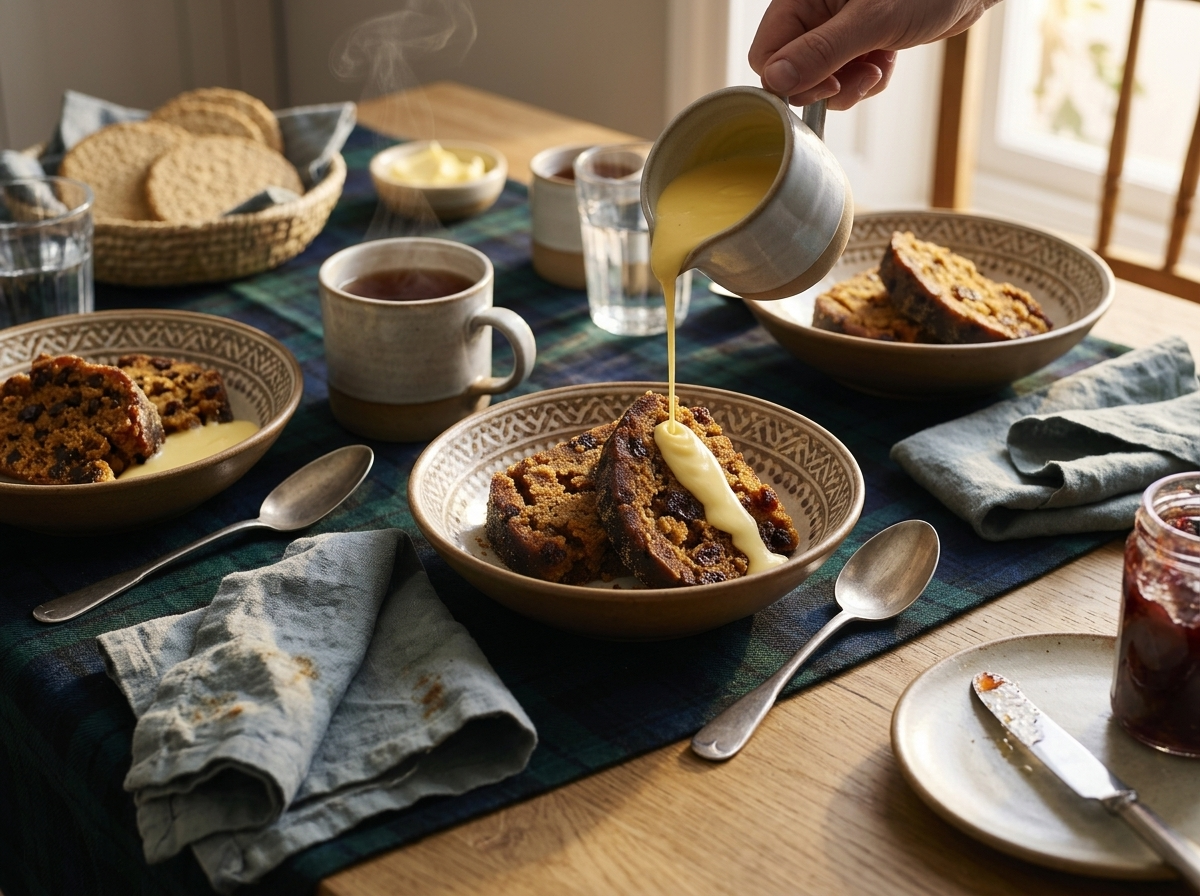
Clootie dumpling is best served warm with hot custard poured over the slice. Single cream or vanilla ice cream also works.
A fried slice is a traditional part of a Scottish cooked breakfast, alongside bacon and eggs.
I also like a cold slice with strong tea in the afternoon. The spices come through more once it’s chilled.
FAQ
Why is my clootie dumpling skin sticky instead of dark and chewy?
A sticky skin means the cloth wasn’t dusted enough or the dumpling skipped the oven. Rub 2 tbsp flour and 1 tbsp caster sugar into the damp cloth before filling it. Then dry the unwrapped dumpling at 150 C / 300 F for 10 minutes, until the skin looks dark and feels slightly chewy rather than tacky.
Can I use butter instead of suet in a clootie dumpling?
Yes, use 100 g of very cold grated butter in place of the suet. The crumb comes out a little denser and richer, and the flavor is less traditional. Vegetable suet is the closer swap and keeps the same open texture, so it’s the one I reach for.
Does clootie dumpling freeze well, and how do I reheat a slice?
Yes. Wrap each slice in baking parchment and then foil, and freeze for up to 3 months. Thaw overnight in the fridge, then warm a slice in the microwave for 30 to 40 seconds or fry it in butter for 2 minutes per side until the edges crisp.
What goes well with Scottish clootie dumpling?
Hot custard is the classic partner, poured over a warm slice. Single cream or vanilla ice cream also works. A fried slice is a traditional part of a Scottish cooked breakfast, served next to bacon and eggs, so leftovers have a second life the next morning.
Can I make clootie dumpling dairy free?
Yes. Swap the 150 ml whole milk for oat or soy milk, since both beef and vegetable suet are already dairy free. The egg stays, so the dumpling isn’t vegan, and the batter behaves the same. Check the labels on your suet and dried fruit if you avoid other allergens.
What’s the difference between clootie dumpling and Christmas pudding?
A clootie dumpling is boiled in a floured cloth and dried in the oven, which gives it a dark, chewy skin. Christmas pudding is steamed in a basin. Clootie has lighter spicing, no alcohol and less fruit, so it’s eaten year-round, while Christmas pudding is darker, wetter and usually matured for weeks.
Related recipes
