
Jump to Recipe
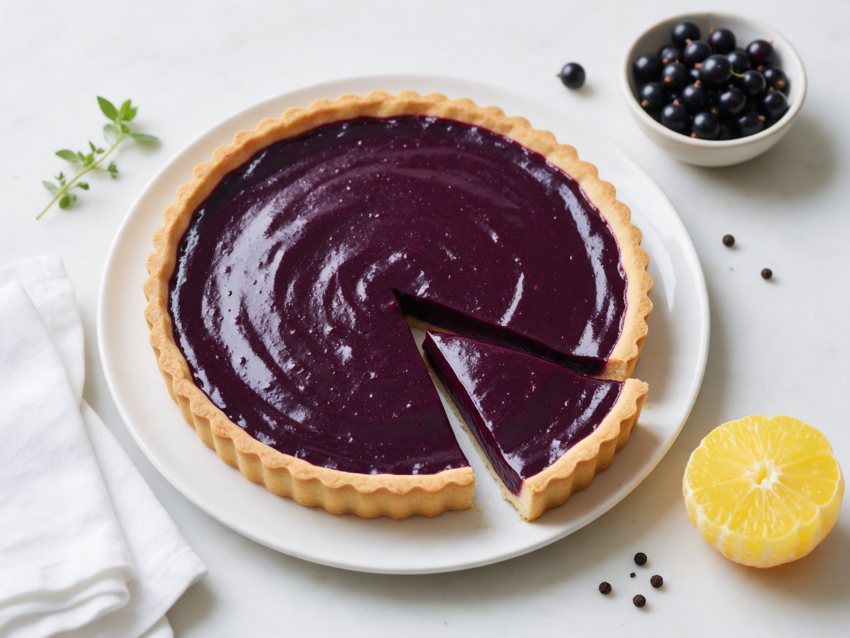
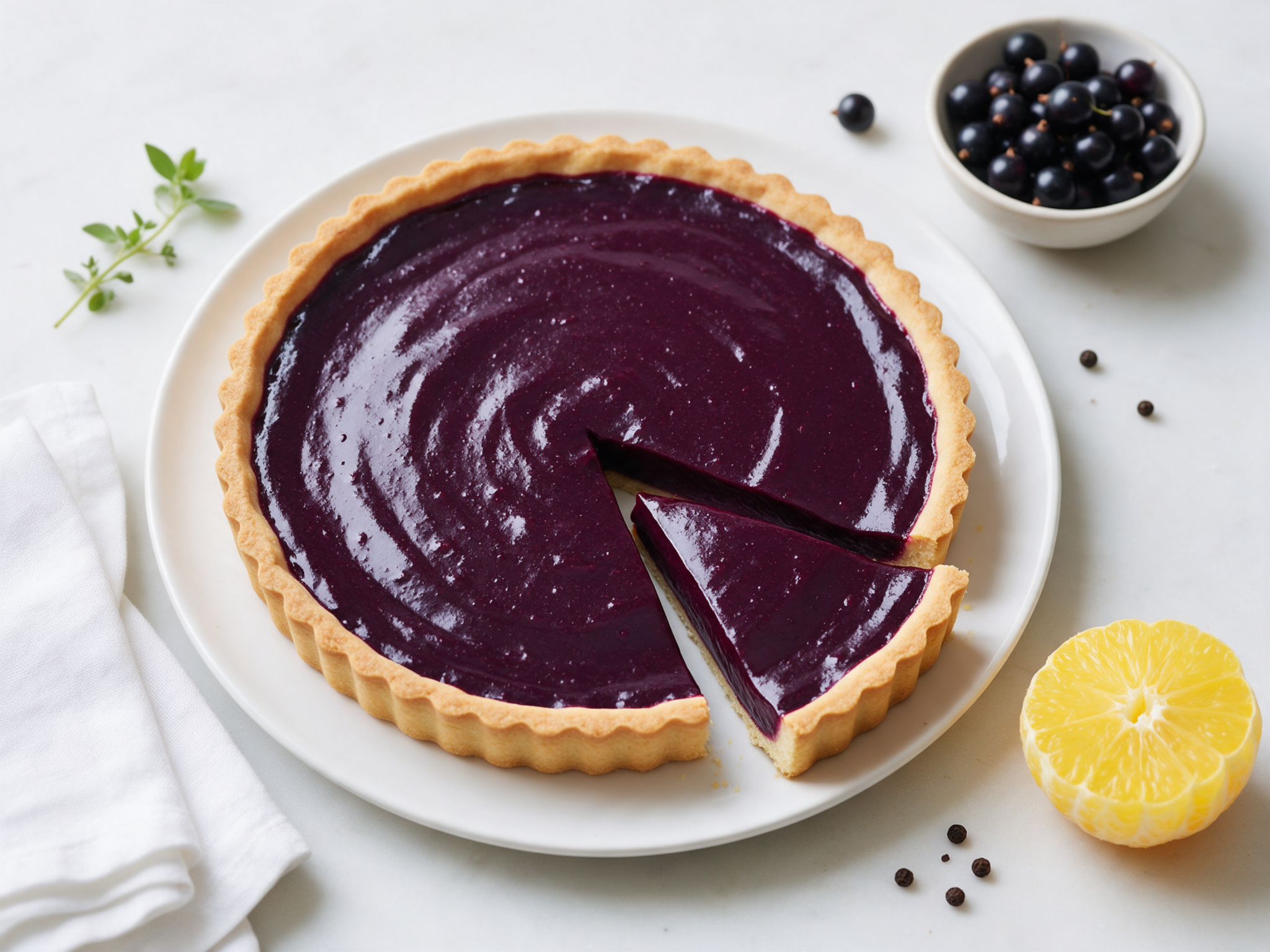
This black currant curd tart is a buttery shortbread shell filled with deep purple, tart-sweet curd that slices cleanly after 3 hours in the fridge. You’ll spend about 48 minutes on it, then let the fridge do the rest.
There’s something about that color. Dark magenta, almost wine-like, against a pale golden crust.
I first cooked with black currants from a friend’s garden. They’re sharp and a little musky, nothing like the blueberries in a baked Finnish blueberry pie. Simmered with sugar and pushed through a sieve, they turn smooth and bright.
The crust is a press-in dough, so there’s no rolling and no pie weights. Frozen berries work straight from the freezer, which means you can make this in January.
Why You’ll Love This Recipe
- Press-in crust needs no rolling pin or pie weights
- Curd sets firm enough to slice cleanly after 3 hours
- Crust and curd both work a day or two ahead
- Frozen black currants work straight from the freezer
Ingredient Notes
- black currants: Fresh or frozen both work, and frozen berries go straight into the pan without thawing. Blackberries are the closest substitute, with an extra tablespoon of lemon juice.
- cornstarch: It’s what makes the curd hold a clean slice. Flour would leave a pasty taste and a cloudy color, so I don’t swap it.
- unsalted butter: Keep it cold for the crust so the dough turns sandy, not greasy. The curd butter should also be cold and cubed so it melts in slowly and the curd stays glossy.
- egg yolks: Yolks give the curd its body and rich color. Save the whites for an omelet or freeze them for meringue.
- powdered sugar: It dissolves fully into the dough, which keeps the shortbread tender with a fine crumb. Granulated sugar makes a grainier, crunchier crust.
Silky Black Currant Curd Tart with Shortbread Crust
Ingredients
Method
- Whisk the flour, powdered sugar and 1/4 tsp salt in a large bowl. Rub in the cold butter with your fingertips until the mix looks like damp sand with a few pea-size pieces. Stir in the egg yolk and vanilla, then squeeze the dough together. If it stays crumbly, add 1 tsp cold water.
- Press the dough evenly over the base and up the sides of a 23 cm / 9-inch tart tin with a removable bottom, about 4 mm thick. Prick the base with a fork. Freeze for 15 minutes while the oven heats to 175 C / 350 F.
- Set the frozen shell on a 33 x 46 cm / 13 x 18 inch sheet pan and bake for 22 minutes, until the edges are deep golden and the base is pale gold. Leave it in the tin on a rack. Start the curd in the next step while it bakes.
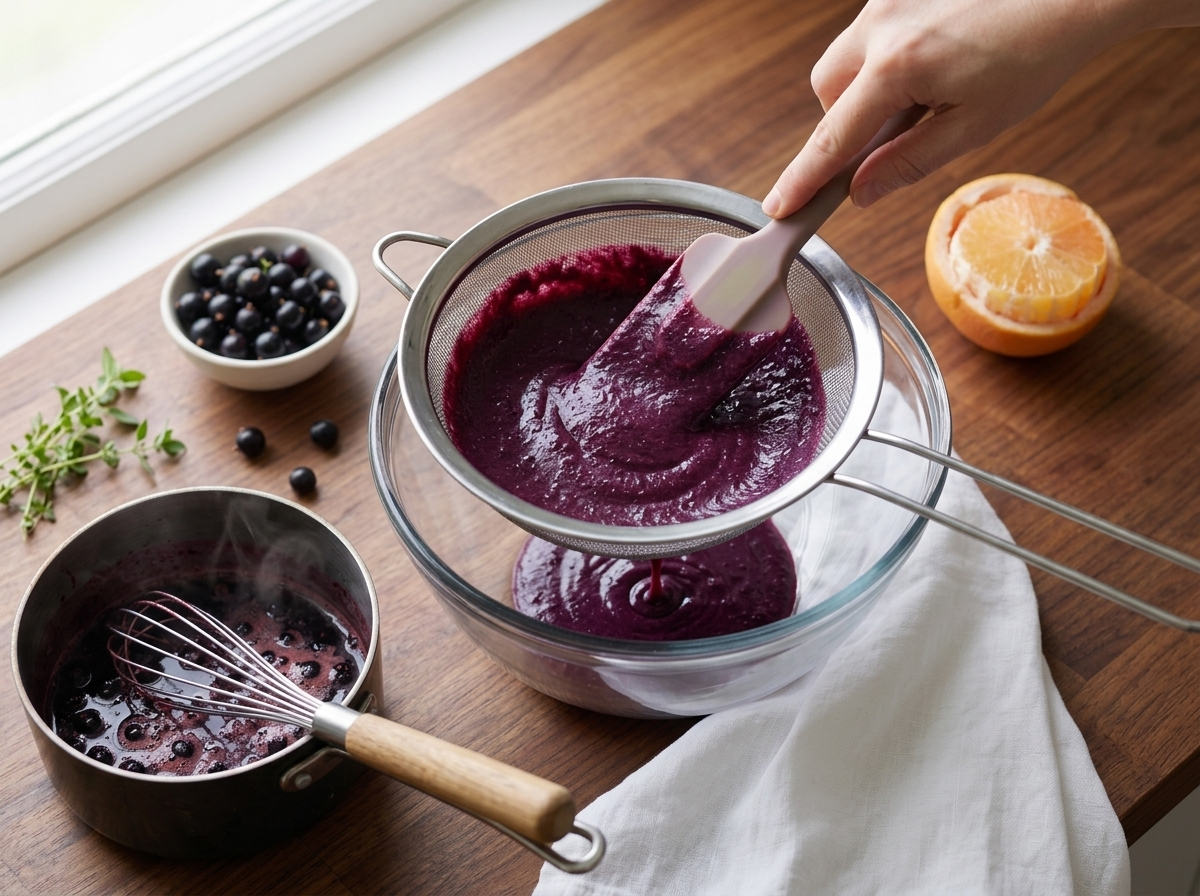
- Combine the currants, water and 130 g of the sugar in a 3-quart / 2.8 L heavy-bottomed saucepan. Simmer over medium heat for 8 to 10 minutes, stirring often, until the berries burst and the juices turn syrupy. Blend until smooth, then press through a fine-mesh sieve into a bowl, scraping the underside of the sieve. You should have roughly 300 ml of purée. Discard the skins and seeds.
- Rinse and dry the saucepan. Whisk the eggs, egg yolks, remaining 60 g sugar, cornstarch, pinch of salt and lemon juice in it until smooth. Slowly whisk in the warm purée.
- Cook over medium-low heat, whisking constantly and scraping the corners, for 6 to 8 minutes. The curd is done when it's thick like pudding and a few slow bubbles break the surface. Keep whisking for 1 more minute after the first bubbles. If the edges start to set into lumps, lift the pan off the heat right away, whisk hard, and strain the curd through the sieve.
- Off the heat, whisk in the cold butter a few cubes at a time until the curd turns glossy. Pour it into the baked shell, which will have cooled a few minutes in its tin, and smooth the top.
- Press plastic wrap directly onto the curd and refrigerate for 3 hours, until fully set. Push up the tart tin base to unmold, slide the tart onto a plate, and slice with a hot, damp knife wiped between cuts.
Notes
- Use a tart tin with a removable bottom so unmolding doesn't crack the crust.
- Weigh the currants, since cup measures vary a lot with frozen berries.
- Press the dough to an even 4 mm thickness, especially in the corners.
- Chill a full 3 hours before slicing or the center will slump.
- Taste the strained purée before adding the eggs and stir in 1 more tablespoon of sugar if it's too sharp.
Tips for Success
- Freeze the pressed crust for 15 minutes before baking so the sides hold their shape and don’t slump in the oven.
- Press the purée through the sieve with the back of a ladle and scrape the underside, where the thickest pulp collects.
- Whisk constantly and reach into the pan corners, where the curd sets first and can scorch.
- Press plastic wrap directly onto the curd while it chills so no skin forms on top.
- Wipe the knife with a hot, damp cloth between cuts to get clean slices with sharp edges.
Variations
- Replace 30 g of the flour with unsweetened cocoa for a chocolate shortbread crust that pairs well with the tart berry.
- Whisk 2 tablespoons of crème de cassis into the finished curd, after the butter, for a deeper, boozier berry flavor.
- Make six individual tartlets in 10 cm / 4-inch tins, baking the shells for 15 minutes and chilling the filled tartlets for 2 hours.
Storage and Reheating
Black currant curd tart keeps in the fridge for up to 4 days, loosely covered. The crust is crispest in the first 2 days, then softens slightly as moisture from the curd moves in.
Serve it cold. This tart isn’t reheated, because warming loosens the curd and turns the buttery crust greasy. Take it out of the fridge 10 minutes before slicing to take the hard chill off.
For make-ahead, bake the shell up to 2 days early and keep it airtight at room temperature. The curd keeps 5 days in a jar in the fridge, or freezes for up to 3 months. Whisk cold curd smooth, spoon it into the shell, and chill for 1 hour. Don’t freeze the filled tart.
Serving Suggestions
Cut the tart into 8 slices with a knife dipped in hot water and wiped dry between cuts. Serve straight from the fridge, with the center still cool and firm.
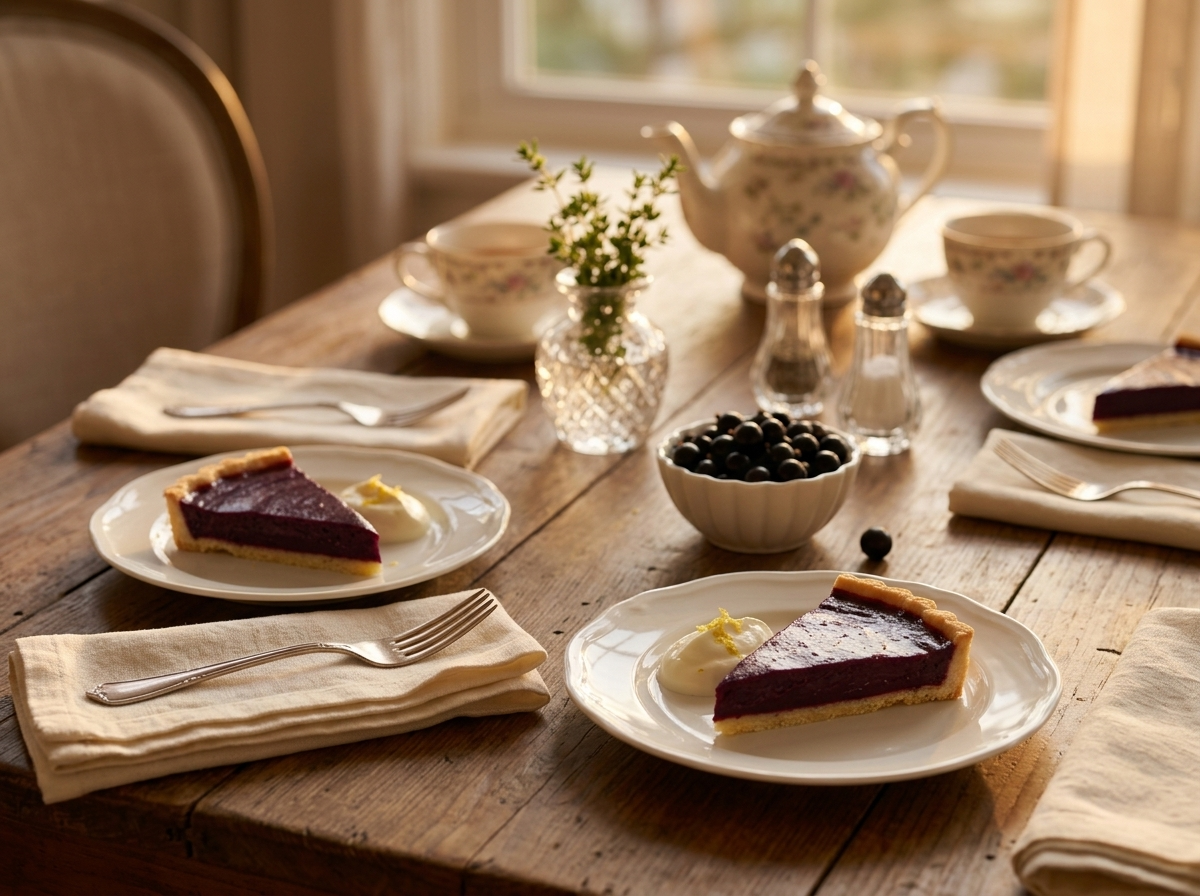
A spoonful of crème fraîche or lightly whipped cream on the side balances the tart curd. A few fresh currants or a light dusting of powdered sugar on top finishes it.
It works at afternoon tea next to a pot of Earl Grey, or after a roast dinner with a small glass of chilled dessert wine.
FAQ
How do I know when black currant curd is thick enough?
The curd is ready when it holds a clear line on the back of a spoon and a few slow bubbles break the surface, usually 6 to 8 minutes over medium-low heat. Keep whisking for 1 minute after the first bubbles, because the cornstarch needs that to set. Curd that never bubbles stays runny after chilling.
Can I use blackberries instead of black currants in the curd tart?
Yes, use 300 g blackberries and keep the rest the same. They’re less tart, so add an extra tablespoon of lemon juice. Blackberry seeds are larger, so strain just as firmly. The color comes out a little browner than the deep purple of black currants.
Can I freeze black currant curd or the finished tart?
Freeze the curd in a jar for up to 3 months, then thaw it overnight in the fridge and whisk smooth. Don’t freeze the filled tart, since the curd weeps and the shortbread turns soft as it thaws. The unfilled baked shell freezes well for 1 month, wrapped airtight.
Does black currant curd tart go better with whipped cream or crème fraîche?
Crème fraîche gives the cleanest contrast, because its tang sits next to the sweet curd and buttery crust without competing. Lightly sweetened whipped cream makes each slice milder and softer. Use about 2 tablespoons per slice either way, spooned on right before serving so it doesn’t weep onto the curd.
Is black currant curd tart gluten free?
No, the shortbread crust uses wheat flour. For a gluten-free version, swap in a 1:1 gluten-free baking flour blend and add 1 to 2 teaspoons of cold water if the dough looks sandy and won’t hold. The curd is already gluten free, since it uses cornstarch instead of flour.
What’s the difference between black currant curd and lemon curd?
Black currant curd is built on cooked, strained fruit purée, while lemon curd uses raw juice and zest. This version adds cornstarch so it holds a clean slice inside a tart shell. Classic lemon curd is looser, meant for spooning onto scones or toast.
You might also like
