
Jump to Recipe
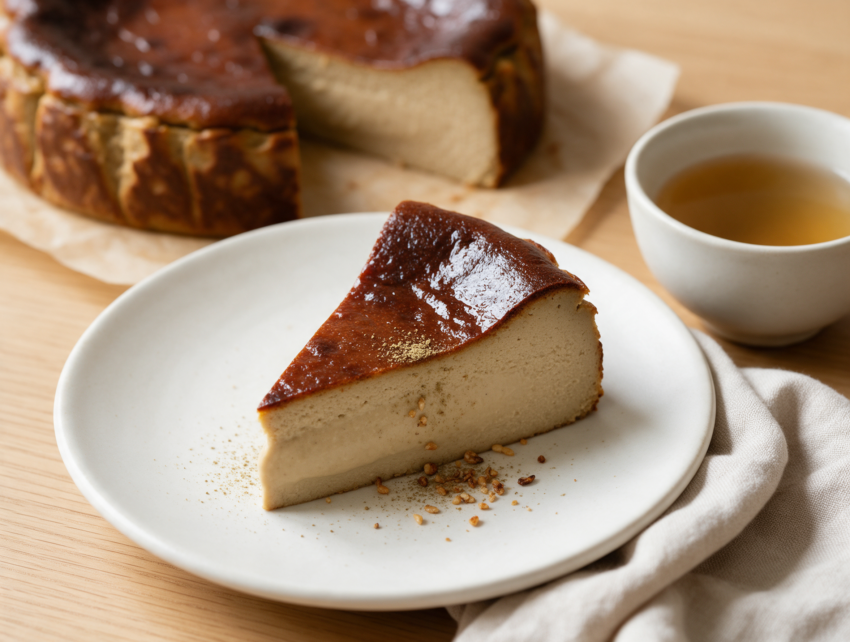
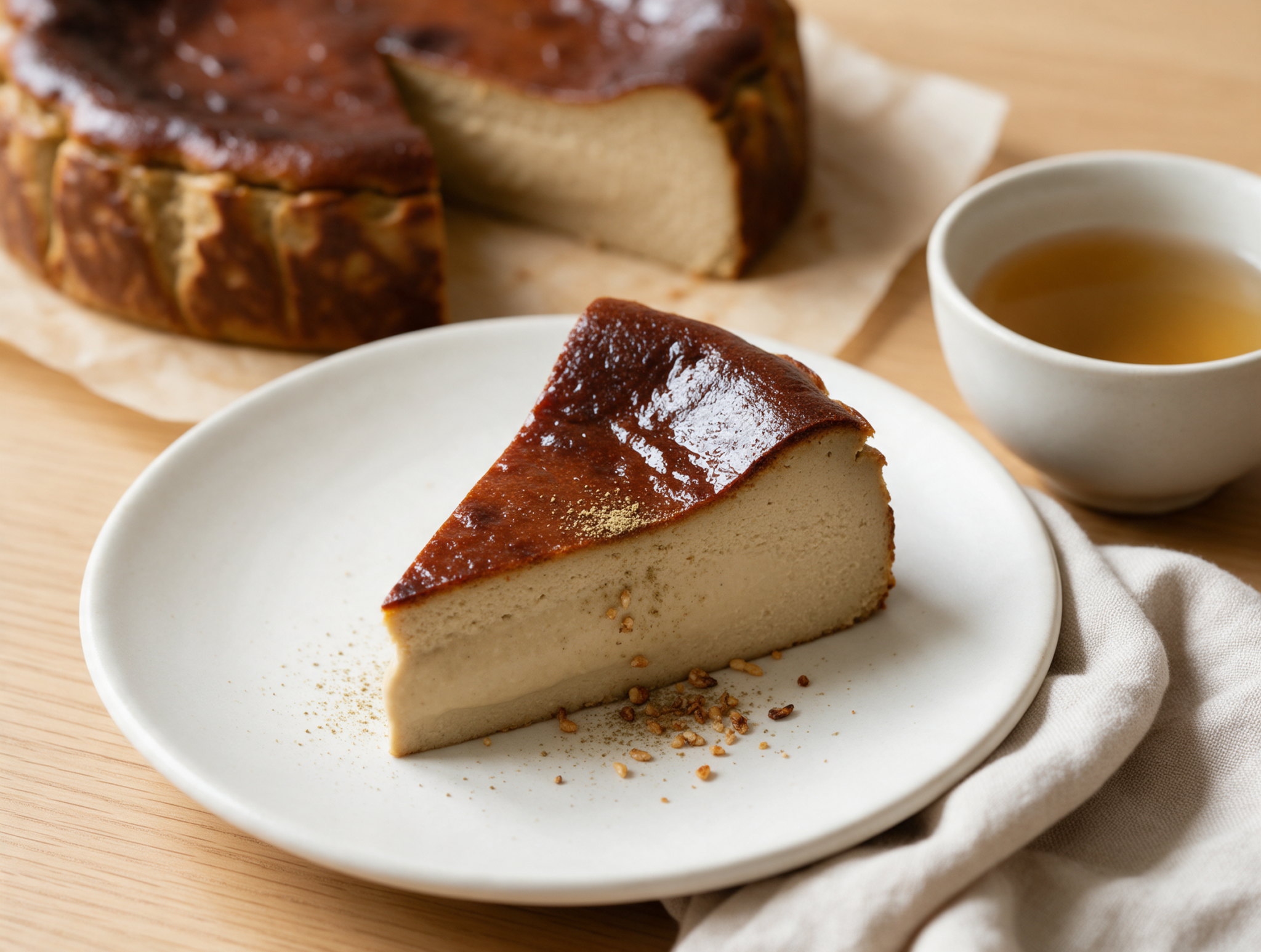
Hojicha burnt cheesecake is a crustless, Basque-style cheesecake flavored with roasted green tea powder. You bake it at 230 C / 445 F for 35 minutes, until the top is dark mahogany and the middle still wobbles.
There’s something about hojicha that suits a scorched top. The tea is already roasted, so it tastes toasty, a little like caramel and a little like cocoa. The burnt surface echoes that instead of fighting it.
I fell for hojicha on a rainy afternoon in Kyoto, one small cup after another. This cake is how I bring that smell home.
One mistake matters here. Don’t wait for the center to look set. Pull the cake while the middle still jiggles like gelatin, because it firms up as it cools. Bake it until it’s solid and you get a dry, crumbly slice.
Why You’ll Love This Recipe
- No crust and no water bath to manage
- One bowl and about 20 minutes of hands-on work
- Toasty tea flavor that isn’t bitter like matcha
- Tastes better after a night in the fridge
Ingredient Notes
- Hojicha powder: Look for finely ground roasted green tea powder sold for baking and lattes. If you only have loose leaves, grind them in a spice grinder and sift out the coarse bits.
- Cream cheese: Use full-fat block cream cheese, not the spreadable tub kind, which has more water and sets softer. Cut it into 2 cm cubes so it softens faster.
- Heavy cream: Choose cream with at least 35% fat. Whole milk makes the center runny, and half-and-half is too thin to give the custardy texture.
- All-purpose flour: Two tablespoons just stabilize the batter. Swap in the same weight of cornstarch to make the cake gluten-free.
Hojicha Burnt Cheesecake with Toasty Caramelized Top
Ingredients
Method
- Heat the oven to 230 C / 445 F with a rack in the middle. While it heats, cut the cream cheese into 2 cm cubes and leave them on the counter to soften. If your eggs are cold, set them in a bowl of warm tap water for 5 minutes.
- Crumple two 35 cm / 14-inch squares of parchment, then smooth them out and press them crisscrossed into a 20 cm / 8-inch springform pan. The paper should stand about 5 cm above the rim.
- Beat the cream cheese and sugar in a 3-quart / 2.8 L bowl with a hand mixer on medium speed for about 2 minutes, until smooth with no visible lumps. Scrape down the bowl halfway through.
- Sift the hojicha powder, flour and salt over the bowl. Mix on low speed for about 30 seconds, until no dry streaks remain.
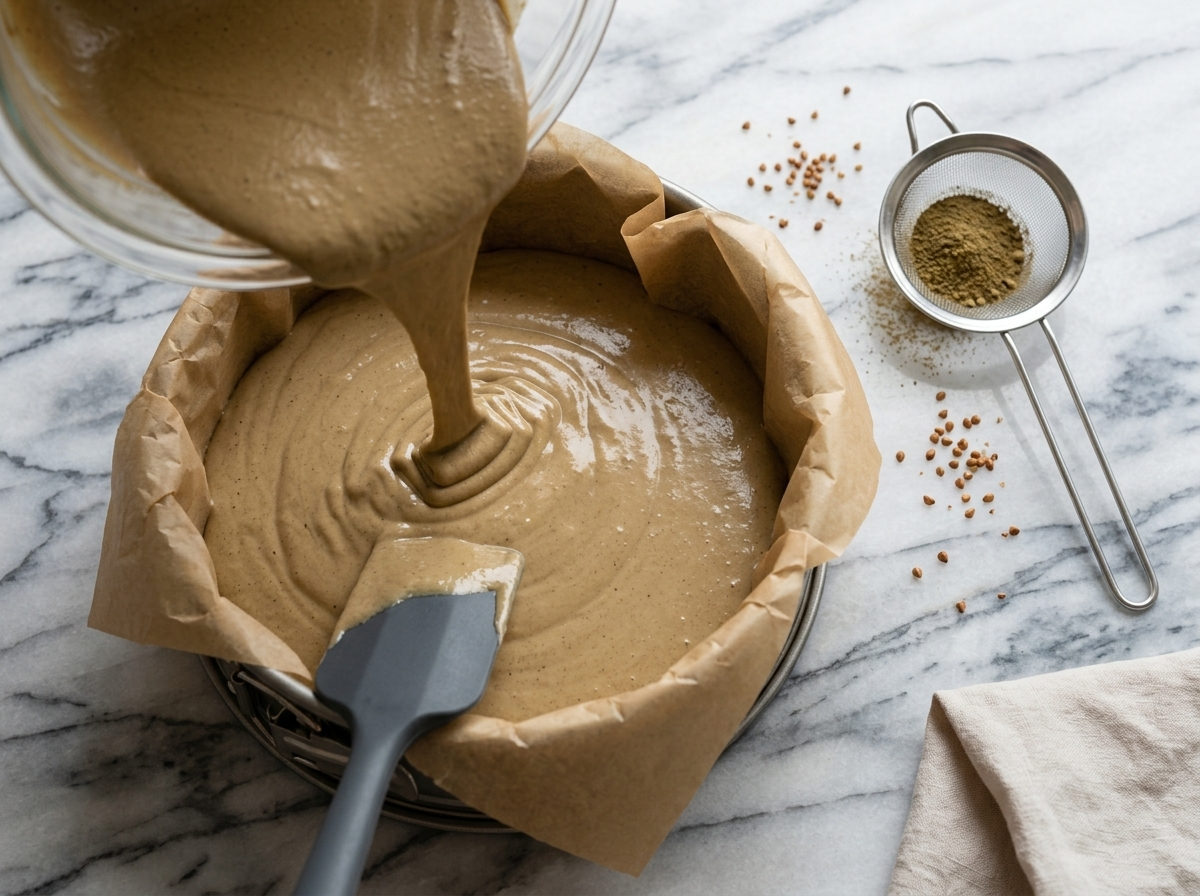
- Add the eggs one at a time, mixing on low for 20 seconds after each. Pour in the cream and vanilla and mix just until the batter is smooth and pourable, like a thick milkshake.
- Pour the batter into the lined pan and tap it on the counter twice to release air bubbles. Bake for 35 minutes, until the top is deep brown with dark patches, the edges are puffed and set, and the center jiggles like gelatin when you nudge the pan.
- Cool the cake in the pan on a rack for 60 minutes. It will sink in the middle as it cools. Remove the ring, peel back the parchment and serve slightly warm, or chill for 4 hours for firmer slices.
Notes
- Use a 20 cm / 8-inch springform pan so the batter bakes to the right depth.
- Mix on low speed after adding the eggs to avoid trapped air.
- Pull the cake while the center still jiggles. It finishes setting as it cools.
- Cool in the pan for 60 minutes before removing the ring and peeling off the parchment.
Tips for Success
- Beat the cream cheese and sugar until completely smooth before adding anything else, because lumps won’t melt out in the oven.
- Mix on low speed once the eggs go in, so you don’t whip in air that makes the cake puff high and crater hard.
- Crumple two sheets of parchment before pressing them into the pan, and let the paper stand 5 cm above the rim to catch the rise.
- Check your oven with a standalone thermometer, since an oven running 15 C cool gives a pale top instead of a dark one.
- Pull the cake when the center jiggles like set gelatin, then leave it in the pan to finish setting for the full cooling time.
Variations
- Replace 2 tablespoons of the white sugar with dark brown sugar for a deeper molasses note that pairs well with the roasted tea.
- Use 16 g of cornstarch in place of the flour for a gluten-free cake that sets just as softly.
- Top slices with lightly sweetened whipped cream and a pinch of hojicha powder for a cooler contrast to the dark top.
Storage and Reheating
Hojicha burnt cheesecake keeps for 3 to 4 days in the fridge, covered with foil or in an airtight container. The tea flavor deepens overnight and the texture settles into a denser custard.
Don’t reheat it. The cake is best slightly warm from the first 60-minute cool, or cold from the fridge, and the oven or microwave dries the edges and can split the custard. Take chilled slices out 20 to 30 minutes before serving so they soften. Don’t leave the cake out for more than 2 hours.
To freeze, chill the cake fully, cut it into slices and wrap each one in plastic and foil. They keep for up to 1 month and thaw overnight in the fridge. To make it ahead, bake the day before, cool it completely and chill it in the pan, covered.
Serving Suggestions
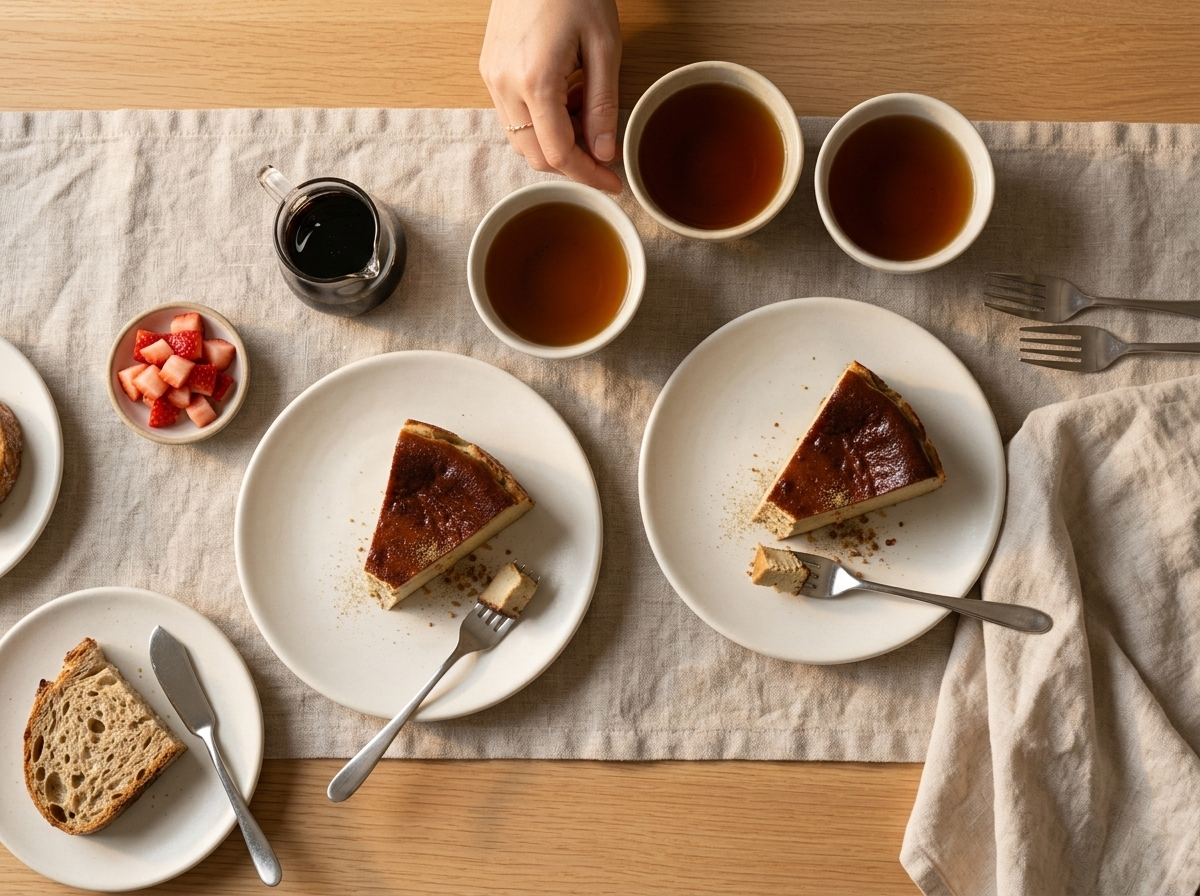
Hojicha burnt cheesecake tastes best with something cold or lightly bitter on the side. Unsweetened whipped cream works, and so do fresh strawberries or cherries.
A hot hojicha latte makes a good pairing. A drizzle of kuromitsu (Japanese black sugar syrup) or maple syrup leans into the caramel notes of the burnt top.
For clean slices, wipe a long knife with a hot damp towel between cuts. Cut the cake into 8 wedges.
FAQ
Why did my hojicha burnt cheesecake sink in the middle?
A sunken center is normal. The cake puffs up in the 230 C / 445 F oven, then settles as it cools, which gives the rustic dip and wrinkled edges. If it collapsed into a wet, soupy hole, it came out too early. If the top is pale, your oven runs cool.
Can I use matcha instead of hojicha in a burnt cheesecake?
Yes, but expect a different cake. Use 2 tablespoons of matcha in place of the 3 tablespoons (15 g) of hojicha. Matcha tastes grassy and a little bitter, and its green fades to olive under the high heat. Hojicha is already roasted, so it handles the char far better.
Can I freeze hojicha burnt cheesecake, and how do I thaw it?
Yes, it freezes well for up to 1 month. Chill the cake fully, cut it into slices, then wrap each slice in plastic and foil. Thaw slices overnight in the fridge, then let them sit 20 to 30 minutes at room temperature before eating.
What goes well with hojicha burnt cheesecake?
Unsweetened whipped cream, fresh strawberries or cherries, and a hot hojicha latte all work. The cake is rich and a little sweet, so something cold, tart or lightly bitter cuts through it. A drizzle of kuromitsu (Japanese black sugar syrup) leans into the caramel notes.
Is hojicha burnt cheesecake gluten free?
Not as written, because it uses 2 tablespoons (16 g) of all-purpose flour. Swap in the same weight of cornstarch and the cake turns out gluten-free, with the same soft set. Check that your hojicha powder is pure tea with no added fillers.
What is the difference between burnt cheesecake and New York cheesecake?
Burnt cheesecake has no crust, bakes at around 230 C / 445 F with no water bath, and finishes with a dark top and creamy center. New York cheesecake has a graham crust, bakes at a lower temperature, and sets dense and pale. The Basque style came from La Viña in San Sebastián, Spain.
You might also like
