
Jump to Recipe
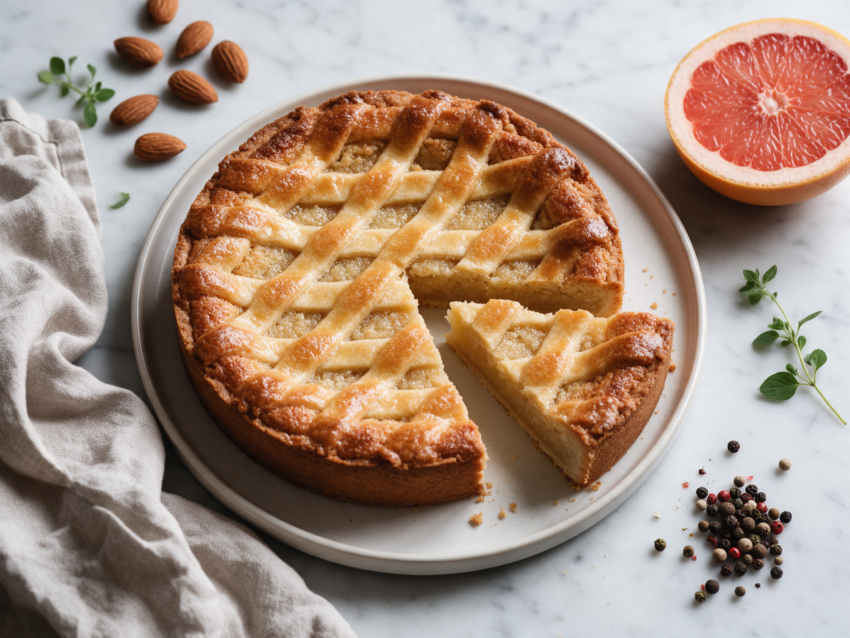
There’s something about a Norwegian fyrstekake that makes a kitchen smell like Christmas even in July.
I first had a slice in Bergen, at a bakery with steamed-up windows and a line out the door. The lattice top was golden. The almond filling underneath was dense, sweet, and a little chewy at the edges.
Fyrstekake means ‘prince’s cake’ in Norwegian, and it’s shown up at celebrations there for over a century. The build is simple: buttery shortcrust pastry, a thick almond filling, and a woven lattice on top that bakes until deep gold.
This version bakes at 175C / 350F for 35 to 40 minutes, until the lattice turns golden brown and the filling is set with just a slight jiggle in the center. Don’t rush the chilling step on the dough, warm butter is the main reason lattice strips tear instead of holding their shape.
Why You’ll Love This Recipe
- Lattice top looks impressive but uses simple pastry strips
- Almond filling stays dense and chewy, never dry
- Dough chills once, no blind baking required
- Keeps well for days, tastes better on day two
Ingredient Notes
- Almond flour: Use finely ground, blanched almond flour for a smooth filling. Almond meal with skins left on gives a coarser, speckled texture.
- Cold butter: Keep the butter cold for the pastry so it stays flaky. Softened or room-temp butter here makes the dough too soft to roll.
- Egg yolk in the dough: The extra yolk adds richness and helps the pastry hold together without much water.
- Almond extract: A little goes a long way. Vanilla extract can replace it if you prefer a milder filling.
- Lemon zest: Optional, but it cuts through the richness of the almond filling. Orange zest works too.
Fyrstekake: A Norwegian Almond Tart with Lattice Top
Ingredients
Method
- Whisk the flour, sugar, baking powder, and salt together in a mixing bowl.
- Cut the cold butter into the flour mixture with your fingertips or a pastry cutter until it looks like coarse crumbs.
- Add the egg yolk and vanilla extract, mix with a fork, then add cold water 1 tsp at a time until the dough just holds together when pressed.
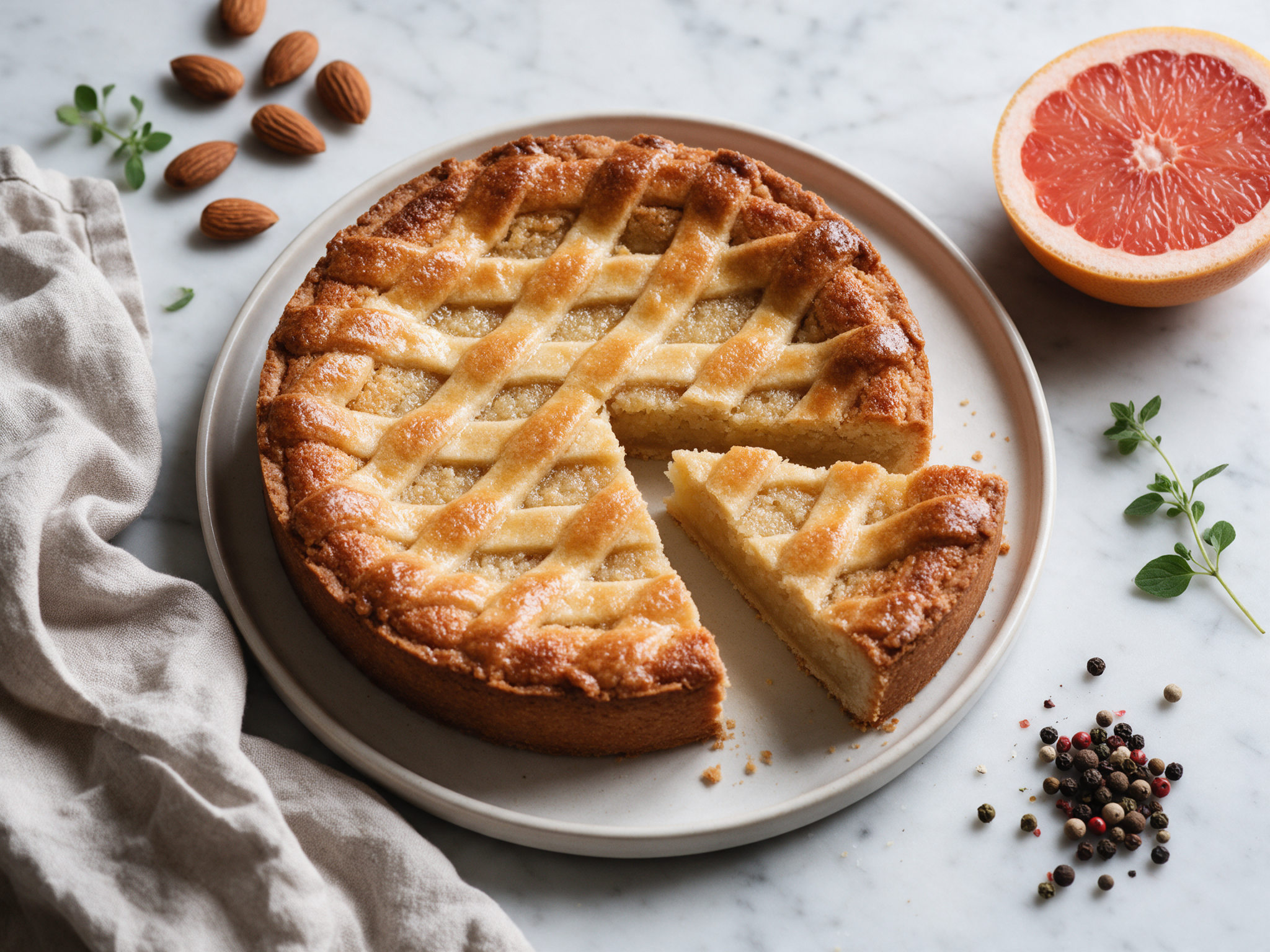
- Divide the dough into two pieces, about two-thirds for the base and sides and one-third for the lattice. Flatten into disks, wrap, and chill for 30 minutes.
- Beat the softened butter and sugar together in a bowl until pale and creamy, about 2 minutes.
- Add the eggs one at a time, beating well after each, then mix in the almond extract and lemon zest.
- Fold in the almond flour until the filling is thick and spreadable, like soft frosting.
- Heat the oven to 175C / 350F and grease a 23 cm / 9-inch tart pan with a removable bottom.
- Roll the larger dough disk on a lightly floured surface to about 3 mm thick. Press it into the base and up the sides of the tart pan, trimming excess.
- Spread the almond filling evenly over the pastry base.
- Roll the remaining dough and cut into strips about 1.5 cm wide. Weave them loosely over the filling in a lattice pattern, then brush with the egg wash (yolk whisked with milk).
- Bake for 35 to 40 minutes, until the lattice is deep golden brown and the filling is set with just a slight jiggle in the center.
- Cool in the pan for 15 minutes, then transfer to a wire rack to cool completely before slicing.
Notes
- Chill dough 30 minutes minimum, warm dough tears when woven into a lattice.
- Use a 23 cm / 9-inch tart pan with removable bottom for easy release.
- Filling should feel like soft frosting before spreading, not runny.
- Cool tart fully before slicing, warm filling won't hold its shape.
Tips for Success
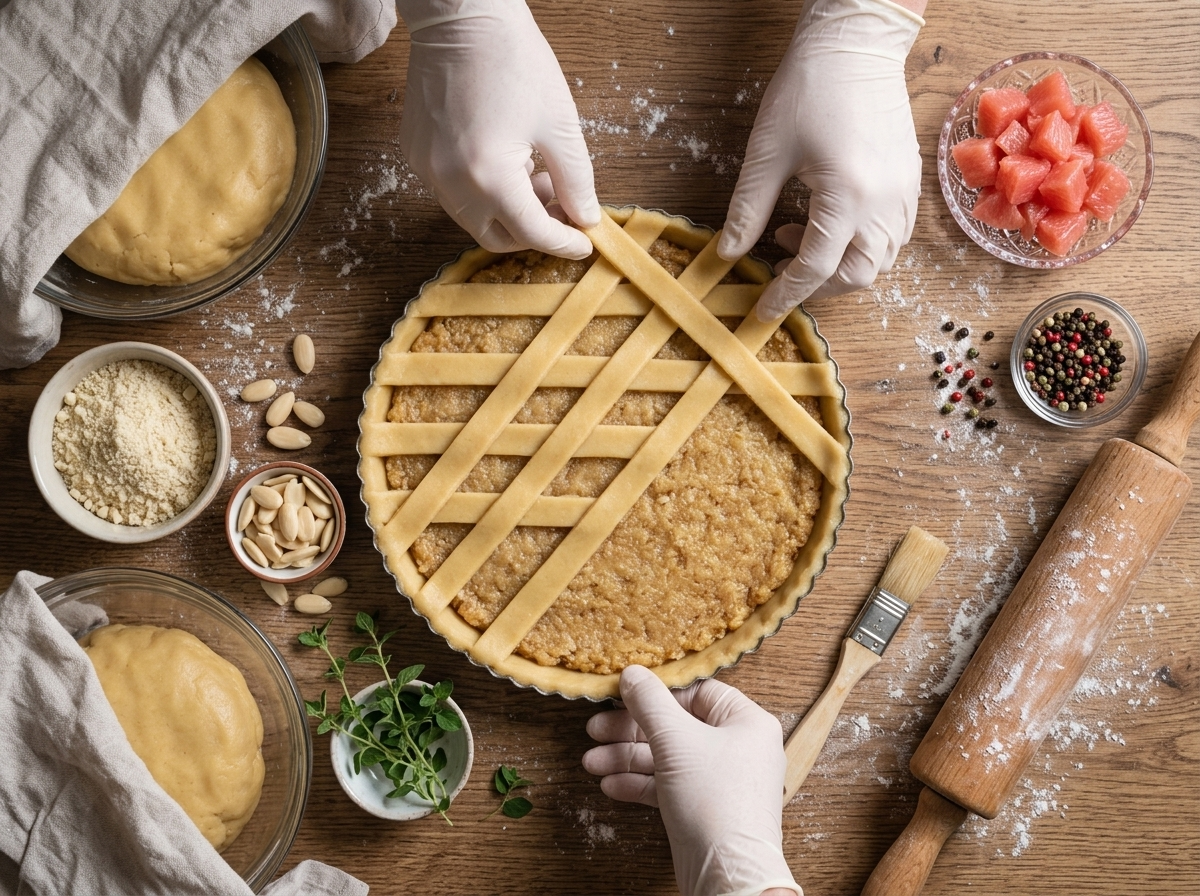
- Chill the dough for a full 30 minutes so the butter firms up and the lattice strips hold their shape.
- Use blanched almond flour, not almond meal with skins, for a smoother, paler filling.
- Weave the lattice loosely, warm dough stretches thin and tears if you pull it tight.
- Check doneness at 35 minutes, the lattice must be deep gold and the center should only slightly jiggle.
- Let the tart cool completely before slicing so the almond filling sets firm enough to cut cleanly.
Variations
- Swap half the almond flour for hazelnut flour for a nuttier, slightly darker filling with more depth.
- Add 1 tsp ground cardamom to the pastry dough for a warmer, more traditional Norwegian bakery flavor.
- Spread a thin layer of raspberry jam over the crust before adding the almond filling for a fruity contrast.
Storage and Reheating
Fyrstekake keeps at room temperature for 2 days if covered tightly with plastic wrap or stored in an airtight container. For longer storage, refrigerate up to 5 days, the dense almond filling holds moisture well and won’t dry out.
To freeze, wrap the cooled tart, whole or in slices, tightly in plastic and foil, and freeze up to 2 months. Thaw overnight in the fridge before serving.
The tart tastes good cold or at room temperature. If you want it warm, put a slice in a 150C / 300F oven for 8 to 10 minutes until just heated through.
Serving Suggestions
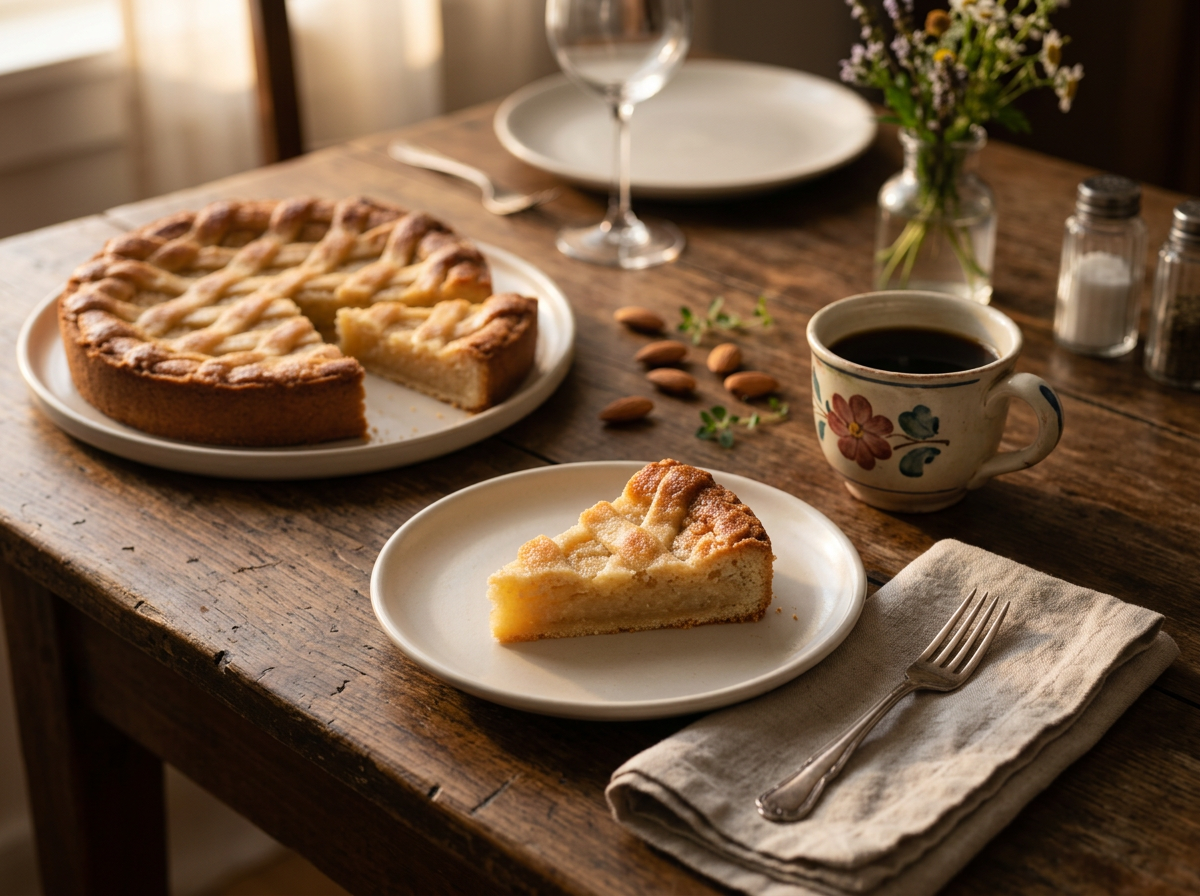
Fyrstekake is traditionally served with strong black coffee in Norway, cut into thin wedges since it’s rich. A dollop of lightly whipped cream on the side softens the sweetness.
For a holiday table, add a small bowl of fresh berries, lingonberries or raspberries work well against the buttery crust.
I also like a thin dusting of powdered sugar right before serving, it makes the lattice pattern stand out more against the golden crust.
FAQ
How do I know when my fyrstekake is fully baked?
The lattice should be deep golden brown and the almond filling should look set, with only a slight jiggle in the very center. This happens around 35 to 40 minutes at 175C / 350F. If the lattice is pale, give it another 5 minutes, it darkens fast in the last stretch.
Can I use store-bought almond flour instead of grinding whole almonds for the filling?
Yes, blanched almond flour works well and saves time, just make sure it’s finely ground and skin-free for a smooth filling. Almond meal with skins left on gives a coarser, speckled texture. I use fine almond flour every time I make this tart.
Can I make fyrstekake a day ahead for a party?
Yes, fyrstekake actually tastes better a day after baking, once the almond filling has had time to firm up. Bake it, cool completely, then cover and store at room temperature overnight. Slice it the next day for cleaner cuts.
What drink pairs best with a slice of fyrstekake?
Strong black coffee is the classic Norwegian pairing and cuts through the rich almond filling well. A cup of spiced tea or a glass of dessert wine also works if you want something a little sweeter alongside it.
Is fyrstekake gluten free or can I make a gluten-free version?
The classic recipe isn’t gluten free since the pastry uses all-purpose flour. You can swap in a 1:1 gluten-free flour blend for the crust, the almond filling itself is naturally gluten free since it’s mostly ground almonds, sugar, and eggs.
Why is this Norwegian tart called fyrstekake?
Fyrstekake translates to ‘prince’s cake’ in Norwegian, a name tied to its history as a rich, special-occasion dessert. It’s been a staple at Norwegian celebrations and coffee tables for generations, especially around Christmas.
Related recipes
