
Jump to Recipe
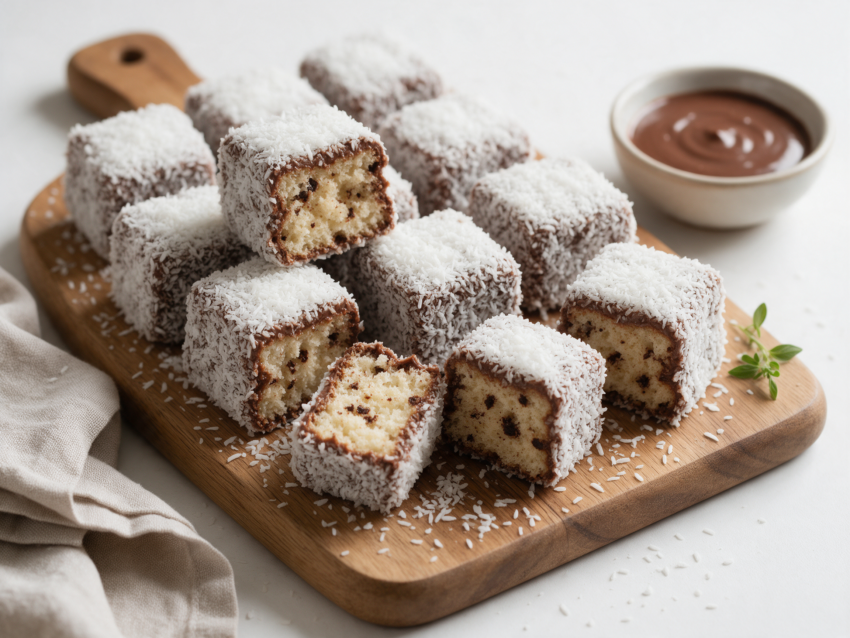
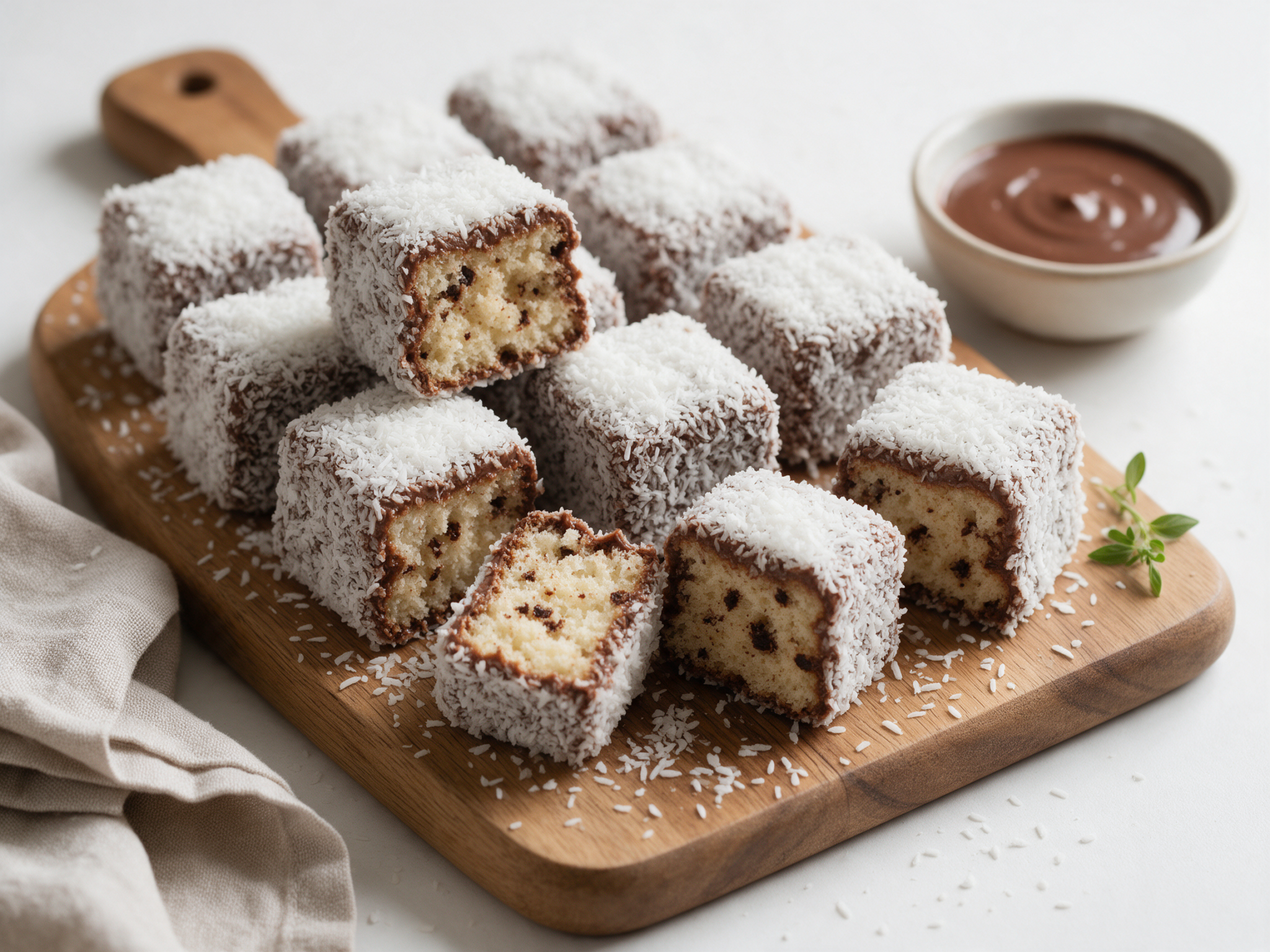
Cupavci are small Croatian sponge cake cubes, dipped in a glossy cocoa glaze and rolled thick in shredded coconut. Think of them as Croatia’s cousin to the Australian lamington, minus the jam layer, with a deeper chocolate coating and a hit of rum in the sponge.
I first had these at a bakery in Split, stacked in a glass case next to kremšnite. The coconut coating was so thick I almost missed the soft crumb underneath.
The sponge here is plain, no fancy folding technique. You whisk eggs with sugar, stir in oil and milk, then fold in flour. It bakes flat in a 23 cm / 9-inch square pan and gets cut into cubes once it’s fully cool.
Skip cutting the cake while it’s warm. Warm cake crumbles when you try to dip it, and the glaze won’t hold onto broken edges.
Why You’ll Love This Recipe
- No mixer or fancy folding technique required
- Coconut coating hides any imperfect cutting
- Freezes well for make-ahead dessert trays
- Only one bowl needed for the sponge batter
Ingredient Notes
- eggs: Use large eggs at room temperature so they whip up with more volume.
- vegetable oil: Keeps the sponge moist for days. Sunflower or canola oil both work fine.
- dark rum: Traditional in cupavci sponge. Swap for 1 tsp rum extract if you want to skip the alcohol.
- all-purpose flour: Spoon and level it rather than scooping straight from the bag, or the sponge turns dense.
- unsweetened cocoa powder: Use natural cocoa, not Dutch-process, for a slightly sharper chocolate flavor in the glaze.
- unsalted butter: Gives the glaze shine and helps it set with a slight snap once cooled.
- shredded coconut: Desiccated coconut is closer to what Croatian bakeries use and coats more cleanly than flaked coconut.
Homemade Cupavci: Croatian Coconut Chocolate Cake Cubes
Ingredients
Method
- Heat the oven to 180 C / 355 F. Grease a 23 cm / 9-inch square baking pan and line it with parchment paper.
- In a mixing bowl, whisk the eggs and sugar together for 2 to 3 minutes until pale and slightly foamy.
- Whisk in the oil, milk, vanilla, and rum until smooth.
- In a separate bowl, stir together the flour, baking powder, and salt. Fold into the wet ingredients until just combined. The batter will be thin.
- Pour the batter into the pan and smooth the top. Bake for 25 minutes, until a toothpick comes out clean and the top springs back when pressed.
- Cool the cake in the pan for 10 minutes, then turn it out onto a wire rack and cool completely, about 1 hour, before cutting.
- Trim the edges of the cooled cake, then cut into cubes about 4 cm / 1.5 inches. You'll get about 20 to 24 cubes.
- Combine the sugar, cocoa powder, milk, and butter in an 18 cm / 7-inch saucepan. Warm over medium-low heat, whisking often, for 4 to 5 minutes until smooth and thick enough to coat the back of a spoon. Keep it warm over low heat while you work.
- Spread the shredded coconut in a shallow bowl or plate.
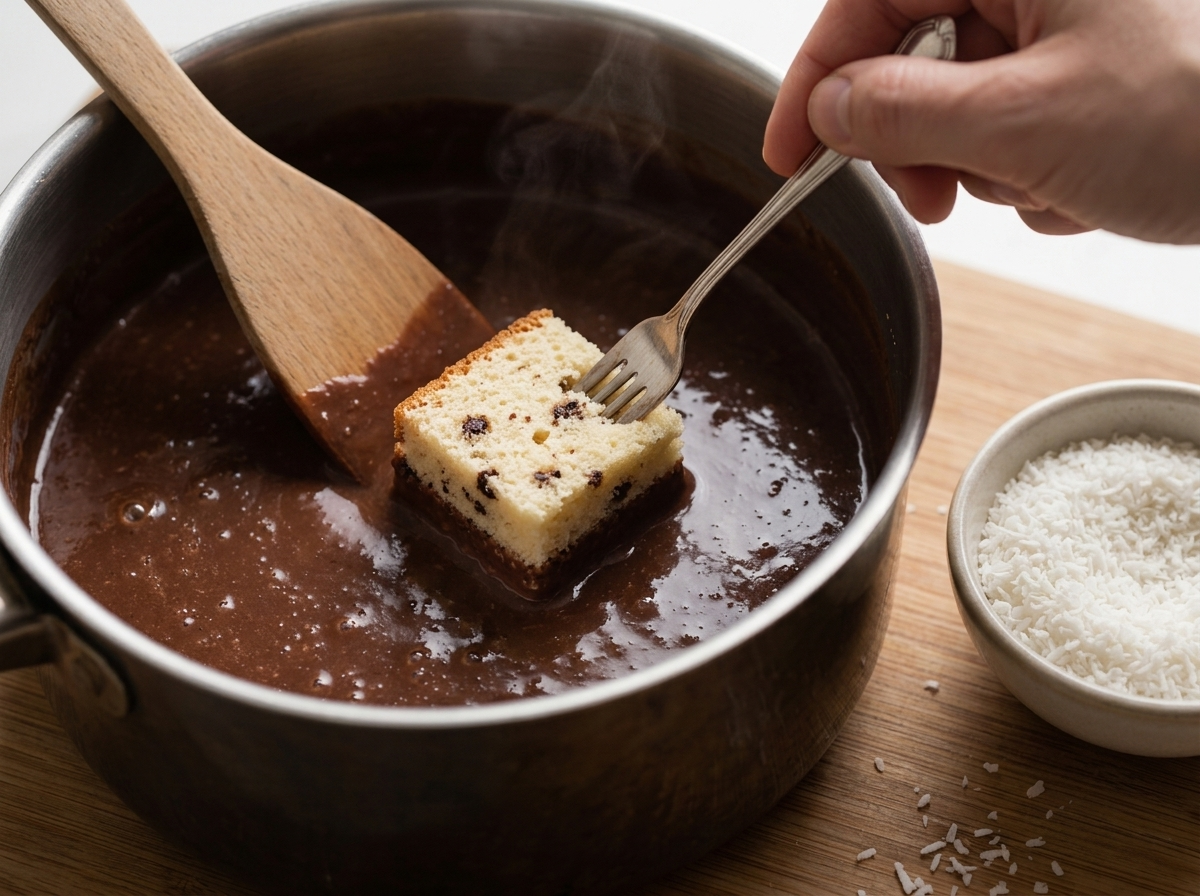
- Working in batches of 5 to 6 cubes, dip each cube in the warm glaze with a fork, let the excess drip off, then roll immediately in the coconut until fully coated.
- Set the finished cubes on a wire rack or plate to set, about 20 minutes, before serving.
Notes
- Let the sponge cool fully, about 1 hour, before cutting into cubes.
- Keep the glaze warm over low heat while dipping so it stays fluid.
- Work in batches of 5 to 6 cubes so the coconut doesn't clump together.
- Use a fork to dip and turn cubes without breaking the soft edges.
Tips for Success
- Cool the sponge completely before cutting, at least 1 hour, or the cubes will crumble apart.
- Cut cubes about 4 cm / 1.5 inches so each piece holds a good ratio of cake to coating.
- Warm the glaze gently and keep it fluid over low heat; a thick glaze won’t coat the cubes evenly.
- Roll each cube in coconut right after dipping while the glaze is still wet and tacky.
- Dip with a fork so excess glaze drips off before you roll the cube in coconut.
Variations
- Swap the rum extract for orange zest if you want a citrus-scented sponge instead.
- Use dark chocolate ganache instead of cocoa glaze for a richer, less sweet coating.
- Toast the shredded coconut lightly in a dry pan before rolling for a nuttier, golden coating.
Storage and Reheating
Cupavci keep well in an airtight container at room temperature for 2 days, or in the fridge for up to 5 days. The coconut coating stays drier in the fridge, which some people prefer.
For longer storage, freeze the finished cubes in a single layer on a tray, then transfer to a freezer bag for up to 2 months. Thaw at room temperature for about 1 hour before serving.
These are served cold or at room temperature, not reheated. If they’ve been in the fridge, let them sit out for 15 to 20 minutes before eating so the sponge softens back up.
Serving Suggestions
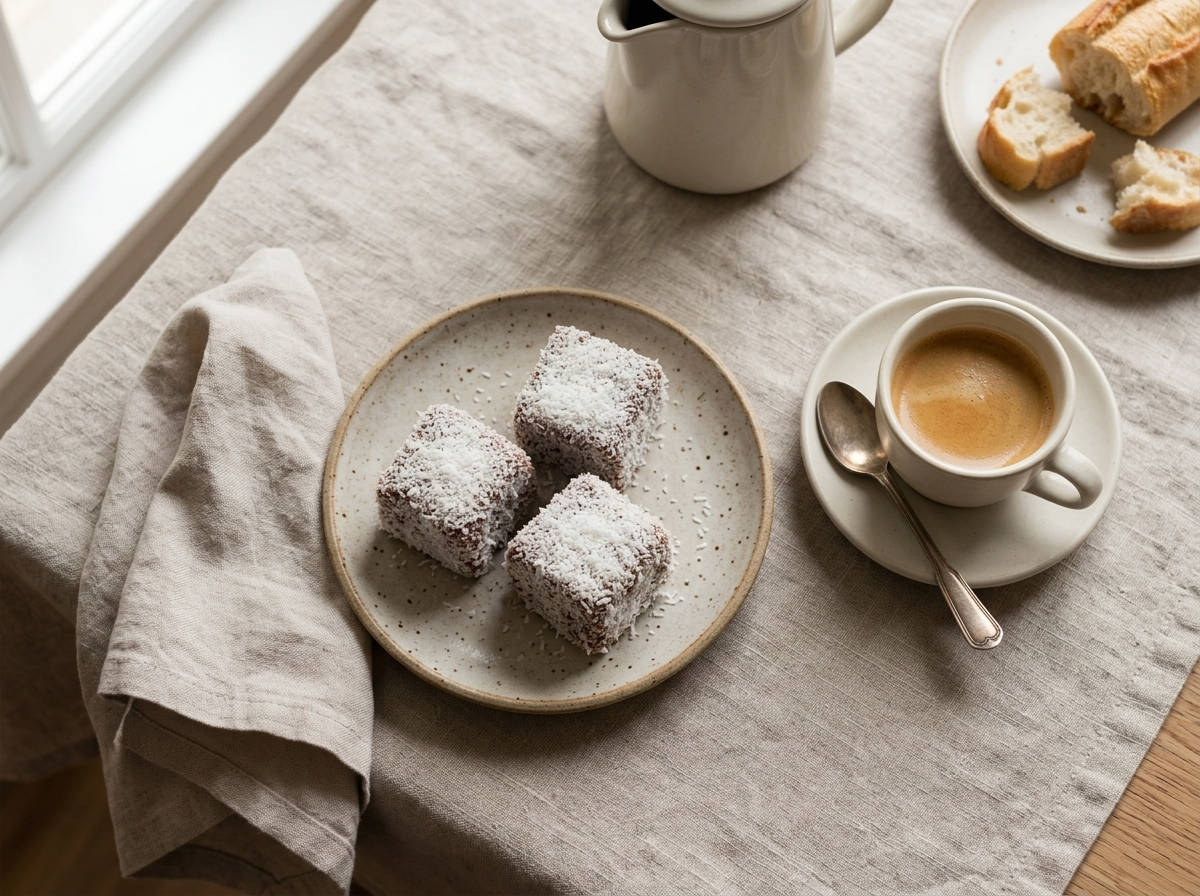
Cupavci show up on Croatian dessert tables alongside coffee, especially after Sunday lunch. A small espresso or Turkish-style coffee cuts through the sweetness.
Pile them on a platter for a party next to other bite-size sweets like rum balls or fritule. They travel well, so pack a few in a lunch box or bring them to a potluck.
For a simple dessert plate, add a cube or two next to a scoop of vanilla ice cream or a handful of fresh berries.
FAQ
Why is the chocolate glaze on my cupavci sliding off instead of sticking?
The glaze was too thin or the cubes were too cold when you dipped them. Warm the sponge cubes slightly, or use them the same day they’re cut, and keep the glaze at a gentle simmer so it clings to the sides. A glaze that’s cooled too much sets before it can grab the coconut.
Can I use desiccated coconut instead of shredded coconut for cupavci?
Yes, desiccated coconut works and is actually what most Croatian bakers use since it’s drier and coats cleaner. Shredded coconut gives a shaggier, more rustic look. Either way, roll the cubes right after dipping while the glaze is still wet.
Can I freeze the sponge cake before dipping it in chocolate glaze?
Yes, the plain sponge freezes well for up to 2 months wrapped tightly in plastic. Thaw it at room temperature, cut into cubes, then dip and roll in coconut fresh. This is an easy way to split the cupavci recipe across two days.
What goes well with cupavci besides coffee?
A glass of cold milk or a scoop of vanilla ice cream balances the sweetness of the coconut coating. Cupavci also work well on a dessert platter next to fresh fruit like sliced oranges or strawberries. Keep other flavors simple since the chocolate and coconut already carry the plate.
Are cupavci gluten free?
No, traditional cupavci use wheat flour in the sponge, so they’re not gluten free as written. You can try a 1:1 gluten-free flour blend in the sponge, though the crumb will be slightly denser. The glaze and coconut coating are naturally gluten free on their own.
What’s the difference between cupavci and Australian lamingtons?
Cupavci use a chocolate glaze without any jam layer, while lamingtons are usually split and filled with jam or cream before dipping. Cupavci also lean on rum flavoring in the sponge, which lamingtons don’t typically have. Both get rolled in coconut, but the flavor profile is different.
You might also like
