
Jump to Recipe
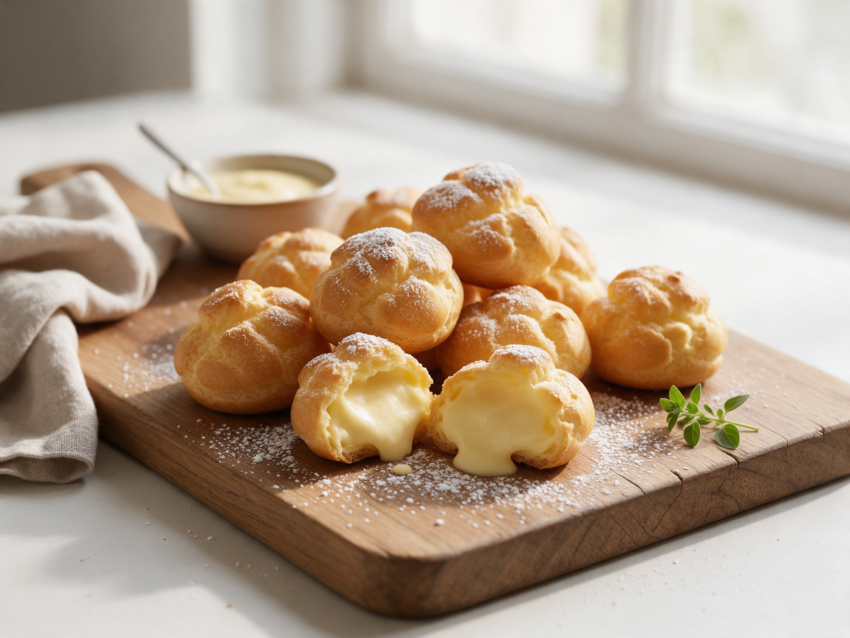
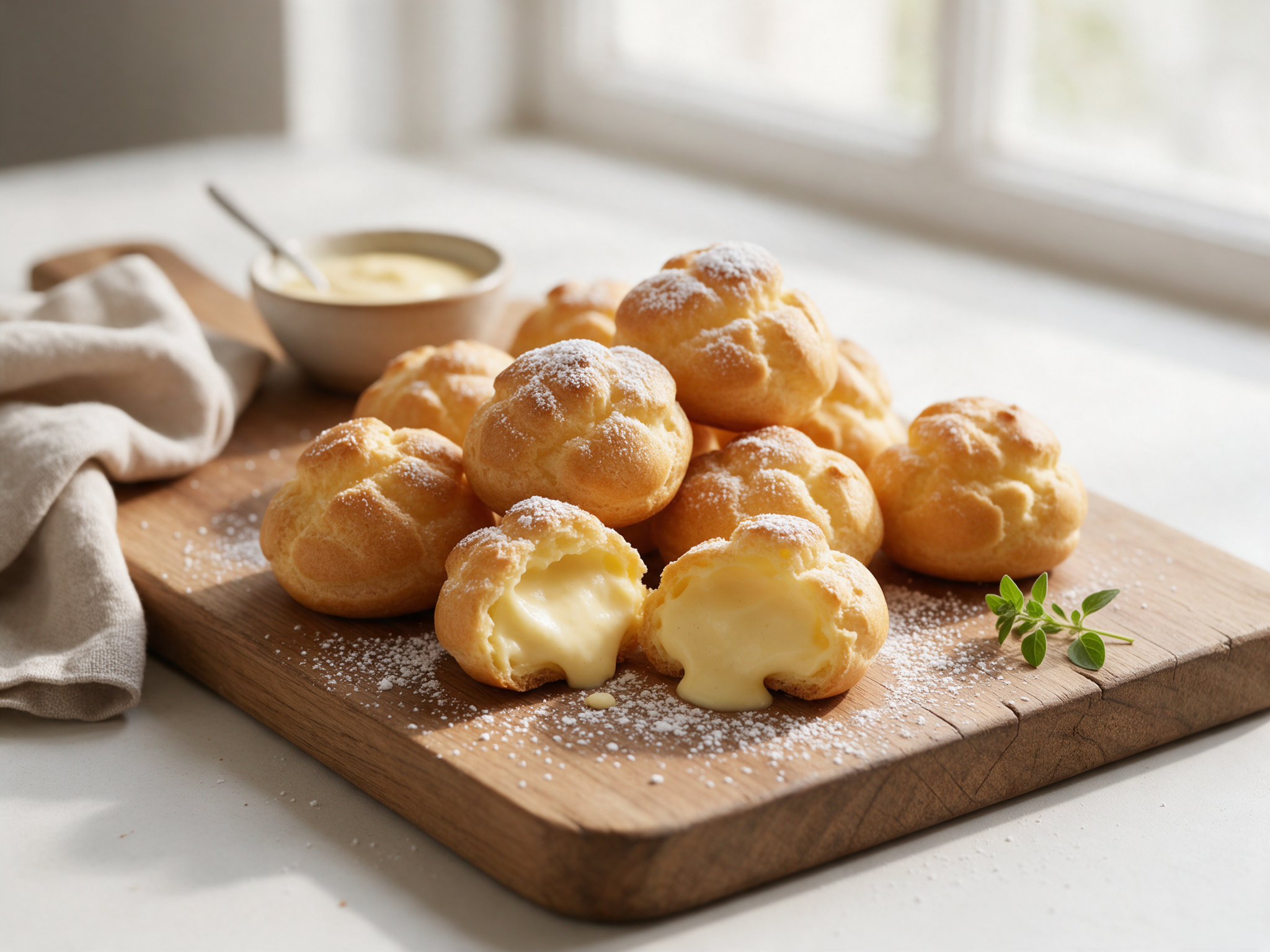
Princes krofne are Serbian cream puffs, small balls of baked choux pastry filled with cold vanilla custard and dusted with powdered sugar.
I first had them at a bakery counter in Belgrade, with powdered sugar on my jacket before I’d even taken a bite.
The shells bake up light and hollow, with a shell that cracks a little when you bite in. Inside is cool, thick custard, not too sweet.
They’re not hard to make, but the choux dough has one tricky moment. You add the eggs slowly, waiting for each one to fully absorb before adding the next. Rush it and the dough turns greasy and won’t puff.
Once you get past that step, the rest is straightforward. Bake, cool, fill, dust, done.
Why You’ll Love This Recipe
- Crisp choux shells with a light, hollow center
- Cool vanilla custard that isn’t overly sweet
- Simple pantry ingredients, no special equipment needed
- Make-ahead friendly, bake the shells days before filling
Ingredient Notes
- Water: Plain water gives the classic crisp shell. Swap half for whole milk if you want a softer crumb.
- Unsalted butter (dough): Use unsalted so you control the salt. European-style butter with higher fat works even better here.
- All-purpose flour: Regular flour builds the structure. Don’t sub gluten-free blends, the shells won’t puff properly.
- Eggs (dough): Room temp eggs incorporate faster into the hot dough. Cold eggs can seize the mixture and slow you down.
- Whole milk: Whole milk makes a thicker, richer custard. Low-fat milk works but the filling turns out thinner.
- Egg yolks: Yolks alone give the custard its dense, silky texture. Save the whites for meringues or an omelet.
- Cornstarch: Cornstarch thickens the custard without a starchy taste. All-purpose flour works as a backup, use 50 g instead.
- Vanilla extract: Real vanilla extract or vanilla bean paste gives the best flavor. Vanilla sugar, a Serbian pantry staple, works too.
- Powdered sugar: A light dusting right before serving keeps the shells from turning damp too soon.
Soft Baked Princes Krofne (Serbian Cream Puffs)
Ingredients
Method
- Heat the oven to 200 C / 400 F. Line a sheet pan (33 x 46 cm / 13 x 18 inch) with parchment paper.
- Combine the water, cubed butter, salt, and sugar in a 3-quart / 2.8 L saucepan. Bring to a rolling boil over medium heat, stirring until the butter melts completely.
- Remove from heat and dump in the flour all at once. Stir hard with a wooden spoon until the mixture pulls away from the sides and forms a ball, about 1 minute.
- Return the pan to low heat and cook the dough for 1 to 2 minutes, stirring constantly, to dry it out slightly. Transfer to a mixing bowl and let cool for 5 minutes.
- Beat in the eggs one at a time with a hand mixer, making sure each egg is fully absorbed before adding the next. The finished dough should be smooth and glossy, falling off the spoon in a thick ribbon.
- Spoon or pipe the dough into 20 mounds, about 4 cm / 1.5 inch wide, spaced 5 cm apart on the sheet pan.
- Bake for 20 minutes at 200 C / 400 F, then lower the oven to 180 C / 355 F and bake for another 10 to 15 minutes, until the puffs are deep golden and sound hollow when tapped. Don't open the oven door in the first 20 minutes or the puffs will collapse.
- Turn off the oven, prop the door open with a wooden spoon, and let the puffs sit inside for 5 minutes to dry out further. Cool completely on a wire rack.
- Whisk the egg yolks, sugar, and cornstarch together in a bowl until pale and smooth.
- Heat the milk in a saucepan until it just starts to steam, no need to boil. Slowly pour about a third of the hot milk into the yolk mixture, whisking constantly, then pour everything back into the saucepan.
- Cook over medium-low heat, whisking constantly, for 4 to 5 minutes until the custard thickens enough to coat the back of a spoon. Remove from heat and whisk in the butter and vanilla extract.
- Pour the custard through a fine-mesh sieve into a clean bowl. Press plastic wrap directly onto the surface and chill for at least 2 hours, until fully cold.
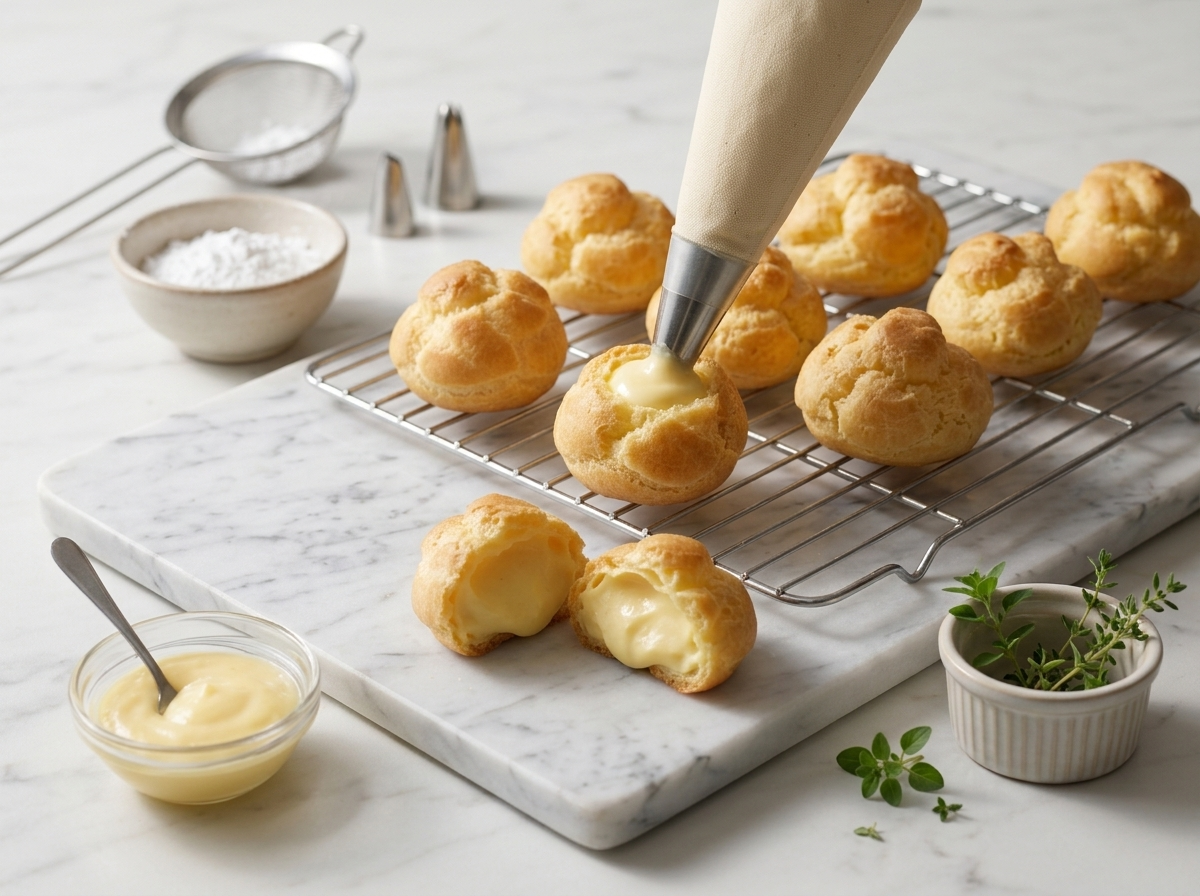
- Poke a small hole in the bottom of each cooled puff with a chopstick or piping tip.
- Spoon the chilled custard into a piping bag fitted with a 1 cm round tip. Pipe custard into each puff until you feel it fill and weigh down slightly in your hand.
- Dust the filled puffs generously with powdered sugar. Serve right away or chill for up to 1 hour before serving.
Notes
- Dry the choux dough over heat for 1-2 minutes before adding eggs, or shells stay gummy inside.
- Add eggs one at a time and wait for full absorption, or dough turns greasy.
- Chill custard fully before piping, warm custard makes puffs soggy fast.
- Fill puffs no more than 1 hour before serving for the crispest shell.
Tips for Success
- Weigh your flour instead of scooping with a cup, since too much makes the dough dry and the puffs won’t rise.
- Pipe the dough in even mounds using a template drawn on parchment paper for uniform baking.
- Poke a hole in each shell right after baking to let steam escape and keep the inside dry.
- Cook the custard low and slow, whisking the whole time, so the egg yolks don’t scramble.
- Fill the puffs close to serving time, since the custard softens the crisp shell within a couple hours.
Variations
- Dip the tops in melted dark chocolate instead of powdered sugar for a glossy, profiterole-style finish.
- Add orange zest or a splash of rum to the custard for a grown-up version of the filling.
- Make mini bite-size puffs using a teaspoon of dough per mound for a party platter version.
Storage and Reheating
Princes krofne taste best filled and eaten within a few hours, since the custard softens the crisp shell over time.
Store filled puffs in an airtight container in the fridge for up to 1 day. After that the shells turn soft, which isn’t ruined exactly, just a different texture than fresh.
For make-ahead, bake the shells up to 2 days in advance and keep them at room temperature in a paper bag, or freeze for up to 1 month. Make the custard up to 3 days ahead and store it covered in the fridge, then fill the puffs the day you plan to serve them.
Serving Suggestions
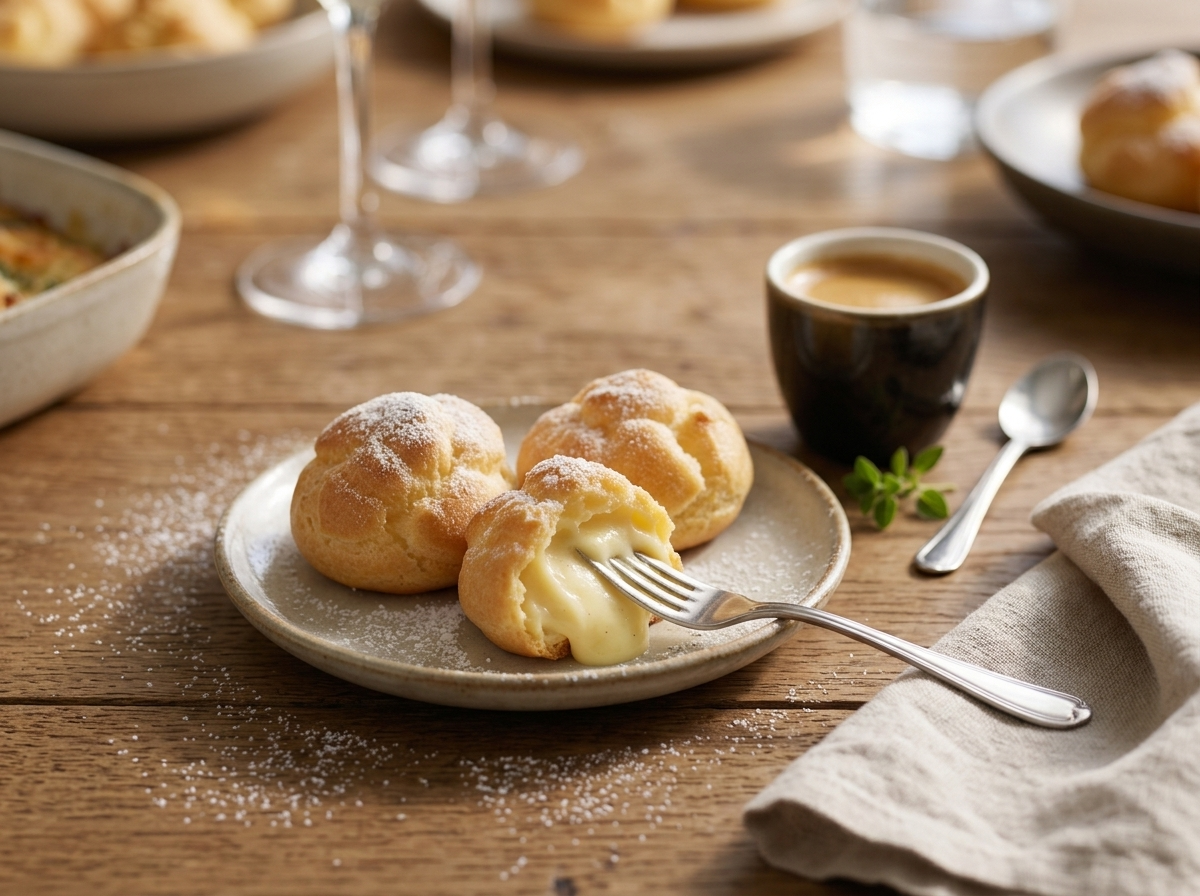
Princes krofne show up at Serbian bakeries and family gatherings, usually next to a strong coffee.
Serve them cold, straight from the fridge, with a dusting of fresh powdered sugar right before they hit the table. A small espresso or Turkish coffee alongside cuts the sweetness nicely.
For a bigger spread, set them out with other small pastries and fresh fruit, so guests can pick a few different bites.
FAQ
Why did my princes krofne deflate after baking?
Deflated puffs usually mean they came out of the oven too early or the door opened during the first 20 minutes. Choux pastry needs a fully set shell before it can hold its shape, so bake until deep golden and hollow-sounding when tapped, then dry them in the switched-off oven for 5 minutes.
Can I use milk instead of water in the choux dough for princes krofne?
Yes, swapping in whole milk gives the shells a softer, more tender crumb with a slightly richer taste. I still use water for the classic bakery-style crisp shell, but a half-and-half mix works well if you want both crispness and tenderness. Stick with the same 250 ml amount either way.
Can I freeze the choux shells before filling them with custard?
Yes, baked and cooled choux shells freeze well for up to 1 month in an airtight container. Thaw at room temperature for 20 minutes, then re-crisp in a 180 C / 355 F oven for 5 minutes before filling with cold custard. Never freeze the puffs once they’re filled, since the custard turns watery.
What goes well with princes krofne besides coffee?
Princes krofne pair well with a strong Turkish coffee or espresso, which cuts through the sweetness of the vanilla custard. They also work as a light dessert after a Balkan-style grilled meat dinner, or alongside fresh berries for some tartness. A glass of cold milk works too if you’re serving them to kids.
Are princes krofne gluten free?
No, princes krofne aren’t gluten free because the choux pastry relies on wheat flour’s structure to puff up properly in the oven. Gluten-free flour blends tend to make the shells dense and prone to collapsing, so I don’t recommend substituting if you need a true gluten-free treat. Look for a recipe built around gluten-free choux instead.
What’s the difference between princes krofne and French profiteroles?
Princes krofne and French profiteroles share the same choux pastry base but differ in filling and finish. Profiteroles are typically filled with ice cream or whipped cream and topped with warm chocolate sauce, while princes krofne use a cooked vanilla custard and a dusting of powdered sugar, closer to a Serbian bakery case treat.
More from the kitchen
- this Mafroukeh: Lebanese Semolina Dessert with Ashta Cream
- Jericalla: Guadalajara’s Baked Cinnamon Custard Cups
- the Bienmesabe Venezolano: Coconut Rum Custard Dessert
- this Classic Zuppa Inglese with Vanilla-Chocolate Custard
