
Jump to Recipe
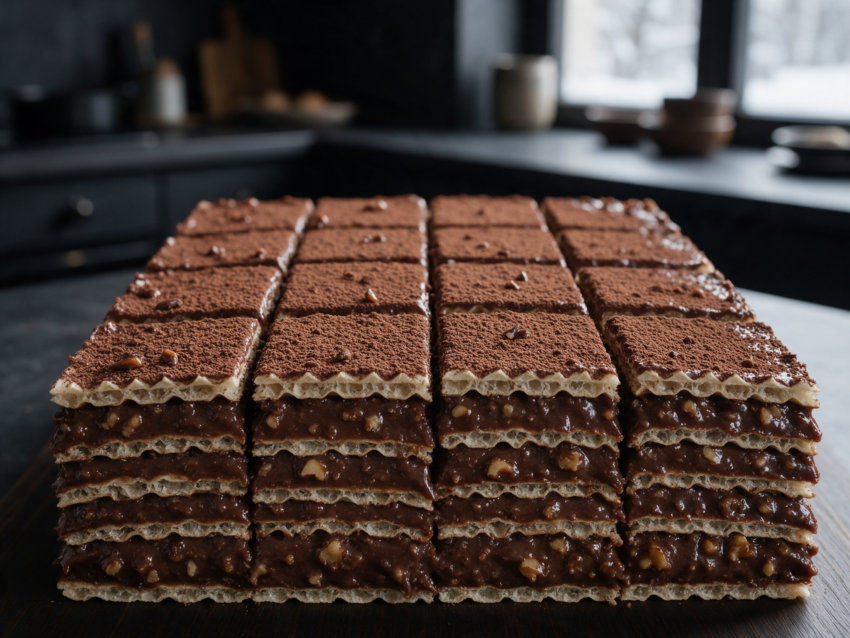
There’s something about a dessert that needs zero oven time and still tastes like it took all day. Oblatne wafer cake is exactly that: thin round wafer sheets stacked with a cooked walnut and cocoa filling, much like Costa Rica’s layered torta chilena, then chilled until it slices clean.
I first ran into this at a Christmas table in Bratislava, a plate of tiny squares set next to the cookies, gone before the coffee even cooled. Nobody baked anything. The wafers came from a bag, the filling from a saucepan.
The custard-style filling is the part that takes attention. Cook it too fast and the egg yolks scramble. Too slow and you’re standing over a double boiler for half an hour. Either way, once it’s spread and chilled overnight, the wafers turn soft and almost cake-like.
This version uses walnuts and cocoa, the classic combination, though hazelnuts work fine if that’s what’s in your pantry.
Why You’ll Love This Recipe
- No oven, no baking, just a saucepan and a fridge
- Filling can be made a day or two before assembling
- Cuts into small squares that stretch a crowd
- Freezer-friendly if you want to make it weeks ahead
Ingredient Notes
- wafer sheets: Look for plain, unsweetened round wafer sheets (oblátky) at Central or Eastern European grocers. Ice cream cone wafer paper cut to size is a decent stand-in.
- unsalted butter: Salted butter works too, just skip the added pinch of salt in the filling.
- whole milk: Whole milk gives the richest custard. Low-fat works but the filling sets a bit softer.
- egg yolks: Save the whites for meringues or an omelet, they don’t go into this filling.
- cocoa powder: Use natural unsweetened cocoa, not Dutch-process, for a deeper, slightly bitter edge.
- ground walnuts: Grind whole walnuts in a food processor until fine but not oily. Pre-ground walnut meal works in a pinch.
No-Bake Oblatne Wafer Cake with Walnut-Cocoa Filling
Ingredients
Method
- Combine the butter, sugar, milk, egg yolks, and salt in a heatproof bowl set over a saucepan (2-quart / 2L) of gently simmering water, making sure the bowl doesn't touch the water.
- Whisk constantly over medium-low heat for 8 to 10 minutes, until the mixture thickens enough to coat the back of a spoon and reaches 71 C / 160 F. Do not let it boil or the yolks will scramble.
- Remove the bowl from the heat and whisk in the cocoa powder until smooth.
- Fold in the ground walnuts and vanilla extract until you have a thick, spreadable paste. Let it cool to room temperature, about 20 minutes, it will thicken further as it sits.
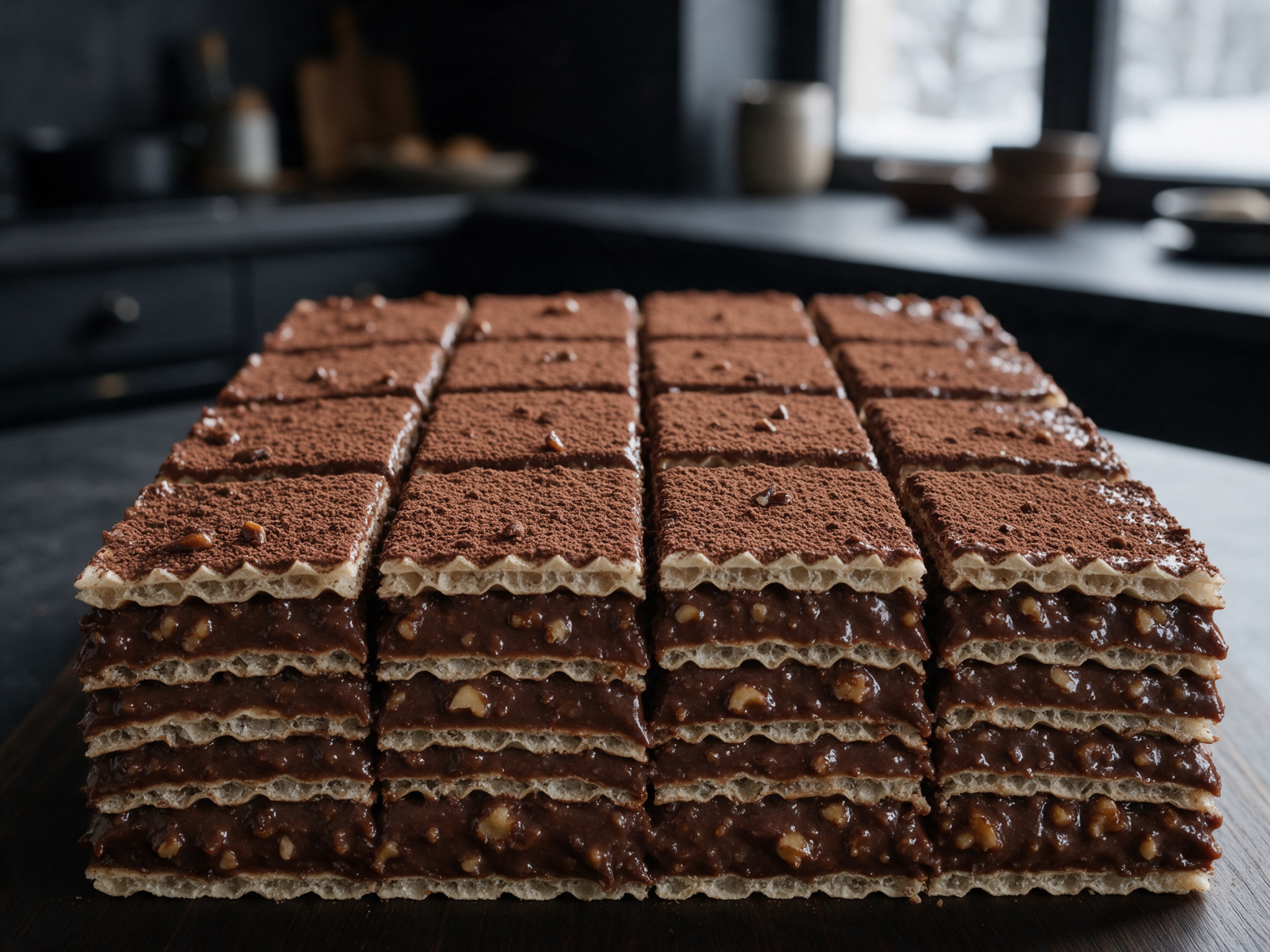
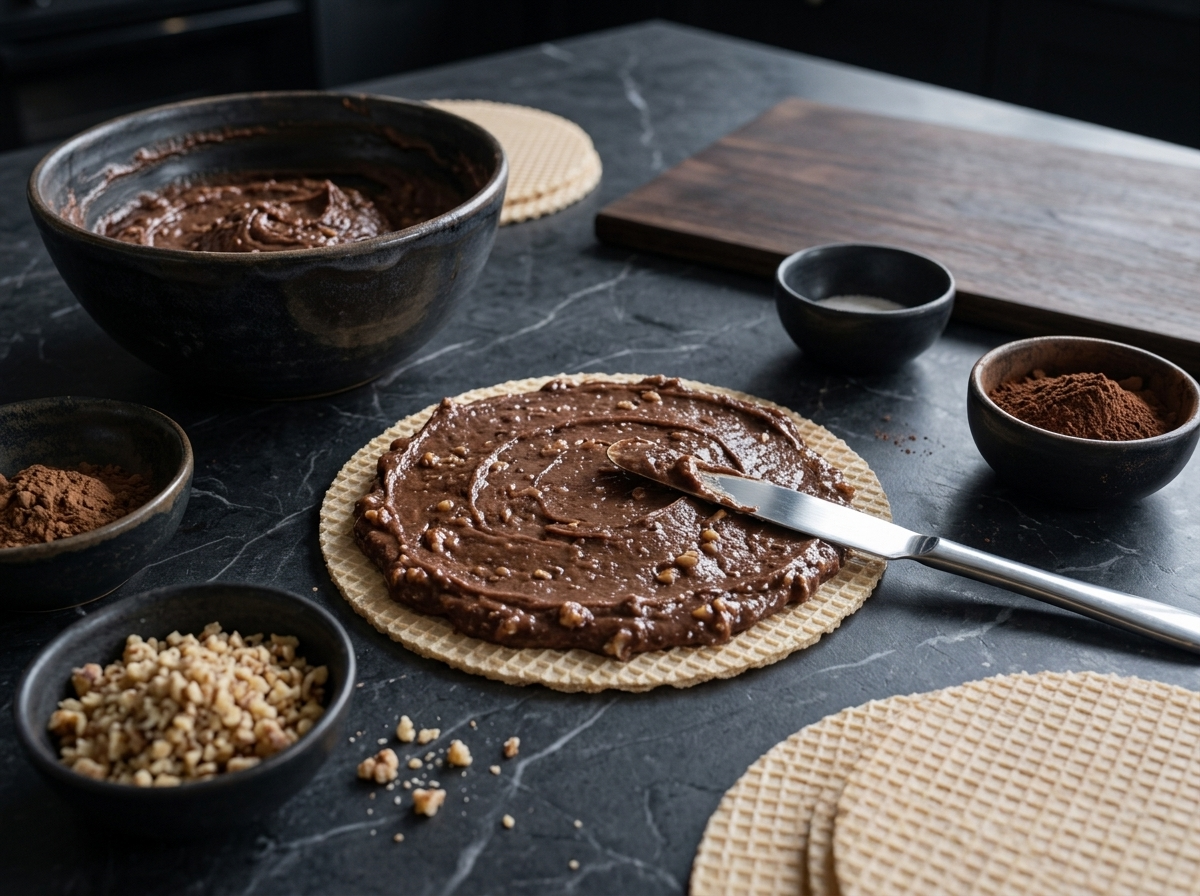
- Place one wafer sheet (20 cm / 8-inch round) on a flat plate or cake board. Spread with a thin, even layer of filling, about 100 g, all the way to the edges.
- Repeat with 3 more wafer sheets and filling, then top with the last plain wafer sheet.
- Cover the stack with parchment paper and set something flat and heavy on top, like a cutting board weighed down with a couple of cans. Press gently to compress the layers.
- Refrigerate for at least 8 hours, or overnight, so the wafers soften and absorb moisture from the filling.
- Trim the edges with a sharp serrated knife if needed, then cut into 12 squares. Wipe the blade between cuts for clean edges.
Notes
- Cook the custard base to 71 C / 160 F, not higher, or the eggs will scramble
- Use plain, unsweetened wafer sheets, not the sweetened ice cream cone kind
- Weigh the stack down overnight for even, soft layers
- Ground walnuts should be fine, almost sandy, for a smooth spreadable filling
Tips for Success
- Weigh down the stacked wafers overnight so they soften evenly instead of staying brittle in the middle.
- Cook the custard base low and slow over the double boiler; scrambled bits mean the heat was too high.
- Toast the walnuts for 5 minutes at 180 C / 350 F before grinding for a deeper, nuttier filling, the same trick behind Korean persimmon walnut rolls.
- Chill the cake fully before cutting, a warm knife through soft wafers turns the layers into a crumbly mess.
- Store any extra filling in a separate container, it keeps for 4 days and is good spread on toast.
Variations
- Swap half the cocoa powder for melted dark chocolate for a glossier, richer filling layer.
- Add a tablespoon of dark rum or strong espresso to the custard base for a grown-up flavor twist.
- Use a mix of walnuts and pecans, or swap in ground almonds for a milder, less bitter filling.
Storage and Reheating
Oblatne wafer cake keeps well because it’s essentially a chilled dessert to begin with.
Wrap leftover squares tightly in plastic wrap or store in an airtight container in the fridge for 4 to 5 days. The filling firms up more with time, so the texture holds well past the first day.
Freeze it if you want to stretch it further. Wrap the whole cake or individual squares tightly and freeze for up to 2 months. Thaw overnight in the fridge before serving, straight from the freezer the wafers turn soggy as they defrost too fast.
Serving Suggestions
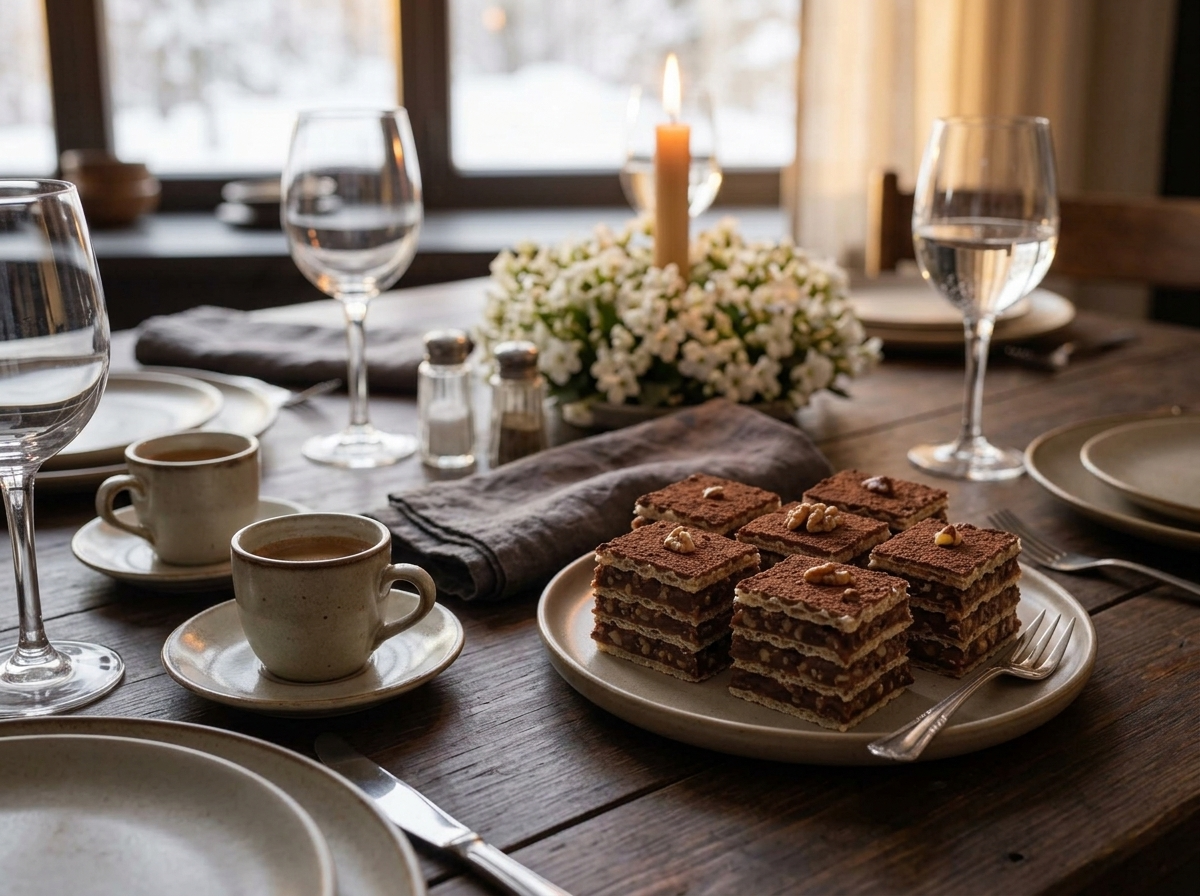
Serve oblatne wafer cake cold, straight from the fridge, cut into small squares since a little goes a long way.
I like it with strong coffee or espresso, the bitterness cuts through the rich filling. A glass of dessert wine or a shot of plum brandy works too if you’re serving it after a holiday meal.
Set it out on a platter with other small sweets, like squares of Argentina’s no-bake chocotorta. Oblatne is a squares-not-slices kind of dessert, one or two pieces per person is plenty.
FAQ
Why is my oblatne filling too runny to spread on the wafers?
Runny filling usually means the custard base didn’t cook long enough over the double boiler. It needs to reach 71 C / 160 F and coat the back of a spoon before you add the cocoa and walnuts. Keep whisking over gentle heat for the full 8 to 10 minutes, it thickens fast near the end.
Can I use hazelnuts instead of walnuts in this wafer cake?
Yes, ground hazelnuts swap in at the same 300 g amount and give a sweeter, less bitter filling than walnuts. Toast them first for better flavor, then grind once cooled. Almonds work too if you want a milder, less distinct nut taste.
How far ahead can I make oblatne wafer cake?
Oblatne wafer cake actually needs to be made ahead, since the wafers need at least 8 hours in the fridge to soften and absorb the filling. You can make it up to 3 days before serving, it holds well and the texture only improves with extra chill time.
What goes well with oblatne wafer cake after dinner?
Strong black coffee or espresso is the classic pairing, the bitterness balances the rich walnut-cocoa filling. A small glass of plum brandy or a dessert wine works too if you’re serving it as part of a holiday spread. Keep portions small since one square goes a long way.
Is oblatne wafer cake gluten free?
No, traditional oblatne wafer cake is not gluten free because the wafer sheets are made from wheat flour. If you need a gluten-free version, look for gluten-free wafer paper online or substitute thin rice paper sheets, though the texture will be slightly different once chilled.
Where does oblatne wafer cake come from?
Oblatne wafer cake comes from Central Europe, especially Slovakia, the Czech Republic, and Austria, where thin wafer sheets called oblátky are a Christmas tradition. Families layer them with cooked nut fillings and chill the stack for days before slicing it into small squares for the holiday table.
Loved this? Try these next
