
Jump to Recipe
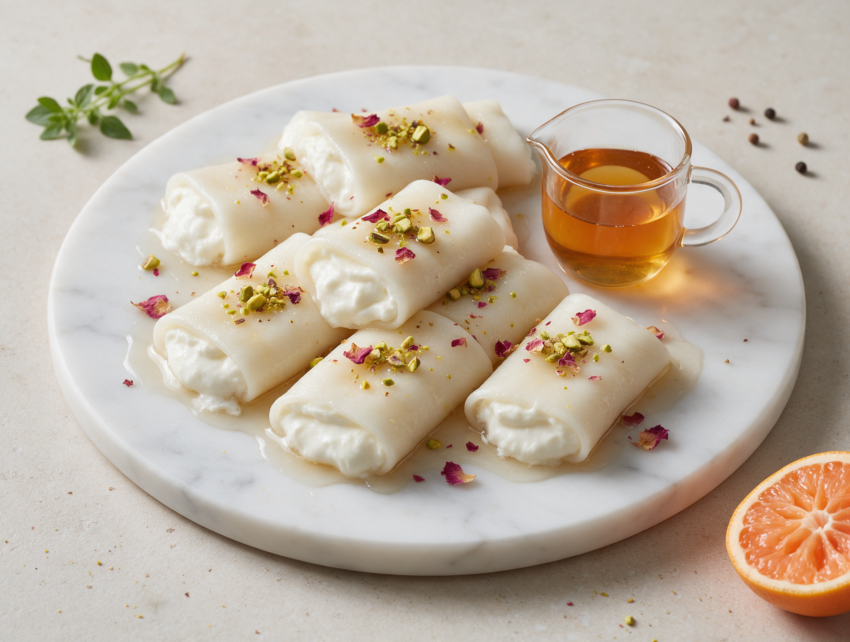
There’s something almost magic about a dessert that starts with melted mozzarella and ends up tasting like sugar and rose petals.
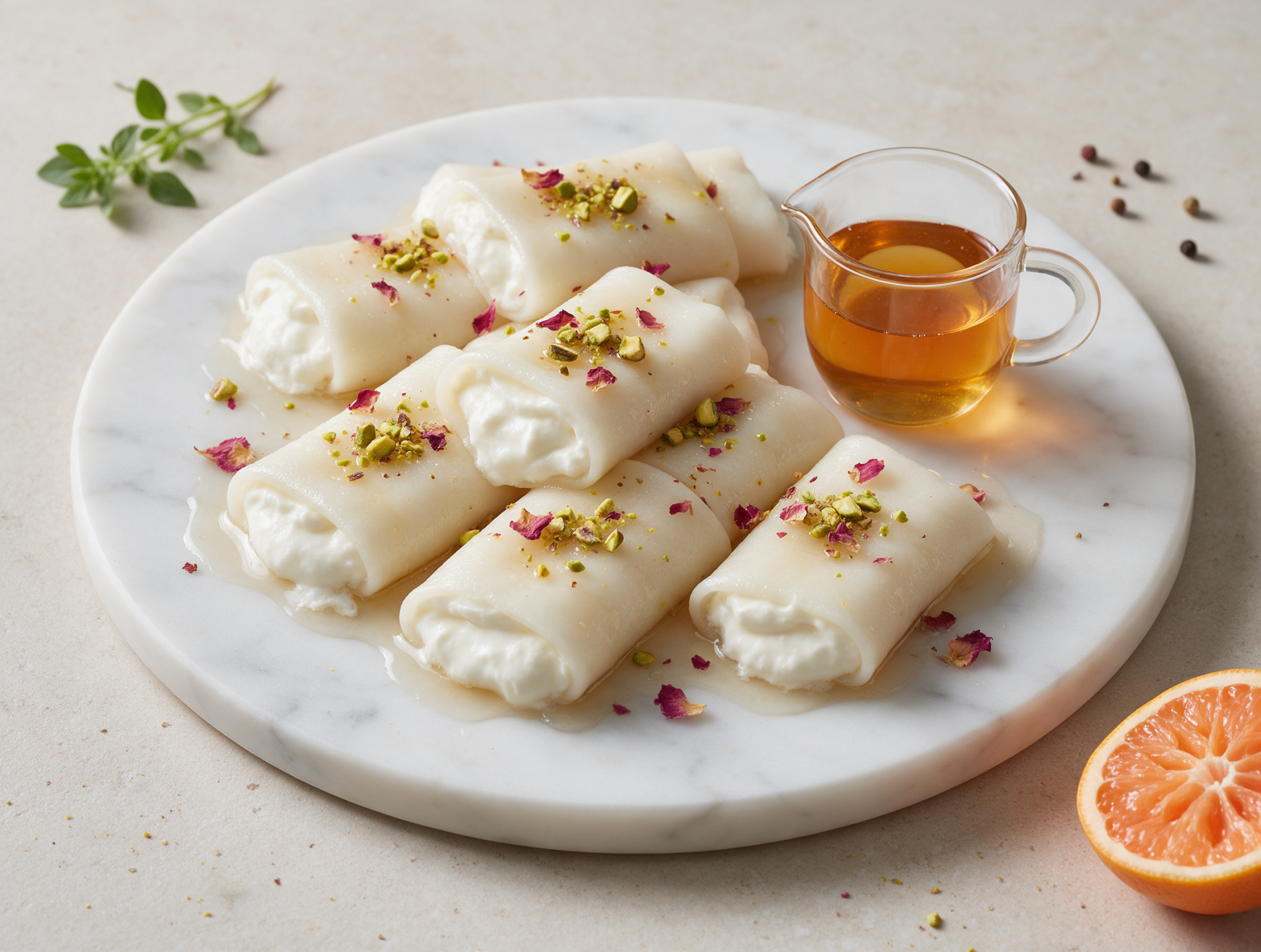
Halawet el jibn is a Lebanese and Syrian sweet that turns semolina and cheese into a soft, stretchy dough, then wraps it around cold ashta cream. No oven. No yeast. Just a pot, a spoon, and patience while the cheese melts into dough.
I first had it at a Beirut bakery counter, still warm, dusted with crushed pistachio and a few drops of orange blossom water. It wasn’t heavy. It wasn’t overly sweet either, the rose water syrup does the work in small amounts.
This version keeps the classic method: cook the dough on the stovetop until it pulls together, roll it thin while it’s warm, fill with chilled ashta, and drizzle with syrup right before serving.
Why You’ll Love This Recipe
- No oven needed, just a stovetop and a pan
- Stretchy cheese dough tastes like a light pastry
- Chilled ashta filling holds its shape for neat rolls
- Ready in under an hour of active cooking time
Ingredient Notes
- fine semolina: Use fine-grind semolina, not the coarse kind, so the dough turns smooth instead of gritty.
- mozzarella: Low-moisture, part-skim shredded mozzarella melts into the stretchy dough this recipe needs. Fresh mozzarella is too wet.
- rose water: Use culinary-grade rose water, not the perfume kind, and start with less if you’re not used to the flavor.
- orange blossom water: Adds a citrus-floral note alongside the rose water. You can swap it for extra rose water if you don’t have it.
- cornstarch: Thickens the ashta into a sliceable cream. Rice flour works as a substitute in a pinch.
- pistachios: Use raw, shelled pistachios and crush them yourself. Pre-salted ones throw off the flavor balance.
Halawet El Jibn: Sweet Cheese Rolls with Ashta
Ingredients
Method
- Combine the sugar, water, and lemon juice in a 2-quart saucepan. Bring to a simmer over medium heat and cook for 8 to 10 minutes, stirring occasionally, until it coats the back of a spoon.
- Remove from heat and stir in the rose water and orange blossom water. Let cool to room temperature, then set aside 200 ml for the dough and 2 tbsp for drizzling later.
- Whisk the heavy cream, milk, cornstarch, and 2 tbsp sugar together in a 2-quart saucepan until smooth.
- Cook over medium heat, whisking constantly, for 6 to 8 minutes until the mixture thickens into a pudding-like cream that holds its shape on the whisk.
- Stir in the rose water, then pour into a shallow dish. Press plastic wrap directly onto the surface and chill for at least 2 hours, until firm enough to hold a shape when scooped.
- Line a sheet pan (13 x 18-inch / 33 x 46 cm) with parchment paper and brush it lightly with some of the reserved syrup.
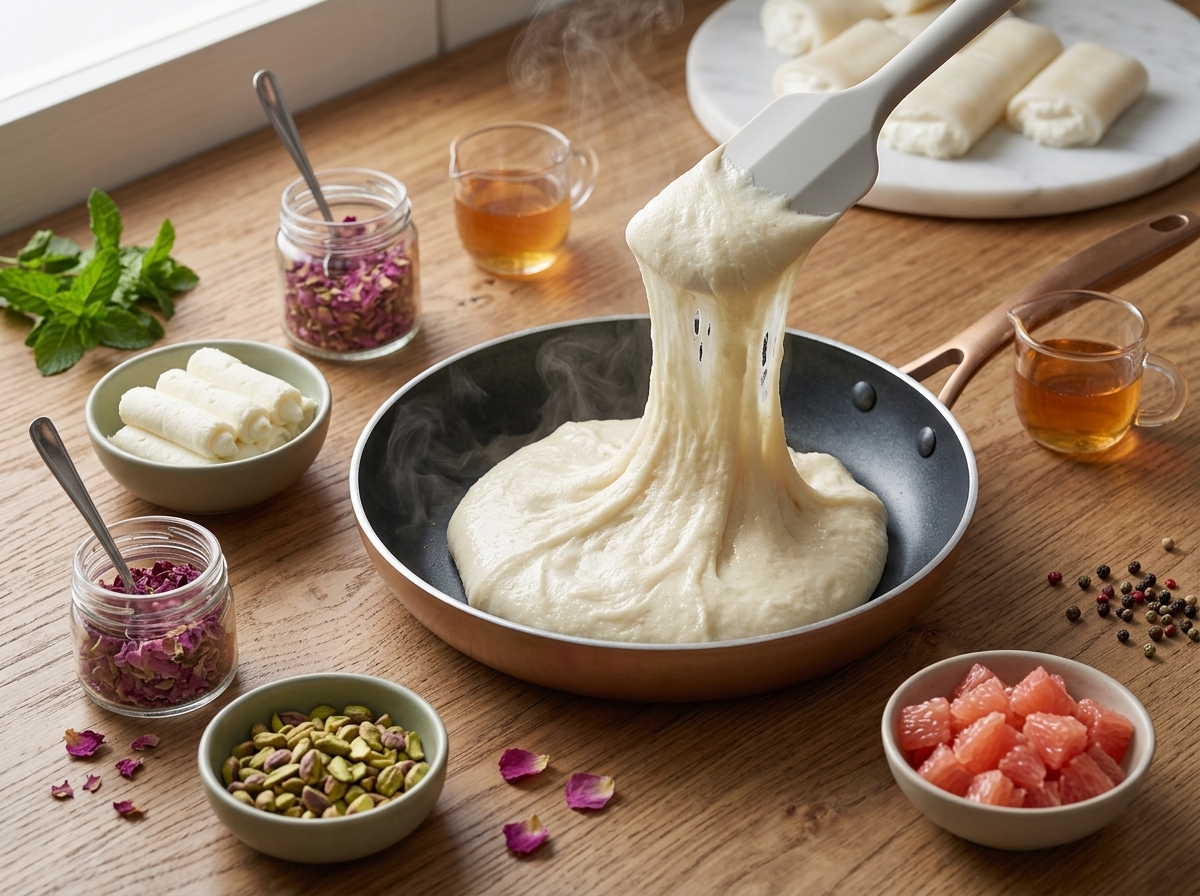
- Combine the shredded mozzarella, semolina, 200 ml of the syrup, and water in a 10-inch nonstick skillet. Cook over medium-low heat, stirring constantly with a silicone spatula, for 8 to 10 minutes, until the cheese fully melts and the mixture pulls together into a smooth, stretchy dough that clears the sides of the pan.
- Turn the hot dough out onto the prepared parchment. Working quickly while it's still warm, brush a rolling pin with syrup and roll the dough into a rectangle about 3 to 4 mm thick.
- Cut the dough into rectangles roughly 8 x 10 cm. If it firms up before you finish cutting, warm it in the microwave for 10 seconds to loosen it again.
- Spoon about 1 tablespoon of chilled ashta along one short edge of each rectangle and roll it up into a log, like a small cigar.
- Arrange the rolls seam-side down on a serving platter. Drizzle with the reserved 2 tbsp syrup and scatter crushed pistachios, and rose petals if using, over the top.
- Chill for 20 to 30 minutes before serving so the rolls firm up and hold their shape when picked up.
Notes
- Roll the dough while it's still warm, it stiffens fast once it hits the parchment.
- Chill the ashta for at least 2 hours before filling, it needs to hold its shape.
- Use syrup, not water, on your rolling pin and hands to keep the dough from getting soggy.
- Cook the cheese dough over medium-low heat, higher heat scorches the cheese before it melts through.
Tips for Success
- Work fast once the dough is rolled out, it stiffens within a couple of minutes as it cools.
- Brush your rolling pin and hands with syrup instead of water so the dough doesn’t turn soggy.
- Chill the ashta at least 2 hours so it holds together when you fill and roll the dough.
- Cut the dough into rectangles right away, and microwave it for 10 seconds if it hardens before rolling.
- Reserve extra syrup for drizzling at the table instead of soaking the rolls ahead, so they stay firm.
Variations
- Swap the ashta for lightly sweetened mascarpone if you want a quicker, no-cook filling option.
- Blend in akkawi cheese with the mozzarella for a saltier, more traditional cheese dough flavor.
- Skip the pistachio garnish and top with crushed walnuts or shredded coconut for a different crunch.
Storage and Reheating
Halawet el jibn is a cold dessert, so there’s no reheating step to worry about. Store rolled and garnished pieces in an airtight container in the fridge for up to 3 days.
The dough can soften and the cheese layer can weep a little as it sits, so eat within the first two days for the best texture.
For make-ahead ease, cook the dough and prepare the ashta up to a day in advance and keep them separate in the fridge. Roll and fill the day you plan to serve, since fresh-rolled dough is far more pliable and holds its shape better.
Serving Suggestions
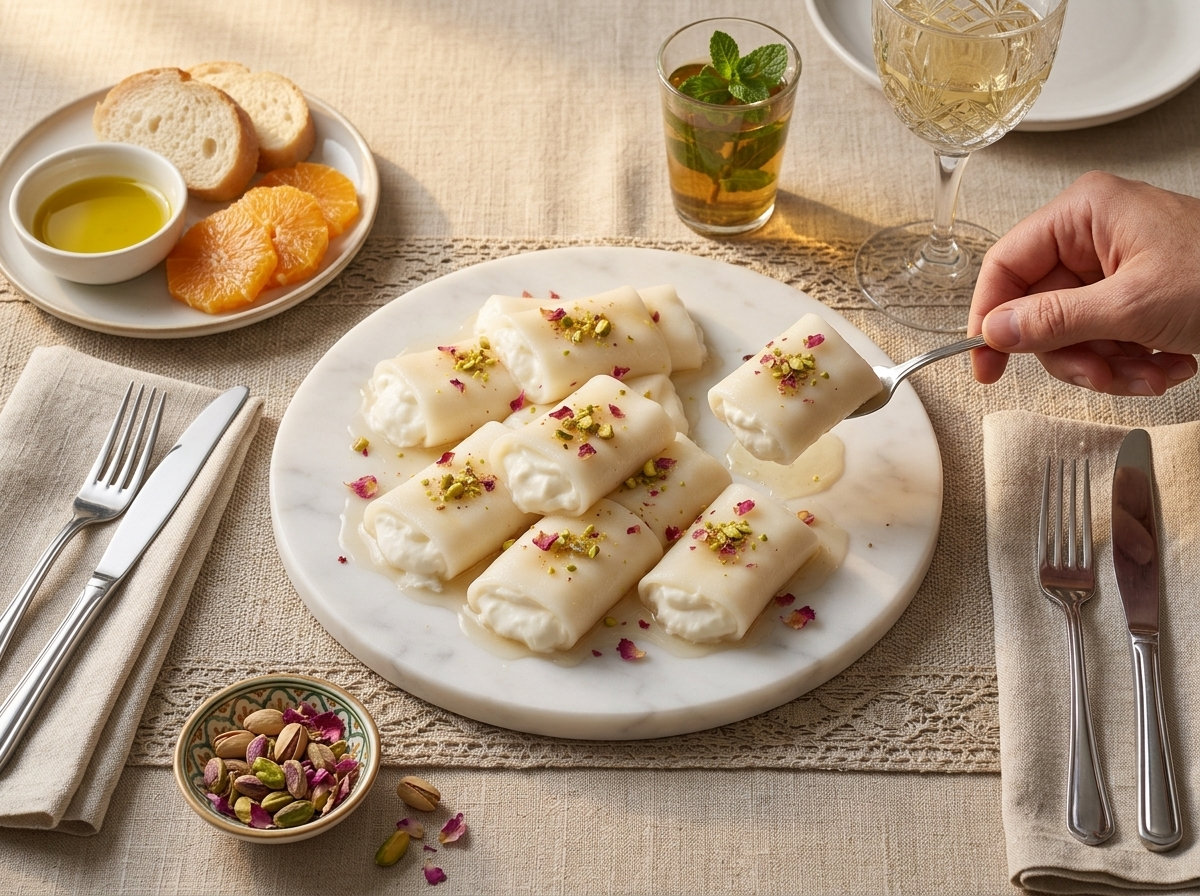
Serve halawet el jibn cold or at room temperature, straight from the fridge with extra syrup drizzled on top.
Pair it with strong Arabic coffee or mint tea, the bitterness balances the sweetness well.
It also works on a dessert platter alongside baklava or maamoul for a Middle Eastern spread.
FAQ
Why does my halawet el jibn dough turn stiff before I can roll it?
The dough cools fast once it leaves the skillet, and semolina sets as it drops in temperature. Work within a minute or two of taking it off the heat, and brush your rolling pin and hands with syrup instead of water so the dough doesn’t seize up or turn soggy. If it stiffens anyway, microwave for 10 seconds to loosen it.
Can I use ricotta instead of mozzarella for halawet el jibn?
No, ricotta doesn’t melt into the same stretchy dough that this recipe needs. Low-moisture, part-skim mozzarella gives the pull and structure that holds the rolls together, so stick with shredded mozzarella or a mozzarella-akkawi blend if you can find akkawi cheese.
Can I make the ashta filling for halawet el jibn a day ahead?
Yes, the ashta filling holds up well in the fridge for up to 24 hours before you roll it. Keep it covered with plastic wrap pressed onto the surface so it doesn’t form a skin, and cook the cheese dough fresh the day you plan to roll and serve.
What goes well with halawet el jibn besides the syrup?
Strong Arabic coffee or mint tea works well, since the bitterness cuts through the sweetness. It also sits nicely on a dessert platter next to baklava or maamoul if you’re putting together a Middle Eastern spread for guests.
Is halawet el jibn gluten free?
No, this recipe uses fine semolina in the cheese dough, which is made from wheat. There isn’t a reliable gluten-free swap that keeps the same stretchy texture, so this one isn’t suitable for a gluten-free diet as written.
What’s the difference between halawet el jibn and kunafa?
Halawet el jibn is a no-bake cheese and semolina dough rolled around cream and served cold, while kunafa is baked, layered with shredded phyllo or semolina on top of cheese, and served warm. Both use similar cheese and syrup, but the texture and serving temperature are different.
Related recipes
