
Jump to Recipe
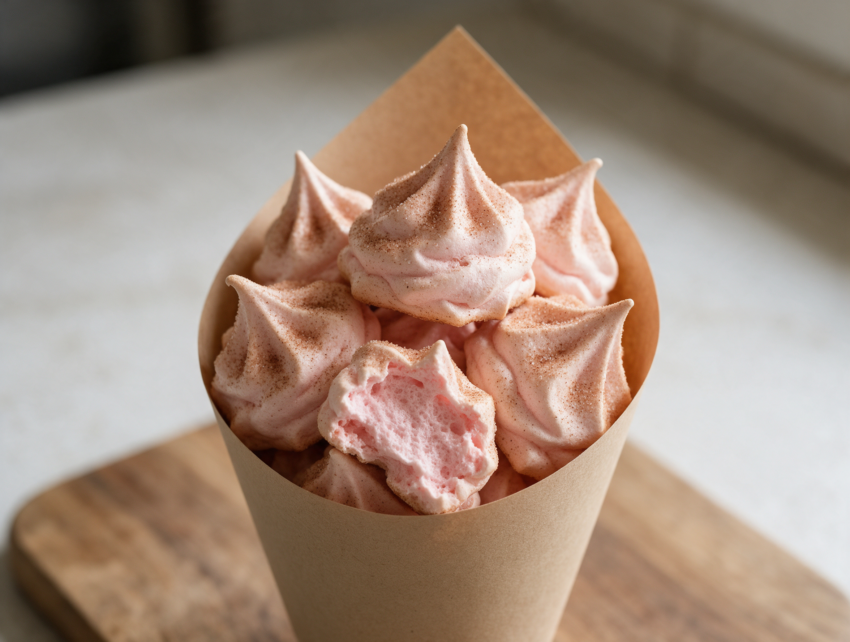
Espumillas are Ecuadorian meringue cookies made by whipping egg whites with sugar and folding in guava paste until the mixture turns pale pink and glossy. Street vendors in Quito and Cuenca have sold them from carts for generations, piled into paper cones and dusted with cinnamon sugar.
I first had one from a cart near Parque Calderón, still warm, and the outside cracked like a shell while the inside pulled apart like marshmallow fluff. That contrast is the whole point.
This version bakes low and slow so the shells set without turning tough. Guava paste gives the classic pink color and a soft fruity edge, though other fruit pastes work if that’s what you have on hand.
Don’t rush the whipping stage. Under-beaten egg whites collapse in the oven and you end up with flat, chewy discs instead of tall pink peaks.
Why You’ll Love This Recipe
- Only 4 main ingredients, no flour or butter needed
- Naturally gluten free and dairy free
- Piped peaks look festive for holidays or parties
- Guava paste gives real fruit flavor, not just sugar
Ingredient Notes
- egg whites: Use room temperature whites, they whip faster and hold more volume than cold ones straight from the fridge.
- guava paste: Look for pasta de guayaba at Latin grocery stores. Quince paste or tamarind paste both work as a substitute with a similar firm texture.
- cream of tartar: Stabilizes the meringue so it holds peaks. Swap in 1/2 tsp lemon juice if you don’t have any.
- granulated sugar: Add it slowly, a tablespoon at a time, so it fully dissolves and the meringue stays glossy instead of grainy.
- cinnamon sugar: This is the traditional finishing touch. Colored sprinkles are also common on Ecuadorian street carts if you want a festive look.
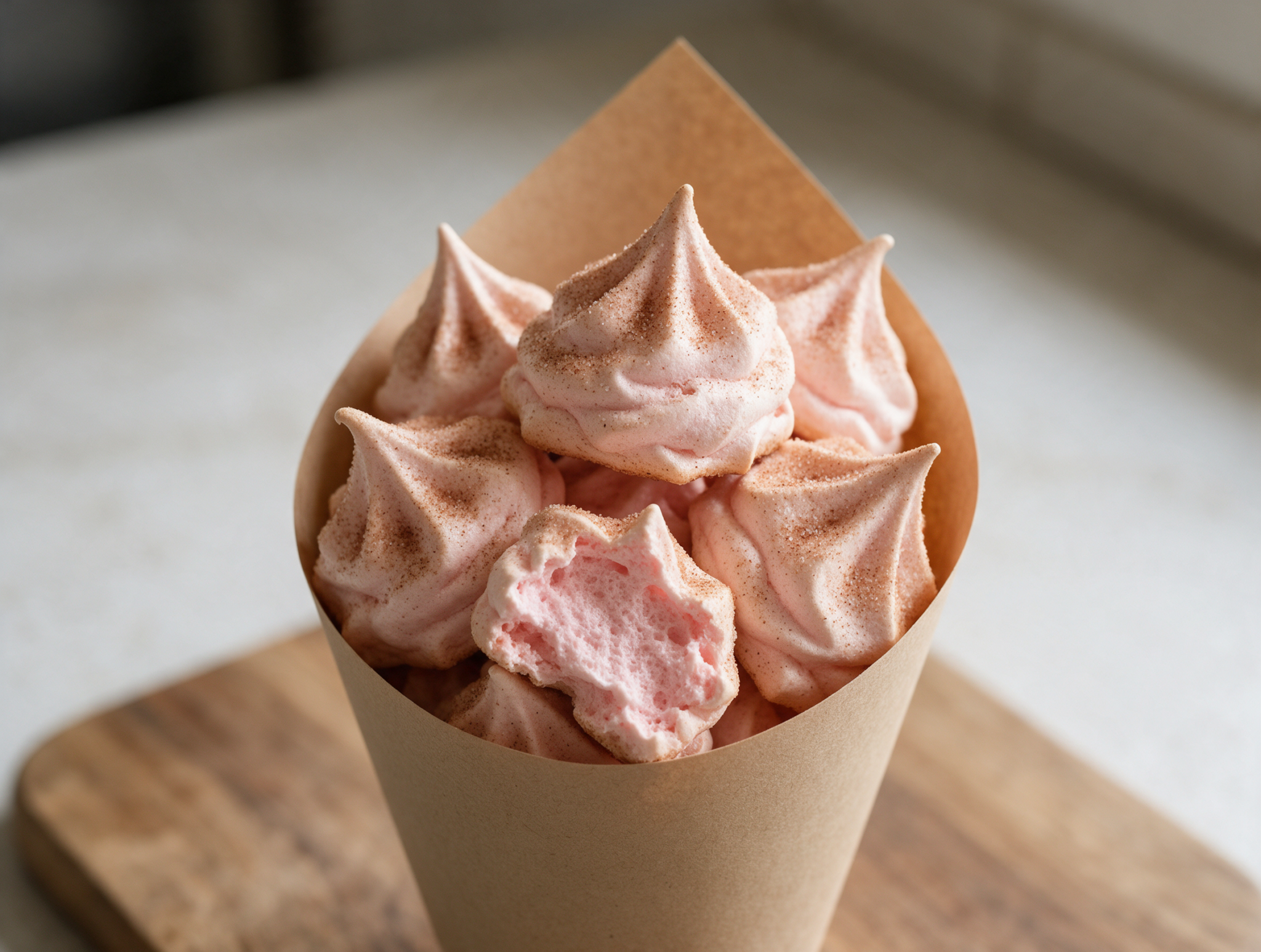
Ecuadorian Espumillas: Fluffy Guava Meringue Treats
Ingredients
Method
- Heat the oven to 120 C / 250 F and line a sheet pan (33 x 46 cm / 13 x 18 inch) with parchment paper.
- In a large mixing bowl, beat the egg whites, cream of tartar, and salt on medium speed until foamy, about 1 minute.
- Add the lemon juice, then increase to high speed and add the granulated sugar 1 tablespoon at a time. Beat for 6 to 8 minutes until the meringue is stiff, glossy, and holds a firm peak when you lift the beaters.
- In a 1-quart / 1 L saucepan, warm the guava paste with the water over low heat, stirring, until it loosens into a thick, spoonable paste, about 2 minutes. Let it cool for 5 minutes.
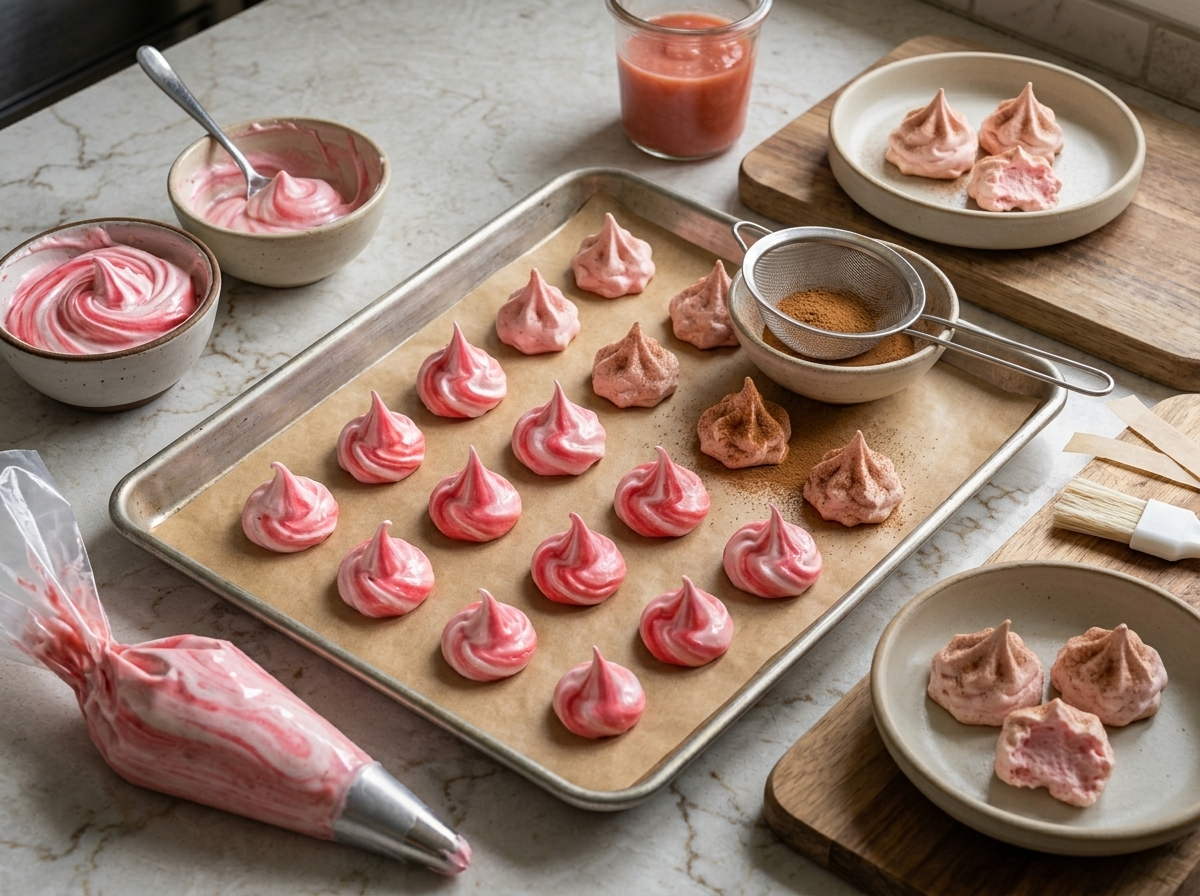
- Drizzle the warm guava paste over the meringue in 3 additions, folding gently with a rubber spatula each time. Stop as soon as you see pink streaks, overmixing will deflate the meringue.
- Spoon the mixture into a piping bag fitted with a large round tip. Pipe tall peaks about 5 cm / 2 inches wide onto the parchment, spacing them 4 cm / 1.5 inches apart.
- Bake for 45 to 50 minutes until the outside feels dry and set and the peaks hold their shape, with only a faint cream color, not deep golden.
- Turn off the oven, crack the door open, and leave the espumillas inside for 10 minutes so they finish drying without collapsing.
- Transfer to a wire rack and dust with the cinnamon sugar while still warm. Let cool completely before serving or storing.
Notes
- Room temperature egg whites whip up faster and taller than cold ones.
- Fold guava paste in only 3 additions to keep the meringue from deflating.
- Bake low at 120 C / 250 F, higher heat browns the shell before the center sets.
- Cool completely on a rack before stacking, warm meringues stick together.
Tips for Success
- Beat egg whites to stiff, glossy peaks before adding guava paste, or the meringue will deflate in the oven.
- Warm the guava paste slightly so it folds in smoothly instead of clumping into hard streaks.
- Stop folding as soon as you see pink swirls, overmixing knocks the air out of the meringue.
- Pipe the peaks with 4 cm / 1.5 inch gaps between them so hot air circulates evenly.
- Let the espumillas finish drying in the turned-off oven with the door cracked, this keeps the shell from cracking too fast.
Variations
- Swap guava paste for tamarind or reduced passionfruit pulp for a tangier, less sweet version of espumillas.
- Tint the meringue with a drop of natural red food coloring if your guava paste is pale and you want brighter pink peaks.
- Pipe smaller 3 cm peaks and shorten baking to 30 minutes for a crisp, bite-size version to serve in mini paper cups.
Storage and Reheating
Espumillas keep best at room temperature, not in the fridge. Store them airtight in a container with a sheet of parchment between layers, and they’ll stay good for 2 to 3 days before the shells start softening.
Skip the freezer. Once thawed, the guava swirl weeps moisture into the meringue and the texture turns rubbery instead of light.
If they do soften from humidity, a 10 minute stint in a 120 C / 250 F oven can re-crisp the outside, but the marshmallow center won’t bounce back exactly the same.
Serving Suggestions
Espumillas are street food in Ecuador, piled into paper cones and eaten by hand while walking. That’s still the best way to serve them, no plate required.
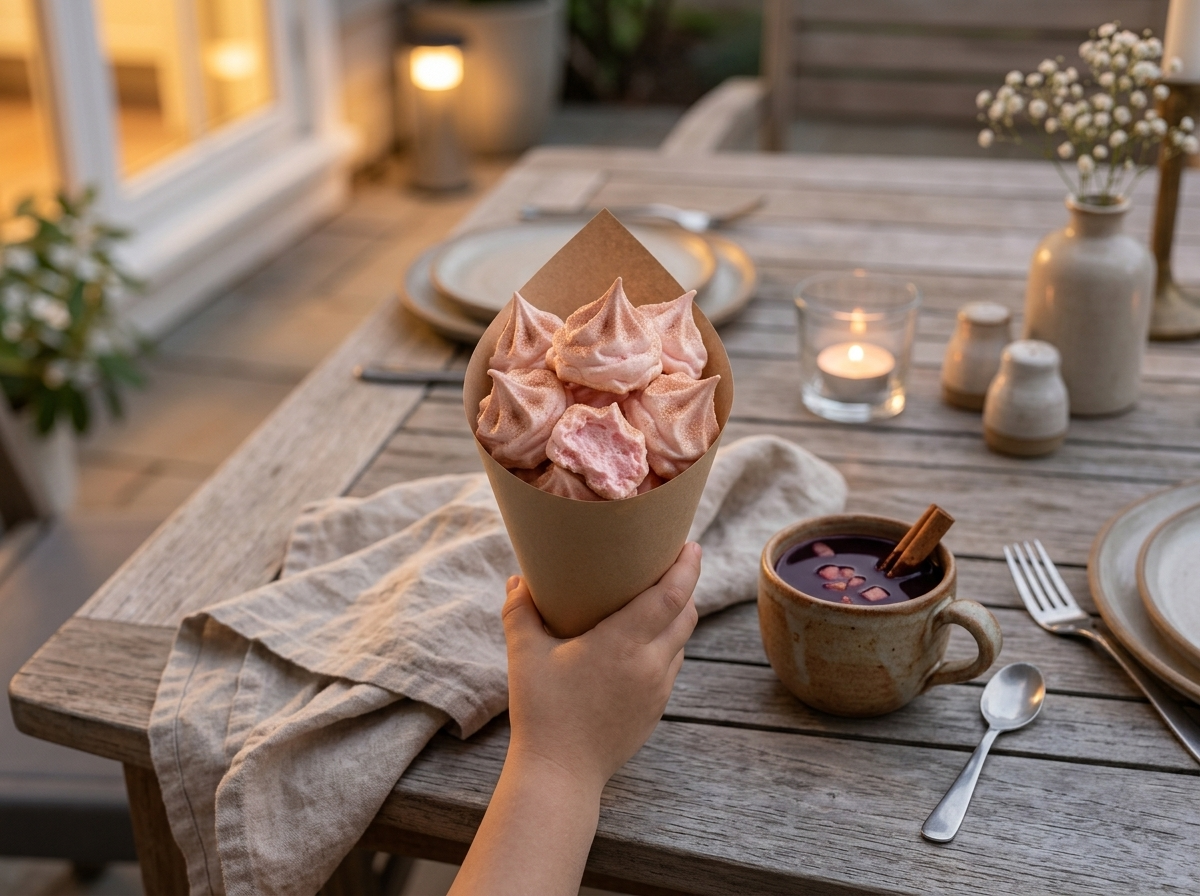
Pair them with colada morada, hot chocolate, or a strong cup of coffee. The mild sweetness and light texture work well after a heavier lunch too.
For a party, pipe them small and set them out on a platter next to other bite-size desserts. They disappear fast.
FAQ
Why did my espumillas collapse or turn flat in the oven?
The meringue was probably under-whipped or overmixed after folding in the guava paste. Egg whites need to reach stiff, glossy peaks before you add the fruit paste, and folding should stop the moment you see pink streaks. Baking too hot instead of the low 120 C / 250 F setting also causes collapse.
Can I use guava jam instead of guava paste for espumillas?
Guava paste works better than jam because it’s firmer and holds its shape. Jam has more liquid and can weep into the meringue, making it deflate or turn sticky instead of holding a peak. If jam is all you have, simmer it down first until thick before folding it in.
Can I make espumillas ahead of time and store them?
Yes, espumillas hold for 2 to 3 days if stored airtight at room temperature with parchment between layers. Keep them away from humidity since moisture softens the crisp shell fast. Skip the fridge, it makes them sticky, and skip the freezer since thawing turns the texture rubbery.
What goes well with Ecuadorian espumillas?
Espumillas pair well with hot colada morada, coffee, or hot chocolate, the way they’re traditionally sold from carts in Ecuador. They also work as a light finish after a savory lunch since they’re mostly egg white and fruit paste, not heavy on butter or flour.
Are espumillas gluten free?
Yes, espumillas are naturally gluten free since the recipe uses only egg whites, sugar, and guava paste with no flour. Check your guava paste label if you need a certified gluten free product, since some brands process fruit pastes in facilities that also handle wheat.
What’s the difference between espumillas and regular meringue cookies?
Espumillas fold guava paste into the meringue for a pink color and fruity edge, while plain meringue cookies are just egg white and sugar. Espumillas also bake at a gentler temperature so the outside sets while the inside stays soft like marshmallow, rather than drying all the way through.
If you enjoyed this, try
