
Jump to Recipe
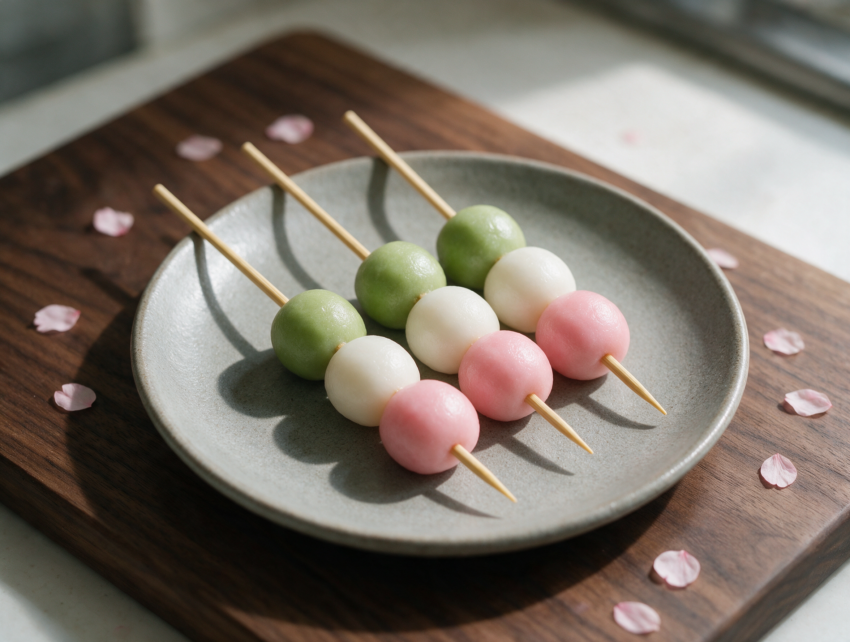
Hanami dango is the pink, white, and green mochi skewer sold at spring festivals across Japan, made from a sweet glutinous rice dough that’s boiled until chewy and threaded three balls to a stick.
I first had it under a row of blooming cherry trees in Osaka, straight off a food cart, still warm. The chew was soft but sturdy, not sticky on the teeth, and barely sweet on its own.
This version uses dango-ko, a blend of glutinous and regular rice flour made for exactly this texture. You split one dough into three batches, color two of them naturally with strawberry powder and matcha, and boil them until they float.
No oven, no fancy equipment. Just a pot of water and a bit of patience while you roll 36 small balls.
Why You’ll Love This Recipe
- No oven needed, just a pot of boiling water
- Naturally colored with matcha and strawberry powder
- Ready in under an hour start to finish
- Fun for kids to help roll the balls
Ingredient Notes
- dango-ko: A blend of glutinous and regular rice flour made specifically for dango. If you can’t find it, use equal parts shiratamako and joshinko, or substitute mochiko and cut the water slightly.
- strawberry powder: Gives the pink dough color and a mild fruit flavor without dye. A few drops of pink food coloring work too if that’s what you’ve got.
- matcha powder: Culinary-grade matcha is enough here, it colors and lightly flavors the green dough. Ceremonial grade is wasted once it’s boiled.
- sugar: Just enough to round out the chew, hanami dango isn’t meant to taste very sweet on its own.
- bamboo skewers: Standard 15 cm bamboo skewers work fine. No need to soak them since you’re not grilling.
Three-Color Hanami Dango: Soft Japanese Mochi Skewers
Ingredients
Method
- In a small bowl, stir the strawberry powder into 80 ml hot water until dissolved. In another small bowl, stir the matcha powder into 85 ml hot water until smooth.
- In a mixing bowl, combine 100 g dango-ko with 1 tbsp sugar for the white dough. Add the 80 ml plain hot water gradually, mixing with a spoon, then knead by hand until smooth and as soft as an earlobe, about 2 minutes.
- Repeat in a second bowl for the pink dough, using the strawberry water instead of plain water. Repeat in a third bowl for the green dough, using the matcha water.
- Divide each dough into 12 equal pieces, about 12 to 13 g each. Roll each piece between your palms into a smooth ball, keeping the three colors separate on the counter.
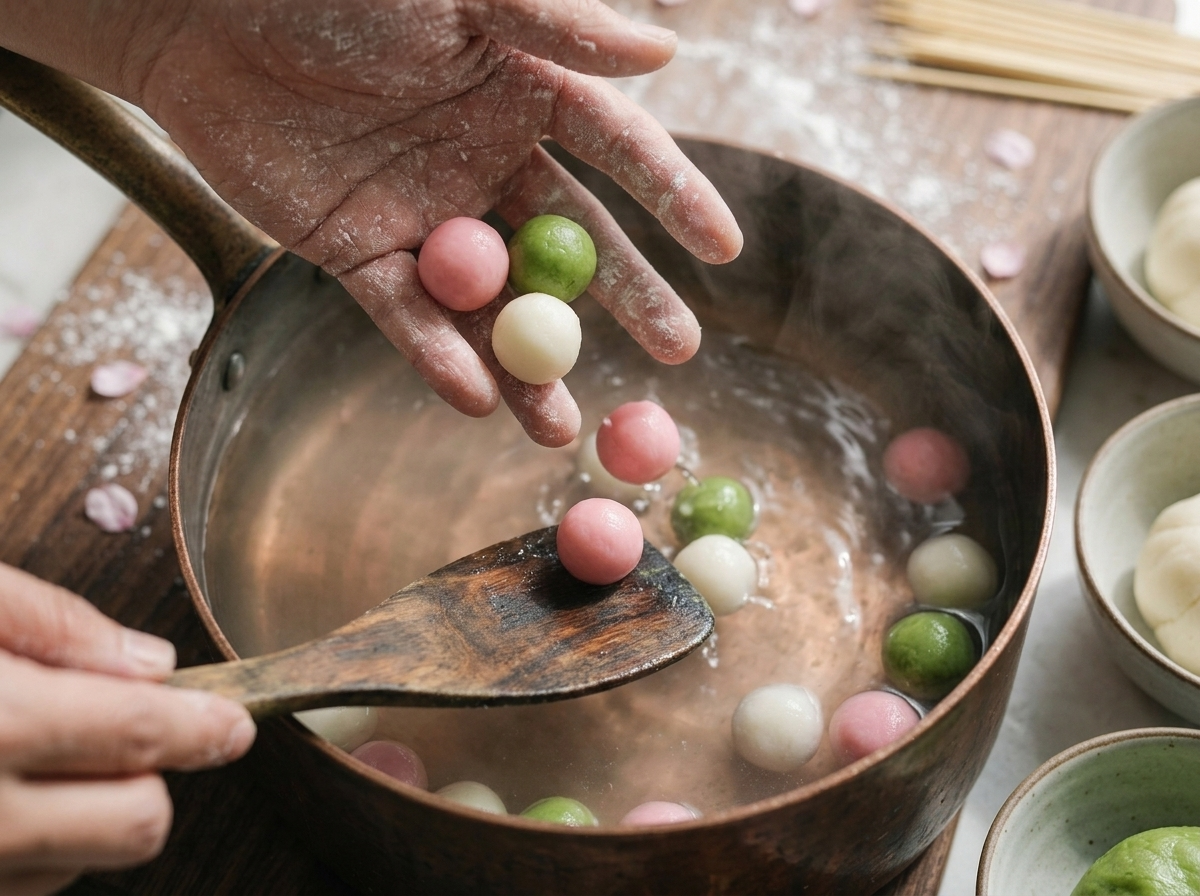
- Bring a 3-quart / 2.8 L saucepan of water to a boil. Working one color at a time so they don't crowd or stick, drop in the balls and boil until they float to the surface, about 2 to 3 minutes.
- Let the floating dango simmer 1 to 2 minutes more, until slightly translucent and chewy all the way through. Lift out with a slotted spoon and drop straight into the bowl of ice water.
- Let the dango sit in the ice water for 2 to 3 minutes to firm up, then repeat the boiling and shocking with the remaining two colors.
- Drain the cooled dango well on a clean kitchen towel.
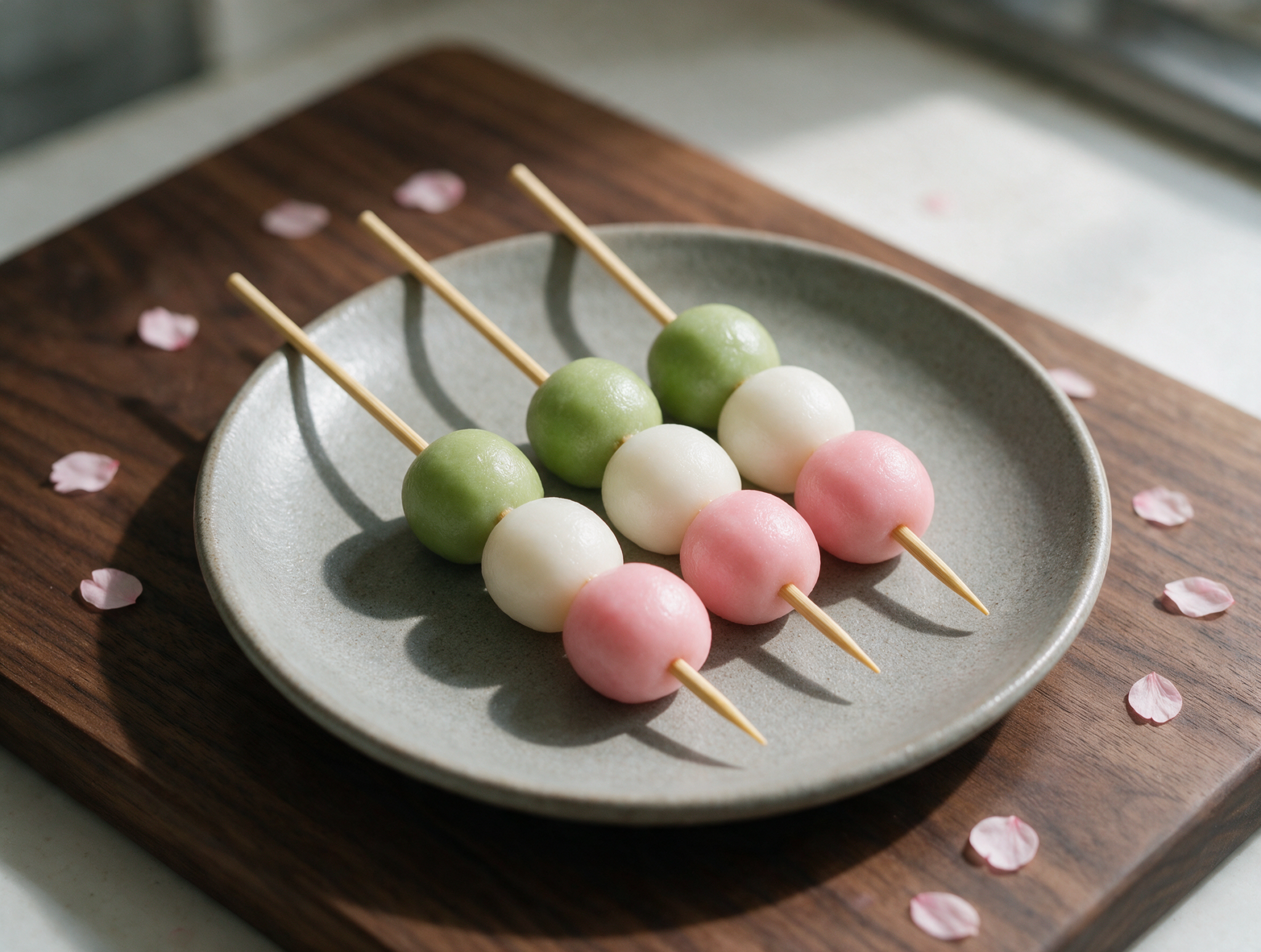
- Thread one pink, one white, and one green dango onto each bamboo skewer, in that order, until all 12 skewers are assembled.
- Arrange the skewers on a plate and serve at room temperature.
Notes
- Work fast once each dough is mixed, it dries out on the counter within minutes.
- Don't stack warm dango on top of each other right after rolling, they'll stick together.
- Matcha dye needs slightly more hot water than the plain and pink doughs to loosen properly.
- Roll all 36 balls before you start boiling so you're not rolling and boiling at once.
Tips for Success
- Knead each dough until it feels as soft as an earlobe, adding water a few drops at a time if it cracks.
- Keep the three doughs separate while boiling so the pink and green dye don’t bleed into the white.
- Shock the balls in ice water right after boiling to stop the cooking and firm up the chew.
- Skewer the dango while still a little warm, since cold dango cracks more easily when pierced.
- Weigh the flour instead of scooping by cup, packed rice flour throws off the water ratio fast.
Variations
- Swap matcha for cocoa powder and use a caramelized sugar dough instead of strawberry for a fall-colored version.
- Simmer a mitarashi glaze of soy sauce, sugar, and cornstarch until glossy and brush it over plain white dango.
- Roll the finished dango in kinako (roasted soybean flour) mixed with a little sugar for a nutty coating.
Storage and Reheating
Hanami dango tastes best within a few hours of boiling, since the rice flour dough starts to firm up and turn a little chalky as it sits at room temperature.
If you have leftovers, wrap them tightly and refrigerate for up to 1 day, then microwave each skewer for 10 to 15 seconds with a damp paper towel draped over the dango to soften the chew back up.
For longer storage, freeze cooked, cooled dango in a freezer bag for up to 1 month. Thaw at room temperature and microwave the same way before serving.
Serving Suggestions
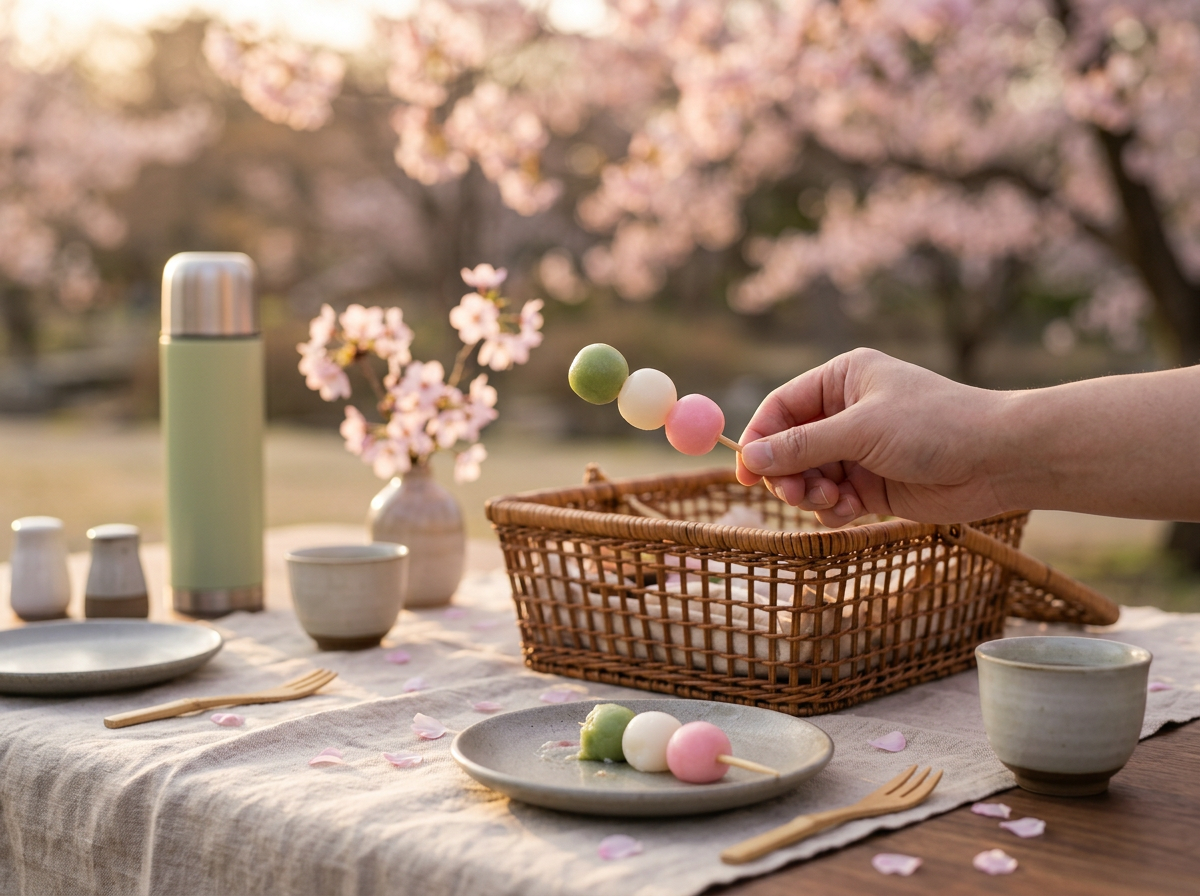
Hanami dango is served plain and at room temperature in Japan, usually alongside a cup of hot green tea whose bitterness plays off the mild sweetness of the mochi.
Set a few skewers on a small plate next to sakura mochi or a bowl of sweetened red bean paste for dipping, and you’ve got a simple spring dessert board.
They also travel well in a bento box or picnic basket, which is exactly how they’re meant to be eaten, outside, under blossoming trees.
FAQ
How do I know when hanami dango is done boiling?
Hanami dango is done when it floats to the top of the water and turns slightly translucent, usually after 3 to 4 minutes total. Let the balls simmer 1 to 2 minutes after they float so the center cooks through fully. Pull one out and press it, it should feel soft and chewy with no chalky middle.
Can I use mochiko instead of dango-ko for hanami dango?
Yes, mochiko works though the finished dango turns out slightly softer and stickier than with dango-ko. Dango-ko is a blend of glutinous and regular rice flour made for this exact chew, so with mochiko cut the water by about 10 percent. Shiratamako is another good stand-in.
Can you freeze hanami dango?
Yes, cooked hanami dango freezes well for up to 1 month if wrapped tightly and sealed in a freezer bag. Thaw at room temperature, then microwave for 10 to 15 seconds with a damp paper towel over the dango to bring back the chewy texture. Fresh dango hardens within hours, so freezing is the better make-ahead option.
What goes well with hanami dango?
Green tea is the classic pairing, its bitterness balances the mild sweetness of the mochi. Hanami dango also works on a spring dessert board next to sakura mochi or a small bowl of red bean paste for dipping. Serve them at room temperature, since chilling makes the mochi too firm.
Is hanami dango gluten free?
Yes, hanami dango is naturally gluten free since it’s made from glutinous rice flour, which despite the name has no wheat gluten in it. Just check that your matcha powder or coloring doesn’t carry a cross-contamination warning if you’re strict about it. Sugar and water are gluten free by default.
What’s the difference between hanami dango and mitarashi dango?
Hanami dango is the pink-white-green skewer eaten during cherry blossom season and is usually plain with just a little sugar in the dough. Mitarashi dango is a different style, plain white dango glazed in a sweet soy sauce syrup and often lightly grilled. Both share the same base dough, just different colors, glaze, and occasion.
More from the kitchen
