
Jump to Recipe
There’s something almost hypnotic about watching kuzu starch turn from cloudy white to glass in a hot pan. That’s the moment kuzumochi is born.
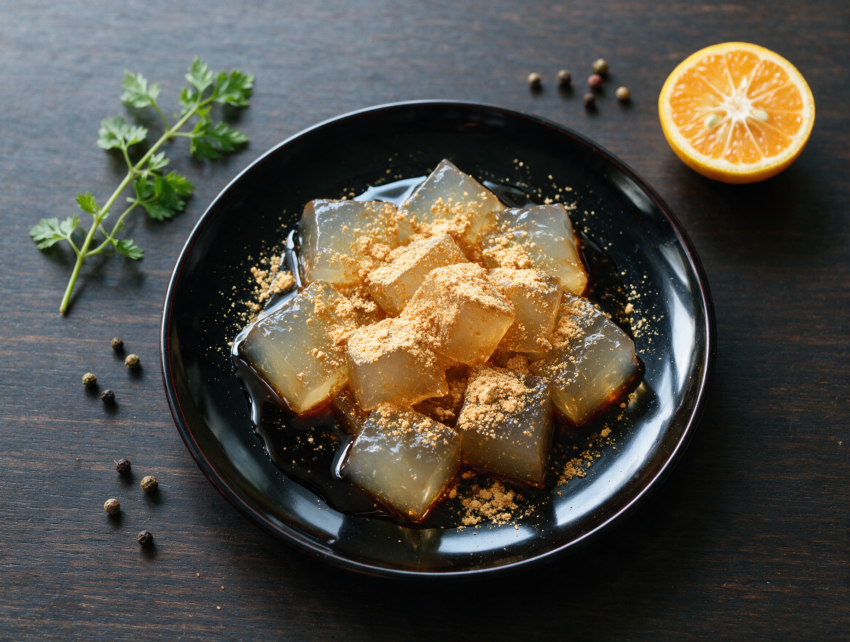
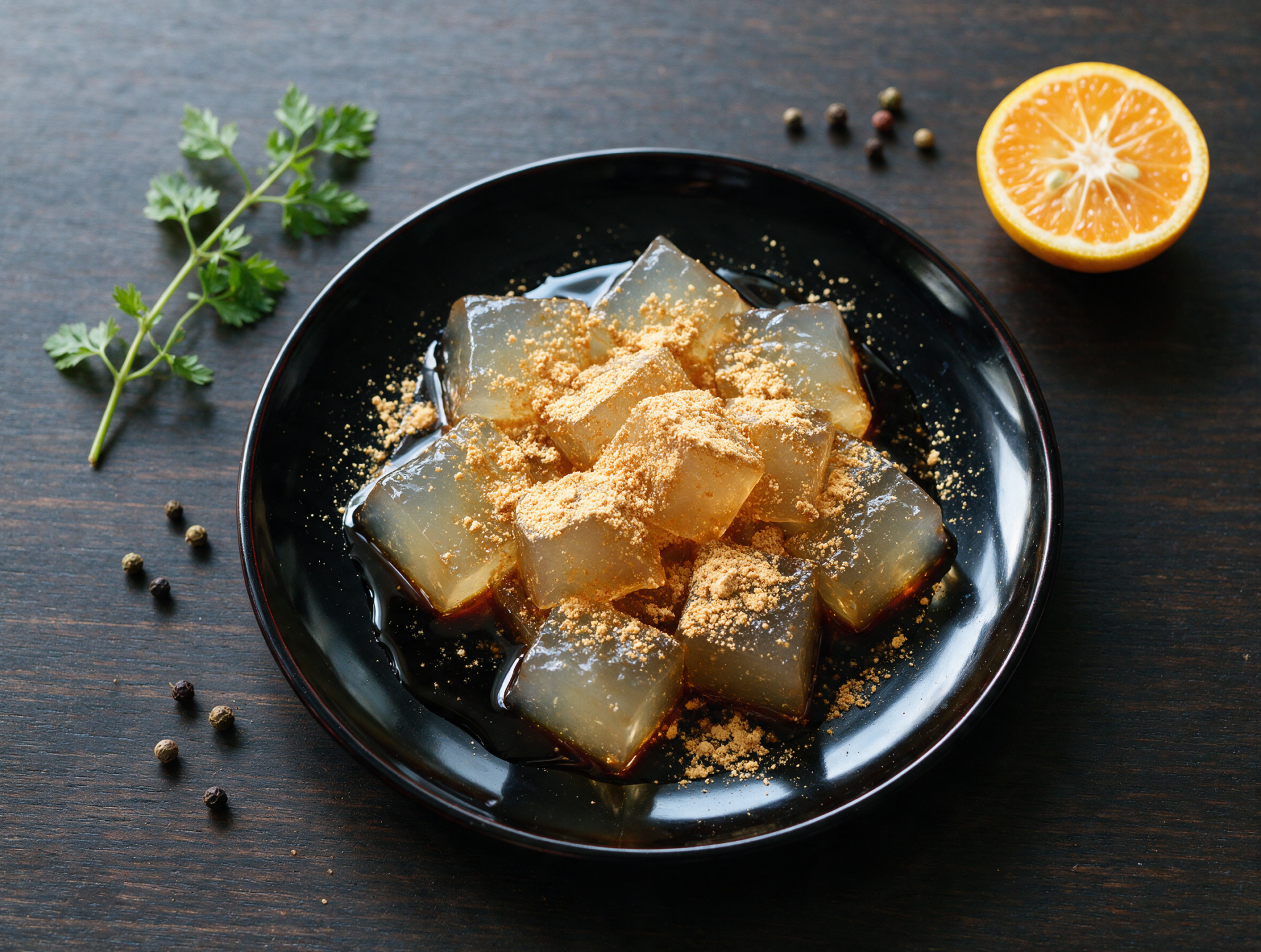
Kuzumochi is a chilled Japanese starch jelly, dusted with roasted soybean flour and finished with dark sugar syrup. It isn’t sweet on its own. The kinako and kuromitsu do that work.
I first ate it at a tea house in Kamakura, cool cubes wobbling on a black lacquer plate. The texture surprised me. Soft, a little springy, cold enough to wake you up on a humid afternoon.
This version uses real kuzu starch (honkuzu), water, and a homemade kuromitsu syrup you can stir together in five minutes. No oven, no fancy gear, just the same no-bake ease as Classic Nanaimo Bars. Just a saucepan, a spatula, and about ten minutes of steady stirring.
Get the texture right and you’ll see why this dessert has stuck around in Japan for centuries.
Why You’ll Love This Recipe
- Just three ingredients make the jelly base
- Naturally gluten-free, vegan, and dairy-free dessert
- Ready to eat in under two hours
- Cool, springy texture that works on humid days
Ingredient Notes
- honkuzu (kuzu starch): Use real kuzu starch for the springy, slightly chewy bite. Potato starch or cornstarch works as a substitute but sets smoother and more glass-like.
- water: Cold tap water is fine for whisking the starch, no need to filter it first.
- dark brown sugar or kurozato: Kurozato (Okinawan black sugar) gives the deepest molasses flavor for the kuromitsu, dark brown sugar is the easy stand-in.
- kinako (roasted soybean flour): Look for it in Japanese or Asian grocery stores. Sift it right before serving so it doesn’t clump on the damp cubes.
Chilled Kuzumochi: Japanese Starch Jelly with Kinako
Ingredients
Method
- Combine the dark brown sugar and 50 ml water in a small 1-quart / 1L saucepan. Simmer over low heat for 3 to 4 minutes, stirring, until syrupy and slightly darker. Set aside to cool.
- In a 2-quart / 1.9L saucepan, whisk the kuzu starch into the 400 ml cold water until fully dissolved with no lumps.
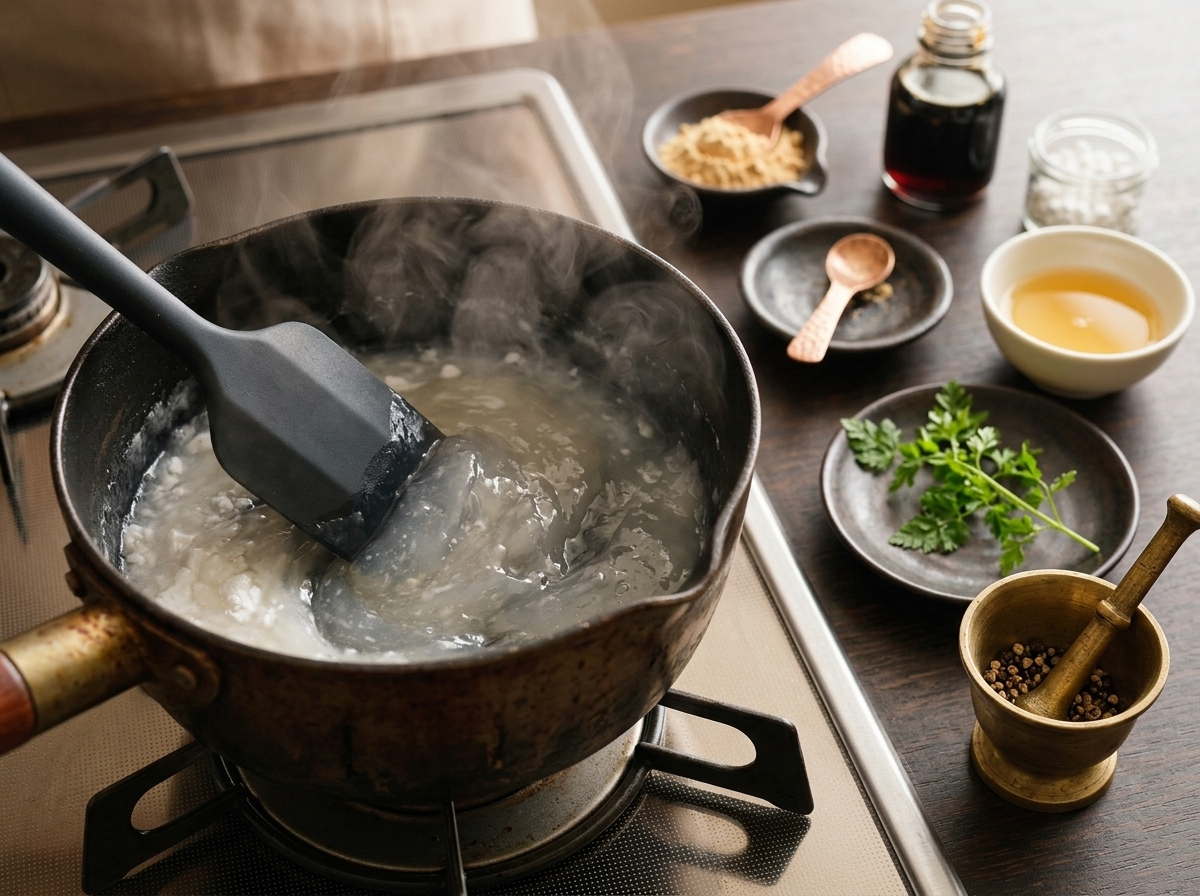
- Set the pan over medium-low heat. Stir constantly with a rubber spatula, scraping the bottom and sides, for 8 to 10 minutes.
- Keep stirring until the mixture shifts from cloudy white to translucent gray and turns thick enough to mound on the spatula without dripping off. Don't stop stirring during this stretch, even 30 seconds unattended can let it clump and scorch on the bottom.
- Pour the hot mixture into an 18 cm / 7-inch square dish. Smooth the top with a wet spatula.
- Set the dish into a large bowl of ice water for 15 minutes, until the surface feels firm to the touch.
- Cover and refrigerate for at least 1 hour, until fully set through the center.
- Turn the set kuzumochi out onto a damp cutting board. Cut into 2.5 cm / 1-inch cubes with a wet knife, wiping the blade between cuts.
- Divide the cubes into bowls. Dust generously with kinako and drizzle with the kuromitsu right before serving.
Notes
- Stir constantly, kuzu scorches fast once it starts to thicken.
- Real honkuzu costs more but gives the best chew.
- Chill at least 1 hour before cutting or cubes fall apart.
- Kuromitsu keeps a week in the fridge, make a double batch.
Tips for Success
- Whisk the kuzu starch into cold water first, never hot, or you’ll get lumps that never smooth out.
- Keep stirring the whole 8 to 10 minutes, one unattended minute lets it scorch on the bottom of the pan.
- Use real honkuzu starch if you can find it, the texture is springier than potato starch substitutes.
- Cut the set jelly with a wet knife so the blade glides through instead of dragging the cubes apart.
- Dust the kinako on right before serving, it turns pasty and clumps if it sits on damp cubes too long.
Variations
- Swap kuromitsu for maple syrup mixed with a splash of soy sauce for a nuttier, less sweet finish.
- Whisk a small spoon of matcha into the kuzu mixture before cooking for pale green cubes with a grassy edge.
- Fold in fresh strawberry puree at the end of cooking for a pink-tinted kuzumochi with a fruitier bite.
Storage and Reheating
Kuzumochi belongs in the fridge, not the microwave, chilling firm the way a Classic Canadian Flapper Pie sets before slicing. Reheating turns the gel rubbery and weepy, so skip that step entirely.
Store cut cubes in an airtight container with a little cold water over the top for up to 2 days, then drain before serving. Don’t freeze it, the starch gel breaks down as it thaws and turns grainy and watery.
Make the kuromitsu syrup up to a week ahead and keep it in a jar in the fridge. Cook the kuzumochi itself the day you plan to serve it, or the night before at the latest, for the best texture.
Serving Suggestions
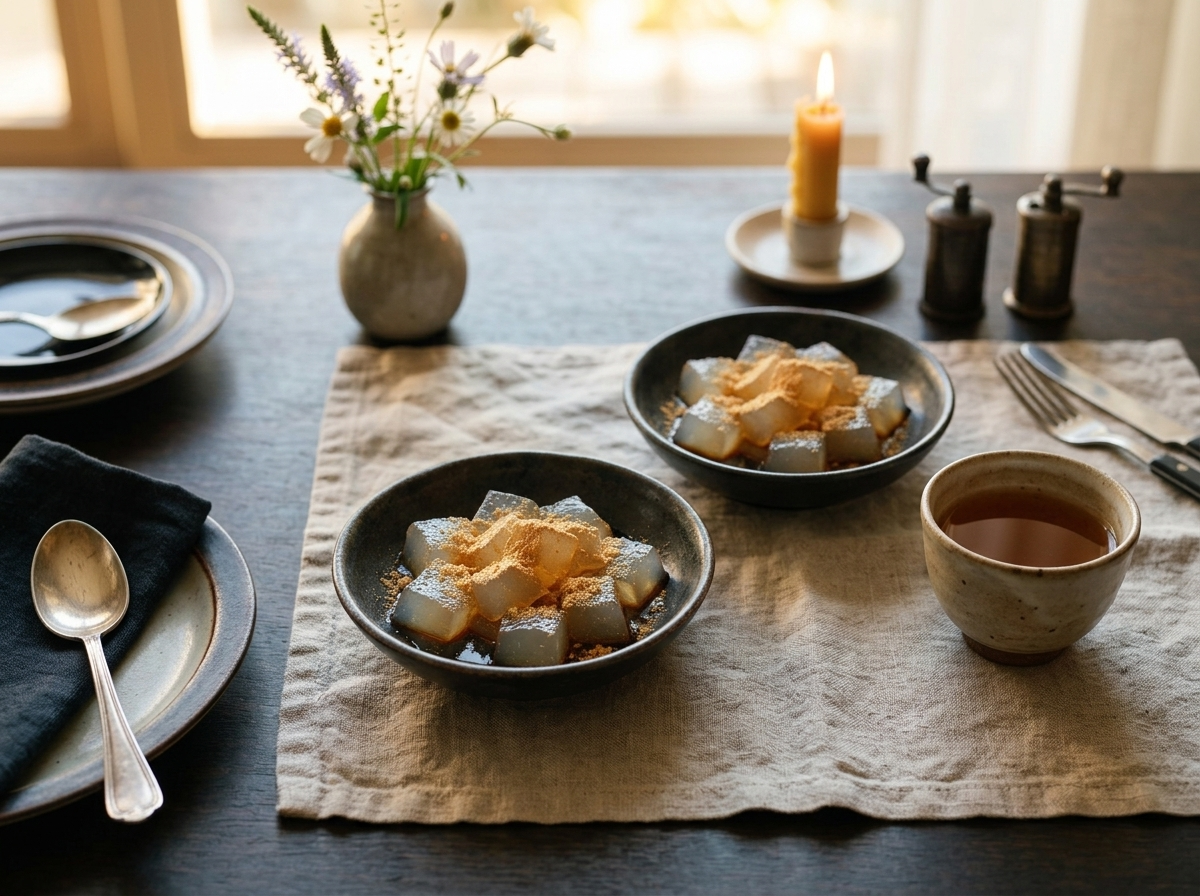
Serve kuzumochi straight from the fridge, in small bowls or on a lacquer plate if you have one. Dust it heavy with kinako right before it hits the table.
Drizzle kuromitsu over the top just before eating, not before, so the cubes don’t sit in a pool of syrup and turn gummy.
I like it after a rich dinner, alongside hot roasted green tea (hojicha), or on its own during a humid afternoon.
FAQ
Why is my kuzumochi still cloudy instead of clear and jelly-like?
Cloudy kuzumochi usually means it hasn’t cooked long enough for the starch to fully gelatinize. Keep it on medium-low heat, stirring nonstop, until the mixture turns glossy and translucent gray, usually around 8 to 10 minutes. Pull it too early and it sets soft, staying milky instead of clear.
Can I use potato starch or cornstarch instead of kuzu starch?
You can, and both work in a pinch, but the texture changes. Kuzu starch gives kuzumochi a springy, slightly chewy bite, while potato starch or cornstarch turns it smoother and more glass-like, closer to a firm pudding. Cooking time stays roughly the same, just watch for the same shift from cloudy to clear.
How long does kuzumochi keep in the fridge, and can I freeze it?
Kuzumochi keeps for about 2 days in the fridge, stored in an airtight container with a little cold water over the cubes to stop them from drying out. Don’t freeze it. The starch gel breaks down as it thaws and turns grainy and watery instead of springy.
What goes well with kuzumochi besides kinako and kuromitsu?
Hot hojicha or roasted green tea works well, its toasty bitterness balances the sweet kuromitsu syrup. Fresh berries or a scoop of matcha ice cream on the side also work if you want more contrast. Keep additions simple since kuzumochi’s texture is the main event.
Is kuzumochi gluten free and vegan?
Yes, kuzumochi is naturally gluten-free and vegan when made with kuzu starch, water, plant-based sugar, and kinako. Double check your kuromitsu if you’re buying it premade, since some brands add honey. Homemade kuromitsu with dark brown sugar and water keeps the whole dessert plant-based.
What’s the difference between this kuzumochi and Kawasaki-style kuzumochi?
Kawasaki-style kuzumochi, like the kind sold at Funabashiya, is made from wheat starch fermented for over a year, giving it a dense, slightly sour flavor and jiggly bite. This homemade version uses kuzu starch cooked fresh, so it’s mild, translucent, and ready the same day instead of after months of aging.
