
Jump to Recipe
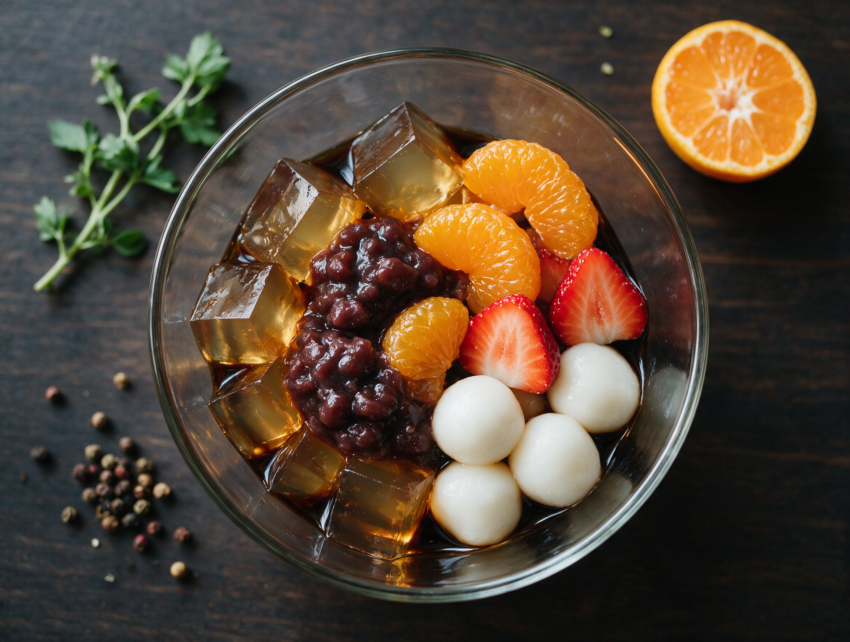
There’s something calming about a bowl of anmitsu on a hot afternoon. Cold jelly cubes, sweet beans, soft fruit, all sitting in a small pool of dark syrup you pour on yourself.
I first had it at a tiny kissaten in Kyoto, the kind of place with vinyl booths and a slow ceiling fan. It wasn’t heavy or cake-sweet. It was cool, a little chewy, a little bouncy, and it didn’t leave me feeling like I’d overdone it.
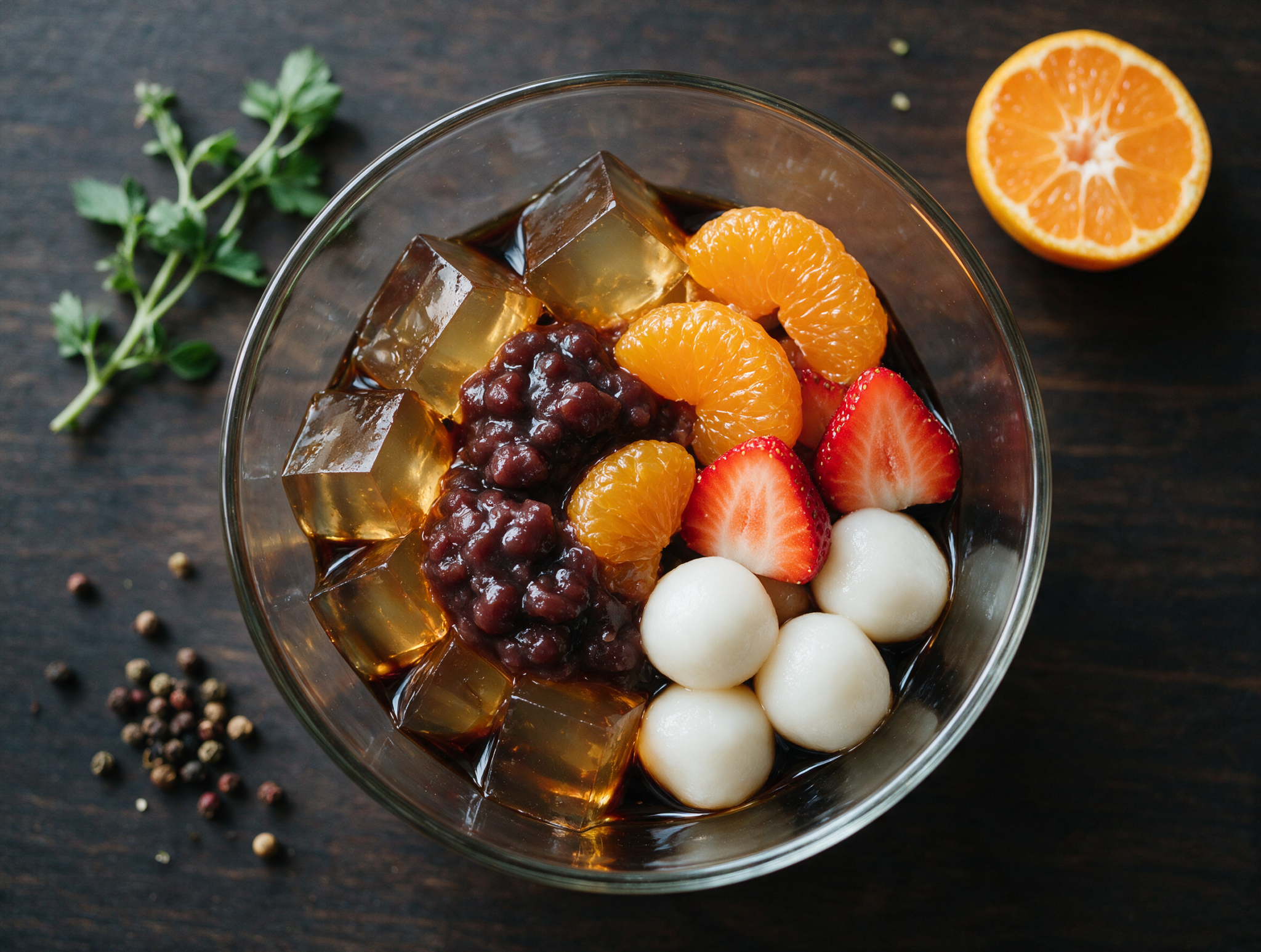
This version of the Japanese dessert uses agar powder for the jelly cubes, homemade shiratama dango, canned mandarin and pineapple, and a simple kuromitsu syrup you make in ten minutes on the stove. Nothing here is hard. It just takes a little patience while the jelly sets.
You build your own bowl at the end, so nobody eats the same one twice.
Why You’ll Love This Recipe
- Agar jelly sets firm at room temp, no gelatin needed
- Every component can be made a day ahead
- Naturally vegan and gluten free without substitutions
- Cooling and light, not a heavy sugar-bomb dessert
Ingredient Notes
- Agar agar powder (kanten): This sets firm and holds cube shapes even at room temp. Gelatin won’t work the same way here, it melts too easily.
- Shiratamako: Glutinous rice flour made specifically for dango, giving a chewier bite than regular rice flour. Look for it at Japanese or Asian grocery stores.
- Anko (sweet red bean paste): Use store-bought smooth or chunky anko to save time, or homemade if you have it. Canned versions work fine.
- Dark brown sugar: Kokuto (Okinawan black sugar) is traditional for kuromitsu, but muscovado or dark brown sugar gives a close molasses flavor.
- Canned mandarin and pineapple: Canned fruit is traditional here and holds up better in syrup than fresh citrus segments, which can turn bitter.
Homemade Anmitsu Japanese Dessert with Kanten Jelly
Ingredients
Method
- Sprinkle the agar powder over 500 ml water in a 2-quart / 2 L saucepan. Let it sit for 5 minutes to bloom.
- Bring to a boil over medium heat, stirring often. Once boiling, lower the heat and simmer for 1 to 2 minutes, stirring, until no agar grains remain on the spoon.
- Stir in the sugar until dissolved, then pour into a 20 cm / 8-inch square dish. Cool at room temperature for 20 minutes, then chill for at least 1 hour until firm and cuttable.
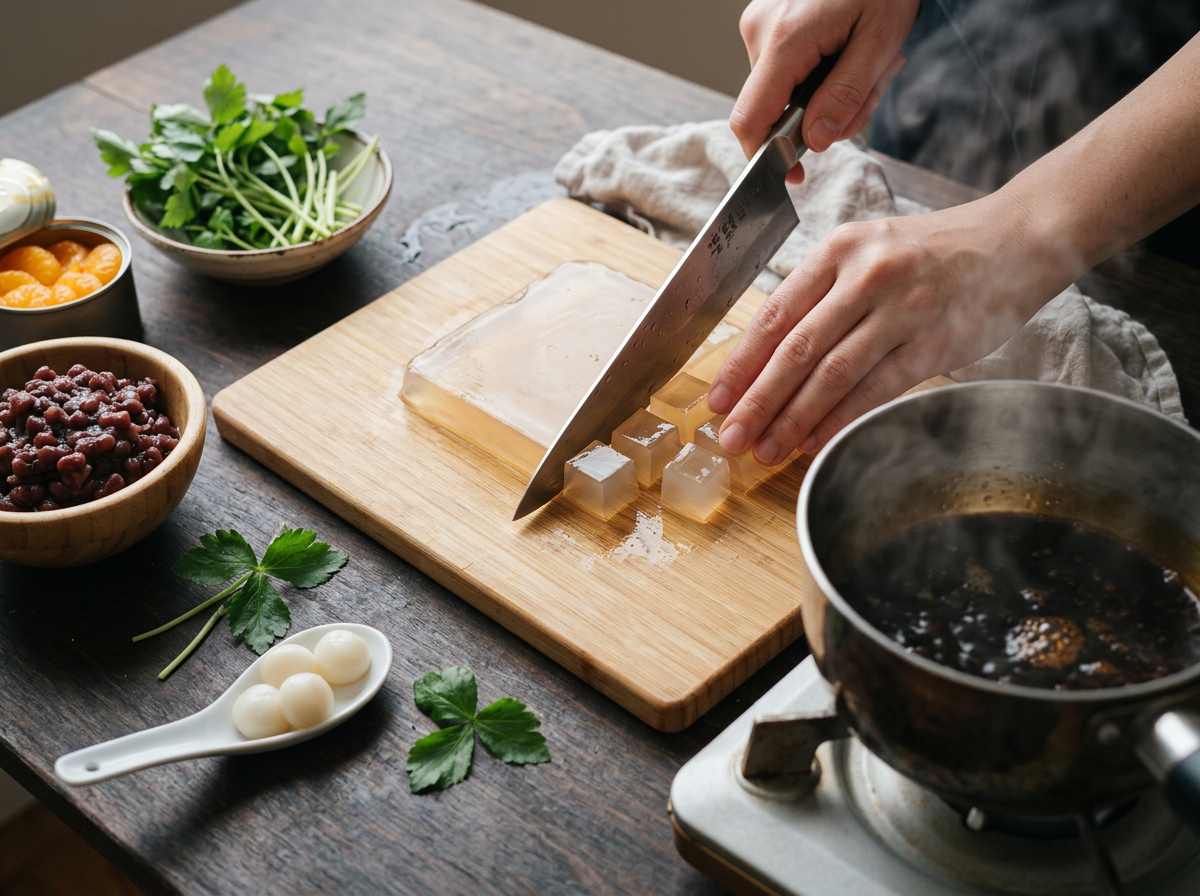
- Run a wet knife around the edge and cut the jelly into roughly 2 cm cubes.
- Put the shiratamako in a mixing bowl. Add water a little at a time, kneading, until the dough feels soft like an earlobe and holds together without cracking.
- Divide into 12 pieces, roll into balls, and press a shallow dimple in the center of each with your thumb.
- Bring a pot of water to a boil and drop in the dango. Boil until they float to the surface, about 2 to 3 minutes, then let them bob for 1 more minute. Scoop out with a slotted spoon and drop straight into a bowl of ice water.
- Combine the dark brown sugar and 50 ml water in a small saucepan. Simmer over low heat for 3 to 4 minutes, stirring, until glossy and slightly thickened. Cool before using.
- Divide the kanten cubes among 4 bowls. Add 3 dango, a scoop of anko, and a mix of mandarin, strawberry, and pineapple to each bowl.
- Add a scoop of ice cream if using, then drizzle each bowl generously with the cooled kuromitsu syrup right before serving.
Notes
- Bloom the agar in cold water for 5 minutes before heating, this helps it dissolve fully.
- Test dango doneness by float time, not a clock, they're done once they bob for 1 minute.
- Keep kuromitsu on the thin side, it should pour, not spoon.
- Assemble bowls last, jelly left sitting in syrup too long turns soft.
Tips for Success
- Boil the agar mixture for a full minute after it reaches a rolling boil, or the jelly stays cloudy and soft.
- Cut the kanten cubes with a wet knife so they release cleanly instead of sticking and tearing.
- Roll the dango a little flatter than a marble, a slight dimple in the center helps them cook evenly.
- Chill every component separately and assemble bowls right before serving so the jelly doesn’t turn watery.
- Use dark muscovado sugar for kuromitsu if you can’t find kokuto, it gives a similar deep molasses note.
Variations
- Swap the mandarin and pineapple for seasonal fruit like ripe peaches, kiwi, or melon balls in summer.
- Stir a spoonful of matcha into the dango dough for pale green dumplings with a light bitter edge.
- Add a scoop of vanilla ice cream and call it cream anmitsu, a common café add-on in Japan.
Storage and Reheating
Anmitsu is best assembled fresh, so treat this as a make-ahead-in-parts dessert rather than a leftovers dish.
Keep the kanten cubes in their pan or in an airtight container in the fridge for up to 3 days. Store the kuromitsu syrup in a sealed jar in the fridge for up to 2 weeks, it keeps well since it’s mostly sugar.
Make the shiratama dango the same day you plan to serve them. They firm up and turn chalky within a few hours, so if you need a head start, hold them in cold water in the fridge for no more than 3 to 4 hours before assembling.
Serving Suggestions
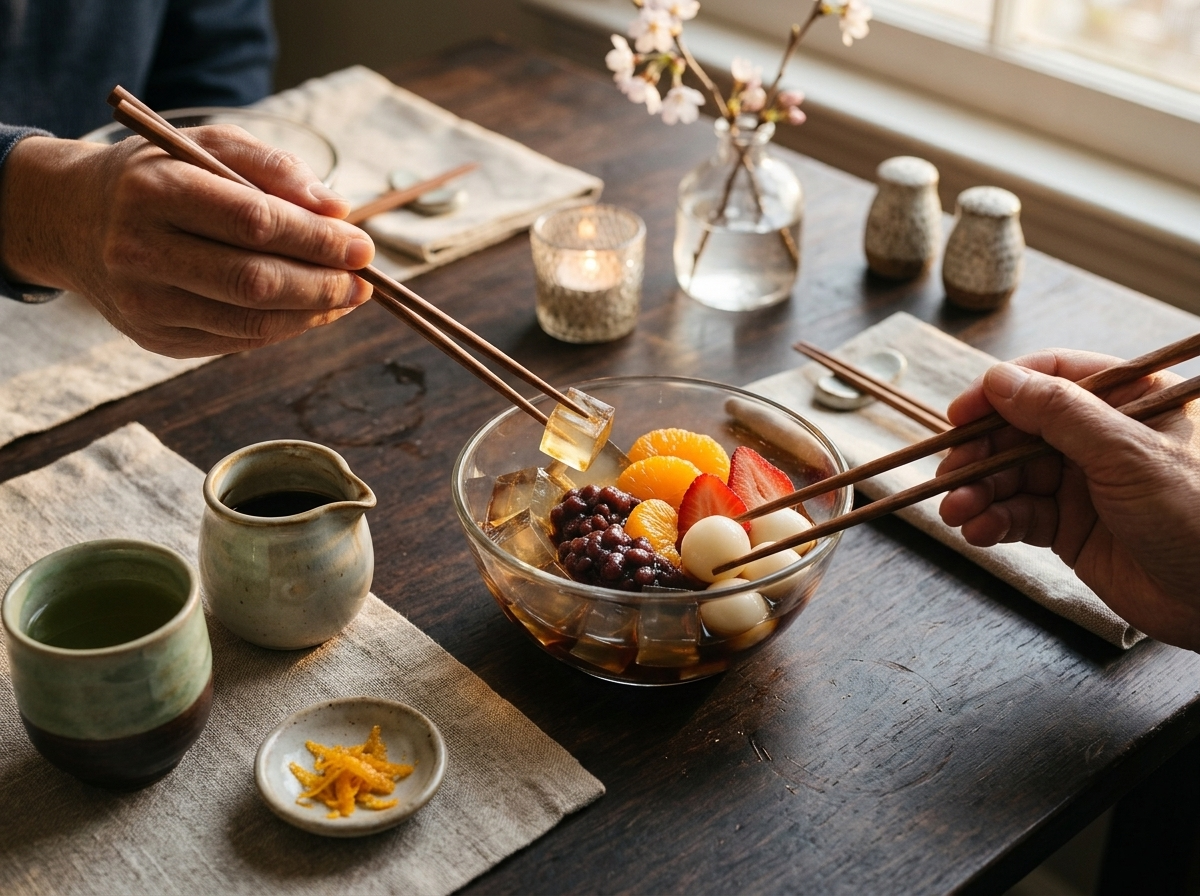
Set out small bowls, spoons, and the kuromitsu syrup on the side so everyone drizzles their own amount. That’s how it’s usually served at Japanese teahouses, in individual portions rather than one shared dish.
Hot roasted hojicha or plain green tea cuts through the sweetness well. A cold barley tea works too if you want the whole thing served chilled.
For a heavier finish, add a small scoop of vanilla or matcha ice cream just before the syrup goes on.
FAQ
Why is my kanten jelly not setting?
Kanten jelly won’t set if you don’t bring the agar mixture to a full boil first. Agar needs about 1 to 2 minutes at a rolling boil to dissolve completely, unlike gelatin which just needs warm liquid. If yours stays runny, pour it back into the pan and reboil for another minute before chilling again.
Can I use gelatin instead of agar for the jelly cubes?
No, gelatin doesn’t behave the same way in anmitsu. Kanten jelly made with agar sets firm at room temperature and holds its shape in a bowl of fruit and syrup, while gelatin melts as soon as it warms up and turns soupy. Stick with agar powder for the classic bouncy, clean-cut texture.
How far ahead can I make the kanten cubes and dango?
The kanten cubes keep well for up to 3 days in the fridge, covered in their pan or in an airtight container. Shiratama dango are best made the same day since they firm up and turn chalky after a few hours, if needed, make them a few hours ahead and hold them in cold water.
What goes well with anmitsu besides kuromitsu syrup?
A small scoop of vanilla or matcha ice cream on top is the classic addition at Japanese kissaten. Sweetened condensed milk drizzled over the top instead of, or alongside, kuromitsu is also common in home kitchens. Either one adds richness against the plain jelly and beans.
Is anmitsu gluten free?
Yes, anmitsu is naturally gluten free when made with shiratamako, which despite the name contains no wheat gluten. Check your anko and kuromitsu labels if you’re strict about cross-contamination, but the core ingredients, agar, rice flour, beans, and fruit, are all gluten free.
What’s the difference between anmitsu and mitsumame?
Mitsumame is the simpler version, just kanten jelly cubes, fruit, and syrup with no anko or dango. Anmitsu builds on that base by adding sweet red bean paste, which is where the an in its name comes from. Both get the same kuromitsu drizzle.
If you enjoyed this, try
