
Jump to Recipe
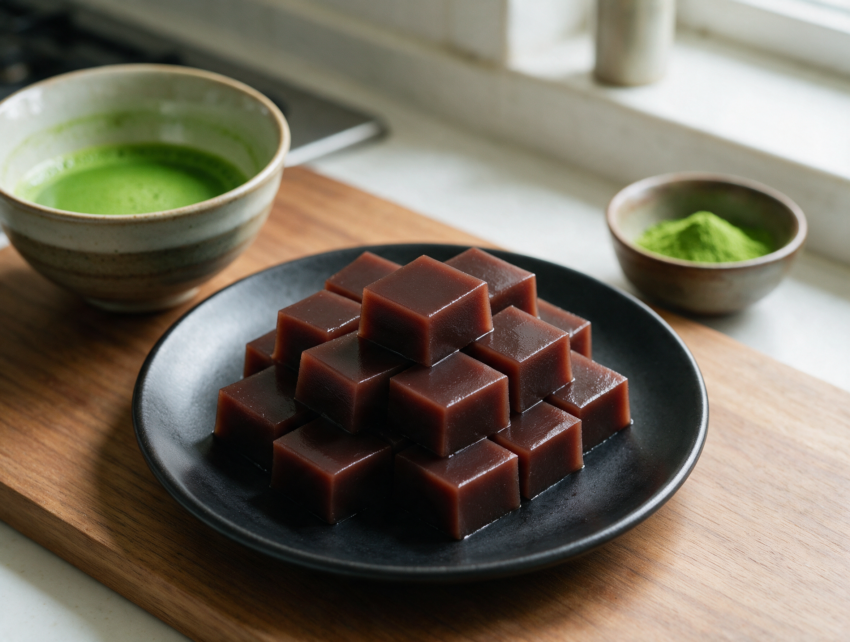
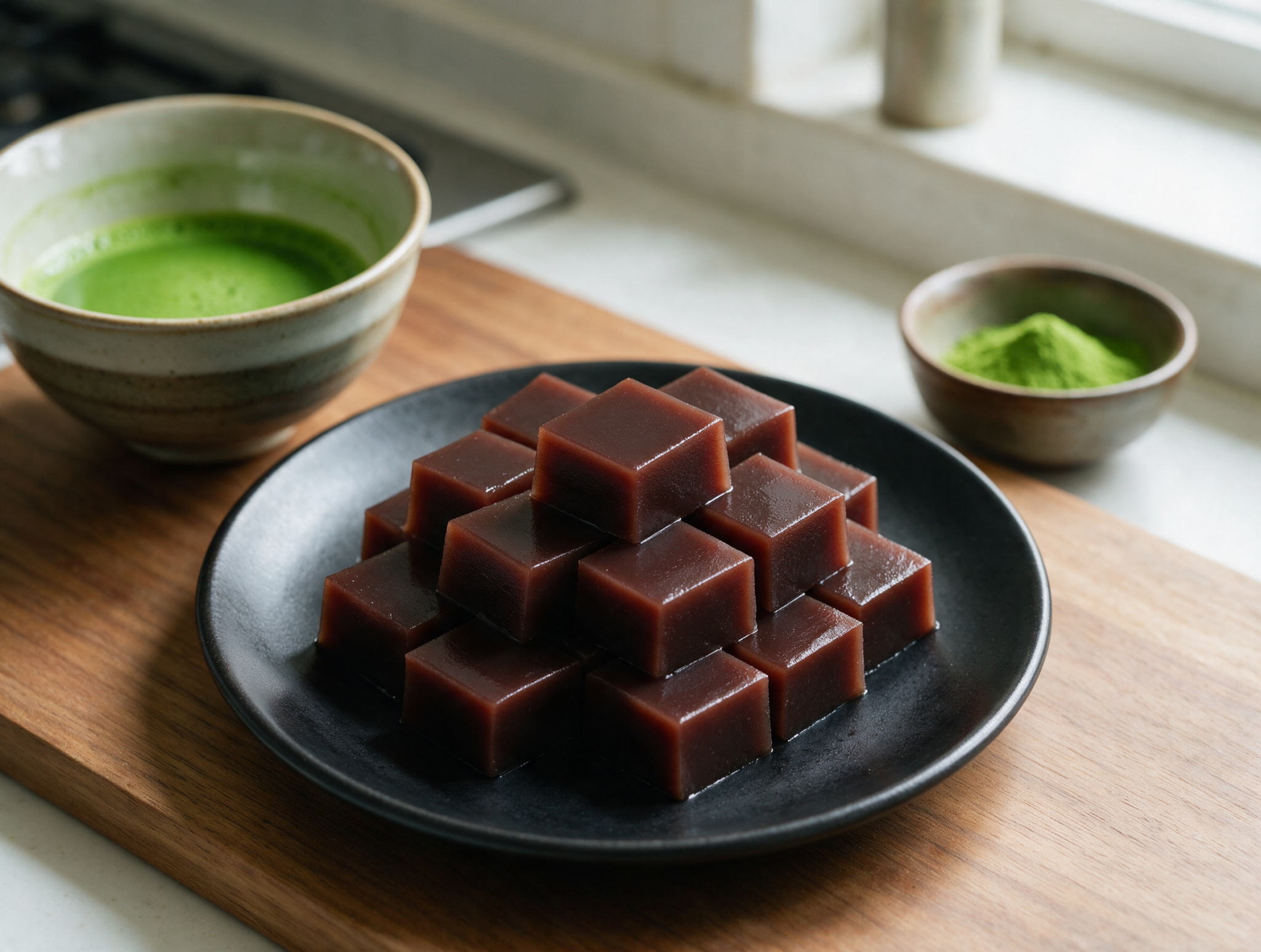
Yokan is a firm, jellied Japanese sweet made from red bean paste, sugar, and agar (kanten), set in a loaf pan and sliced into glossy squares.
I first ate yokan in a tea shop in Kyoto, next to a bowl of matcha so bitter it made the sweetness of the jelly hit harder. That contrast is the whole point.
Unlike gelatin desserts, yokan sets at room temperature once the agar boils properly. No fridge required, though I still chill mine for a firmer cut.
The texture surprises people the first time. It’s not bouncy like Jell-O. It’s dense, almost like a firm fruit paste, and it holds a clean knife edge.
You need three main ingredients and about 15 minutes of actual cooking. The rest is just waiting for it to set.
Why You’ll Love This Recipe
- Only three main ingredients: agar, sugar, and red bean paste
- Sets firm at room temperature, no gelatin needed
- Slices clean for bento boxes or tea service
- Keeps well in the fridge for up to 5 days
Ingredient Notes
- agar agar powder: Use powder, not flakes, for accurate measuring. Flakes need roughly double the amount and a longer boil to fully dissolve.
- koshian (smooth red bean paste): Canned or homemade both work. Use smooth koshian rather than chunky tsubuan if you want the classic glassy yokan surface.
- sugar: Cut it to 80 g if your red bean paste is already heavily sweetened.
- salt: A small pinch sharpens the sweetness. Don’t skip it even though the amount seems too small to matter.
Yokan Red Bean Jelly: Silky Japanese Kanten Dessert
Ingredients
Method
- Line a 21 x 11 cm / 8 x 4-inch loaf pan with plastic wrap, leaving a few inches of overhang on the long sides.
- Whisk the agar powder into the water in a 2-quart saucepan. Bring to a boil over medium heat, whisking often, then lower the heat and simmer for 2 minutes until the agar is fully dissolved, no gritty specks left when you rub a drop between your fingers.
- Add the sugar and salt. Stir for about 1 minute until fully dissolved.
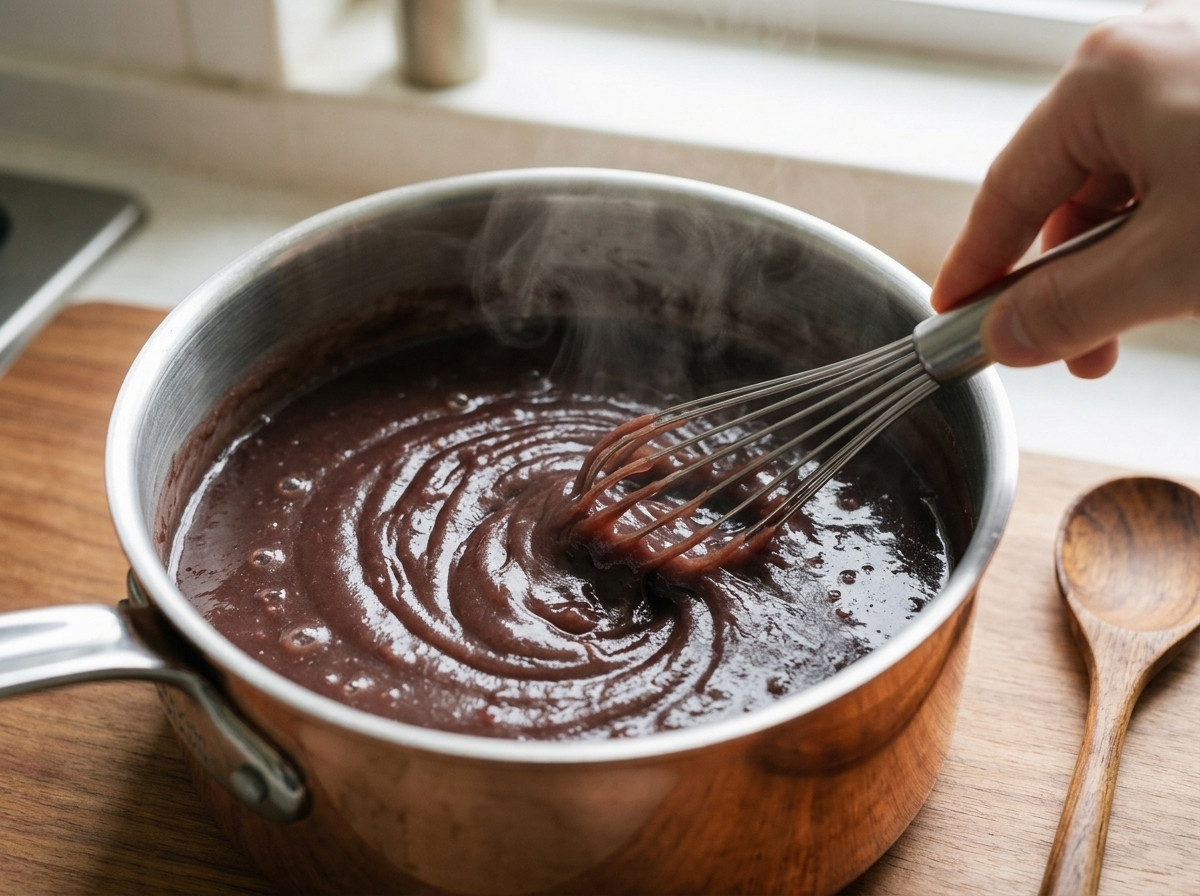
- Reduce the heat to low. Add the red bean paste in two batches, whisking each addition in completely before adding more, until the mixture is smooth with no lumps.
- Simmer gently for 3 to 4 minutes, stirring constantly, until the mixture turns glossy and coats the back of a spoon thickly.
- Pour the mixture into the prepared loaf pan right away, agar starts to firm up within minutes of coming off the heat. Tap the pan on the counter a few times to pop air bubbles.
- Cool at room temperature for 30 minutes, then cover and refrigerate for at least 2 hours, until firm and set. It should spring back gently when you press it, not jiggle loosely.
- Lift the yokan out of the pan using the plastic overhang and set it on a cutting board.
- Slice into 8 rectangles, about 2.5 cm / 1 inch thick, using a knife dipped in hot water and wiped dry between cuts for clean edges.
Notes
- Agar sets at room temperature, unlike gelatin which needs a cold fridge.
- Grainy texture almost always means the agar didn't boil long enough.
- Smooth koshian gives the classic glassy finish, chunky tsubuan looks rustic instead.
- Work fast once agar is dissolved, it starts firming within minutes off heat.
Tips for Success
- Boil the agar mixture for a full 2 minutes before adding sugar, or the jelly sets grainy instead of smooth.
- Whisk the red bean paste in gradually so it doesn’t clump against the hot agar liquid.
- Pour the mixture into the mold as soon as it’s smooth, agar starts firming up within minutes of cooling.
- Dip your knife in hot water and wipe it dry between cuts for clean, glossy slices.
- Use smooth koshian, not chunky tsubuan, if you want the classic glassy yokan surface.
Variations
- Swirl in 1 tbsp matcha powder dissolved in hot water for a green tea marbled yokan.
- Layer cooked chestnut pieces into the pan before pouring for a textured autumn version.
- Cut the water to 200 ml for a firmer, denser yokan closer to traditional neri yokan.
Storage and Reheating
Yokan keeps in the fridge for up to 5 days. Wrap the block tightly in plastic wrap or store cut slices in an airtight container so the surface doesn’t dry out.
There’s no reheating step here, yokan is meant to be served cold or at room temperature straight from the fridge.
Skip the freezer. Agar sets by trapping water in a firm gel, and freezing breaks that structure, so thawed yokan turns weepy and grainy instead of glossy.
Serving Suggestions
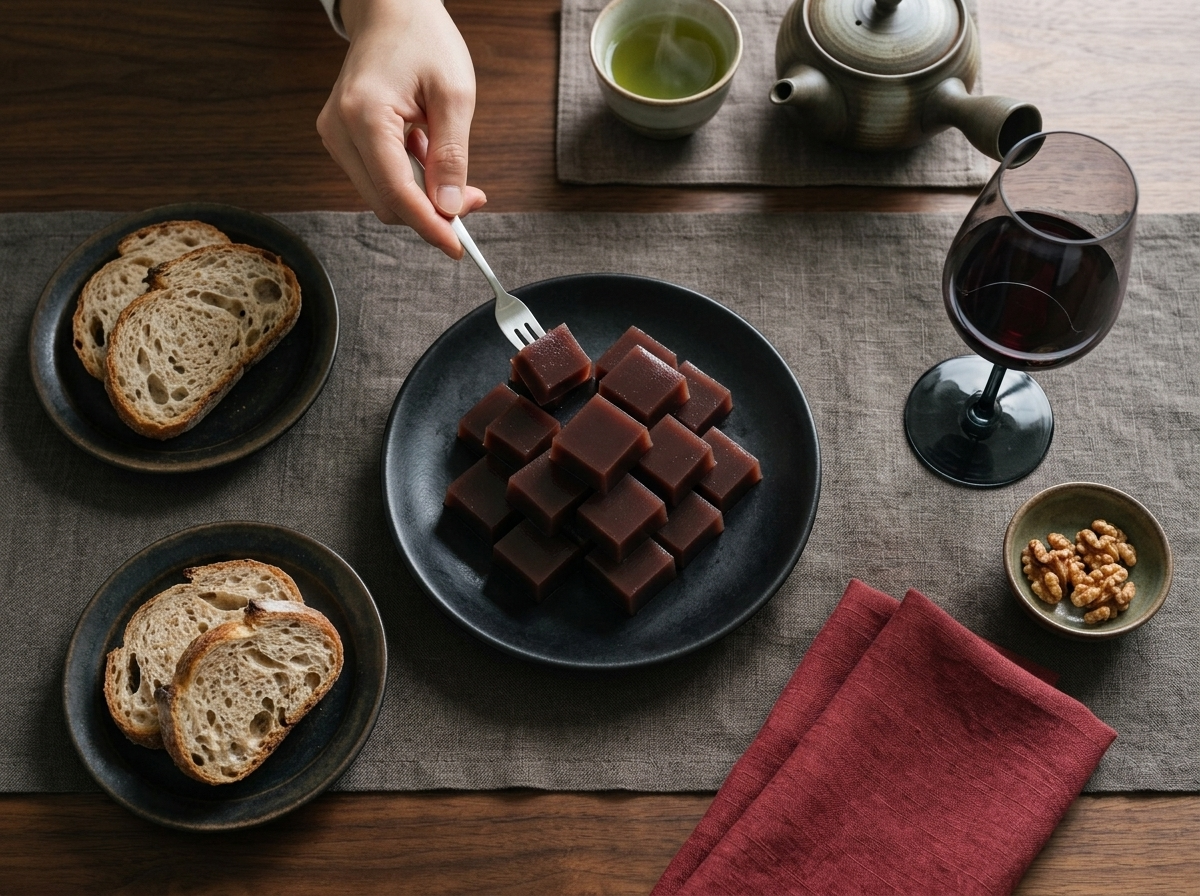
Yokan pairs with strong, slightly bitter tea, the sweetness needs that contrast. Matcha is classic, but plain green tea or even black coffee works too.
Slice it thin and serve on a small plate with a fork, a 2.5 cm slice is plenty per person since it’s dense.
For a simple dessert table, cut it into small cubes and serve alongside fresh fruit like sliced persimmon or strawberries.
FAQ
Why is my yokan grainy instead of smooth?
Grainy yokan almost always means the agar didn’t fully dissolve before you added the sugar and bean paste. Agar needs a full rolling boil for about 2 minutes, not just a quick simmer. Rub a drop of the liquid between your fingers, if you feel gritty specks, keep boiling it a bit longer.
Can I use gelatin instead of agar for yokan?
No, gelatin won’t give you real yokan. Agar sets firm at room temperature and holds a clean slice, while gelatin stays soft and needs constant refrigeration to hold its shape. Swapping it changes the texture completely and it won’t be traditional yokan anymore, just a red bean gelatin dessert.
How far ahead can I make yokan red bean jelly?
You can make yokan up to 5 days ahead. Keep it wrapped tightly in the fridge, either as one block or already sliced in an airtight container. It actually firms up and slices more cleanly after a full day of chilling, so making it a day ahead works well.
What goes well with yokan besides green tea?
Yokan pairs well with any bitter drink since the jelly itself is quite sweet. Matcha is the classic match, but plain black tea, roasted hojicha, or even a small cup of black coffee balances it out. Fresh fruit like persimmon or strawberries also works alongside it on a plate.
Is yokan red bean jelly gluten-free and vegan?
Yes, yokan made this way is both gluten-free and vegan. It uses agar (kanten), a seaweed-based setting agent, instead of gelatin, and the only other ingredients are red bean paste, sugar, and water. Just double check your red bean paste brand doesn’t add honey or dairy.
What’s the difference between yokan and mizuyokan?
Mizuyokan uses more water and less agar, so it sets much softer and wobblier, almost like a spoonable pudding. This recipe makes neri yokan, the firmer, sliceable version you eat with a fork. Mizuyokan is traditionally served in summer, while firm yokan is eaten year-round.
If you enjoyed this, try
