
Jump to Recipe
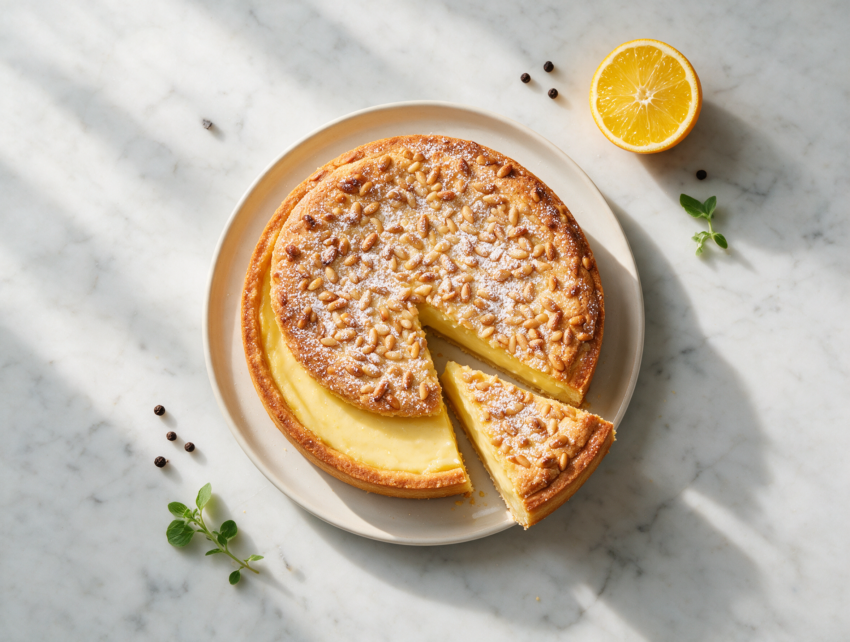
There’s something about a torta della nonna that feels like walking into an Italian kitchen on a Sunday afternoon.
I first had a slice in Florence, at a bakery counter no bigger than a closet, with powdered sugar landing on my sleeve before I’d even sat down.
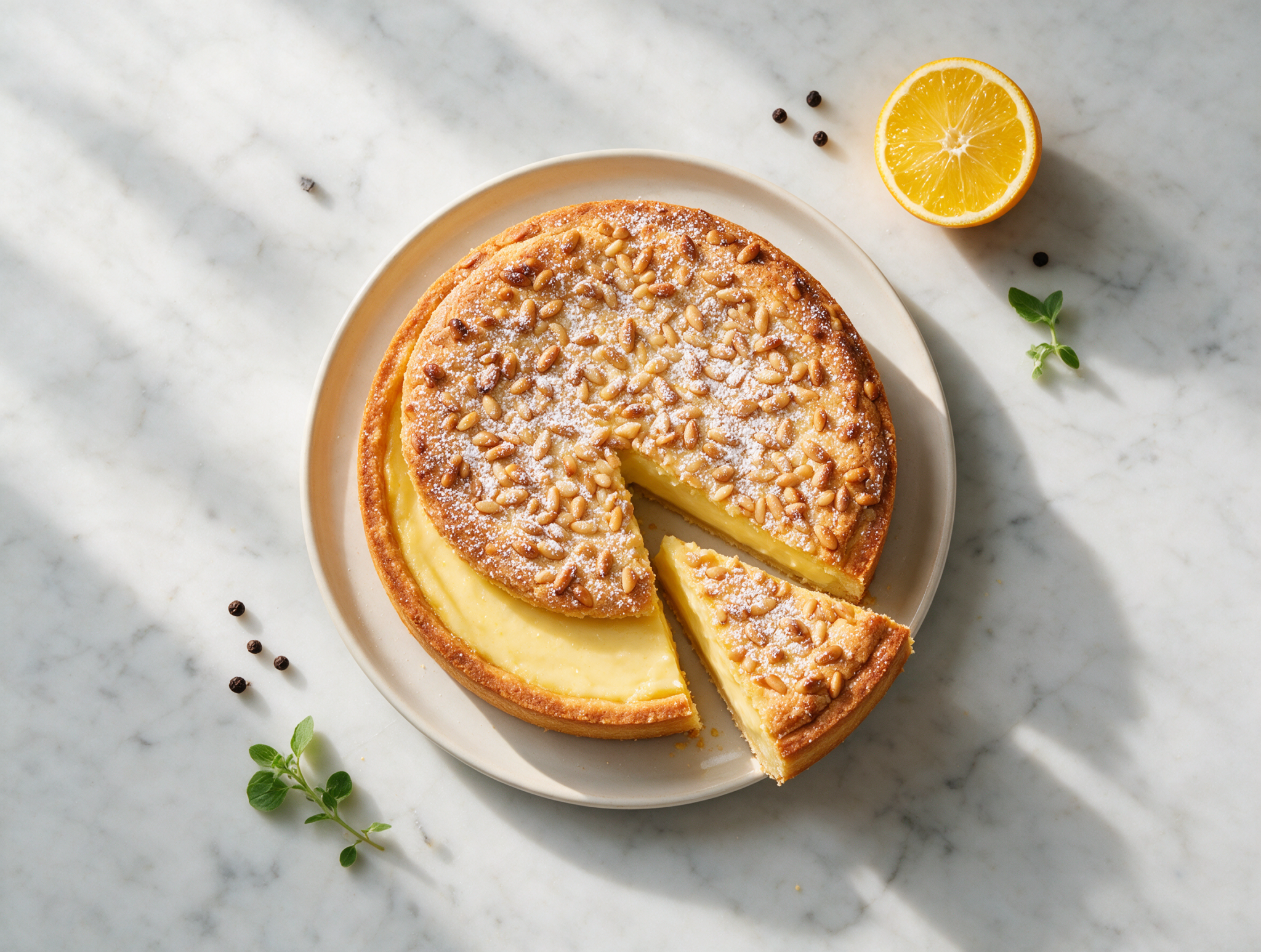
This is a baked custard tart: a shortcrust shell filled with lemon-scented pastry cream, topped with a second layer of dough and a scatter of toasted pine nuts.
It’s simpler than it looks. The dough comes together in one bowl, the pastry cream takes about 10 minutes on the stove, and the oven does the rest.
The one thing that trips people up is skipping the chill time on the dough. Warm dough shrinks and slumps in the pan, so give it the full hour.
Why You’ll Love This Recipe
- One-bowl shortcrust with no special tools needed
- Make-ahead friendly, tastes better after a night in the fridge
- Lemon pastry cream instead of jam, so it’s not overly sweet
- Toasted pine nuts add crunch against the soft custard
Ingredient Notes
- pine nuts: Toast them lightly before scattering on top for a deeper flavor. Sliced almonds work as a substitute if pine nuts are pricey or hard to find.
- cornstarch: Thickens the pastry cream without a floury taste. Potato starch works in the same amount if that’s what you have.
- lemon zest: Use organic or well-scrubbed lemons since only the zest goes in, no juice. Orange zest is a nice swap if you want it milder.
- unsalted butter: Keep it cold and cubed straight from the fridge so the dough stays sandy, not greasy, when you rub it in.
- egg yolks: Save the leftover whites for meringue or an omelet the next morning. Room temperature yolks blend into the cream more smoothly.
Torta della Nonna: Baked Custard Tart with Pine Nuts
Ingredients
Method
- Whisk the flour, sugar, baking powder, and salt together in a large bowl. Add the cold cubed butter and rub it in with your fingertips until the mixture looks like coarse sand.
- Add the egg yolks and lemon zest, then mix until the dough just comes together. Turn it out and knead briefly into a smooth ball.
- Divide the dough into two disks, one slightly larger for the base. Wrap both in plastic and chill for 60 minutes.
- Heat the milk and lemon zest in a 2-quart / 2 L saucepan over medium heat until steaming, not boiling.
- Whisk the egg yolks, sugar, and cornstarch together in a bowl until pale. Slowly pour in the hot milk while whisking constantly to temper the yolks.
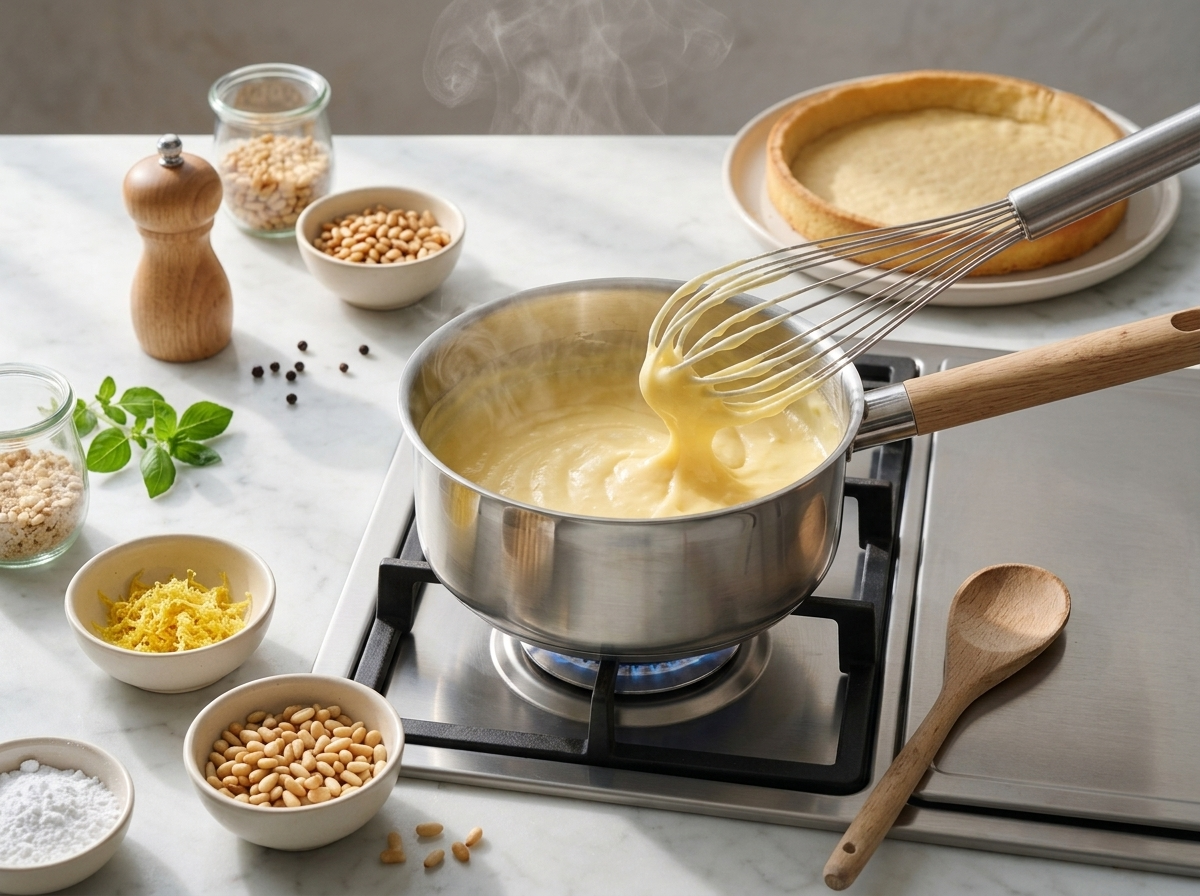
- Return the mixture to the saucepan and cook over medium-low heat, whisking constantly, for 3 to 4 minutes until it thickens enough to coat the back of a spoon.
- Stir in the vanilla, then press plastic wrap directly onto the surface of the cream. Cool to room temperature.
- Heat the oven to 180 C / 350 F and butter a 23 cm / 9-inch tart pan with a removable bottom.
- Roll the larger dough disk on a floured surface to about 3 mm thick and line the tart pan, pressing it into the edges. Trim any overhang.
- Pour the cooled pastry cream into the shell and spread it evenly with a spatula.
- Roll the second dough disk to the same thickness and lay it over the filling. Pinch the edges to seal and trim excess dough.
- Brush the top with the beaten egg, scatter the pine nuts over the surface, and poke a few small steam vents with a knife.
- Bake for 35 to 40 minutes until the crust is golden brown and the pine nuts are toasted.
- Cool in the pan for 30 minutes, then transfer to a rack to cool completely. Dust with powdered sugar just before slicing.
Notes
- Chill dough a full 60 minutes before rolling to prevent shrinking.
- Cool pastry cream completely before filling the shell.
- Poke steam vents in the top crust before baking.
- Let the tart cool fully before slicing for clean pieces.
- Toast pine nuts lightly for deeper flavor and color.
Tips for Success
- Chill the dough for the full 60 minutes so it doesn’t shrink or slide down the pan sides while baking.
- Press plastic wrap directly onto the pastry cream’s surface while it cools to stop a skin from forming.
- Poke a few small steam vents in the top crust before baking so it doesn’t puff and crack unevenly.
- Cool the tart completely before slicing, otherwise the custard layer will run instead of holding its shape.
- Toast the pine nuts in a dry pan for 2 minutes first if you want extra crunch and color on top.
Variations
- Swap half the pine nuts for sliced almonds for a slightly sweeter, crunchier topping.
- Add a tablespoon of limoncello to the cooled pastry cream for a stronger lemon kick.
- Use a lattice top instead of a solid crust if you want more custard peeking through.
Storage and Reheating
Torta della Nonna is best kept cold rather than reheated. Store leftover slices covered in the fridge for 3 to 4 days, and serve them chilled or let them sit at room temperature for 20 minutes before eating.
The custard layer can weep or turn rubbery if you try to warm it in the oven or microwave, so skip reheating altogether.
For make-ahead baking, you can bake the whole tart up to 2 days in advance and keep it wrapped in the fridge. It also freezes well once fully cooled: wrap tightly and freeze up to 1 month, then thaw overnight in the fridge before dusting with fresh powdered sugar.
Serving Suggestions
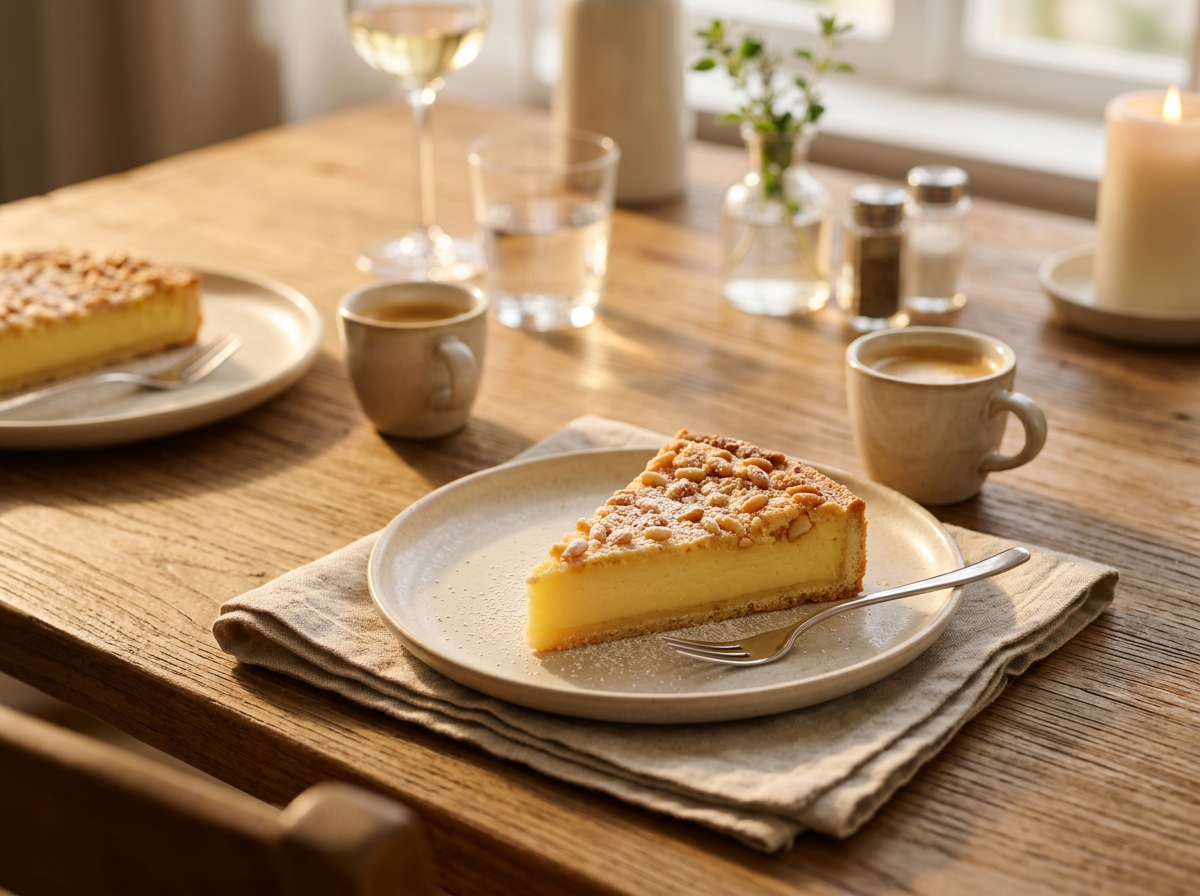
Torta della Nonna is traditionally served on its own with a strong espresso, no plate decoration needed beyond the powdered sugar already on top.
A small glass of vin santo alongside turns it into a proper end to an Italian meal, especially in cooler months.
If you want something fresher, a few macerated strawberries or a spoon of lightly sweetened whipped cream on the side works well without covering up the lemon custard.
FAQ
Why is the bottom crust of my torta della nonna soggy?
This usually means the pastry cream went in while still warm, or the dough was rolled too thin on the base. Let the cream cool completely before filling, and keep the bottom crust around 3 to 4 mm thick so it can hold its structure under the custard.
Can I use almonds instead of pine nuts in torta della nonna?
Yes, sliced almonds are a common substitute and work in the same amount, about 50 g. They toast a bit faster than pine nuts, so check them at the 30-minute mark to avoid burning while the tart finishes baking.
How far ahead can I make torta della nonna and how should I store it?
You can bake it up to 2 days ahead and keep it covered in the fridge, which actually helps the custard set firmer for cleaner slices. It also freezes well, wrapped tightly, for up to 1 month, then thaws overnight in the fridge.
What goes well with torta della nonna besides just eating it plain?
Espresso is the classic pairing, since the tart isn’t overly sweet on its own. A small glass of vin santo or a spoon of lightly sweetened whipped cream on the side also works if you want something more indulgent.
Is torta della nonna gluten free or can I make it dairy free?
As written, no, the shortcrust uses wheat flour and the filling uses butter and milk. You can try a 1:1 gluten-free flour blend for the crust and a dairy-free milk for the custard, though the texture will be softer and less golden.
What’s the difference between torta della nonna and a regular crostata?
Torta della Nonna is filled with lemon pastry cream and topped with a full pastry lid and pine nuts, while a crostata is usually an open-faced tart filled with jam. The custard filling gives torta della nonna a softer, richer bite than a fruit crostata.
Related recipes
