
Jump to Recipe
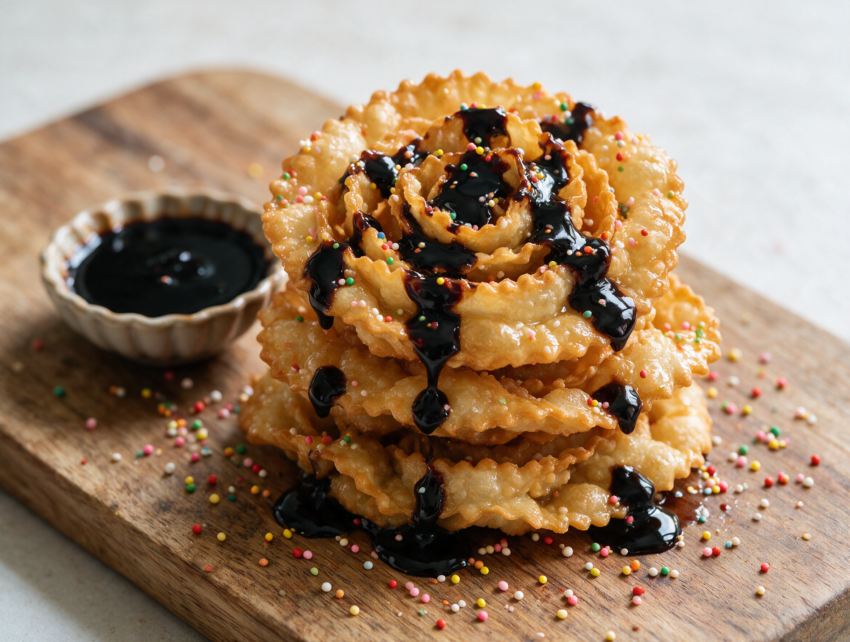
There’s something about cartellate Pugliese that makes a kitchen feel like Christmas Eve in southern Italy. Strips of thin dough get pinched into ruffled spirals, much like the coiled shape of Quebec’s baked cinnamon pastry rolls, fried until the edges curl and crisp, then dunked in warm vincotto until they turn glossy and dark.
I first ate these at a friend’s nonna’s table in Bari, stacked on a plate next to fig cookies and clementines. She fried them in an old copper pot and didn’t measure a single thing.
The dough itself is simple: flour, dry white wine, a little olive oil. No eggs, no butter. What takes practice is the shaping, pinching the scalloped edge so the rose holds its curl in the hot oil.
Don’t worry if your first few come out lopsided. Mine did too, and they still tasted like Christmas.
Why You’ll Love This Recipe
- No eggs or dairy in the dough
- Crisp ruffled edges that hold vincotto well
- Keeps for weeks in a tin, no rush to eat them
- A genuine taste of Puglia’s Christmas table
Ingredient Notes
- flour: Use 00 flour or all-purpose. It gives the dough enough structure to hold the ruffled shape without turning tough.
- dry white wine: Adds acidity and helps the dough fry up crisp instead of dense. Dry vermouth works if you’re out of wine.
- olive oil: Use a mild extra virgin oil, not a peppery one, so it doesn’t fight with the vincotto’s flavor.
- vincotto: Cooked grape must syrup, sold at Italian delis or online. Dark honey works as a substitute, though it’s sweeter and lacks the wine-like tang.
- frying oil: Use peanut or sunflower oil. Both are neutral and hold steady at 170 C / 340 F without smoking.
- orange zest: Optional but traditional in Puglia, it adds brightness to the dough. Skip it if you don’t have citrus on hand.
- diavolilli sprinkles: Colorful Italian nonpareils used for garnish. Rainbow sprinkles or crushed pistachios work as a substitute.
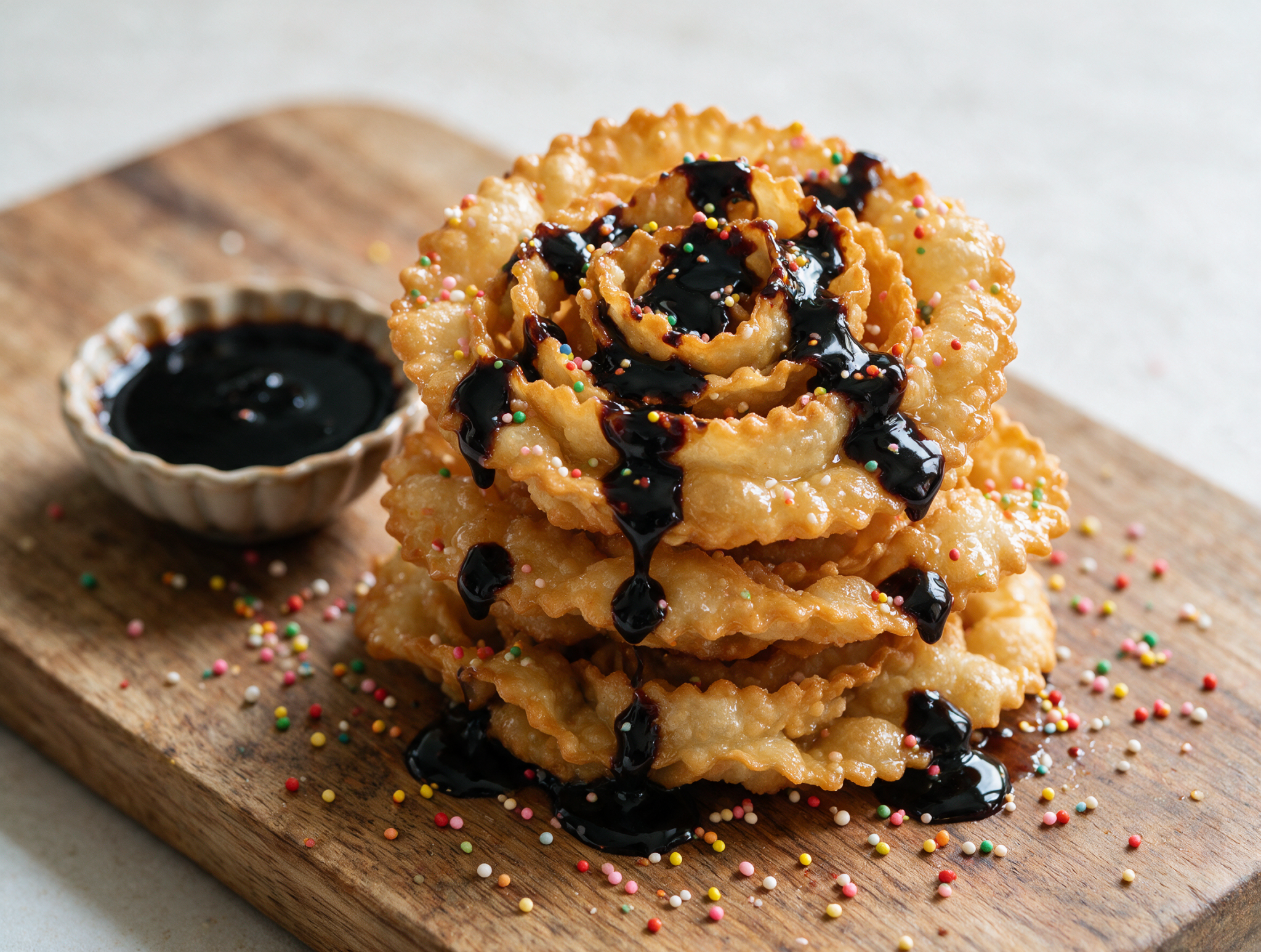
Cartellate Pugliese: Fried Rose Pastries in Vincotto
Ingredients
Method
- Whisk the flour, sugar, salt, and orange zest together in a large bowl.
- Make a well in the center and pour in the white wine and olive oil. Mix with a fork, then your hands, until a shaggy dough forms.
- Turn the dough onto a work surface and knead for 8 to 10 minutes until smooth and elastic. Wrap in plastic and rest at room temperature for 30 minutes.
- Cut the dough into 4 pieces. Working with one piece at a time, roll it through a pasta machine or with a rolling pin to about 2mm thick.
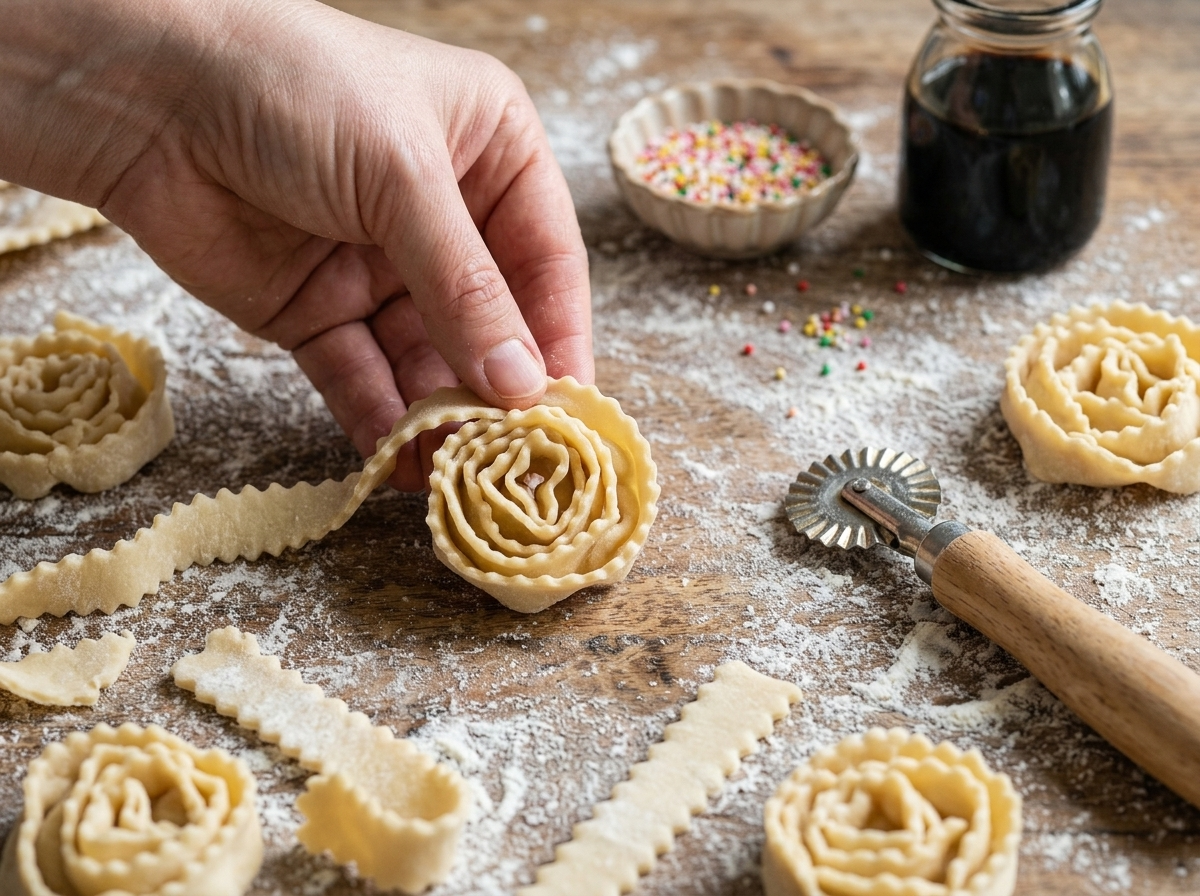
- Cut the sheet into strips 3 cm wide and 25 to 30 cm long. Using a fluted pastry wheel, trim one long edge of each strip into a wavy scalloped pattern.
- Fold each strip in half lengthwise with the scalloped edge facing out, and pinch every 2 cm along the folded edge to create ruffles.
- Starting from one end, roll the strip loosely into a spiral, pinching the base to hold its shape like a rose with the ruffled edge standing up.
- Heat the frying oil in a 26 cm / 10-inch deep pot to 170 C / 340 F.
- Fry the cartellate in batches of 4 to 5 so the oil temperature doesn't drop, for 2 to 3 minutes, turning once, until golden and crisp.
- Lift out with a slotted spoon and drain on a wire rack. Repeat with the remaining dough.
- Warm the vincotto in a small saucepan over low heat until it loosens, then dip the top of each cooled cartellata into it or drizzle it over.
- Scatter diavolilli sprinkles over the top while the vincotto is still wet. Let set for 30 minutes before serving.
Notes
- Roll dough to 2mm thickness for ruffles that crisp evenly.
- Fry in batches of 4-5 so oil temp holds steady.
- Pinch scalloped edges firmly before rolling into spirals.
- Warm vincotto before dipping so it coats instead of pooling.
- Undipped cartellate freeze well for up to 2 months.
Tips for Success
- Roll the dough as thin as pasta sheets, about 2mm, or the ruffles won’t crisp evenly in the oil.
- Keep the oil at 170 C / 340 F with a thermometer, since cooler oil makes cartellate greasy instead of crisp.
- Fry in small batches of 4 to 5 pieces so the oil temperature doesn’t drop and the roses cook evenly.
- Pinch the scalloped edge firmly before rolling, or the spiral will unravel the moment it hits the oil.
- Warm the vincotto gently before dipping, the same way you’d warm the molasses sauce that finishes Newfoundland figgy duff, so it coats the fried dough instead of pooling at the bottom.
Variations
- Swap vincotto for warm honey thinned with a splash of orange juice if you can’t find grape must syrup.
- Add a pinch of cinnamon or vanilla to the dough for a warmer, spiced version of the classic.
- Swap the sprinkles for chopped pistachios or crushed almonds pressed into the wet vincotto for a nuttier finish.
Storage and Reheating
Cartellate Pugliese store well at room temperature in a tin or airtight container, undipped, for up to 3 weeks, which is why Puglia makes big batches ahead of Christmas.
If you’ve already dipped them in vincotto, keep them in a single layer in an airtight container for 5 to 7 days. The syrup keeps the edges chewy rather than glass-crisp, which is part of the tradition.
Skip reheating. Cartellate are meant to be eaten at room temperature, and warming softens the fried texture instead of restoring it. Fry a batch of undipped dough roses ahead, freeze them plain for up to 2 months, then thaw and dip in warm vincotto right before serving.
Serving Suggestions
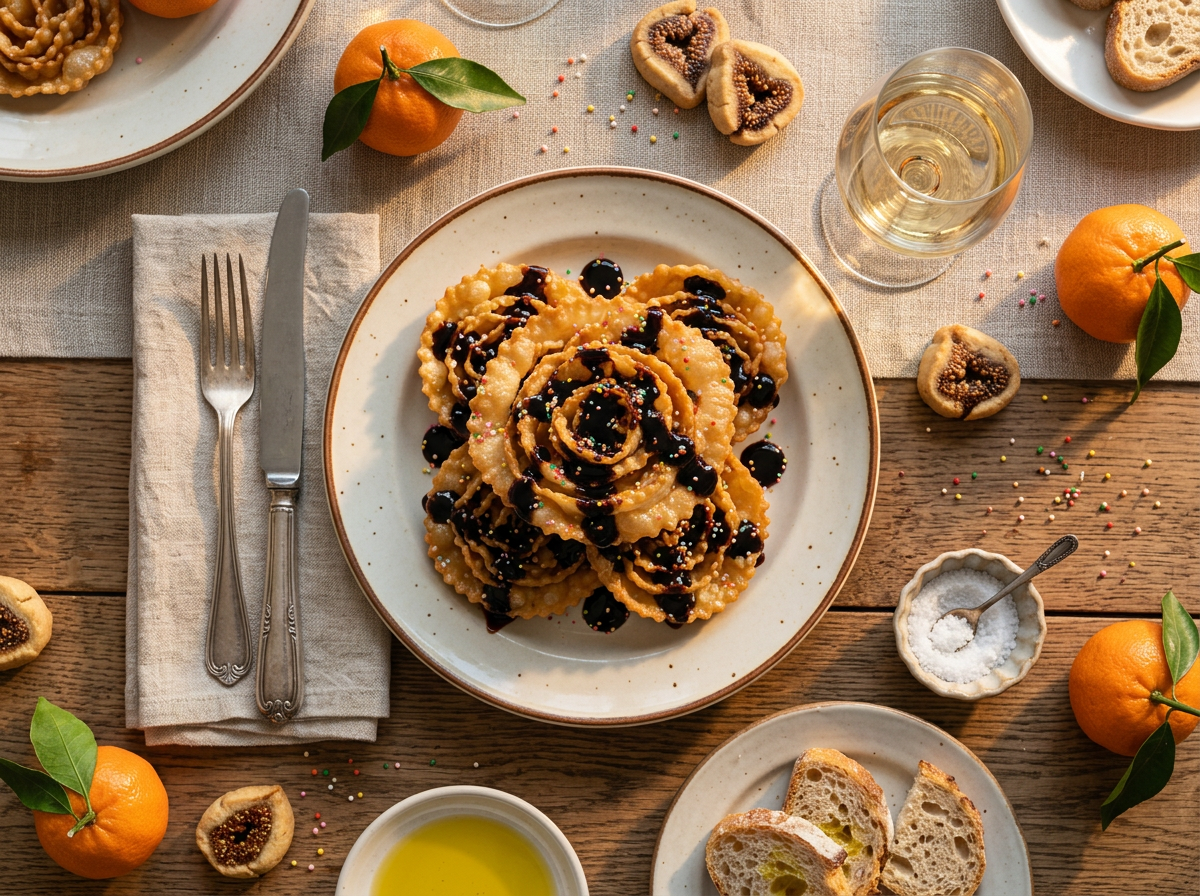
Cartellate Pugliese belong on a holiday dessert table next to figs, torrone, and clementines, the way they’re served across Puglia on Christmas Eve.
Stack them on a large plate and drizzle extra warm vincotto over the top right before guests arrive, so the top layer stays glossy.
A small glass of moscato or a dark coffee alongside, much like the coffee pairing that suits crisp espresso almond biscotti, cuts through the sweetness of the vincotto nicely.
FAQ
Why did my cartellate turn out greasy instead of crisp?
Greasy cartellate usually means the oil wasn’t hot enough or it dropped below 170 C / 340 F once you added the dough. Rolling the dough too thick is the other common cause, since thicker strips take longer to fry and soak up more oil before they crisp. Use a thermometer and fry in small batches of 4 to 5 pieces.
Can I use honey instead of vincotto for cartellate Pugliese?
Yes, warm honey works if you can’t find vincotto, though it tastes sweeter and lacks the wine-like tang of cooked grape must. Thin the honey with a splash of orange juice to loosen it before dipping. The texture and shelf life of the finished cartellate stay about the same either way.
Can I make cartellate Pugliese ahead of Christmas?
Yes, fry the plain dough roses up to 2 months ahead and freeze them without the vincotto. Thaw at room temperature, then dip them in warm vincotto the day you plan to serve. Once dipped, cartellate keep in an airtight container for 5 to 7 days without needing refrigeration.
What goes well with cartellate Pugliese on a Christmas dessert table?
Cartellate Pugliese pair well with other Puglia Christmas sweets like fig cookies, torrone, and fresh clementines on the same platter. A glass of moscato or a small dark coffee balances the sweetness of the vincotto. Serve them at room temperature, stacked so the ruffled edges show.
Are cartellate Pugliese vegan?
Yes, cartellate Pugliese are naturally vegan since the dough uses only flour, white wine, olive oil, and sugar, with no eggs or dairy. Check that your vincotto or honey substitute doesn’t contain added animal products, though most vincotto is just cooked grape must. Use a neutral vegetable oil for frying.
What’s the difference between cartellate and struffoli?
Cartellate are made from wine dough rolled into ruffled spirals and fried, then soaked in vincotto, while struffoli are small fried dough balls piled into a mound and coated in honey. Cartellate come specifically from Puglia, while struffoli are a Neapolitan tradition. Both appear on southern Italian Christmas tables.
