
Jump to Recipe
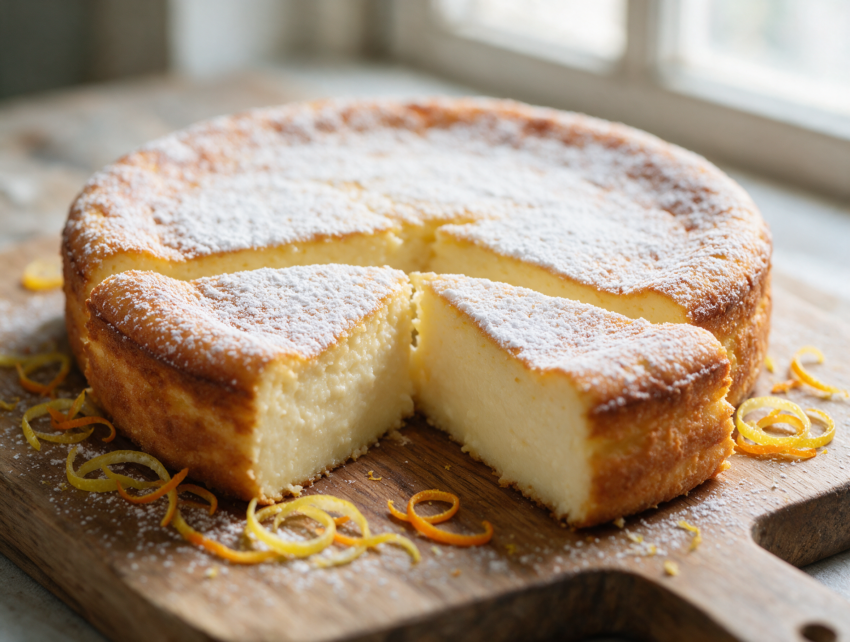
Migliaccio napoletano is a Neapolitan semolina and ricotta cake baked until the top turns deep gold and the inside sets into something between a custard and a dense sponge. It’s a Carnevale tradition in Naples, made in the weeks before Lent when kitchens smell like citrus and simmering milk.
I first had a slice from a bakery near Piazza Bellini, still cold from the fridge case, and it wasn’t what I expected. No pastry shell, no ricotta filling hiding under crumbs. Just a plain-looking cake with a soft, grainy bite and a lemon and orange scent that hit before the fork did.
The only tricky part is cooking the semolina in milk and water before it meets the ricotta. Whisk it in slowly and you won’t get lumps. Rush it, and you’ll be picking bits out of the batter.
This bakes into a 26 cm / 10-inch round, cuts into 12 wedges, and tastes better the next day once it’s had time to firm up in the fridge.
Why You’ll Love This Recipe
- Custardy crumb with no pastry shell to fuss over
- Made from pantry staples: semolina, ricotta, eggs, citrus
- Tastes better the next day, ideal for make-ahead baking
- One pan, one bowl, no fancy equipment needed
Ingredient Notes
- Semolina: Use fine semolina (semolino rimacinato), not coarse polenta-style grits, for a smooth porridge base.
- Whole milk: Gives the richest porridge. Low-fat milk works but the crumb turns slightly drier.
- Ricotta: Drain it in a sieve for 30 minutes if it looks wet, or the batter turns loose and slow to bake.
- Sugar: 250g keeps this on the less-sweet side typical of home versions. Bakery slices are often sweeter.
- Eggs: Use room-temperature eggs so they blend into the warm semolina without streaking.
- Butter: Melted into the milk mixture, it adds richness without making the crumb greasy.
- Lemon and orange zest: Zest with a microplane and stop before you hit the bitter white pith.
- Cinnamon: Optional, a touch some Naples households add. Skip it for a cleaner citrus flavor.
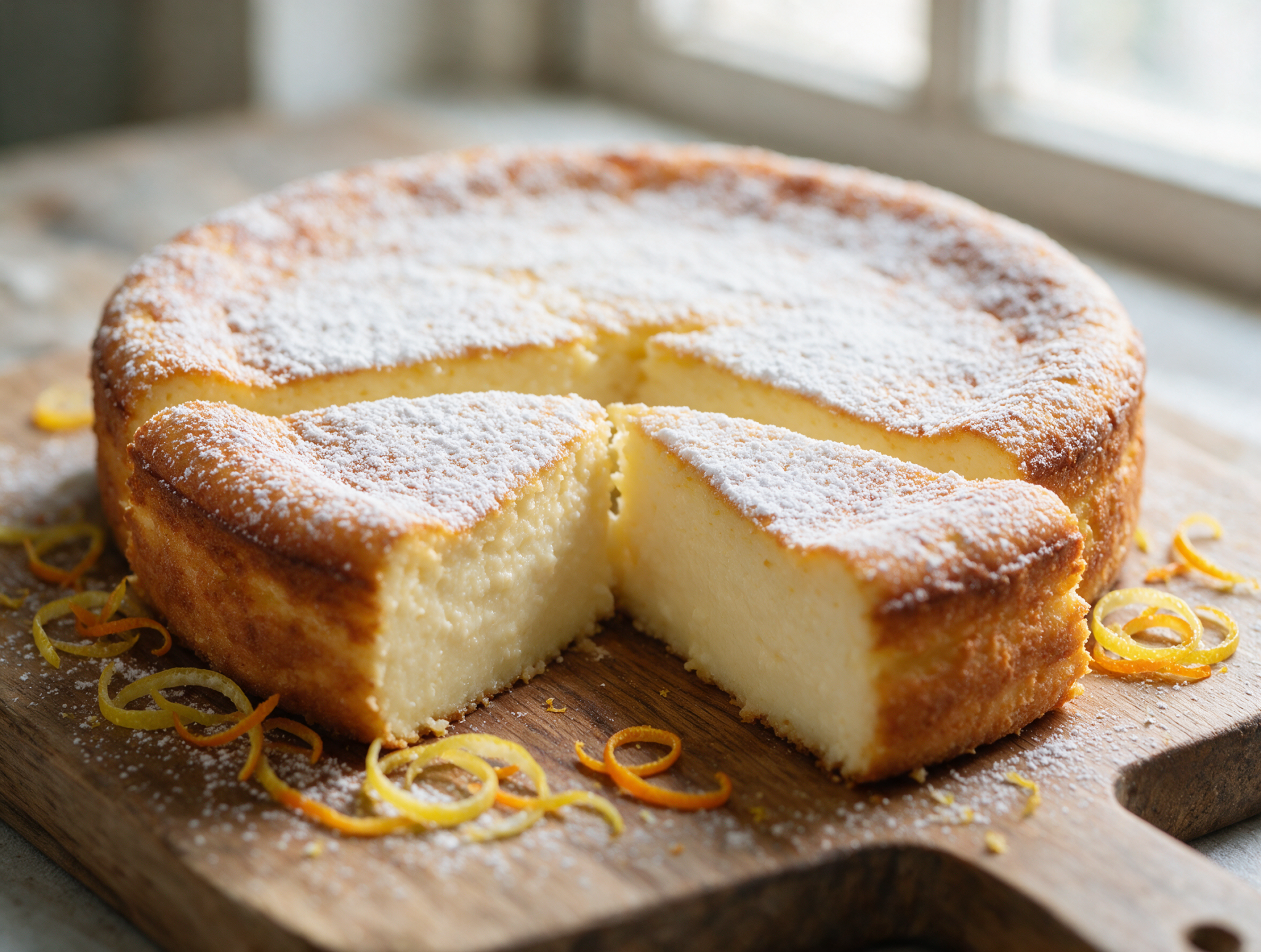
Baked Migliaccio Napoletano with Ricotta and Citrus
Ingredients
Method
- Heat the oven to 180 C / 350 F. Butter a 26 cm / 10-inch springform pan and dust it lightly with flour or fine semolina, tapping out the excess.
- Pour the milk and water into a 3-quart / 2.8 L saucepan. Add the butter and salt, and bring to a gentle boil over medium heat.
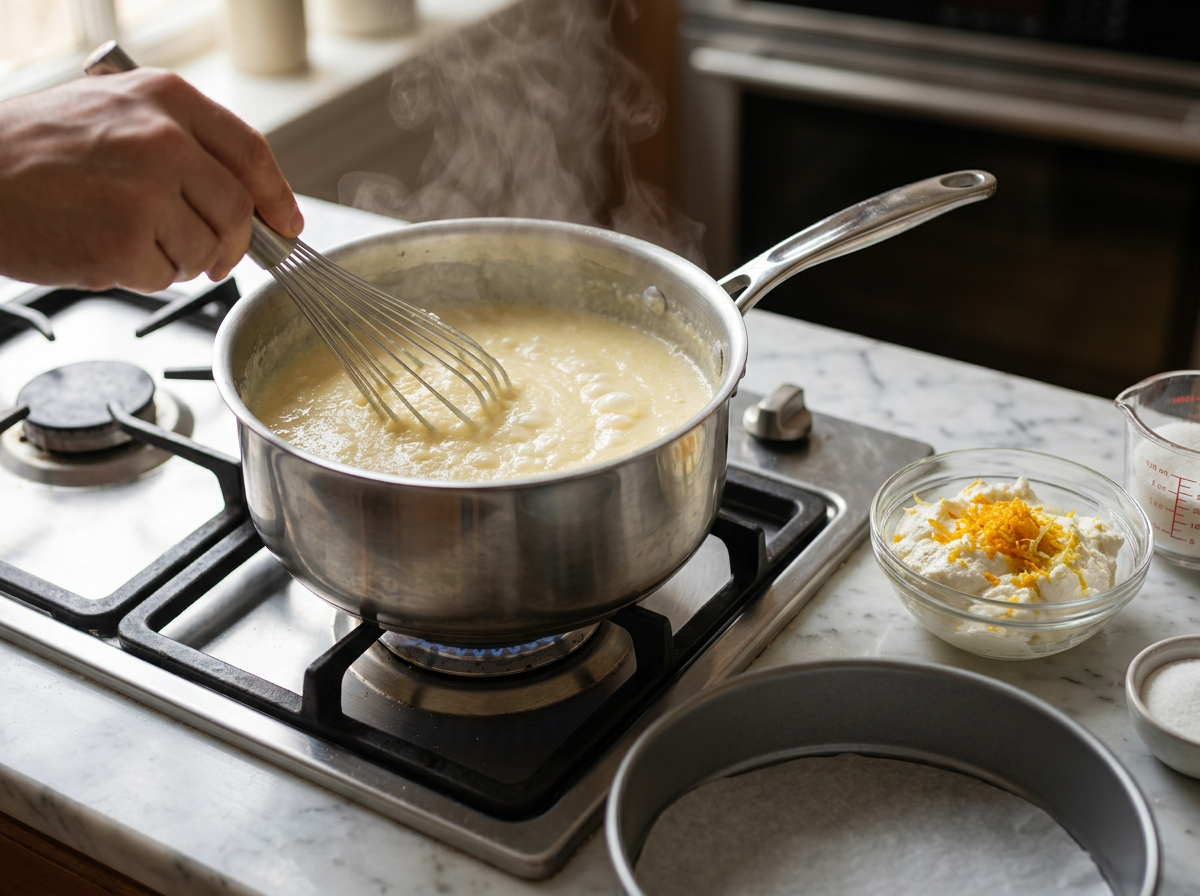
- Reduce the heat to low. Sprinkle in the semolina in a thin, steady stream, whisking constantly so it doesn't clump. Cook for 5 to 8 minutes, stirring, until the porridge is thick and pulls away from the sides of the pan.
- Scrape the porridge into a large bowl and let it cool for 15 to 20 minutes, stirring once or twice, until just warm.
- In a separate bowl, whisk the ricotta smooth. Add the sugar and whisk until creamy, about 1 minute.
- Whisk in the eggs one at a time, then stir in the lemon zest, orange zest, vanilla, and cinnamon if using.
- Fold the ricotta mixture into the cooled semolina porridge in two additions, mixing until the batter is smooth with no streaks.
- Pour the batter into the prepared pan and smooth the top with a spatula.
- Bake for 55 to 60 minutes, until the top is deep gold and the edges pull slightly from the pan. The center should still jiggle slightly, like a set custard, when you nudge the pan.
- Cool the cake in the pan on a wire rack to room temperature, about 1 hour, then refrigerate for at least 2 hours before slicing.
- Dust with powdered sugar just before serving. Cut into 12 wedges with a thin knife.
Notes
- Whisk semolina in slowly to prevent lumps in the porridge.
- Cool porridge 15 to 20 minutes before adding eggs.
- Refrigerate at least 2 hours before slicing for clean wedges.
- Cake tastes better on day two once fully chilled.
Tips for Success
- Whisk semolina into the boiling milk gradually to avoid lumps forming in the porridge.
- Drain ricotta in a sieve for 30 minutes if it looks watery, so the batter doesn’t turn runny, much like the curd cheese drained for a Yorkshire curd tart.
- Cool the semolina porridge for 15 to 20 minutes before mixing in eggs so they don’t scramble.
- Refrigerate the baked cake for at least 2 hours before slicing so it sets into clean wedges.
- Zest the lemon and orange with a microplane, avoiding the white pith, for cleaner flavor, the same technique used in lemon crinkle cookies.
Variations
- Swap orange zest for extra lemon and add a splash of limoncello for a tarter, boozier version.
- Stir in 50g candied citron or orange peel for a nod to the traditional Carnevale recipe.
- Replace half the sugar with honey and add a pinch of nutmeg for a deeper, spiced flavor.
Storage and Reheating
Migliaccio napoletano keeps well in the fridge, covered, for 4 to 5 days. It’s meant to be eaten cold or at room temperature, so there’s no need to warm it up before serving.
For longer storage, wrap individual slices tightly in plastic and freeze for up to 2 months. Thaw overnight in the fridge, then let the slice sit at room temperature for 15 minutes before serving.
Skip the microwave here. Warming migliaccio softens the semolina and turns the crumb mushy instead of custardy, so it’s better served straight from the fridge.
Serving Suggestions
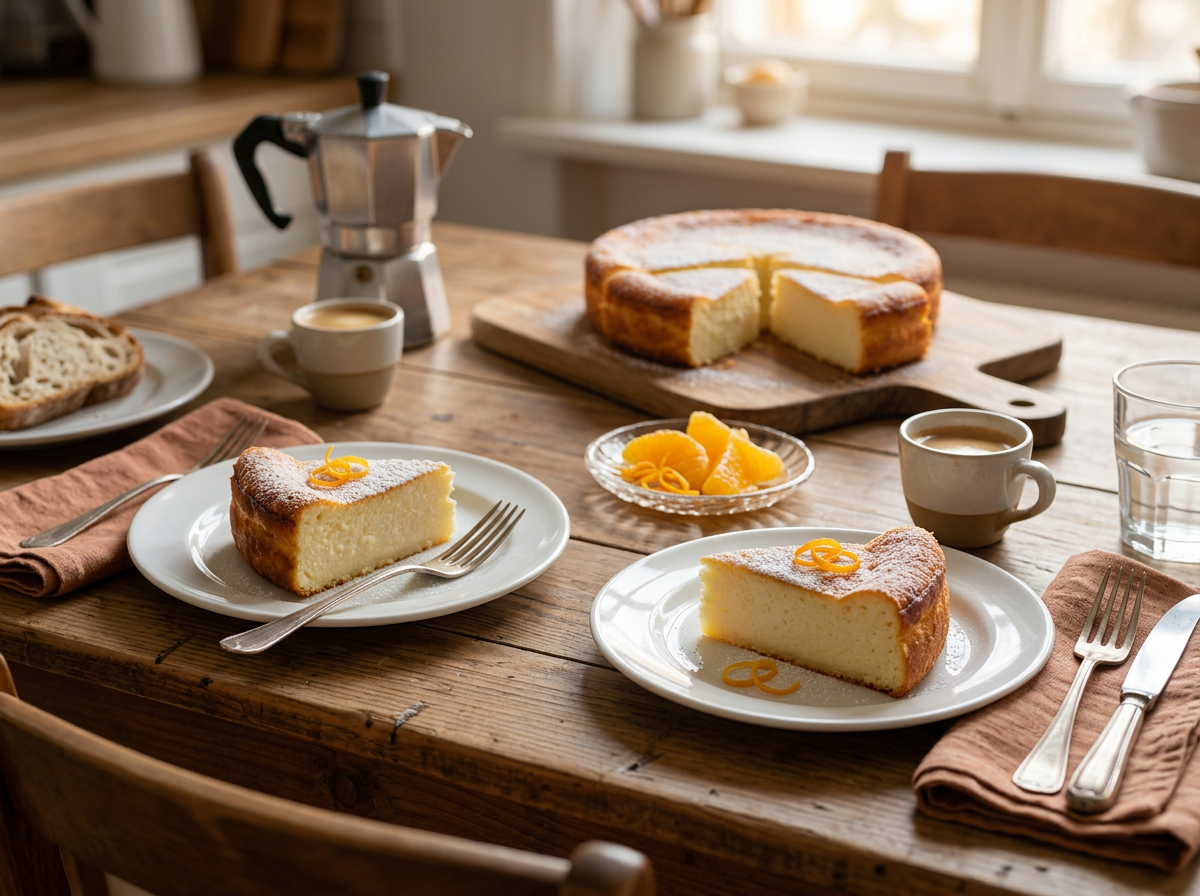
Migliaccio napoletano is a Carnevale staple in Naples, usually cut into wedges and served cold with a dusting of powdered sugar. A short espresso alongside cuts through the sweetness.
For a bigger spread, set it next to chiacchiere or sanguinaccio, the other Carnevale sweets Neapolitan bakeries fill their windows with in February. Fresh orange segments on the side echo the zest in the batter.
At home, I like it for a lazy Sunday breakfast with the espresso pot still warm, or packed into a lunchbox as an afternoon snack.
FAQ
Why did my migliaccio napoletano sink in the middle after baking?
This usually means it came out of the oven before the center fully set. Migliaccio should still jiggle slightly like a custard when you pull it out, since it firms up as it cools. Taking it out too early, or opening the oven door often, causes the center to collapse as it cools.
Can I use rice instead of semolina in migliaccio napoletano?
Some home versions swap in pre-cooked rice, but that makes a different regional cake with a firmer, grainier bite. Semolina is what gives classic Neapolitan migliaccio its smooth, custardy texture. If you only have coarse semolina, pulse it briefly in a food processor before cooking it in the milk.
Can I make migliaccio napoletano a day ahead?
Yes, and it actually tastes better that way. The cake needs at least 2 hours in the fridge to set before slicing, but a full day lets the citrus and ricotta flavors settle. Store it covered in the fridge and let it sit for 10 minutes at room temperature before serving.
What goes well with migliaccio napoletano besides powdered sugar?
A short espresso is the classic match in Naples, since the bitterness cuts through the cake’s sweetness. Fresh orange slices or a spoon of citrus marmalade on the side also work well. Some bakeries serve it alongside chiacchiere, the fried Carnevale pastries, for a full holiday spread.
Is migliaccio napoletano gluten free?
No, migliaccio napoletano is not gluten free since semolina is made from durum wheat. Swapping in a gluten-free flour blend won’t give the same grainy, custardy texture the cake is known for. If you need a gluten-free version, look for a recipe built around rice or cornmeal instead.
What’s the difference between migliaccio napoletano and pastiera napoletana?
Migliaccio is a semolina and ricotta cake baked without a crust, traditionally made for Carnevale in the weeks before Lent. Pastiera napoletana uses cooked wheat berries in a pastry shell and is baked for Easter. Both are Neapolitan and use ricotta and citrus, but their textures and occasions differ.
Related recipes
