
Jump to Recipe
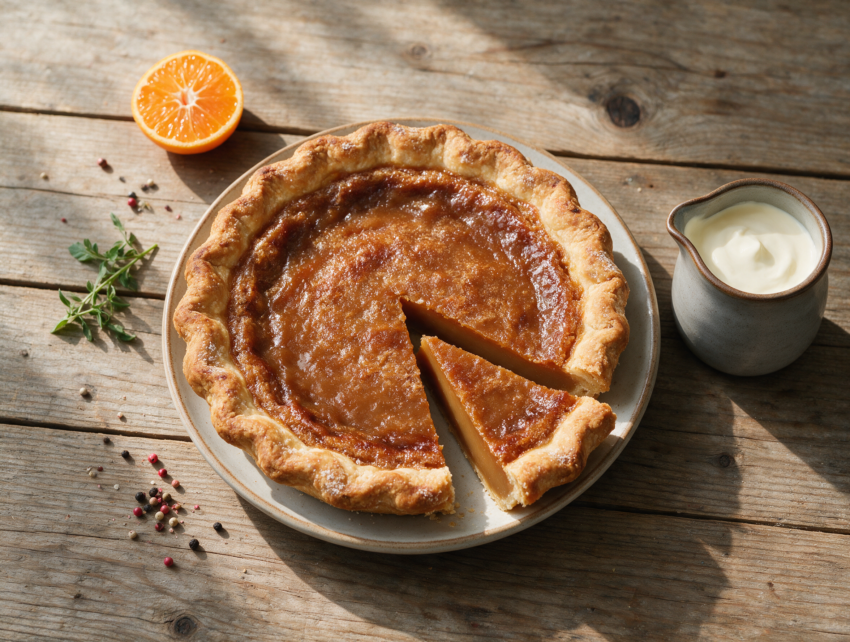
There’s something about a warm slice of tarte au sucre that feels like a Quebec kitchen in February, snow outside and a wood stove going.
I first had this pie at a sugar shack outside Montreal, the kind of place where maple syrup drips straight into your hot dog and everyone eats dessert before it’s even cool. This pie showed up at the end of the meal, dark and glossy, and I asked for the recipe before I finished my slice.
Quebec tarte au sucre is a baked custard pie built from brown sugar, cream and butter poured into a flaky crust. It’s simpler than pecan pie and richer than a basic custard pie, closer to a Southern chess pie in spirit but with its own French-Canadian backbone.
The filling firms up as it cools, so the real trick here is patience, not skill. Give it the full 2 hours on the counter and it slices clean every time.
Why You’ll Love This Recipe
- Uses pantry staples, no maple syrup required
- Bakes in under an hour once the crust is ready
- Sets up firm and sliceable after cooling
- Tastes like a Quebec sugar shack in every bite
Ingredient Notes
- all-purpose flour: Used in both the crust and the filling. Spoon and level it rather than scooping to avoid a dense crust.
- cold unsalted butter: Keep it cold until it hits the flour so the crust bakes up flaky instead of tough.
- dark brown sugar: Dark brown sugar gives the deepest molasses flavor. Light brown sugar works too but tastes milder and less caramel-like.
- heavy cream: Full-fat cream gives the filling body. Half-and-half will work but makes a noticeably thinner, less rich pie.
- large egg: Binds the filling as it bakes. Let it sit at room temperature for 10 minutes so it blends in smoothly.
- vanilla extract: Rounds out the brown sugar flavor. Skip imitation vanilla here, the real thing makes a difference in a filling this simple.
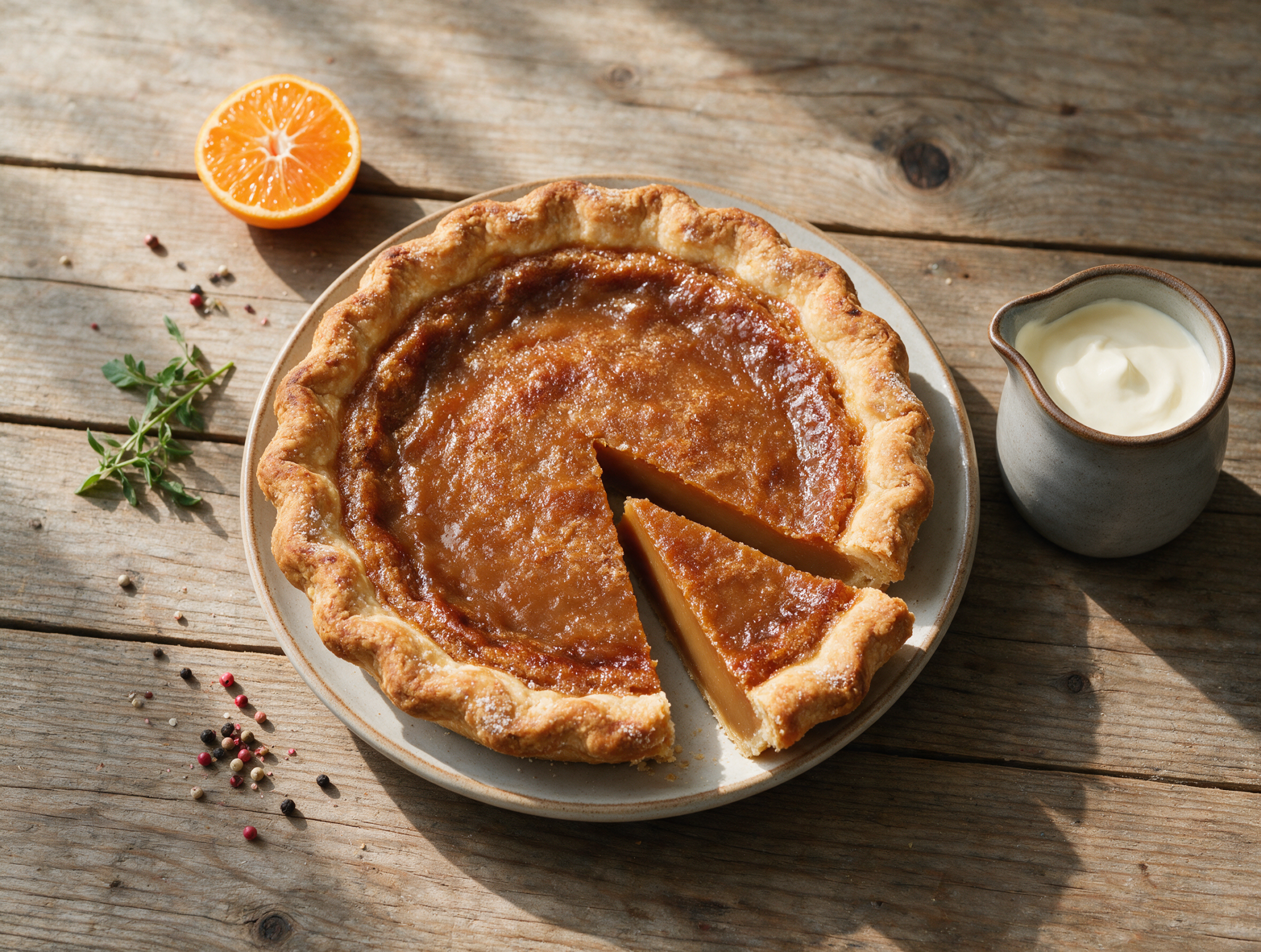
Tarte au Sucre du Quebec: A Classic Brown Sugar Pie
Ingredients
Method
- Whisk the flour and 1/4 tsp salt together in a mixing bowl. Add the cold cubed butter and cut it in with a pastry cutter or your fingers until the mixture looks like coarse crumbs with pea-sized bits of butter.
- Sprinkle in the ice water one tablespoon at a time, mixing gently with a fork, until the dough just clumps together when pressed. Shape into a disk, wrap, and chill for 30 minutes.
- Roll the chilled dough on a floured surface into a 30 cm / 12-inch circle. Fit it into a 23 cm / 9-inch pie dish, trim the overhang to 2 cm / 3/4 inch, and crimp the edges. Chill the crust while you make the filling.
- Heat the oven to 190 C / 375 F.
- Combine the brown sugar, heavy cream, and 45 g butter in a 2-quart / 1.9 L saucepan over medium heat. Whisk constantly for 3 to 4 minutes until the sugar dissolves and the mixture is smooth, without letting it come to a hard boil.
- Remove from the heat and let cool for 5 minutes. Whisk in the flour until no lumps remain.
- Whisk in the egg, vanilla, and pinch of salt until fully blended and glossy.
- Pour the filling into the chilled crust.
- Bake for 10 minutes at 190 C / 375 F, then lower the oven to 160 C / 325 F and continue baking for 30 to 35 minutes, until the edges are puffed and set and the center still jiggles slightly like loose gelatin, similar to a pecan pie. An instant-read thermometer inserted in the center should read about 175 F / 79 C.
- Cool the pie on a wire rack for at least 2 hours at room temperature before slicing. It looks underdone warm but firms up completely as it cools, and cutting into it early is the main reason sugar pie turns runny.
- Slice into 8 wedges and serve at room temperature or slightly warm.
Notes
- Use a glass or ceramic pie dish so you can check the crust color through the bottom.
- Don't skip the flour in the filling, it's what keeps the pie from staying syrupy.
- Full cooling time matters more than exact bake time for a clean slice.
- Homemade crust can be swapped for a store-bought 9-inch crust to save 20 minutes.
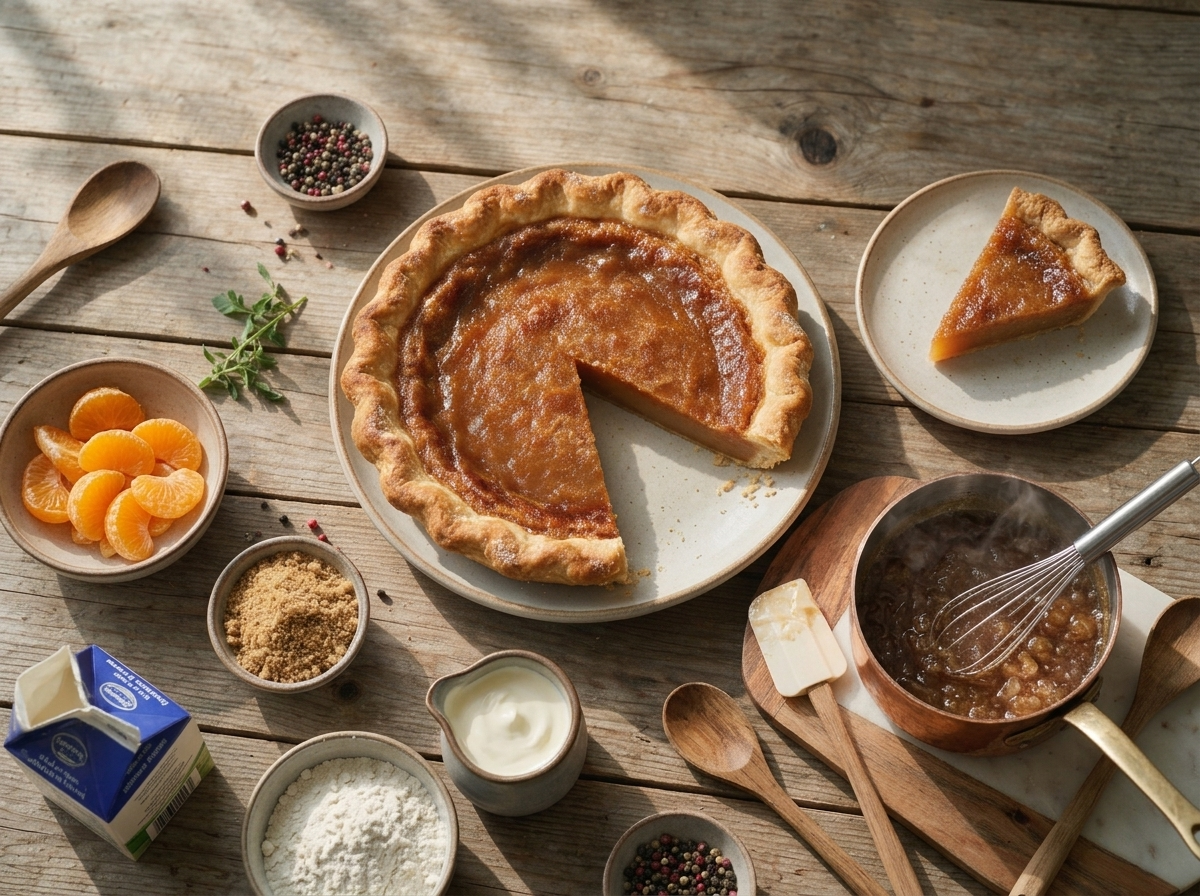
Tips for Success
- Chill the dough for a full 30 minutes before rolling, or the butter warms up and the crust turns tough instead of flaky.
- Whisk the sugar and cream constantly on the stove so the mixture doesn’t scorch on the bottom of the pan.
- Let the pie cool at least 2 hours on the counter before cutting, since the filling firms up as it cools.
- Use dark brown sugar instead of light for a deeper molasses flavor closer to a Quebec sugar shack pie.
- Cover the crust edges with foil strips if they brown too fast before the filling finishes baking.
Variations
- Add 1/2 cup toasted pecans to the filling before baking for a nuttier, Southern-leaning twist on the classic.
- Swap a third of the brown sugar for maple syrup to lean into Quebec’s maple traditions with a lighter filling.
- Stir in 1/4 teaspoon ground cinnamon or nutmeg with the vanilla for a warmer, spiced version of the pie.
Storage and Reheating
Tarte au sucre keeps well at room temperature for 1 day if your kitchen isn’t too warm, loosely covered.
For longer storage, refrigerate it covered for up to 4 days. The filling firms up more in the fridge, which some people prefer.
This pie is best served at room temperature or barely warm, not hot, since high heat can make the sugar filling weep. Microwave a single slice for 10 to 15 seconds if you want it slightly warm, rather than reheating the whole pie in the oven.
Serving Suggestions
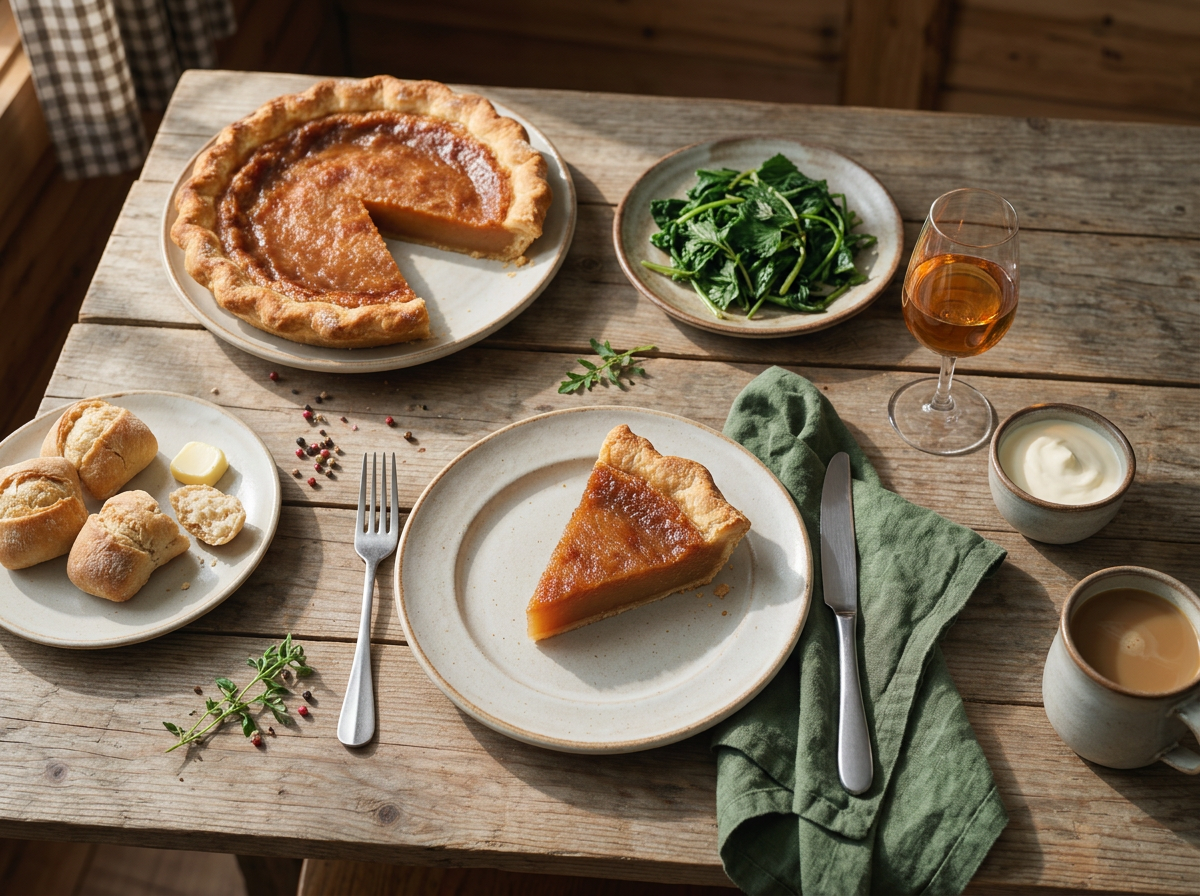
Tarte au sucre is rich enough to serve in small wedges with a spoon of unsweetened whipped cream on top.
A cup of strong coffee or tea balances the sweetness well, and it’s the classic pairing at Quebec sugar shacks in early spring.
For a holiday table, serve it alongside shortbread or a scoop of vanilla ice cream so guests can mix textures.
FAQ
Why is my tarte au sucre runny in the middle after baking?
Runny centers usually mean it hasn’t cooled long enough, not that it’s undercooked. The filling looks jiggly straight out of the oven and needs at least 2 hours at room temperature to firm up as the sugar and egg set. If it’s still soupy after cooling fully, the oven ran too low or the flour was left out.
Can I use maple syrup instead of brown sugar in tarte au sucre?
You can swap in maple syrup for part of the brown sugar, but not all of it, or the filling won’t set properly. Replace up to a third of the sugar, about 100 g, with maple syrup and cut the cream by 2 tablespoons. Full maple syrup gives a thinner, more caramel-like pie closer to tarte au sirop d’erable.
Can I make tarte au sucre a day ahead?
Yes, and it slices cleaner the next day. Bake it, let it cool completely on the counter, then cover and refrigerate overnight so the filling firms up fully. Bring it to room temperature or warm a slice for 10 seconds in the microwave before serving.
What goes well with Quebec sugar pie?
Unsweetened whipped cream or a scoop of vanilla ice cream cuts through the richness of tarte au sucre nicely. A strong black coffee or espresso also works since the pie is sweet enough on its own. Some Quebec bakers add a spoon of maple cream on the side for extra sugar-shack flavor.
Is tarte au sucre gluten free?
No, this recipe isn’t gluten free as written, since both the crust and the filling use all-purpose flour. Swap in a 1:1 gluten-free flour blend for the crust and use 1 tablespoon of cornstarch instead of flour in the filling. Check your flour blend’s label if celiac disease is a concern.
What’s the difference between tarte au sucre and tarte a la ferlouche?
Tarte au sucre is a brown sugar and cream custard pie, while tarte a la ferlouche is made with molasses and often raisins, giving it a darker color and a deeper, more bitter-sweet flavor. Both are traditional Quebec desserts served around the holidays, but ferlouche leans heavier on spice and molasses.
More from the kitchen
