
Jump to Recipe
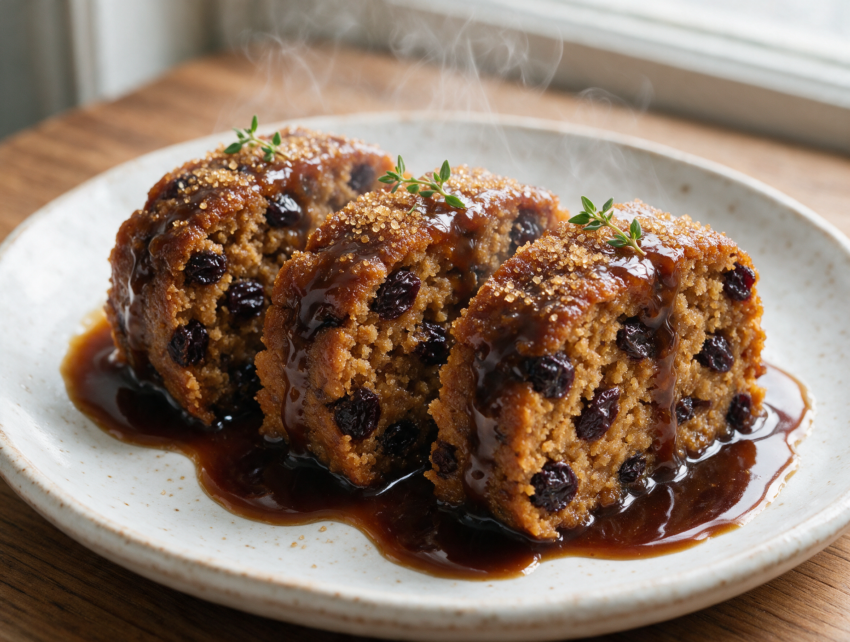
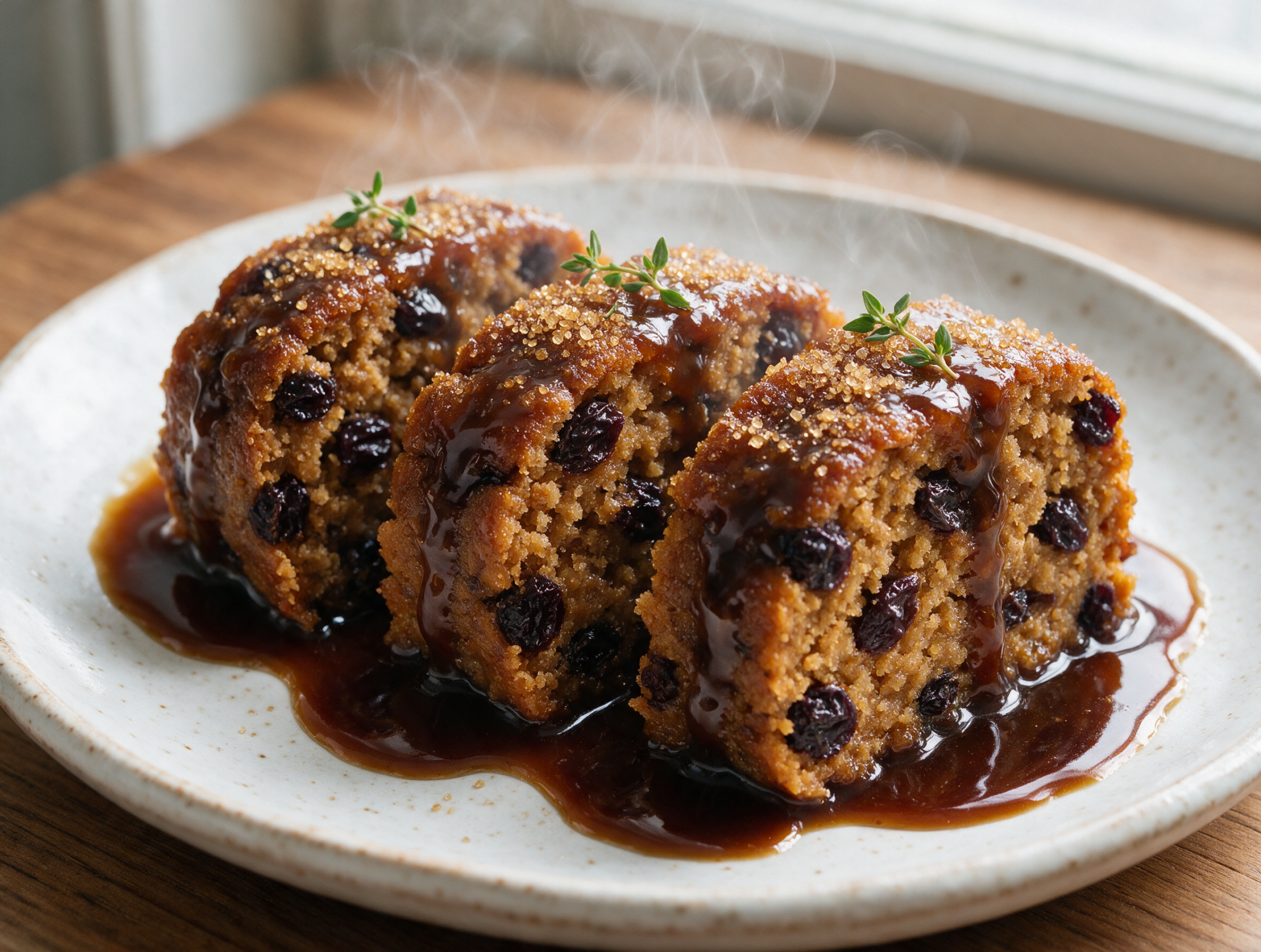
Newfoundland figgy duff is a steamed pudding built from breadcrumbs, raisins, and molasses, cooked slowly in a covered basin set inside a pot of simmering water. In Newfoundland dialect, raisins go by the name ‘figs’ in this dish, which is where the name comes from even though there isn’t a fresh fig anywhere in the bowl.
I first ate this at a kitchen party outside St. John’s, ladled straight from the pudding cloth with a puddle of molasses sauce on top. It was heavy in the best way. Dark, warm, and a little sweet from the blackstrap in the sauce.
This version steams in a 1.5 L / 6-cup pudding basin instead of the old cloth bag, which is easier to manage and just as good. Give it the full 3 hours on the stove. Pull it early and the center stays gummy instead of set.
Serve it warm, sliced thick, with the molasses sauce poured right over the top.
Why You’ll Love This Recipe
- One pot does all the work, no oven needed
- Freezes well for a make-ahead holiday dessert
- Uses pantry staples like breadcrumbs and molasses
- The molasses sauce turns it into a proper dessert
Ingredient Notes
- raisins: Newfoundlanders call these ‘figs’ in this pudding. Use dark seedless raisins, or swap half for currants for a deeper flavor.
- suet: Traditional recipes use shredded beef suet for a light, moist crumb. Grated cold butter works as a substitute, though the texture turns a bit denser.
- molasses: Use fancy, mild molasses here, not blackstrap, or the pudding turns bitter. Blackstrap is fine in the sauce if you like a stronger edge.
- breadcrumbs: Dry, day-old bread torn into rough crumbs gives the best texture. Fresh sandwich bread turns gummy once steamed.
- baking soda: Dissolve it into the warm milk before mixing. It reacts with the molasses and lightens what would otherwise be a dense, heavy pudding.
Steamed Newfoundland Figgy Duff with Molasses Sauce
Ingredients
Method
- Grease a 1.5 L / 6-cup pudding basin with butter and line the bottom with a small circle of parchment paper.
- In a large mixing bowl, combine the breadcrumbs, flour, suet, raisins, brown sugar, cinnamon, nutmeg, and salt.
- In a separate bowl, whisk the egg with the warmed milk, molasses, and baking soda.
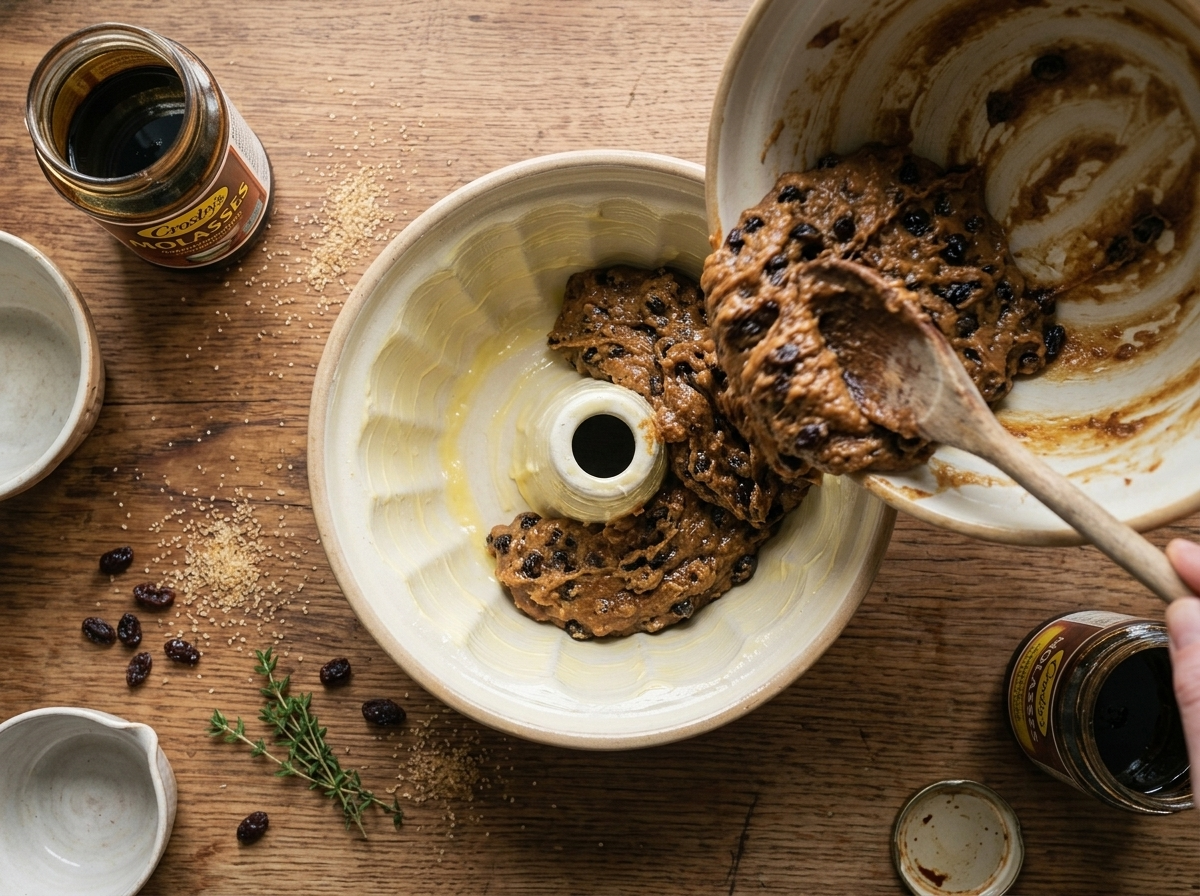
- Pour the wet ingredients into the dry and stir until just combined. The batter should be thick and heavy, not runny.
- Scrape the batter into the prepared basin, filling it about two-thirds full, and smooth the top.
- Cover the basin with a pleated sheet of parchment then foil, leaving room for expansion, and tie tightly with kitchen twine.
- Set the basin on an upturned saucer inside a 30 cm / 12-inch stockpot. Pour boiling water halfway up the sides of the basin.
- Cover the pot and steam over medium-low heat, keeping the water at a steady simmer, for 3 hours. Top up with boiling water every hour so the pot doesn't run dry.
- Check doneness with a skewer inserted into the center of the pudding. It should come out clean with no wet batter clinging. If not, cover and steam another 15 to 20 minutes.
- Lift the basin out of the pot and let the pudding rest, still covered, for 10 minutes.
- While the pudding rests, melt the butter in a 2-quart / 1.9 L saucepan over medium heat. Stir in the brown sugar and molasses and cook for 2 to 3 minutes until dissolved.
- Pour in the cream and simmer, stirring, for 2 to 3 minutes until the sauce thickens slightly and coats the back of a spoon.
- Turn the pudding out onto a plate, slice thick, and serve warm with the sauce poured over.
Notes
- Steam the full 3 hours; pulling it early leaves a gummy center.
- Keep the pot water at a steady simmer, not a hard boil.
- Top up with boiling water hourly so the pot never runs dry.
- Make the sauce fresh right before serving for the best pour.
Tips for Success
- Grease the pudding basin well with butter so the duff releases clean after steaming.
- Keep the water at a steady simmer, not a rolling boil, so the pudding cooks evenly.
- Check the water level every hour and top up with boiling water so the pot never runs dry.
- Test doneness with a skewer in the center; it should come out clean with no wet batter clinging.
- Let the pudding rest 10 minutes in the basin before turning it out so it holds its shape.
Variations
- Swap half the raisins for chopped dried figs or dates for a fruitier, stickier duff.
- Add 2 tbsp chopped candied peel or orange zest for a brighter, citrus-edged pudding.
- Steam individual portions in greased ramekins for 45 minutes instead of one large basin for 3 hours.
Storage and Reheating
Figgy duff keeps in the fridge for 4-5 days, wrapped tightly in plastic once fully cooled. Store the molasses sauce separately in a sealed jar in the fridge for up to a week.
To reheat, slice what you need and steam it for 10-12 minutes, or microwave a slice for 30-45 seconds until warmed through. Warm the sauce in a small saucepan over low heat, stirring, for 2-3 minutes.
Figgy duff also freezes well. Wrap the cooled pudding tightly in plastic then foil and freeze for up to 2 months, then thaw overnight in the fridge before reheating.
Serving Suggestions
Figgy duff traditionally follows a boiled Jiggs’ dinner in Newfoundland kitchens, served straight from the same pot the meat and vegetables cooked in. It shows up most on Sundays and around Christmas.
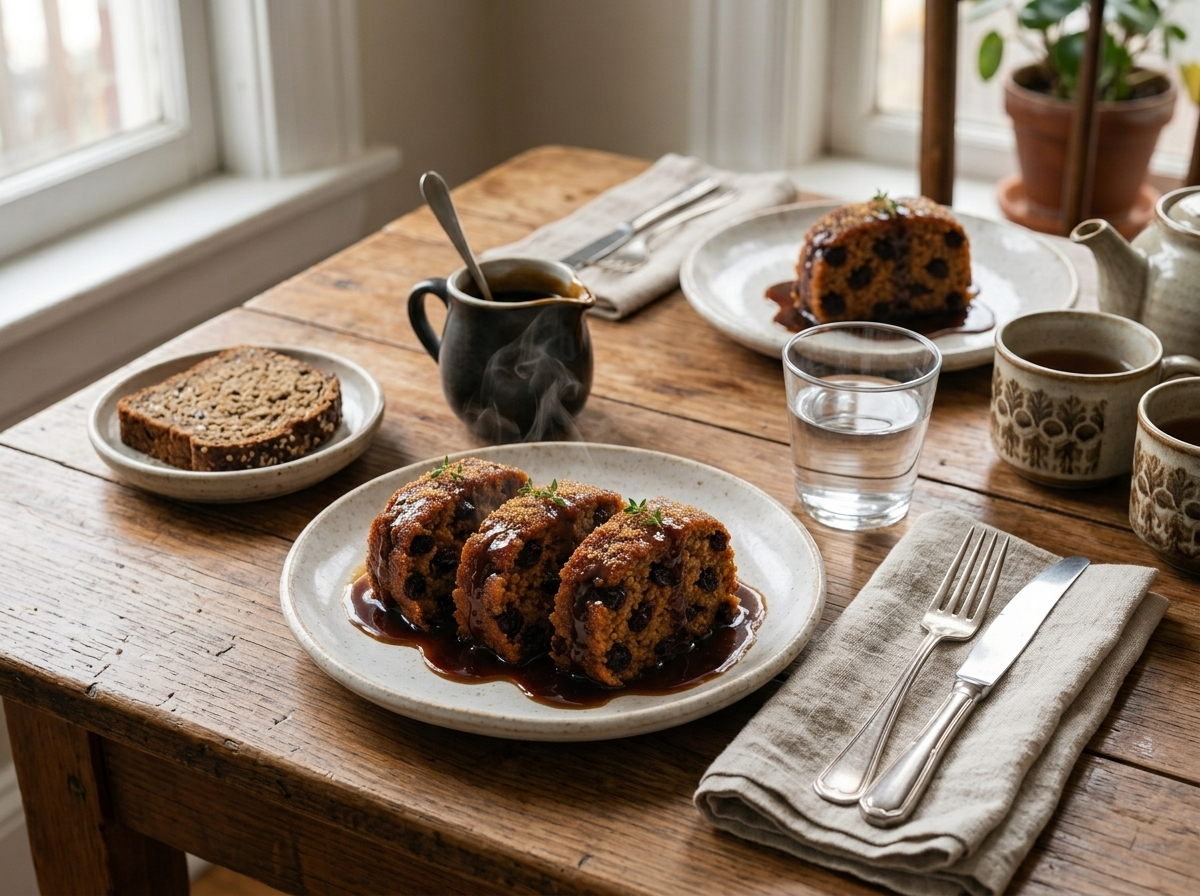
Slice it thick and pour the warm molasses sauce over the top, maybe with a splash of cream. A scoop of vanilla ice cream alongside works too if you want it leaning more toward dessert.
Leftover slices are good cold with tea the next morning, or lightly toasted in a dry 30 cm / 12-inch skillet until the edges catch a little color.
FAQ
Why is my figgy duff gummy in the middle instead of firm?
A gummy center means it came off the heat too soon or the water dropped below a simmer partway through. Steam the full 3 hours over steady simmering water, topping the pot up with boiling water each hour, and test with a skewer in the center before pulling it. It should come out clean, not sticky.
Can I use butter instead of suet in figgy duff?
Yes, grated cold butter works fine in place of suet, though the crumb turns a bit denser and less airy. Use the same 120 g amount and grate it straight from the freezer so it stays cold going into the batter. The flavor stays close to the traditional version.
Can I freeze figgy duff after steaming it?
Yes, figgy duff freezes well for up to 2 months once fully cooled. Wrap it tightly in plastic then foil before freezing, and thaw overnight in the fridge. Reheat sliced portions by steaming for 10-12 minutes or microwaving for 30-45 seconds before serving with warmed sauce.
What do you serve with Newfoundland figgy duff besides the molasses sauce?
Figgy duff traditionally follows a boiled Jiggs’ dinner, served straight from the same pot the meat and vegetables cooked in. Outside of that, it works as a stand-alone dessert with a splash of cream or a scoop of vanilla ice cream on the side.
Is Newfoundland figgy duff dairy-free?
As written, no, since the batter uses milk and the sauce uses butter and cream. To make it dairy-free, swap the milk for oat milk, use shortening or a plant-based butter in place of suet, and finish the sauce with full-fat coconut milk instead of cream.
What’s the difference between figgy duff and a British Christmas pudding?
Figgy duff is lighter and steams for about 3 hours, while British Christmas pudding is denser, often spiked with brandy, and steamed for hours before aging for weeks. Figgy duff also skips the heavy dried fruit mix and citrus peel, leaning mainly on raisins and molasses instead.
More from the kitchen
