
Jump to Recipe
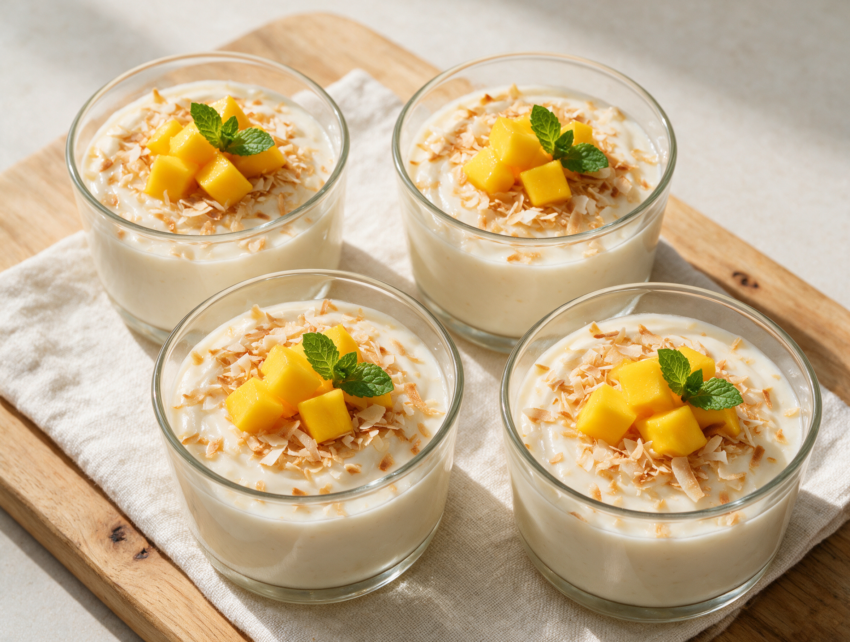
There’s something soothing about a dessert you make in one pot and forget about until it’s cold and set. These simple coconut pudding cups come together with just coconut milk, sugar, and cornstarch, whisked on the stove until glossy, then poured into cups and chilled until firm.
No eggs, no oven, no fuss. I started making these on hot afternoons in Bali, when turning on the oven felt like a bad idea.
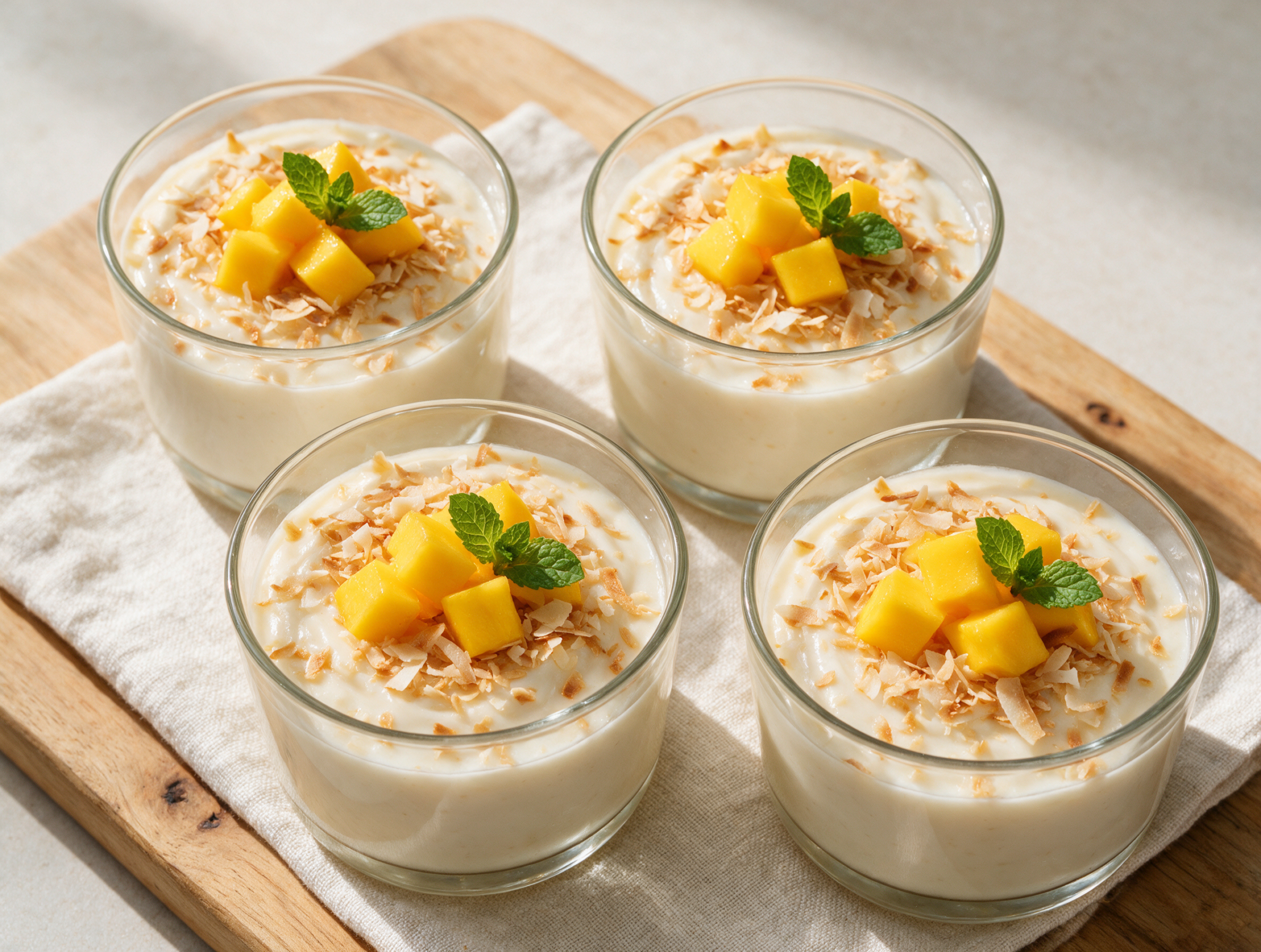
The texture lands somewhere between a custard and a firm pudding, dense enough to hold its shape when you scoop it. Toasted coconut flakes on top add the crunch the pudding itself doesn’t have.
Four cups take about 15 minutes of hands-on work. The rest is just the fridge doing its job.
Why You’ll Love This Recipe
- One saucepan, no oven, no eggs to temper
- Sets firm and holds its shape when scooped
- Ready to eat in about 3 hours, mostly hands-off
- Naturally vegan and gluten free
Ingredient Notes
- coconut milk: Use full-fat canned coconut milk, shaken well before opening. Light coconut milk or the carton kind sold as a drink won’t set properly.
- cornstarch: This sets the pudding without any eggs. Potato starch works as a 1:1 swap if that’s what you have.
- granulated sugar: Cuts the richness of the coconut milk. Brown sugar works too and gives a deeper, caramel-like flavor.
- vanilla extract: Rounds out the coconut flavor without covering it up. Leave it out if you want a cleaner, straight-up coconut taste.
- unsweetened coconut flakes: Toasting brings out a nutty smell and golden color. Sweetened flakes work but make the topping noticeably sweeter.
No-Bake Coconut Pudding Cups with Toasted Coconut Flakes
Ingredients
Method
- Pour 1 cup (240 ml) of the coconut milk into a small bowl and whisk in the cornstarch until no lumps remain. Set the slurry aside.
- Pour the remaining 2 cups (480 ml) coconut milk into a 2-quart / 1.9L saucepan with the sugar and salt. Set over medium heat and whisk until it steams and the sugar dissolves, about 3 minutes.
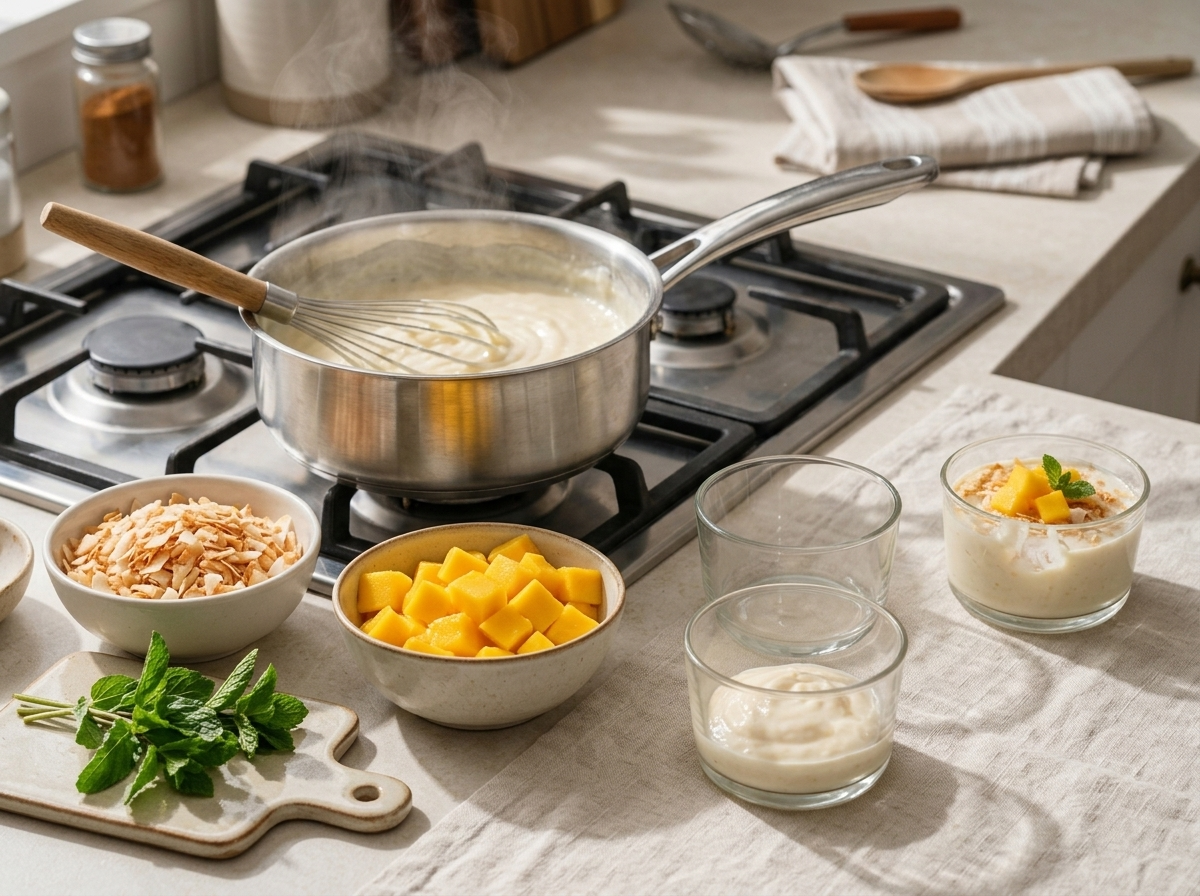
- Whisk the cornstarch slurry back into the pan. Cook over medium-low heat, whisking constantly, for 5 to 6 minutes, until the pudding thickens enough to coat the back of a spoon and holds a ribbon off the whisk. Don't walk away here, it can catch on the bottom of the pan fast once it starts to thicken.
- Remove from the heat and stir in the vanilla extract.
- Divide the pudding evenly among 4 ramekins or small cups (about 170 ml / 6 oz each). Tap each cup on the counter to knock out any air bubbles.
- Press a piece of plastic wrap directly onto the surface of each pudding to stop a skin from forming, or cover the cups loosely.
- Refrigerate for at least 3 hours, or until fully set, cold, and firm when you press the surface.
- While the pudding chills, toast the coconut flakes in a dry 8-inch / 20 cm skillet over medium heat for 2 to 3 minutes, stirring often, until golden and fragrant.
- Top each pudding cup with the toasted coconut just before serving. Add fresh mango or berries if using.
Notes
- Whisk the cornstarch slurry smooth before it goes into the hot pan to avoid lumps.
- Chill at least 3 hours; the pudding needs that time to fully set.
- Toast the coconut flakes just before serving so they stay crisp.
- Use full-fat canned coconut milk, not a lite version, or the pudding stays soft.
Tips for Success
- Whisk constantly once the slurry hits the hot pan; unattended cornstarch scorches on the bottom fast.
- Use canned coconut milk, not the carton beverage kind, or the pudding stays loose.
- Shake the can well before opening so the cream and water blend evenly.
- Toast the coconut flakes right before serving so they stay crisp instead of softening in the fridge.
- Press plastic wrap directly onto the pudding surface while it cools to stop a rubbery skin forming.
Variations
- Swap 1/2 cup of the coconut milk for mango puree for a layered tropical version.
- Stir 1 tbsp cocoa powder in with the sugar for a chocolate-coconut pudding.
- Use brown sugar instead of white sugar for a deeper, caramel-like flavor.
Storage and Reheating
Coconut pudding cups keep well covered in the fridge for 3 to 4 days. Press plastic wrap onto the surface of each cup before storing so they don’t develop a skin.
This pudding is a cold dessert, so there’s no reheating step. If you’re making it ahead for a party, cook and chill the base a day early, then add the toasted coconut topping just before serving so it stays crisp.
Freezing isn’t a good idea here. Cornstarch-set puddings turn grainy and watery once thawed, so stick to the fridge timeline above.
Serving Suggestions
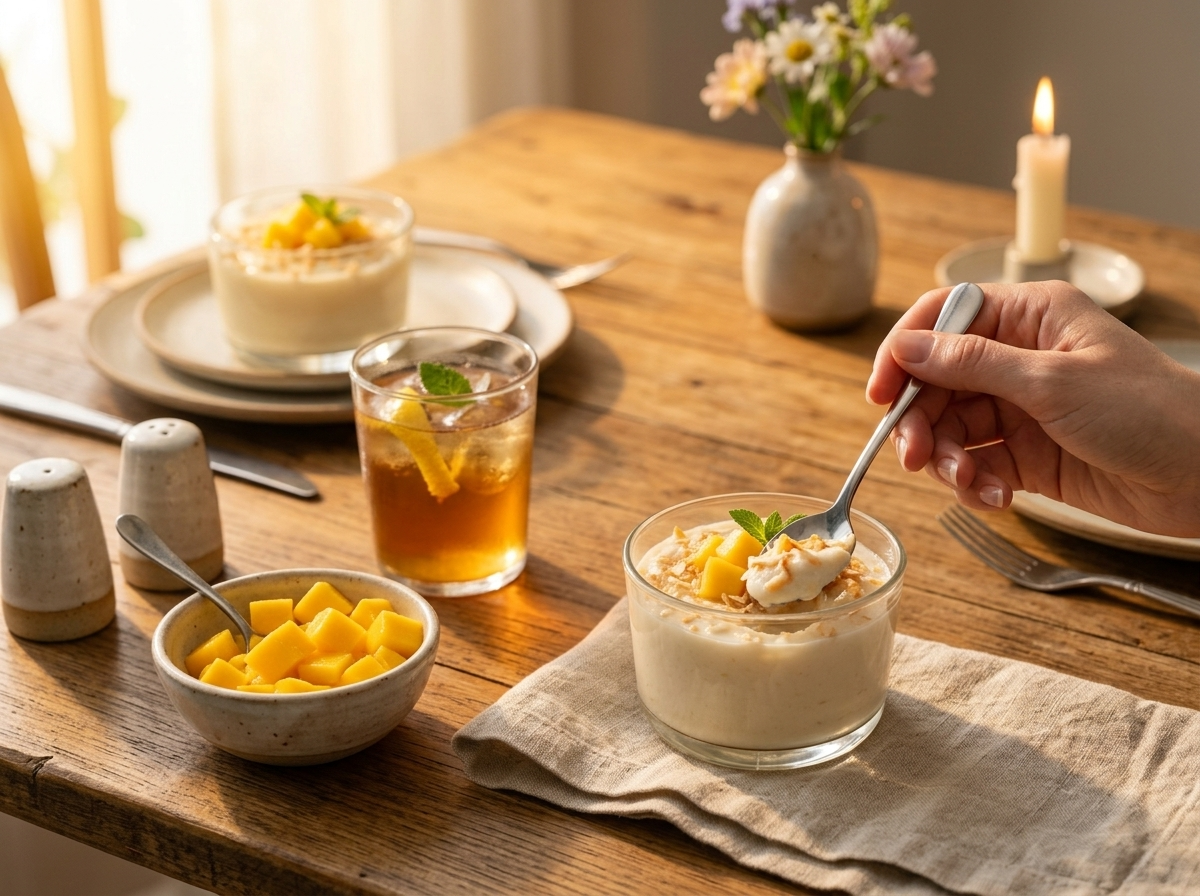
Serve the pudding cold, straight from the fridge, with the toasted coconut added right before it hits the table. Fresh mango or a handful of berries on top makes it feel more like dessert and less like a snack.
A little lime zest scattered over the coconut flakes cuts through the richness nicely. For something crunchy on the side, a plain shortbread cookie or a few crushed graham crackers work well.
These also travel well in small lidded cups if you’re packing them for a picnic or a potluck.
FAQ
Why is my coconut pudding still runny after chilling?
It probably didn’t thicken enough on the stove before you poured it into cups. Cornstarch needs a few minutes of real heat and constant whisking to fully activate, so if it looked thin going into the fridge, it stays thin. Cook it until it coats the back of a spoon and holds a ribbon off the whisk next time.
Can I use coconut cream instead of canned coconut milk for these pudding cups?
Yes, but thin it slightly since coconut cream is much thicker and richer than canned coconut milk. Mix it with a splash of water, about 2 tablespoons per cup, before measuring it into the recipe. Straight coconut cream will set almost too firm and taste heavier.
How far ahead can I make these coconut pudding cups?
You can make the pudding base up to 3 to 4 days ahead and keep it covered in the fridge. Add the toasted coconut topping right before serving so it doesn’t go soft sitting on the pudding. This makes them an easy make-ahead dessert for a dinner party.
What goes well with coconut pudding cups besides toasted coconut?
Fresh mango, berries, or a little lime zest all work well against the richness of the coconut milk. A plain shortbread or crushed graham cracker on the side adds crunch without competing with the flavor. Keep the additions simple since the pudding is already fairly rich.
Are these coconut pudding cups gluten free and dairy free?
Yes, this recipe is naturally gluten free and dairy free since it uses cornstarch instead of flour and coconut milk instead of dairy. It’s also egg free and vegan as written, as long as you check your sugar and vanilla extract for any hidden additives.
What’s the difference between this coconut pudding and coconut flan?
Coconut flan is baked with eggs and set with heat in a water bath, giving it a denser, more custardy bite. This coconut pudding skips eggs entirely and sets on the stovetop with cornstarch, so it’s lighter to make and doesn’t need an oven or a water bath at all.
Related recipes
- Grandma’s Lemon Pudding Cake recipe
- our Classic Nanaimo Bars with Chocolate Custard Layers
- this Classic British Manchester Tart with Banana and Coconut
