
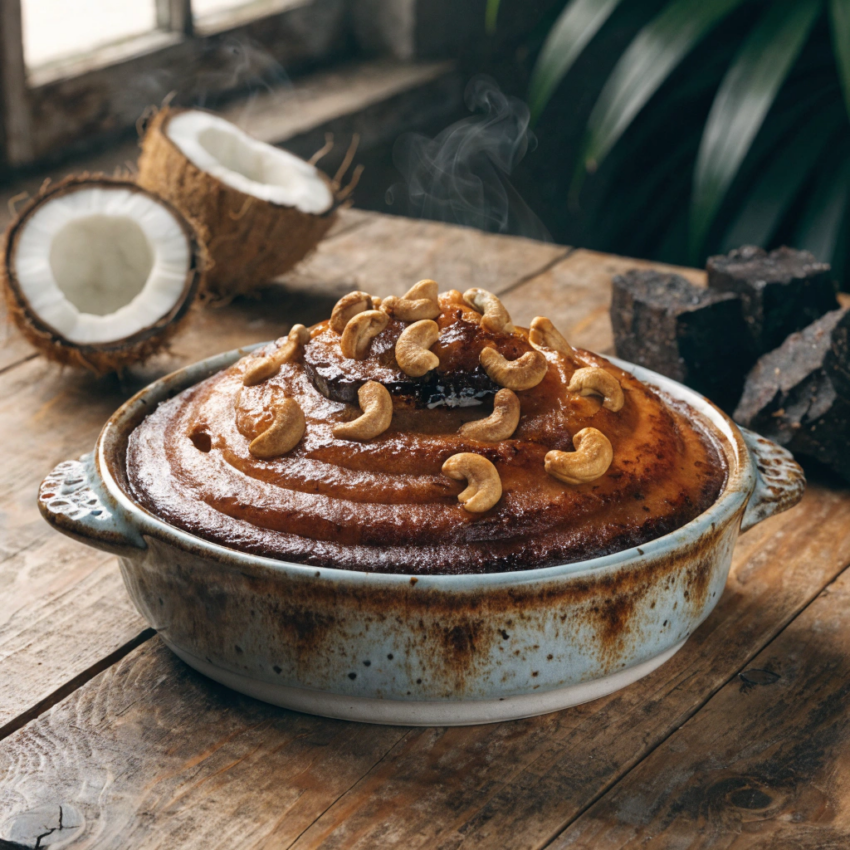
There’s something quietly comforting about a dessert that feels like it has a story to tell. Sri Lankan wattalappam custard is one of those treats. It’s warm, spiced, and deeply satisfying in a way that store-bought sweets just aren’t.
The first time I made this, I remember thinking, “Wait… this is just a few ingredients?” And yet, the flavor hits you in layers—coconut, jaggery, spices—all melting together into something silky and bold.
If you love coconut custard or rich pudding-style desserts, this one deserves a spot in your kitchen.
What Is Sri Lankan Wattalappam?
Wattalappam is a traditional Sri Lankan dessert made with coconut milk, jaggery, eggs, and spices. It’s often compared to caramel pudding, but that comparison only goes so far.
This Sri Lankan pudding is darker, deeper, and more aromatic. The jaggery gives it a molasses-like sweetness, while spices like cardamom bring warmth.
It’s commonly served during celebrations, especially in Muslim households in Sri Lanka. But honestly, you don’t need a special occasion. A quiet evening works just fine.
Why You’ll Love This Recipe
- Rich but not heavy
- Naturally gluten-free
- Made with simple pantry ingredients
- Perfect make-ahead dessert
- Tastes even better the next day
And the texture? Think soft, gently set coconut custard that melts on your tongue.
Ingredients You’ll Need
Here’s everything you need for an authentic Sri Lankan dessert experience:
- 1 cup grated jaggery (or palm sugar)
- 1 cup thick coconut milk
- 4 large eggs
- 1/2 teaspoon ground cardamom
- 1/4 teaspoon ground nutmeg
- 1/4 teaspoon ground cloves
- 1 teaspoon vanilla extract
- Pinch of salt
- 2 tablespoons chopped cashews
If you can find Sri Lankan coconut milk, even better. It has a slightly richer flavor.
How To Make Watalappan (Step-by-Step)
Step 1: Melt the Jaggery
Add grated jaggery to a small pan with a splash of water. Heat gently until melted.
Let it cool slightly before using. Hot syrup will scramble your eggs. Learned that the hard way.
Step 2: Whisk the Eggs
In a bowl, whisk the eggs until smooth. Don’t overdo it. You don’t want too much air in the mixture.
Step 3: Combine Everything
Slowly pour the melted jaggery into the eggs while whisking.
Then add coconut milk, spices, vanilla, and salt.
Mix until smooth. The aroma at this stage? Already amazing.
Step 4: Strain the Mixture
This step is optional but worth it.
Strain the mixture to remove lumps and get that silky custard texture.
Step 5: Pour and Top
Pour into a heatproof dish. Sprinkle chopped cashews on top.
This is what gives you that classic watalappan dessert with cashews look.
Step 6: Steam the Custard
Place the dish in a steamer.
Steam for about 30–40 minutes, or until set.
A knife inserted should come out clean.
Step 7: Cool and Serve
Let it cool completely before slicing.
You can chill it too. Cold wattalappam hits differently—in a good way.
Tips That Actually Matter
- Use fresh coconut milk if possible. It makes a big difference.
- Don’t skip straining if you want a smooth finish.
- Steam gently. High heat can ruin the texture.
- Let it rest before serving. The flavors deepen over time.
What Does Wattalappam Taste Like?
It’s rich, but not cloying.
The jaggery brings a deep caramel flavor. The coconut milk softens everything. Spices linger in the background, not overpowering, just enough to keep things interesting.
If caramel pudding and coconut custard had a more flavorful cousin, this would be it.
Variations You Can Try
1. Baked Version
No steamer? No problem.
Bake it in a water bath at 160°C (320°F) for about 45 minutes.
2. Extra Creamy Version
Add a splash of condensed milk.
It turns this into a more indulgent milk dessert.
3. Spiced Twist
Add a pinch of cinnamon or even black pepper.
Sounds odd, but it works.
4. Nut-Free Option
Skip the cashews if needed.
The custard still shines on its own.
How This Fits Into Sri Lankan Desserts
Sri Lankan desserts are a mix of textures and flavors. Some are light and crispy, others rich and creamy.
Wattalappam sits right in the comfort zone. It’s similar in popularity to:
- Sri Lankan milk toffee
- Biscuit pudding
- Aasmi Sri Lankan dessert
- Lavariya Sri Lankan dessert
Each one has its own charm, but this coconut jaggery custard stands out for its simplicity and depth.
Serving Ideas
- Serve chilled for a firmer texture
- Pair with tea or coffee
- Add fresh fruit on the side
- Drizzle a little extra coconut milk on top
Sometimes, I just eat it straight from the dish. No regrets.
Storage Tips
- Store in the fridge for up to 3 days
- Cover tightly to keep it fresh
- Do not freeze—it affects texture
Common Mistakes to Avoid
- Overcooking: Leads to rubbery texture
- Skipping the strain: Results in lumps
- Using thin coconut milk: Reduces richness
- Adding hot jaggery to eggs: Causes curdling
Why This Recipe Works
This traditional Sri Lankan watalappan recipe keeps things simple. No unnecessary steps. No complicated ingredients.
It relies on balance—sweetness from jaggery, creaminess from coconut milk, and warmth from spices.
That’s it. And honestly, that’s enough.
FAQ About Sri Lankan Wattalappam Custard
What is wattalappam made of?
It’s made with coconut milk, jaggery, eggs, and spices. That’s the base of this Sri Lankan coconut custard dessert.
Is wattalappam the same as caramel pudding?
Not quite. It’s similar in texture, but the flavor is deeper due to jaggery and spices.
Can I use regular sugar instead of jaggery?
You can, but the flavor changes. Jaggery gives that authentic taste found in watalappan Sri Lanka recipes.
How do I know when it’s done?
Insert a knife in the center. If it comes out clean, it’s ready.
Can I make it ahead of time?
Yes. In fact, it tastes better after a few hours in the fridge.
What type of coconut milk should I use?
Use thick coconut milk for best results. It gives that rich coconut milk dessert texture.
Is this dessert very sweet?
It’s sweet, but balanced. The spices cut through the richness.
Can I make it without eggs?
Traditional recipes rely on eggs for structure. Egg-free versions exist, but texture will differ.
Final Thoughts
This wattalappam recipe is one of those desserts that feels special without trying too hard. It’s simple, comforting, and full of flavor.
If you enjoy exploring global sweets, this is a great place to start. And once you try it, don’t be surprised if it becomes a regular in your kitchen.
