
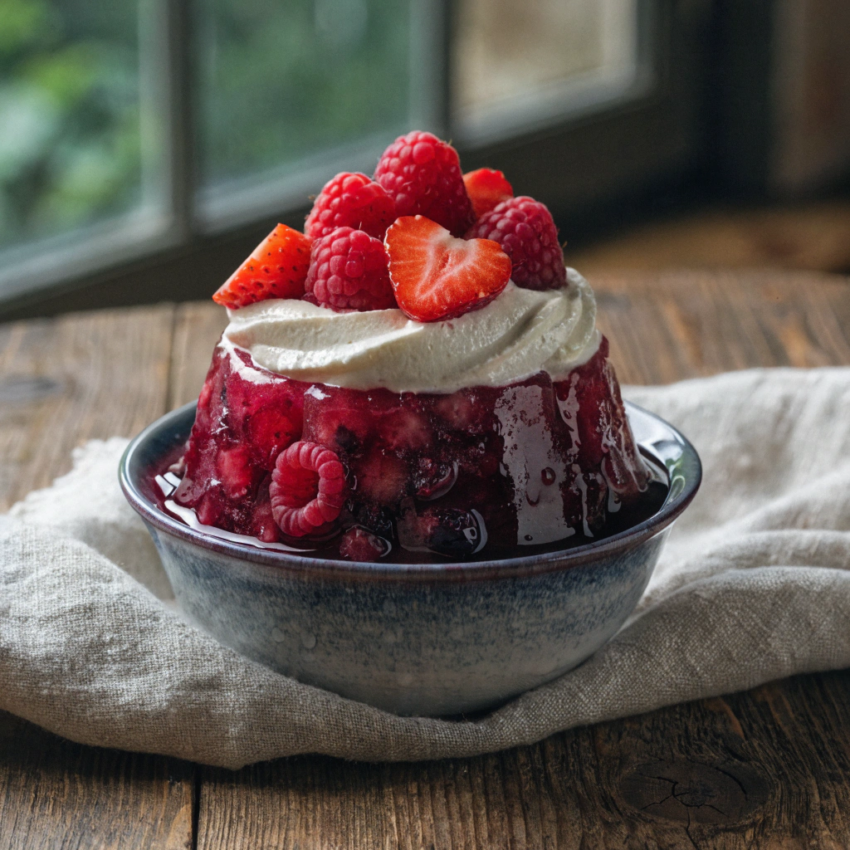
There’s something quietly comforting about a warm bowl of kissel. It’s soft. Silky. Slightly tart. Slightly sweet. And honestly, it feels like something your grandmother would hand you on a cold afternoon and say, “Eat this, you’ll feel better.”
The first time I made a Russian berry kissel pudding, I expected something closer to jelly. What I got was smoother. More delicate. Somewhere between a drink and a dessert. And that’s exactly what makes it special.
If you’ve been exploring Russian desserts or looking for a simple fruit-based treat, this one deserves a spot in your kitchen.
What Is Russian Berry Kissel?
Kissel (also written as kisel or kisiel) is a traditional dish from Russian cuisine made by thickening fruit juice or puree with starch.
It can be served two ways:
- Light and pourable like a drink
- Thick like a soft pudding
This version leans into pudding territory. Spoonable. Cozy. Perfect with a touch of cream.
You’ll often see it made with berries like strawberries, raspberries, or cherries. That bright fruit flavor is what makes it stand out among cream desserts.
Why You’ll Love This Kissel Recipe
It’s quick. No baking. No complicated steps.
It’s budget-friendly. Uses simple pantry ingredients.
It’s flexible. Swap berries depending on what you have.
And honestly, it feels nostalgic—even if you didn’t grow up with it.
Ingredients You’ll Need
For the berry kissel pudding:
- 2 cups fresh or frozen berries (strawberries or raspberries work best)
- 3 cups water
- 3–4 tablespoons sugar (adjust to taste)
- 2 tablespoons cornstarch (or potato starch for a more traditional touch)
- 2 tablespoons cold water (for slurry)
Optional for serving:
- Light cream or Russian cream
- Yogurt (traditional Russian yogurt works beautifully)
- Fresh berries
How To Make Russian Berry Kissel Pudding
Step 1: Cook the berries
Add berries and 3 cups of water to a saucepan.
Bring to a gentle boil.
Let it simmer for about 8–10 minutes. The berries should soften and release their flavor.
Step 2: Strain (optional but recommended)
If you want a smooth pudding, strain the mixture.
Press the berries with a spoon to extract all the juice.
If you like texture, skip this step.
Step 3: Sweeten it
Return the liquid to the pan.
Add sugar. Stir and taste.
Adjust based on how tart your berries are.
Step 4: Make the slurry
In a small bowl, mix cornstarch with cold water.
No lumps. That’s key.
Step 5: Thicken the kissel
Bring the berry liquid to a gentle simmer again.
Slowly pour in the slurry while stirring constantly.
Within seconds, it will thicken.
Don’t walk away here. It thickens fast.
Step 6: Cool slightly
Remove from heat. Let it sit for a few minutes.
It will continue to thicken as it cools.
How Thick Should Kissel Be?
That’s up to you.
- For a drinkable version: use 1 tablespoon starch
- For pudding: use 2 tablespoons
- For very thick: go up to 3 tablespoons
I prefer the middle ground. Spoonable but still soft.
Serving Ideas (Make It Feel Special)
This is where kissel really shines.
Pour it into small bowls. Let it cool just a bit. Then:
- Add a splash of Russian cream
- Top with yogurt for a tangy contrast
- Layer it like a rustic Russian dessert parfait
- Serve chilled in summer, warm in winter
One of my favorite ways? Warm kissel with cold cream. That temperature contrast hits differently.
Strawberry Kissel Recipe Variation
If you want a brighter, sweeter version, go all in with strawberries.
Use:
- 2 cups strawberries
- Slightly less sugar (they’re naturally sweeter)
The result? A softer flavor. Less tart. Great for kids or anyone new to Russian desserts.
Raspberry Russian Cream Twist
Raspberry kissel pairs beautifully with cream.
Make the kissel as usual, then:
- Whip light cream with a little sugar
- Spoon it on top right before serving
It turns into something that feels close to a Russian creme custard, but lighter.
Tips That Make a Big Difference
Don’t rush the thickening step
Pour the slurry slowly. Stir constantly.
Taste before thickening
Once starch goes in, adjusting flavor gets tricky.
Use potato starch if possible
It gives a smoother, glossier finish. More traditional.
Don’t overboil after adding starch
It can break the texture.
A Quick Note on Russian Cream Dessert Pairings
Kissel often shows up alongside other classic treats.
Think:
- Russian cakes like Napoleon cake
- Light custards
- Yogurt-based desserts
It acts as a refreshing contrast to heavier sweets.
Is Kissel Healthy?
Compared to many cream desserts, yes.
It’s:
- Low in fat
- Fruit-based
- Easy to control sugar
If you reduce sugar or use natural sweeteners, it becomes even lighter.
Common Mistakes To Avoid
Lumpy texture
This happens when slurry isn’t mixed well. Always dissolve starch fully.
Too thick
Easy fix. Add a splash of hot water and stir.
Too thin
Simmer a bit longer or add a tiny bit more slurry.
Bland taste
Usually means not enough sugar or weak berries.
How To Store Kissel
Let it cool completely.
Store in the fridge for up to 3 days.
It will thicken more as it sits.
To loosen it:
Add a little warm water and stir gently.
Can You Make It Ahead?
Yes. In fact, it’s better that way.
Chilled kissel develops a deeper flavor.
It also sets into a smooth pudding texture.
Perfect for prepping desserts in advance.
How This Fits Into Russian Cuisine
Kissel has been around for centuries.
Originally, it wasn’t even made with fruit. Early versions used fermented grains.
Over time, fruit-based versions became popular. Especially in home kitchens.
Today, it’s one of the simplest rustic Russian dessert recipes you can try.
No baking. No fancy tools. Just honest ingredients.
FAQ: Russian Berry Kissel Pudding
What is the difference between kissel and jelly?
Kissel is softer and less firm. It’s thickened with starch, not gelatin, so the texture is smoother and more fluid.
Can I use frozen berries?
Yes. No need to thaw. Just cook them a little longer.
What starch works best?
Potato starch is traditional. Cornstarch works perfectly fine.
Can I make it sugar-free?
You can. Use honey or a sugar substitute. Just adjust to taste.
Is kissel served hot or cold?
Both. Warm is cozy. Cold is refreshing. Try both and see what you like.
Can I turn this into a drink?
Yes. Use less starch. It becomes a classic kisiel drink.
What goes well with kissel?
Cream, yogurt, or even layered with Russian creme dessert elements.
Final Thoughts
If you’ve never tried making kissel before, start here.
It’s simple. Forgiving. And surprisingly satisfying.
There’s something about turning a handful of berries into a silky pudding that feels almost magical. No oven. No stress. Just a pot, a spoon, and a few minutes.
And once you try it, don’t be surprised if it becomes your go-to comfort dessert.
