
Jump to Recipe
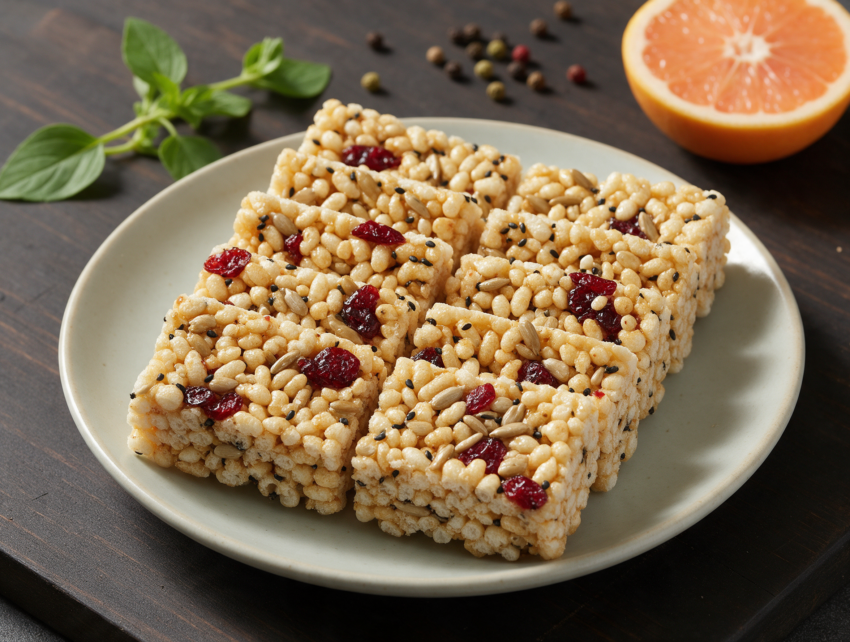
There’s something satisfying about the crackle when you snap a piece of gangjeong in half.
I first had it at a small market stall in Seoul, wrapped in wax paper, still faintly warm from the pan. Sunflower seeds and puffed rice, held together by a syrup that turned as glassy and thin as Japanese sugar crystal candy once it cooled.
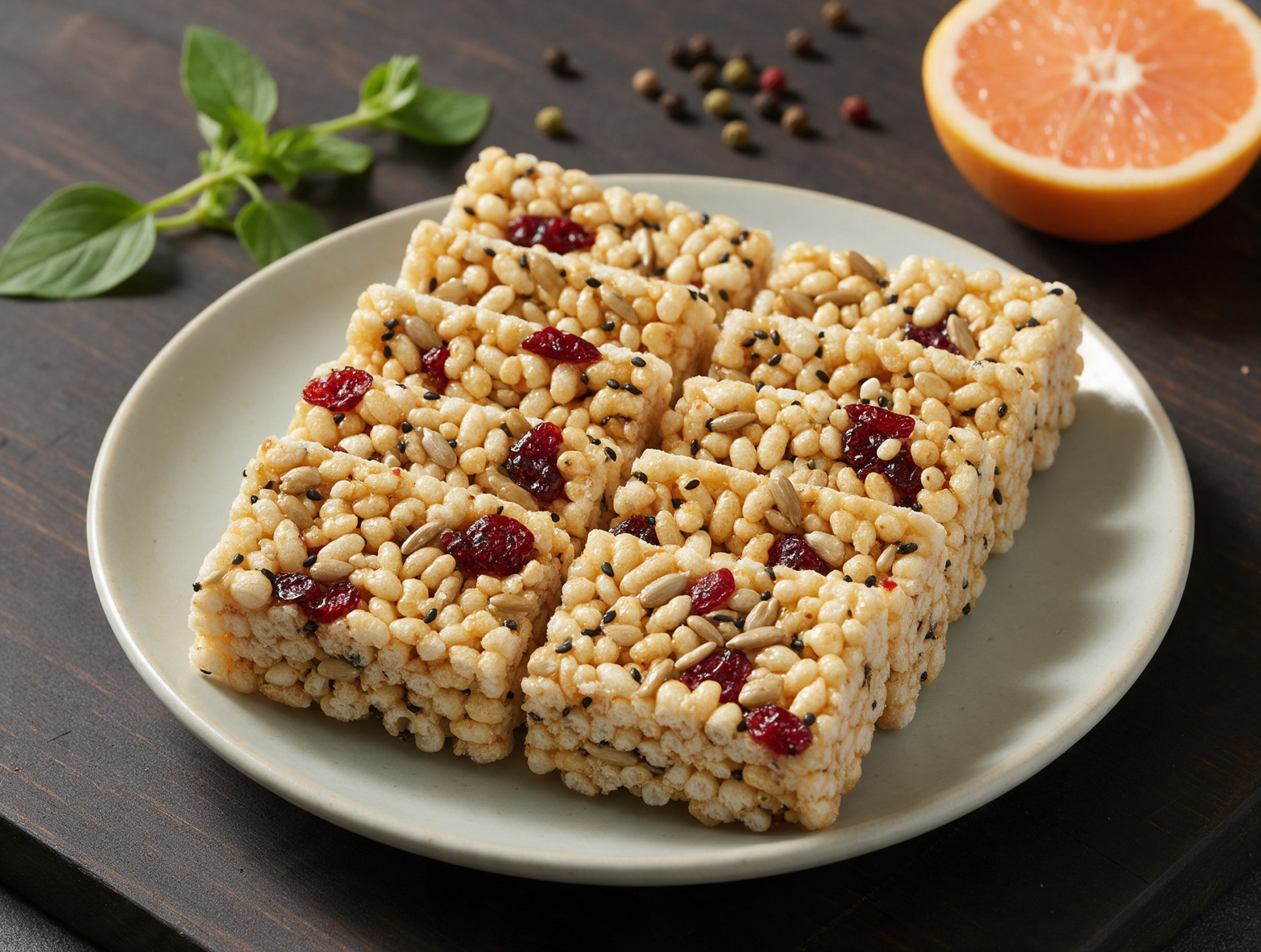
Gangjeong is a Korean rice puff candy made by folding toasted puffed rice and seeds into a hot sugar syrup, then pressing the mixture into a slab and cutting it into bars once it firms up. No oven, no candy thermometer required if you know what to look for.
The whole thing comes together in about 40 minutes on the stove. The syrup stage is the only part that needs attention. Get it too dark and the candy turns brittle and bitter instead of crisp and nutty.
Why You’ll Love This Recipe
- Ready in about 40 minutes, no oven needed
- Crisp, snappable texture that holds up for weeks
- Easy to customize with whatever seeds you have
- No candy thermometer required if you watch the syrup
Ingredient Notes
- plain puffed rice cereal: Use pure, unsweetened puffed rice, not a sugared cereal. Toasting it briefly re-crisps anything that softened in the bag.
- raw sunflower seeds: Toast them dry first for a deeper flavor. Pumpkin seeds or chopped peanuts work as a substitute.
- black sesame seeds: Adds crunch and speckled color. White sesame is fine if that’s what you have.
- dried cranberries: Gives a tart contrast to the sweet syrup. Raisins or chopped dried apricots swap in easily.
- rice syrup (jocheong): The traditional Korean binder, thick and stretchy. Light corn syrup or golden syrup works, though the bite is a touch less chewy.
- granulated sugar: Helps the syrup set firm enough to cut clean. Skipping it leaves the bars too soft to slice.
- neutral oil: Used to grease the pan, knife, and rolling pin so the hot syrup doesn’t stick to anything.
Crunchy Korean Gangjeong Rice Puff Candy with Seeds
Ingredients
Method
- Heat a dry 10-inch skillet over medium heat. Add the puffed rice and toast for 1 to 2 minutes, shaking often, until it sounds crisp and smells lightly nutty. Tip into a large bowl.
- In the same skillet, toast the sunflower seeds for 2 minutes until golden, then add them to the bowl with the puffed rice.
- Stir in the black sesame seeds and chopped dried cranberries. Set the bowl near the stove, you'll need to move fast once the syrup is ready.
- Line an 8 x 8 inch square pan with parchment and brush lightly with neutral oil. Oil a rolling pin or the back of a spoon too.
- In a 2-quart saucepan, combine the rice syrup, sugar, water, and salt. Warm over medium heat, stirring just until the sugar dissolves.
- Stop stirring and let the syrup bubble for 3 to 4 minutes, until it thickens and coats the back of a spoon in a thin sheet. If using a candy thermometer, it should read 115 C / 239 F.
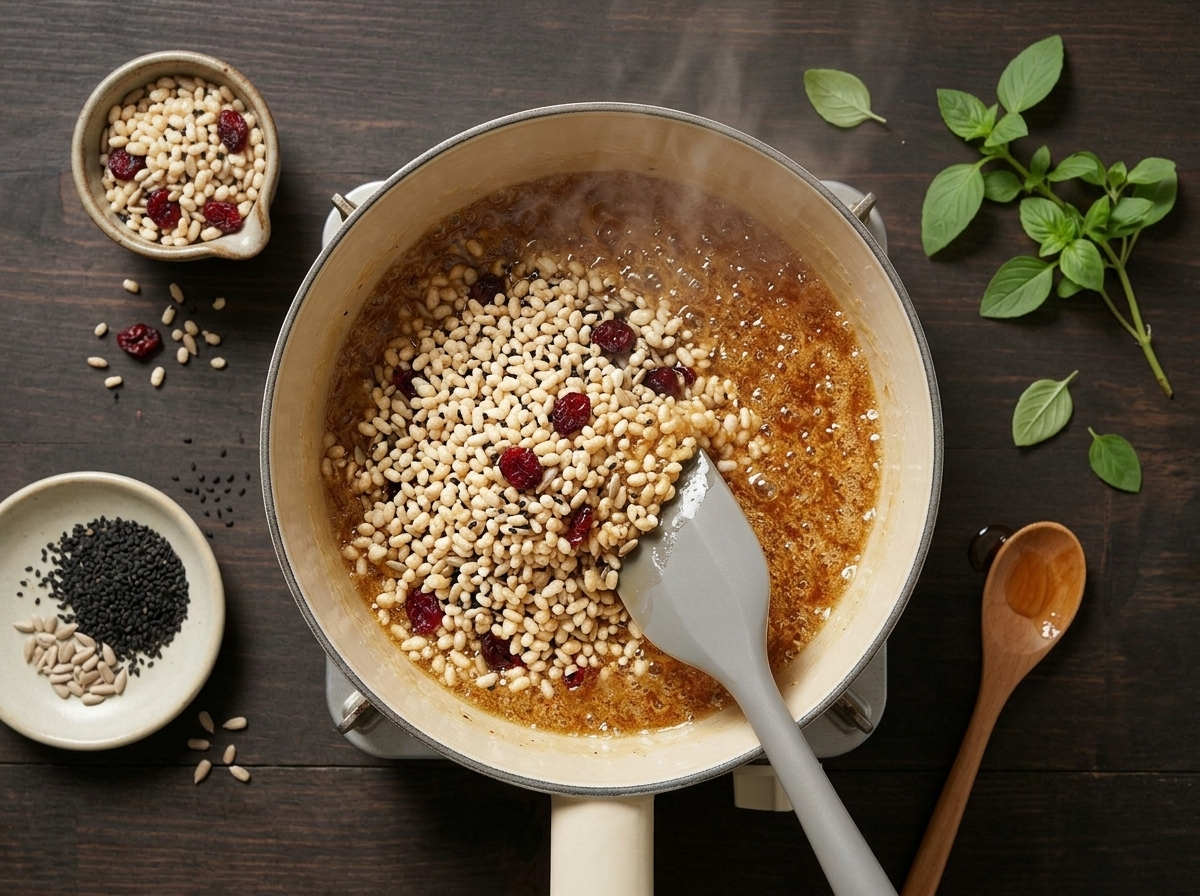
- Remove the pan from heat and immediately tip in the puffed rice mixture. Fold quickly with a silicone spatula until every piece is coated, working within 30 seconds before the syrup starts to set.
- Scrape the mixture into the prepared pan. Press it firm and even with the oiled rolling pin, about 1.5 cm / 0.6 inch thick.
- Let the candy cool for 12 to 15 minutes, until firm but still slightly warm, then cut into bars with a sharp oiled knife. Let it cool completely before separating the pieces.
Notes
- Work fast once the syrup is off the heat, it sets within a minute.
- Overcooked syrup turns brittle and bitter instead of crisp and glassy.
- Grease the pan, knife, and rolling pin, sticky syrup ruins clean cuts.
- Store in an airtight container, humidity softens the candy fastest.
Tips for Success
- Toast the puffed rice for a minute or two before mixing, it re-crisps any staleness from sitting in the bag.
- Measure the mix-ins and oil the pan before the syrup goes on the stove, the folding step happens in seconds.
- Watch the syrup, not the clock, once it coats the back of a spoon in a thin sheet, pull it off the heat.
- Press the warm mixture with an oiled rolling pin instead of bare hands, the syrup stays hot enough to burn skin.
- Cut the bars while they’re still slightly warm, fully cooled candy cracks unevenly instead of slicing clean.
Variations
- Swap the dried cranberries for chopped dried apricots or raisins for a more traditional Korean gangjeong flavor.
- Use puffed millet or puffed quinoa instead of puffed rice for a nuttier bite and different texture.
- Stir a tablespoon of toasted sesame oil into the syrup for a deeper, roasted background flavor.
Storage and Reheating
Gangjeong keeps well at room temperature in an airtight container for 1 to 2 weeks. Humidity is what ruins it, moisture pulls the syrup soft and the bars go sticky instead of staying crisp.
Skip the fridge, cold air adds condensation once you bring the container back out. If your kitchen runs humid, tuck in a folded paper towel or a food-safe silica packet to soak up extra moisture.
This candy isn’t meant to be reheated, it’s eaten at room temperature straight from the container. Make a double batch and split it into two smaller containers instead of one big one, so you’re not opening the same batch over and over.
Serving Suggestions
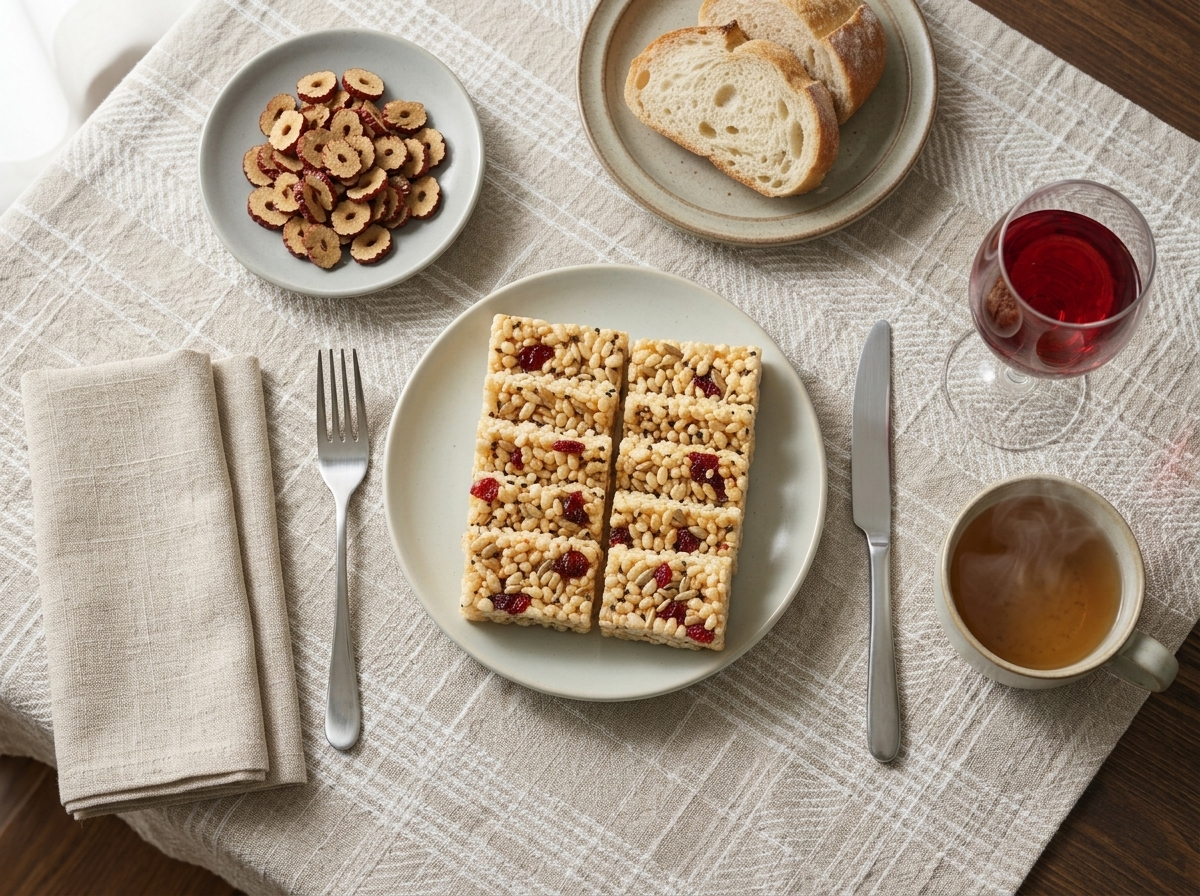
Gangjeong is a fixture on the Korean sweets hangwa tray during Seollal, the Lunar New Year, served alongside barley tea or green tea to cut the sweetness.
I like cutting it into smaller squares and packing a few into lunch boxes, they hold up fine without getting crushed. Slices of Korean pear or apple on the side balance out the sugar.
For a gift, stack the bars in a small tin lined with parchment. They travel well and don’t need to stay cold.
FAQ
Why did my gangjeong turn out rock hard instead of crisp?
Rock-hard gangjeong usually means the syrup cooked past the coating-spoon stage before you added the rice. Once it climbs much above 115 C / 239 F, the sugar hardens fast and traps the puffed rice in a brittle shell instead of a crisp, snappable one. Pull the syrup off the heat the moment it thickens and coats a spoon, then work quickly.
Can I use corn syrup instead of rice syrup (jocheong) for gangjeong?
Yes, light corn syrup or golden syrup works in place of jocheong, though the bars come out a touch less chewy. Jocheong has a thicker, stickier body that holds the puffed rice together with more bite. If you swap in corn syrup, cook it about a minute less since it thickens faster.
How do I store gangjeong so it stays crunchy?
Keep gangjeong in an airtight container at room temperature and it stays crisp for 1 to 2 weeks. Humidity is the enemy here, moisture in the air softens the syrup and makes the bars sticky instead of snappable. Add a folded paper towel to the container if your kitchen runs humid.
What goes well with gangjeong besides tea?
Gangjeong pairs naturally with barley tea or green tea, the way it’s traditionally served in Korea around the Lunar New Year. It also holds up well on a snack platter next to other hangwa or fresh fruit like pear slices, which cut the sweetness. I like it packed into lunch boxes too.
Is gangjeong gluten free?
Yes, this gangjeong recipe is gluten free as long as your puffed rice is a pure rice product with no added wheat or barley malt. Double-check the label, some puffed cereal blends mix in wheat or barley. The syrup, sugar, and seeds here contain no gluten on their own.
Is this the same as the gangjeong made with deep-fried rice cakes?
Not exactly, traditional gangjeong starts with dried rice dough that’s deep-fried until it puffs up, which takes a full day of drying and frying. This version shortcuts that with store-bought puffed rice, so you get the same crisp, syrup-coated bite in about 40 minutes instead of two days.
If you enjoyed this, try
