
Jump to Recipe
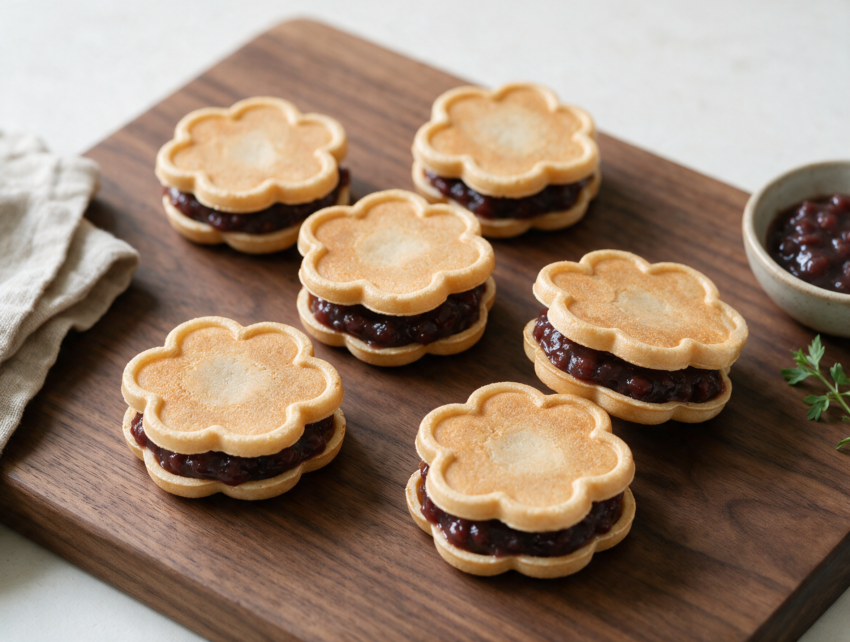
There’s something about the sound of a monaka shell cracking open that I still love. Thin, crisp, almost weightless.
I first had one at a train station stall in Kyoto, tucked between two rice wafers still warm from the vendor’s stand. The filling was sweet, dense, a little grainy from whole beans. I ate three before the train came.
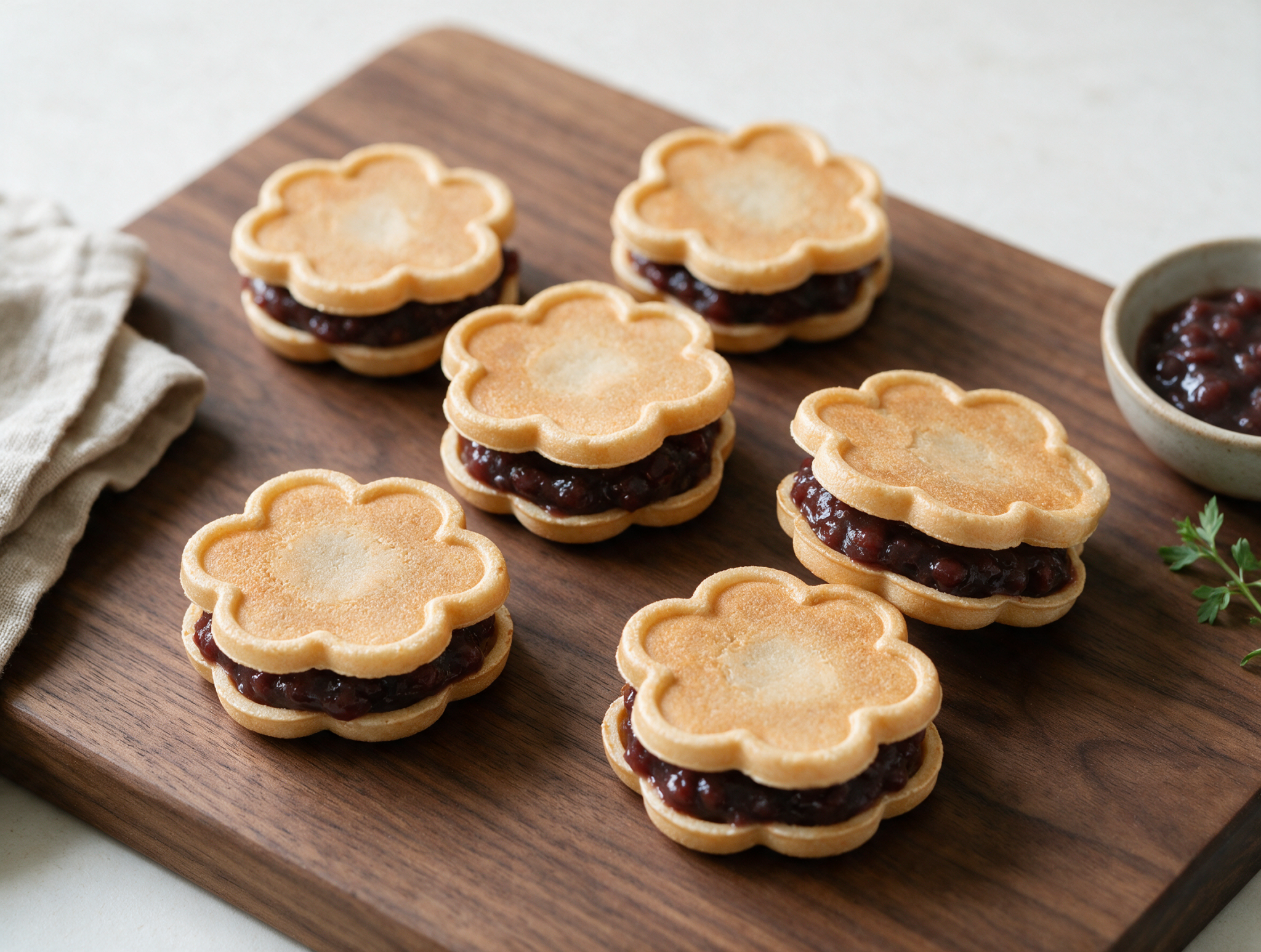
Monaka is one of Japan’s older wagashi, a confection of two crisp wafer shells (monaka no kawa) pressed around sweetened red bean paste, or anko. Making the shells at home takes special molds most kitchens don’t have, so I buy them and put my energy into the anko instead.
The result is a simple, not-too-sweet dessert with real contrast: crisp wafer, soft paste, done in under two and a half hours if you count simmering time.
Why You’ll Love This Recipe
- Only one pot needed for the red bean filling
- Naturally gluten-free wafer shells and filling
- Anko can be made days ahead of time
- Light, not-too-sweet finish after a meal
Ingredient Notes
- dried azuki beans: No presoak needed. A short first boil and drain (shibukiri) removes the bitterness they naturally carry.
- granulated sugar: 180 g gives a classic wagashi sweetness. Cut it to 140 g if you prefer a less sweet paste.
- salt: Just a pinch, but it sharpens the sweetness of the anko noticeably.
- monaka wafer shells: Find these at Japanese grocery stores or online as ‘monaka no kawa’. Store them sealed the moment the bag is opened.
Crisp Homemade Monaka Wafers with Red Bean Filling
Ingredients
Method
- Rinse the 200 g azuki beans under cold water, picking out any shriveled beans or debris.
- Place the beans in a 3-quart / 2.8 L saucepan, cover with 600 ml water, and bring to a boil over high heat. Boil hard for 2 minutes, then drain in a fine-mesh sieve. This first boil, called shibukiri, pulls out the bitterness azuki beans naturally carry.
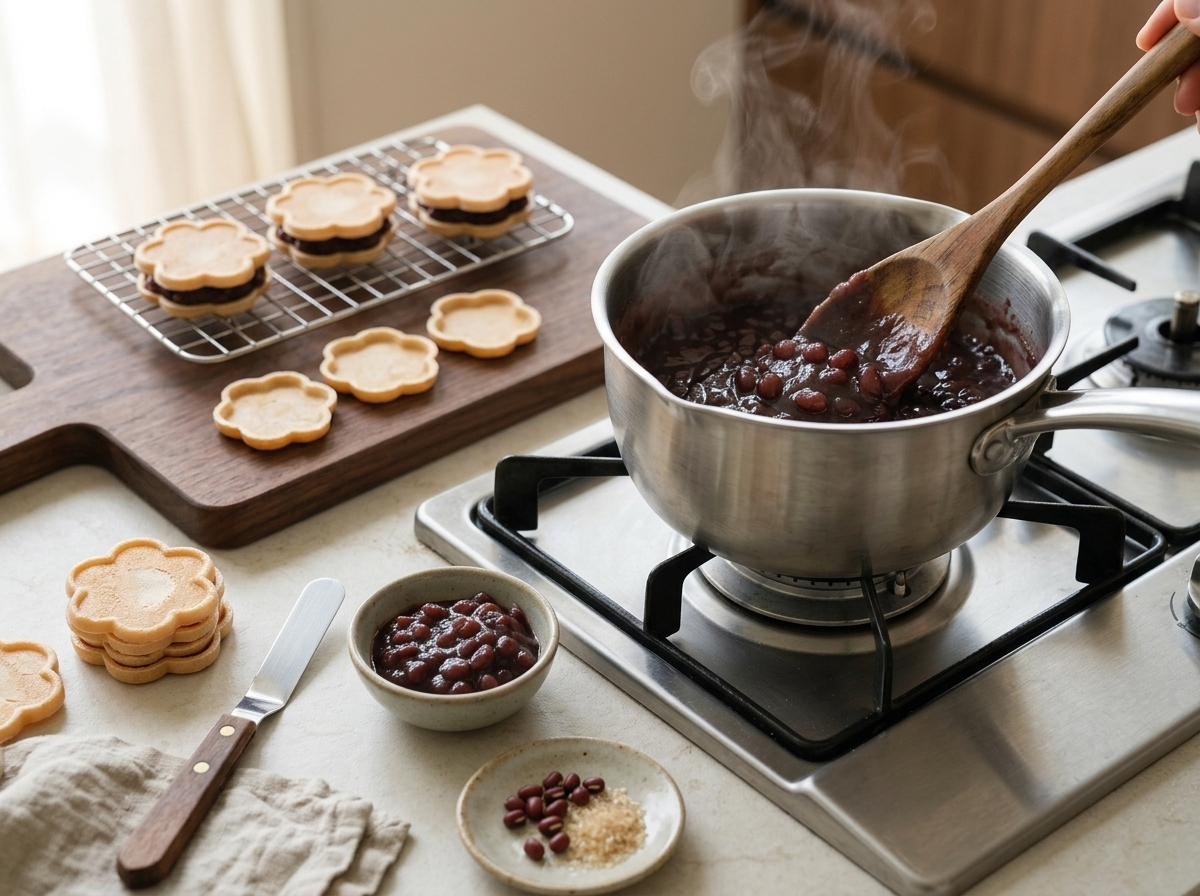
- Return the beans to the saucepan with 600 ml fresh water. Bring to a gentle simmer over medium-low heat, partially covered, and cook for 60 to 75 minutes, topping up water as needed to keep the beans just submerged, until a bean crushes easily between two fingers with no resistance.
- Drain the cooked beans, reserving a splash of the cooking liquid. Return the beans to the pan.
- Add the sugar and salt. Cook over medium-low heat, stirring and mashing with a potato masher or wooden spoon, for 12 to 15 minutes, until the mixture thickens to a paste that mounds when you lift the spoon. Add a spoonful of reserved liquid if it looks dry.
- Spread the anko onto a plate in a thin layer to cool faster. Cover with plastic wrap pressed directly onto the surface and cool at room temperature for 30 minutes, then chill if not using right away.
- Once the anko is fully cool, spoon about 2 tablespoons onto the flat side of one wafer shell.
- Top with a second wafer shell, flat side down, and press together gently, just enough to seal. The shells are brittle and crack under too much pressure.
- Repeat with the remaining shells and anko to make 6 monaka. Serve right away while the wafer is still crisp.
Notes
- Boil beans once and drain before simmering to remove bitterness
- Cool anko fully before filling, warm paste softens the wafer fast
- Fill wafers no more than 1-2 hours before serving
- Keep wafer shells sealed the moment you open the package
Tips for Success
- Boil the beans once and drain before simmering to pull out the bitter compounds azuki beans carry.
- Mash the beans partway through cooking with sugar so the anko keeps some texture instead of turning smooth.
- Cool the anko completely before filling shells, warm paste turns the wafer chewy within minutes.
- Assemble monaka no more than 1 to 2 hours before eating so the wafer stays crisp.
- Store wafer shells in an airtight container away from any moisture the moment you open the package.
Variations
- Add a small cube of plain mochi between the anko layers for extra chew, common in some regional versions.
- Swap half the sugar for honey for a rounder sweetness and a slightly softer set anko.
- Fold a spoonful of whipped cream into the cooled anko before filling for a lighter modern-style monaka.
Storage and Reheating
Anko keeps 4 to 5 days in the fridge in an airtight container, or up to 2 months in the freezer. Thaw frozen anko overnight in the fridge and stir well before using, it can separate slightly.
Unfilled wafer shells store for weeks at room temperature in a sealed bag or container, kept away from any humidity.
Assembled monaka is best eaten fresh, within 1 to 2 hours of filling. This is a no-cook assembly, not a make-ahead dessert, so keep the anko and shells separate and only put them together right before serving.
Serving Suggestions
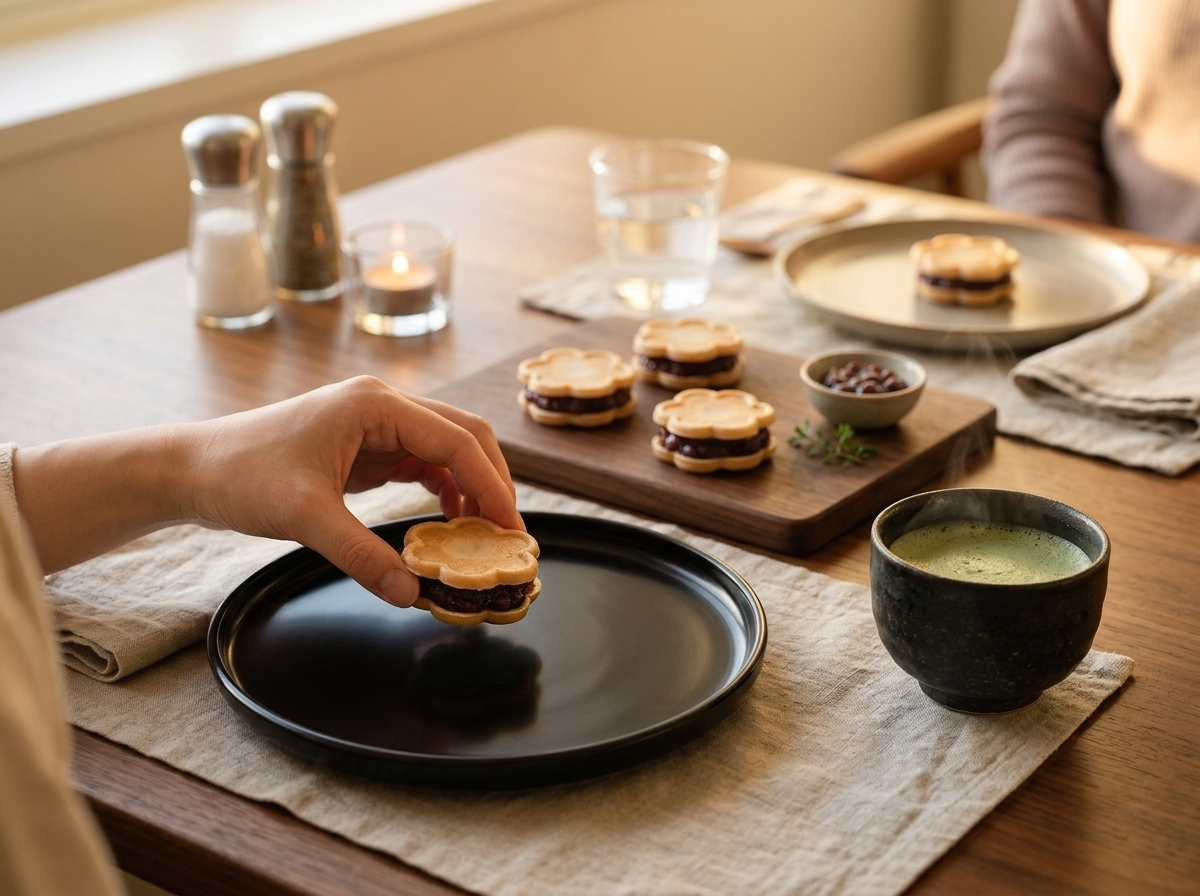
Hot green tea is the classic pairing here. Matcha or genmaicha both cut through the sweetness of the anko without competing with it.
A few slices of fresh fruit, strawberries or persimmon, sit well alongside a plate of monaka for contrast.
Serve these as a small after-meal treat rather than a big dessert. One or two per person is plenty given how dense the filling is.
FAQ
Why did my monaka wafer turn soft and chewy instead of staying crisp?
Monaka wafers turn soft the moment they touch anko because the shells are thin, dry rice dough that soaks up moisture fast. Fill them no more than 1 to 2 hours before eating, and never store a filled monaka overnight. Keep the anko and shells in separate containers until you’re ready to serve.
Can I use canned red bean paste instead of making anko from scratch?
Yes, canned or store-bought anko works fine if you’re short on time. Look for a tsubuan (chunky) or koshian (smooth) paste and use about 2 tablespoons per monaka, same as the homemade version. The texture will be smoother and often sweeter, so taste before adding extra sugar.
Can I freeze the leftover anko from this monaka recipe?
Yes, anko freezes well for up to 2 months in an airtight container. Thaw it overnight in the fridge and stir before filling wafer shells, since it can separate slightly. Do not freeze the assembled monaka itself, the wafer shells turn rubbery once thawed.
What goes well with monaka red bean wafers?
Hot green tea is the classic pairing, matcha or genmaicha both cut through the sweetness of the anko. A few slices of fresh fruit like strawberries or persimmon on the side also work well against the dense, sweet filling.
Is this monaka red bean wafer recipe gluten free?
Usually yes, since both the anko and traditional monaka wafer shells (monaka no kawa) are made from rice, mochiko flour and azuki beans with no wheat. Always check the wafer shell package though, since some commercial brands add wheat starch as a binder.
What’s the difference between monaka and daifuku?
Monaka is two crisp rice wafer shells sandwiched around sweet red bean paste, while daifuku is a soft mochi dough wrapped around the same kind of filling. Monaka stays crunchy right up until you bite in, daifuku is chewy and soft all the way through.
Loved this? Try these next
