
Jump to Recipe
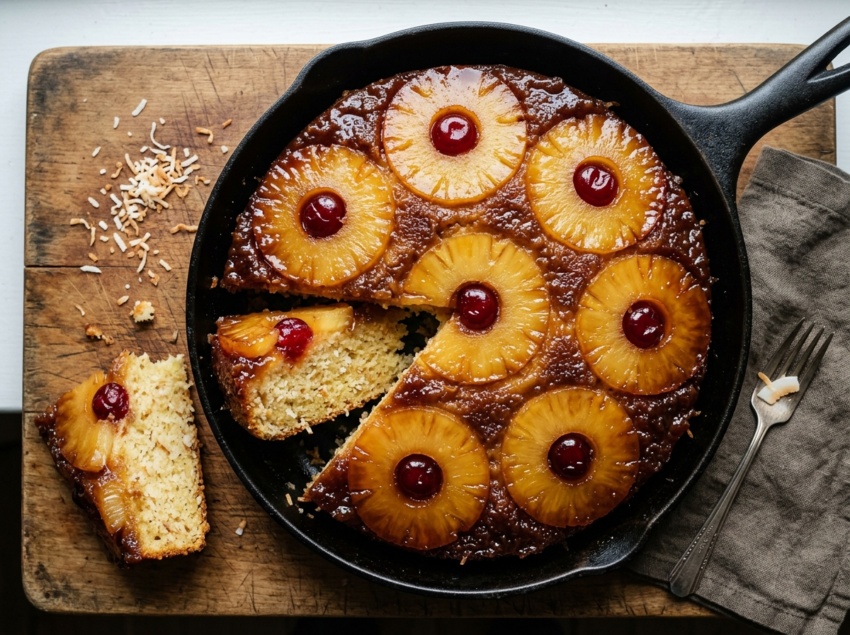
There’s something about flipping a cake out of its pan and watching caramelized pineapple rings glisten on top that never gets old.
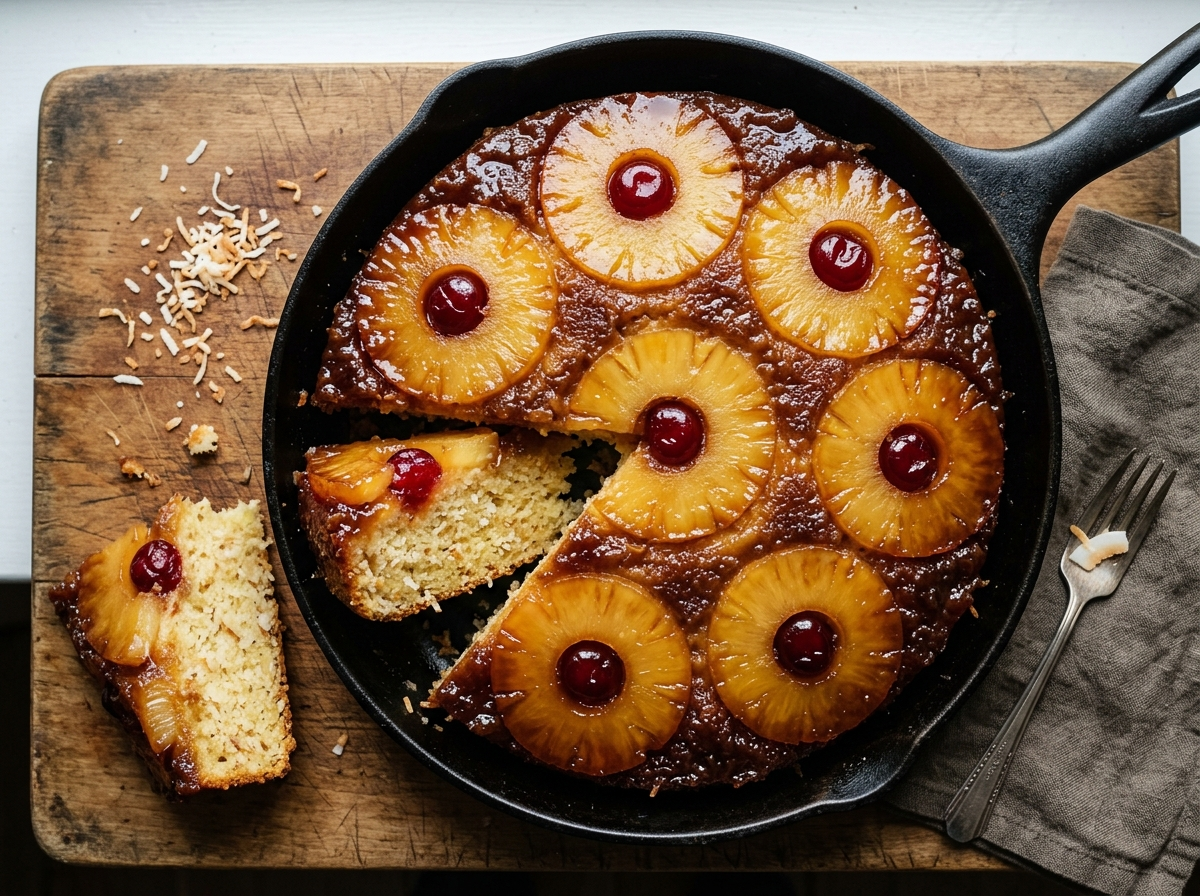
This pineapple coconut upside down cake starts with a brown sugar caramel, canned pineapple rings, and a cherry tucked into each center. The batter gets its coconut flavor from both canned coconut milk and shredded coconut folded right in.
I first made this after a trip where a small diner served something close for breakfast. Mine leans more dessert, with a tender crumb and a caramel top that stays soft for two days if you store it right.
The one trick that took me a few tries to get right: you have to flip it while it’s still warm, within about 15 minutes of coming out of the oven. Wait too long and the caramel grabs the pan and won’t let go.
Why You’ll Love This Recipe
- One skillet does the caramel, the fruit, and the bake
- Coconut milk keeps the crumb moist for days
- Flips out looking like a bakery dessert with no decorating skill
- Works with pantry staples like canned pineapple and shredded coconut
Ingredient Notes
- Pineapple rings: Canned rings in juice work best because the juice goes into the batter. Fresh pineapple sliced into 1/2-inch rounds works too, just pat it dry first.
- Maraschino cherries: These add the classic red pop in the center of each ring. Swap for pitted fresh cherries in summer if you want less sweetness.
- Brown sugar: Packed light or dark brown sugar both work, dark gives a deeper caramel note. Don’t skip packing it into the measuring cup or the caramel runs thin.
- Coconut milk: Use full-fat canned coconut milk, not the carton drinking kind, for a batter that’s rich instead of watery. Shake the can well before opening.
- Shredded coconut: Sweetened desiccated coconut folds into the batter for texture. Unsweetened works too, just add an extra tablespoon of sugar to the batter.
- Unsalted butter: Used both in the caramel and the batter. If you only have salted butter, cut the added salt in the batter by half.
Golden Pineapple Coconut Upside Down Cake with Cherries
Ingredients
Method
- Heat the oven to 175 C / 350 F. Grease a 9-inch cast iron skillet or round cake pan.
- Melt the butter in the pan over low heat, then sprinkle the brown sugar evenly over it. Stir until it starts to dissolve into a smooth caramel, about 2 minutes, then remove from heat.
- Arrange the pineapple rings over the caramel in a single layer, tucking a cherry into the center of each ring and filling any gaps with extra cherries.
- Whisk the flour, baking powder, and salt together in a bowl and set aside.
- Beat the softened butter and sugar together until light and fluffy, about 3 minutes. Add the eggs one at a time, then the vanilla, beating well after each addition.
- Alternate adding the flour mixture and coconut milk to the butter mixture in three additions, mixing just until combined. Fold in the shredded coconut and reserved pineapple juice by hand.
- Pour the batter over the arranged fruit and spread it evenly with an offset spatula. Tap the pan twice on the counter to release air bubbles.
- Bake for 35 to 40 minutes, until a toothpick inserted in the center comes out clean and the top springs back when pressed. Internal temperature should read about 200 F / 93 C.
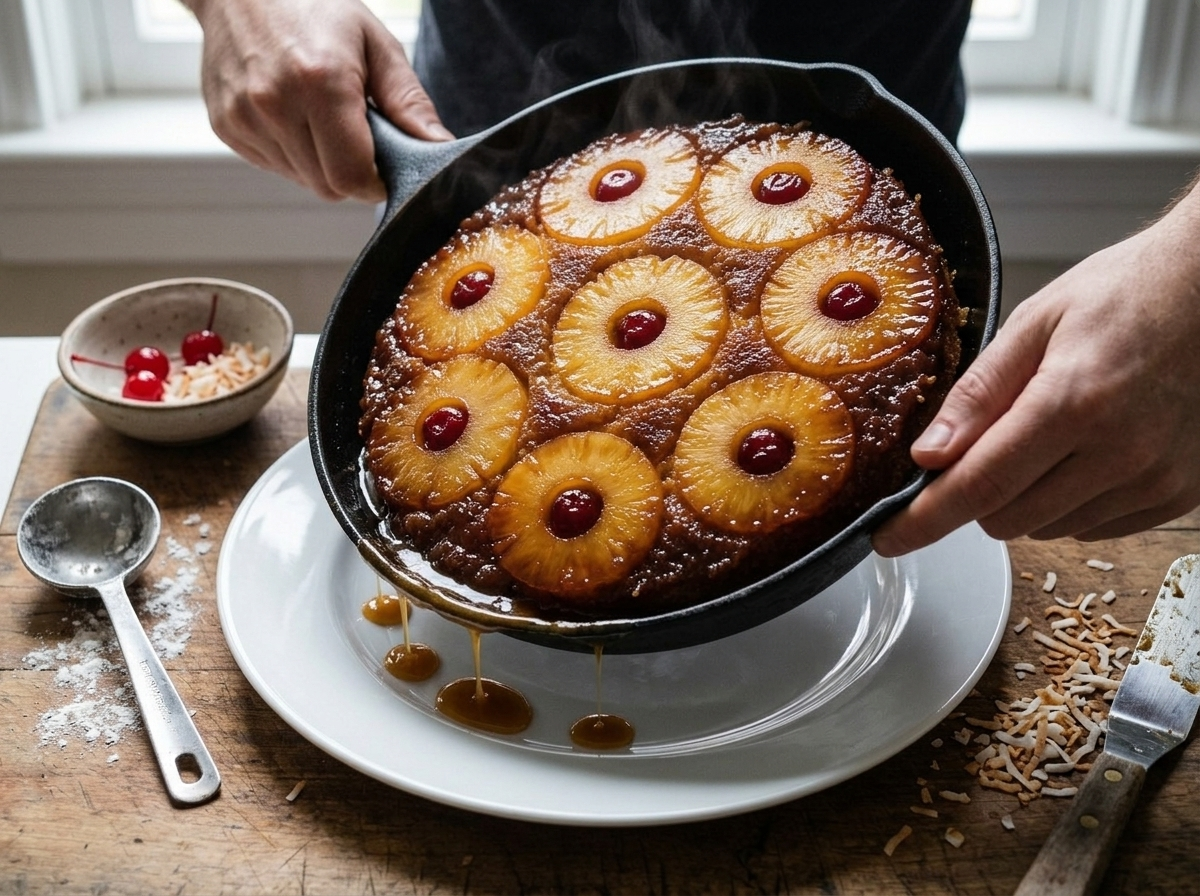
- Cool the cake in the pan on a wire rack for 15 minutes, no longer. Run a knife around the edge, place a plate over the pan, and invert quickly and confidently.
- Lift the pan away carefully, the caramel and rim will be hot. Let the cake cool another 10 minutes before slicing.
Notes
- Use a 9-inch cast iron skillet if you have one, it holds heat evenly for the caramel.
- Reserve 2 tablespoons of pineapple juice from the can for the batter, don't toss it.
- Invert onto a plate with a rim, the caramel can run over the edges.
- Let the pan sit exactly 15 minutes before flipping, not longer.
Tips for Success
- Melt the caramel directly in the baking pan if it’s oven-safe to save a dish and build flavor faster.
- Pat canned pineapple rings dry with paper towel so the batter doesn’t slide off the fruit while baking.
- Invert the cake onto a plate within 15 minutes of pulling it from the oven, before the caramel firms up and sticks.
- Tap the filled pan on the counter twice before baking to knock out air pockets that leave gaps in the topping.
- Toast extra shredded coconut in a dry pan for 2 to 3 minutes and scatter it over the flipped cake for crunch.
Variations
- Swap half the coconut milk for buttermilk if you want a lighter, less rich crumb with more tang.
- Add 1 teaspoon of dark rum to the caramel for a piña colada style flavor twist on the classic.
- Use crushed pineapple folded into the batter instead of juice for extra fruit in every bite, not just the top.
Storage and Reheating
Pineapple coconut upside down cake keeps well at room temperature for 1 day under a cake dome, since the caramel stays glossy when covered. After that, move it to the fridge, covered, for up to 4 days.
To reheat a slice, microwave it for 15 to 20 seconds so the caramel loosens back up. A cold slice straight from the fridge tastes fine too, just firmer.
This cake doesn’t freeze well whole because the caramel weeps as it thaws. If you want to freeze it, wrap individual slices tightly and expect a softer, slightly wet topping once thawed.
Serving Suggestions
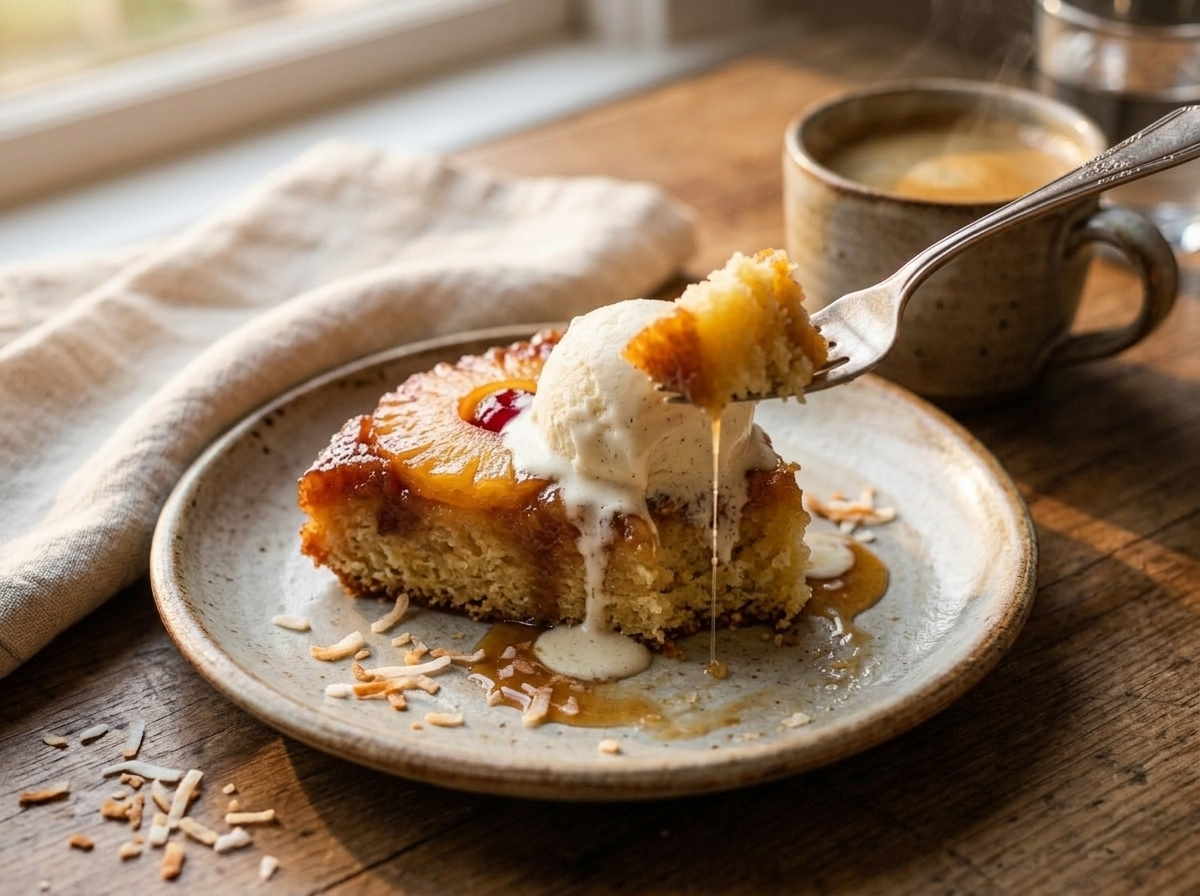
Serve pineapple coconut upside down cake warm, about 20 minutes out of the oven, with a scoop of vanilla ice cream melting into the caramel. A dollop of lightly sweetened whipped cream works just as well if you want something lighter.
For brunch, cut it into thin wedges and set it out with fresh mango or a pot of strong coffee. The tropical flavors hold their own next to both.
Leftover slices are good cold with tea in the afternoon, no reheating needed if you like a firmer bite.
FAQ
Why did my pineapple coconut upside down cake stick to the pan?
This usually happens because the cake sat too long before flipping and the caramel hardened. Invert it onto a plate within 15 minutes of coming out of the oven, while the caramel is still warm and fluid. If it’s already stuck, set the pan back on low heat for 30 seconds to loosen it, then try again.
Can I use fresh pineapple instead of canned rings for this upside down cake?
Yes, slice fresh pineapple into rounds about 1/2 inch thick and pat them dry with paper towel first. Fresh pineapple has more moisture than canned, so drying it prevents a soggy caramel layer. You’ll lose the reserved canned juice, so use a splash of orange juice in the batter instead.
Can I make pineapple coconut upside down cake ahead of time and store it?
Yes, bake and flip it up to a day ahead and keep it covered at room temperature so the caramel stays glossy. After a day, move it to the fridge for up to 4 days. Bring it back to room temperature or microwave a slice for 15 seconds before serving.
What goes well with pineapple coconut upside down cake for serving?
Vanilla ice cream is the classic pairing, since it melts into the warm caramel on top. Lightly sweetened whipped cream or a spoonful of Greek yogurt also work if you want something less rich. Fresh mango or a pot of coffee rounds out a tropical brunch spread.
Is pineapple coconut upside down cake gluten free?
Not as written, since the batter uses regular all-purpose flour. Swap in a 1:1 gluten-free baking blend and the cake bakes up almost the same, though the crumb is slightly denser. Check that your baking powder and coconut are labeled gluten free too.
What’s the difference between pineapple upside down cake and this coconut version?
The classic version uses a plain yellow butter cake batter over the pineapple and caramel. This coconut version adds canned coconut milk in place of some of the liquid and folds in shredded coconut, which makes the crumb moister and gives it a subtle coconut flavor throughout.
Loved this? Try these next
