
Jump to Recipe
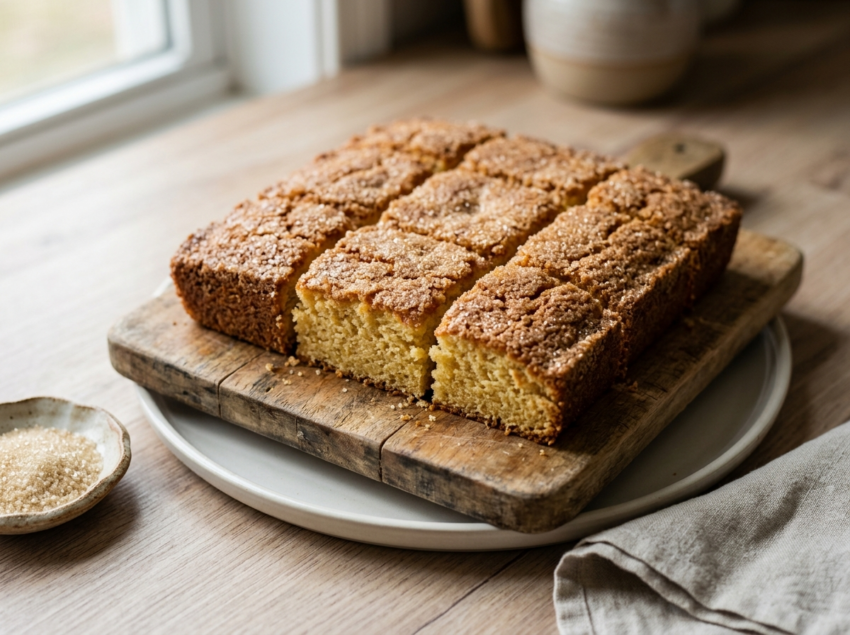
There’s something quietly satisfying about a cake that asks almost nothing of you. No frosting, no fancy layers. Just a soft, golden square that smells like a bakery on a Sunday morning.
Buttermilk does two things here. It tenderizes the crumb, and it adds a faint sourness that stops the cake from tasting flat or one-note. That contrast with the sugar crust on top is what makes it worth making again.
I first had a version of this at a church potluck, baked in a scratched 9×13 pan. Nobody knew who brought it. It disappeared first. I’ve been chasing that recipe ever since.
This one is close — simple pantry ingredients, one bowl, and a sugar topping that crackles when you press it with your thumb, not unlike what makes a one-bowl banana snack cake so easy to return to.
Why You’ll Love This Recipe
- Stays moist for 3 days thanks to buttermilk
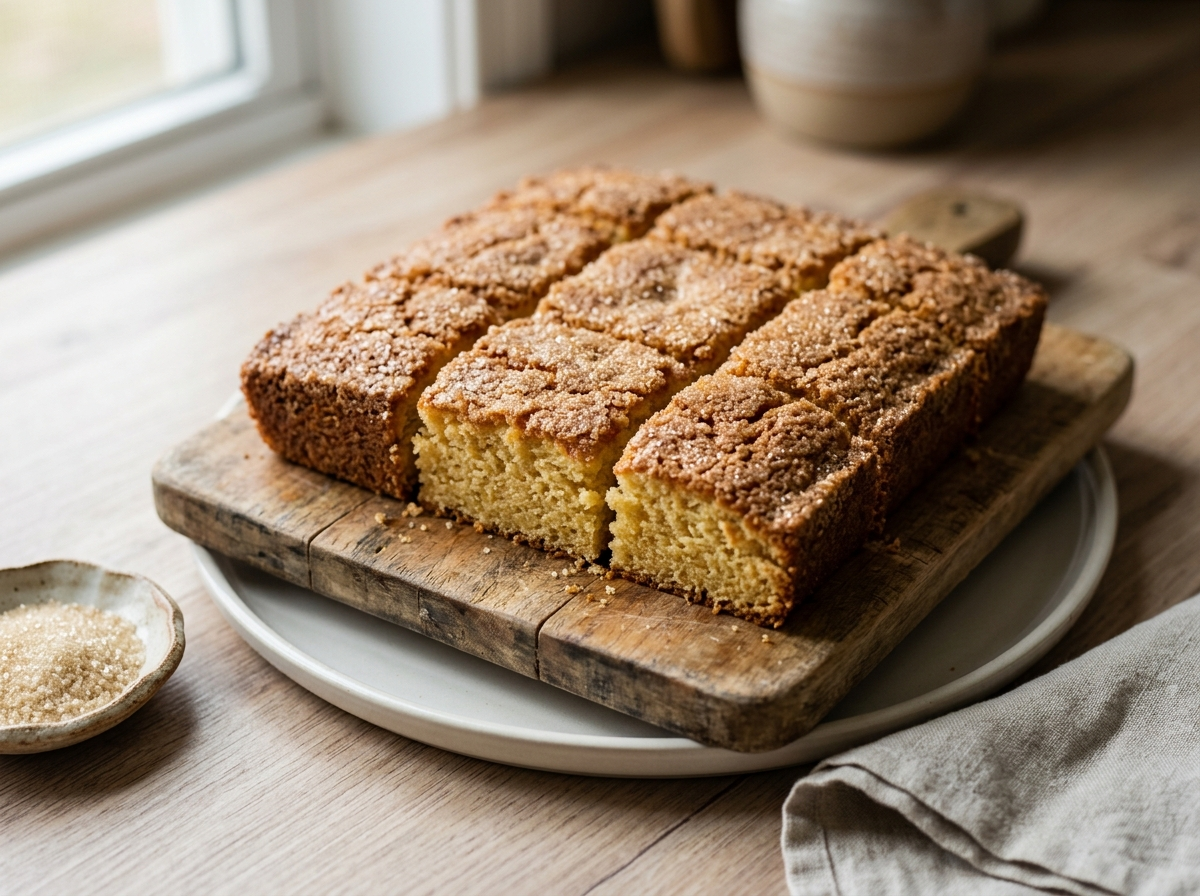
- Crackly sugar crust bakes in without any extra steps
- One bowl, no stand mixer, minimal cleanup
- Works as a snack cake, breakfast slice, or simple dessert
Ingredient Notes
- Buttermilk: Full-fat buttermilk gives the best tang and tenderness. If you don’t have any, stir 1 tablespoon of white vinegar into 1 cup of whole milk and let it sit for 5 minutes.
- Granulated sugar (topping): Use plain white granulated sugar for the topping, not caster or powdered. The coarser crystals are what create the crackly crust.
- All-purpose flour: Standard all-purpose flour works well here. Cake flour makes a slightly softer crumb if you have it, but it’s not necessary.
- Unsalted butter: Melt the butter and let it cool slightly before mixing in. Brown butter is a good variation if you want a nuttier depth.
- Eggs: Two large eggs at room temperature. Cold eggs can make the batter look split, which is fine, but room temp blends smoother.
- Vanilla extract: Pure vanilla extract is worth it here since the flavors are simple. A half teaspoon of almond extract alongside the vanilla adds an interesting layer.
Buttermilk Sugar Cake
Ingredients
Method
- Heat the oven to 175 C / 350 F. Grease a 9x9-inch square baking pan and line the base with parchment paper.
- In a large mixing bowl, whisk together the flour, 200 g of sugar, baking powder, baking soda, and salt until combined.
- In a separate small bowl or jug, whisk together the buttermilk, melted butter, eggs, and vanilla extract until smooth.
- Pour the wet ingredients into the dry ingredients and stir gently with a rubber spatula until just combined. A few small lumps are fine. Do not overmix.
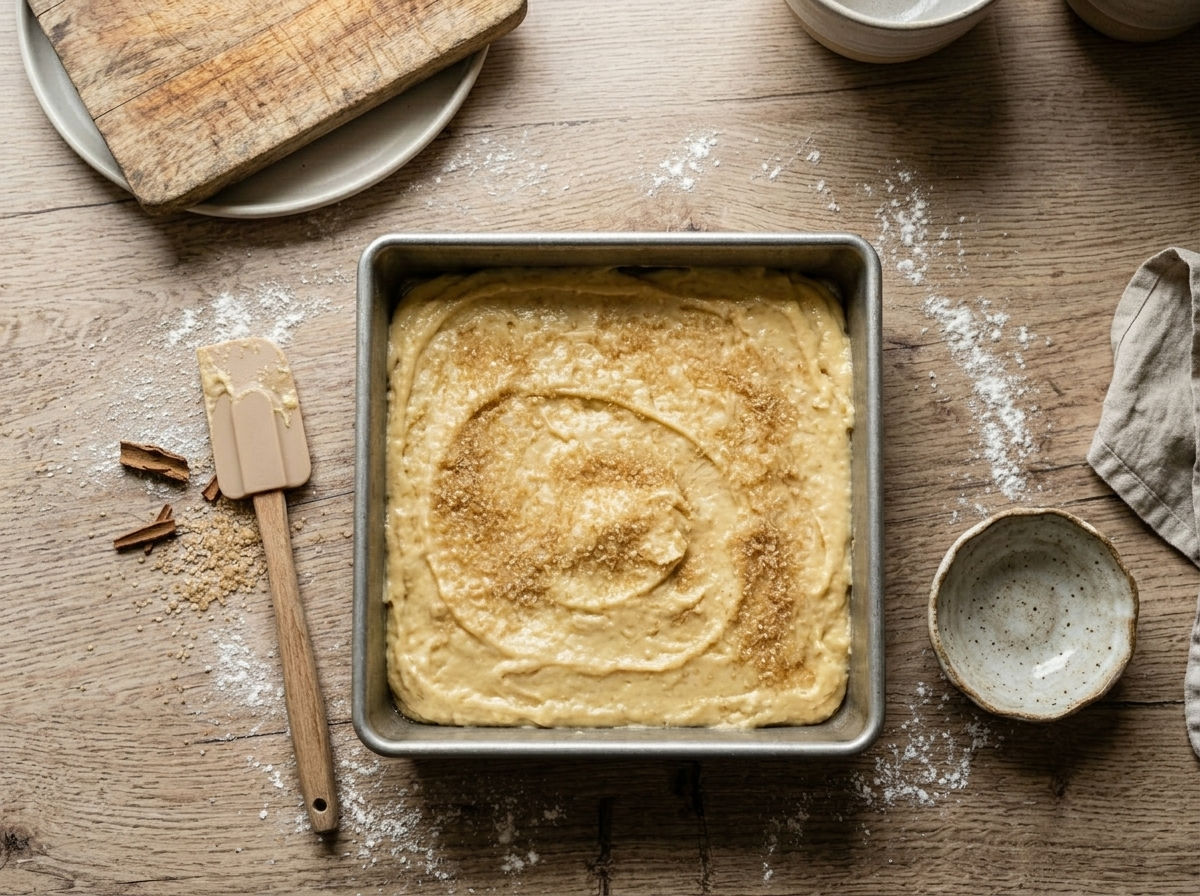
- Pour the batter into the prepared pan and smooth the surface to the edges with the spatula.
- Scatter the 50 g of granulated sugar evenly over the top of the batter right before baking.
- Bake on the center rack for 28 to 32 minutes, until the top is golden, the sugar crust looks set and dry, and the center springs back when pressed lightly.
- Remove from the oven and run a knife around the edges immediately. Cool in the pan on a wire rack for at least 15 minutes before slicing into 9 squares.
Notes
Tips for Success
- Measure flour by spooning it into the cup and leveling off, not scooping, to avoid a dense cake.
- Let melted butter cool for 5 minutes before adding eggs or it can scramble them slightly.
- Spread batter evenly to the pan edges and apply the sugar topping right before it goes into the oven, not earlier.
- Check the cake at 28 minutes by pressing the center lightly – it should spring back without leaving an indent.
- Run a knife around the edges within 5 minutes of pulling the pan from the oven to prevent sticking as the sugar crust hardens.
Variations
- Lemon buttermilk version: add 2 teaspoons of lemon zest to the batter and swap vanilla for lemon extract.
- Cinnamon sugar topping: mix 1 teaspoon of cinnamon into the granulated sugar before sprinkling over the batter.
- Brown butter base: brown the butter until nutty and amber before cooling and mixing in for a richer, nuttier flavor.
Storage and Reheating
Store the cooled cake covered at room temperature for up to 3 days. The sugar crust softens slightly after day one but the crumb stays moist.
For longer storage, wrap individual slices tightly in plastic wrap and freeze for up to 2 months. Thaw at room temperature for about an hour.
To refresh a slice, warm it in a 160 C / 320 F oven for 5 to 7 minutes. It won’t fully restore the crackly top, but the crumb comes back soft.
Serving Suggestions
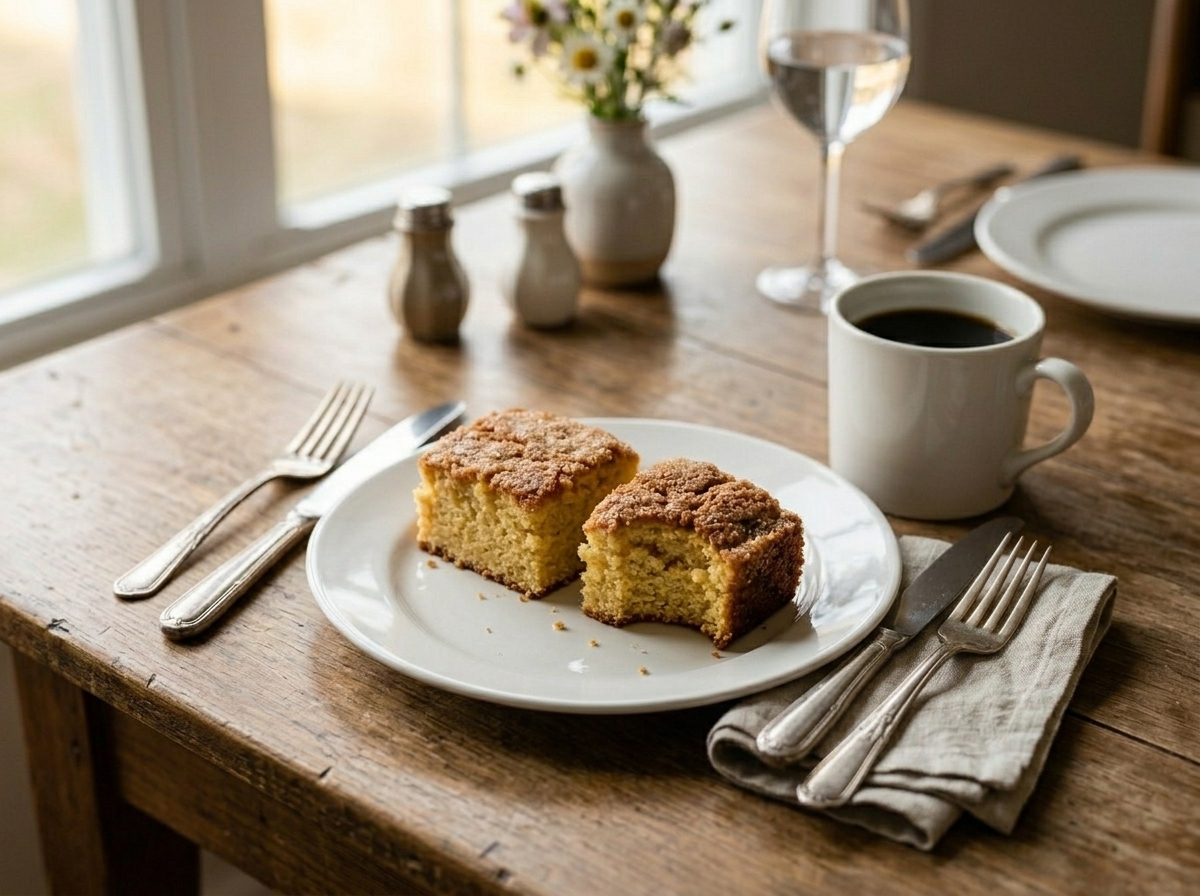
Serve warm squares plain with a cup of strong coffee or black tea. The slight tang of the cake pairs well with a bitter drink, and you don’t need anything else on the plate.
For a simple dessert, add a spoonful of lightly whipped cream and a few fresh berries on the side, much like the topping on mini strawberry sponge cakes. Strawberries or raspberries work especially well against the sweet sugar crust.
At brunch, cut the cake into smaller fingers and serve alongside fruit salad. It holds up on a board without crumbling, which makes it easy to set out for a group.
FAQ
Why is my buttermilk sugar cake dense instead of light?
The most common cause is overmixing the batter after the flour goes in. Stir just until the dry streaks disappear. Over-measuring flour by scooping directly from the bag also packs in too much, so spoon it into your cup instead.
Can I use sour cream instead of buttermilk in this cake?
Yes, thin full-fat sour cream with a splash of milk until it pours like buttermilk. The tang and acidity are similar enough that the cake will bake up close to the original.
How do I know when the sugar crust on top is done?
The top should look dry and lightly golden, not pale or wet. Press the center gently – it should spring back. The sugar crust will feel firm, not tacky, when it’s ready.
Can I bake this buttermilk sugar cake in a round pan instead of square?
A 9-inch round pan works fine. Start checking for doneness a couple of minutes earlier since the depth of batter changes slightly. The sugar crust will still form the same way.
Is buttermilk sugar cake freezer friendly?
It freezes well for up to 2 months if you wrap slices individually. The crackly sugar top will soften after freezing, but the crumb texture holds up without going gummy or dry.
What makes buttermilk sugar cake different from a regular vanilla snack cake?
The buttermilk adds a mild tang that a standard vanilla cake doesn’t have, and it keeps the crumb noticeably more tender, a quality you’ll also find in a buttery one-pan crumb cake. The signature feature is the bare granulated sugar topping, which bakes into a thin crisp crust rather than a frosted surface.
