
Jump to Recipe
There’s something quietly satisfying about a custard pie that barely wobbles when you pull it from the oven.
It’s one of the oldest American desserts – simpler than a chess pie, plainer than a cream pie, and honestly better than both when it’s made right. No layers, no frosting, no tricks.
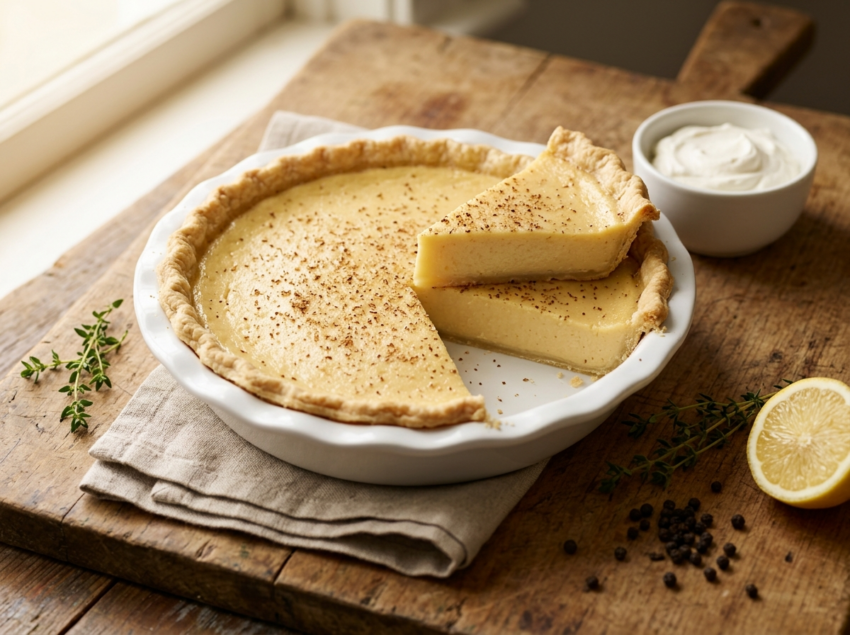
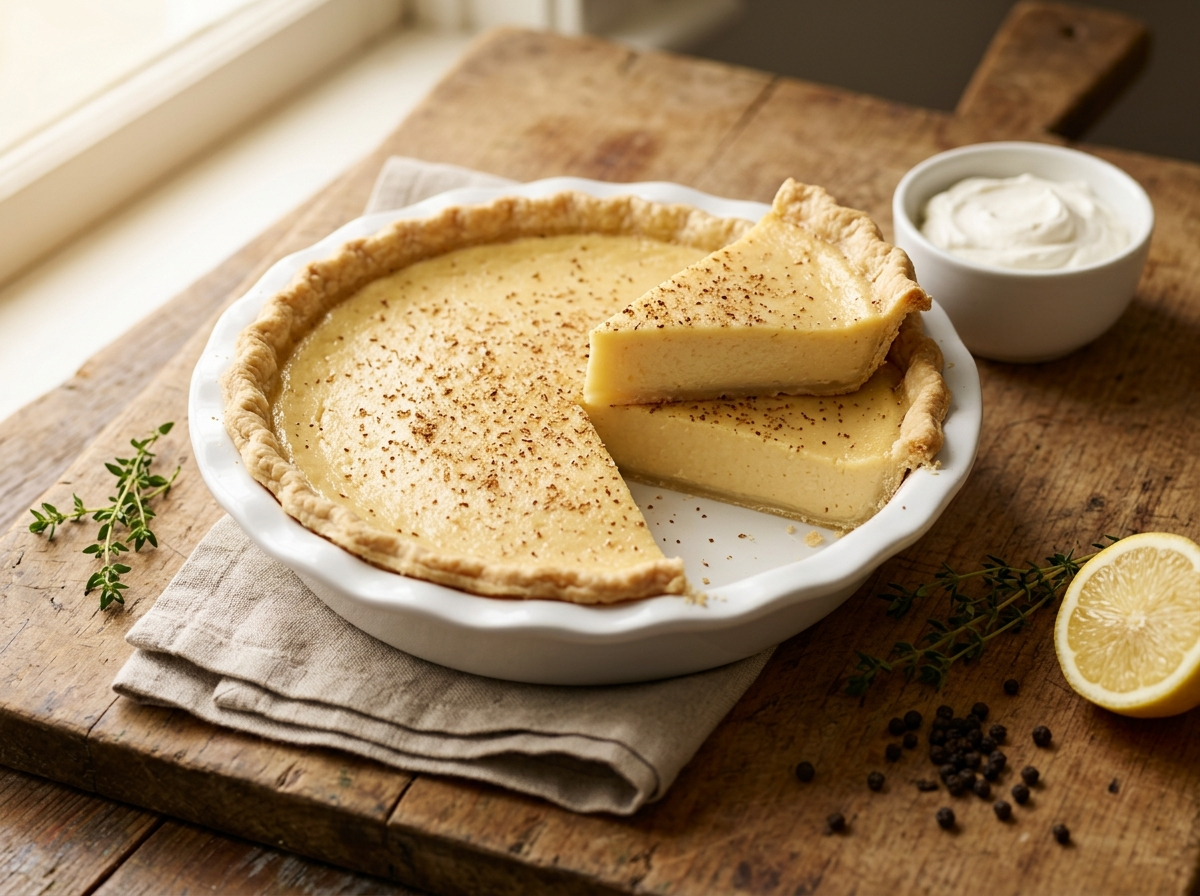
The filling is just eggs, sugar, whole milk, cream, and vanilla poured into a blind-baked shell. The oven does the rest. What you get is a pale golden top dusted with fresh nutmeg and a clean, trembling slice that holds its shape on the plate.
I’ve made this dozens of times. The version below is the one that finally stopped cracking on me.
Why You’ll Love This Recipe
- Sets without a water bath – one less fussy step
- Only six filling ingredients, all pantry staples
- Slices cleanly straight from the fridge
- Nutmeg on top blooms in the oven for real depth
Ingredient Notes
- Whole milk: Whole milk gives the custard body without making it heavy. You can swap up to half with 2% milk, but avoid skim – the filling will weep.
- Heavy cream: Heavy cream (35% fat) keeps the texture silky after chilling. Half-and-half works in a pinch but the slice will be slightly less firm.
- Eggs plus yolks: Three whole eggs plus two yolks is the sweet spot – enough protein to set, enough fat to stay smooth. All whole eggs give a slightly rubbery texture.
- Granulated sugar: Plain white sugar keeps the flavor neutral and lets the vanilla come through. Caster sugar dissolves a little faster if you have it.
- Pure vanilla extract: Pure extract makes a real difference here because the filling has nowhere to hide. A vanilla bean scraped in is even better.
- Freshly grated nutmeg: Ground nutmeg from a jar is flat and dusty by comparison. Buy a whole nutmeg and grate it directly over the pie before it goes in the oven.
- Pie crust (9-inch): Use a homemade or store-bought single-crust shell. Blind bake it first so the base stays crisp under the wet filling.
Classic Baked Custard Pie
Ingredients
Method
- Heat the oven to 190 C / 375 F. Fit the pie crust into a 9-inch pie dish and press it gently against the sides.
- Line the crust with parchment paper and fill with pastry weights or dried beans. Bake for 15 minutes until the edges are pale golden.
- Remove the weights and parchment. Bake for 5 more minutes until the base looks dry and just set. Remove and lower the oven to 160 C / 325 F.
- In a medium bowl, whisk together the whole eggs, egg yolks, and sugar until the sugar dissolves and the mixture looks pale, about 1 minute.
- Add the whole milk, heavy cream, vanilla extract, and salt. Whisk gently until combined. Don't whisk hard - you want as few air bubbles as possible.
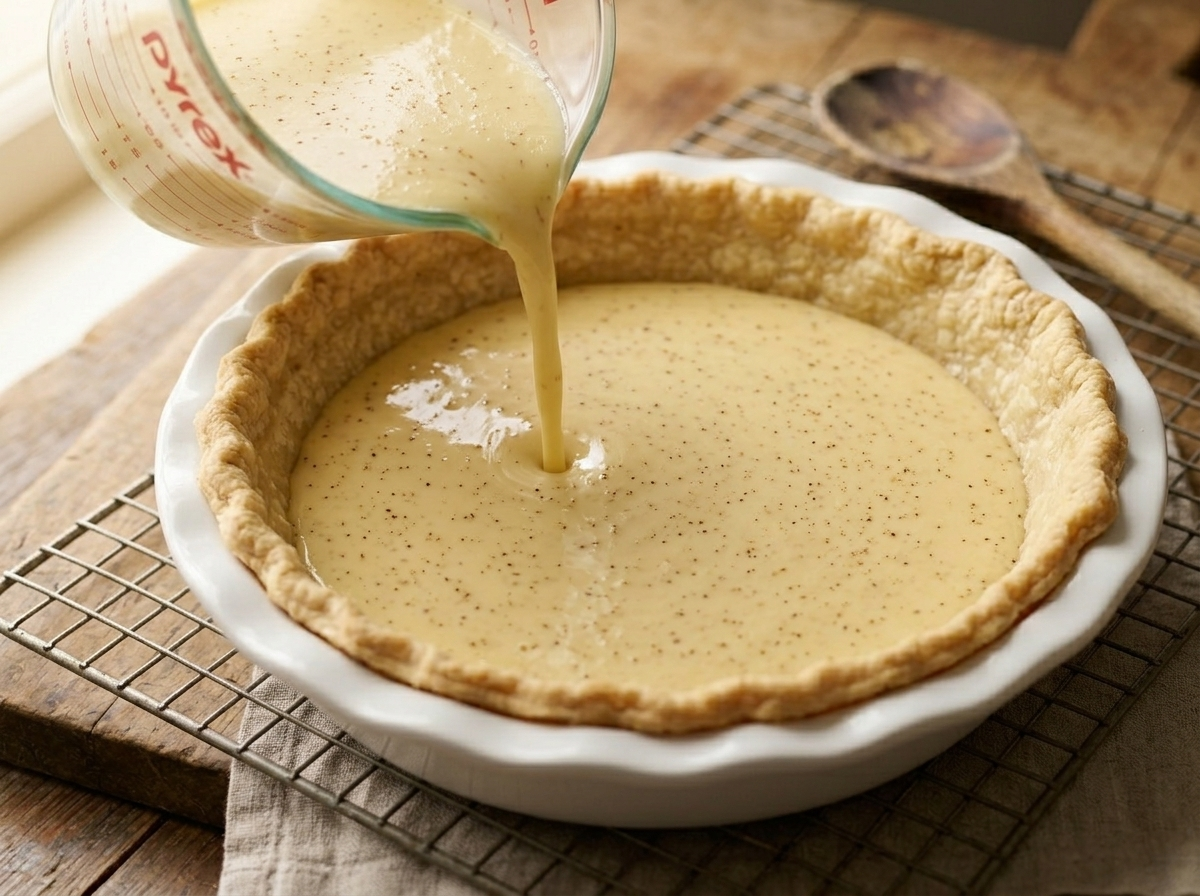
- Pour the mixture through a fine-mesh sieve into a large measuring jug. This removes any egg strands and most of the surface foam.
- Pull the oven rack out halfway. Place the blind-baked shell on the rack. Pour the strained custard carefully into the shell, filling it to about 1 cm below the rim.
- Grate a light, even layer of fresh nutmeg directly over the surface of the custard.
- Slide the rack in gently. Bake at 160 C / 325 F for 35 to 40 minutes, until the edges are fully set and the center 2 inches still jiggles softly when you nudge the pan. The internal temperature should read 175 to 180 F (80 C).
- Turn the oven off and leave the pie inside with the door cracked open for 10 minutes. This slows the cooling and reduces cracking.
- Transfer the pie to a wire rack. Cool at room temperature for at least 2 hours, then refrigerate uncovered for 1 hour before slicing.
Notes
Tips for Success
- Blind bake the crust for 15 minutes before adding the filling to prevent a soggy bottom.
- Strain the custard mixture through a fine-mesh sieve to remove any chalazae and air bubbles.
- Pour the custard into the shell while it sits on the pulled-out oven rack to avoid spilling.
- Bake at 160 C / 325 F – a low temperature keeps the eggs from curdling or puffing.
- Pull the pie when the edges are set but the center 2 inches still jiggle; carryover heat finishes it.
Variations
- Brown sugar custard pie: swap half the white sugar for packed light brown sugar for a caramel undertone.
- Coconut custard pie: replace 120 ml of whole milk with full-fat coconut milk and scatter toasted coconut flakes on top.
- Maple custard pie: use 3 tablespoons of pure maple syrup in place of 2 tablespoons of the sugar and skip half the vanilla.
Storage and Reheating
Cover the cooled pie loosely with plastic wrap and refrigerate for up to 4 days. The custard firms up overnight and actually slices better on day two.
Don’t leave baked custard pie at room temperature for more than 2 hours – the egg filling is perishable.
This pie doesn’t freeze well. The custard separates and weeps on thawing, leaving a watery, grainy texture. Make it fresh.
Serving Suggestions
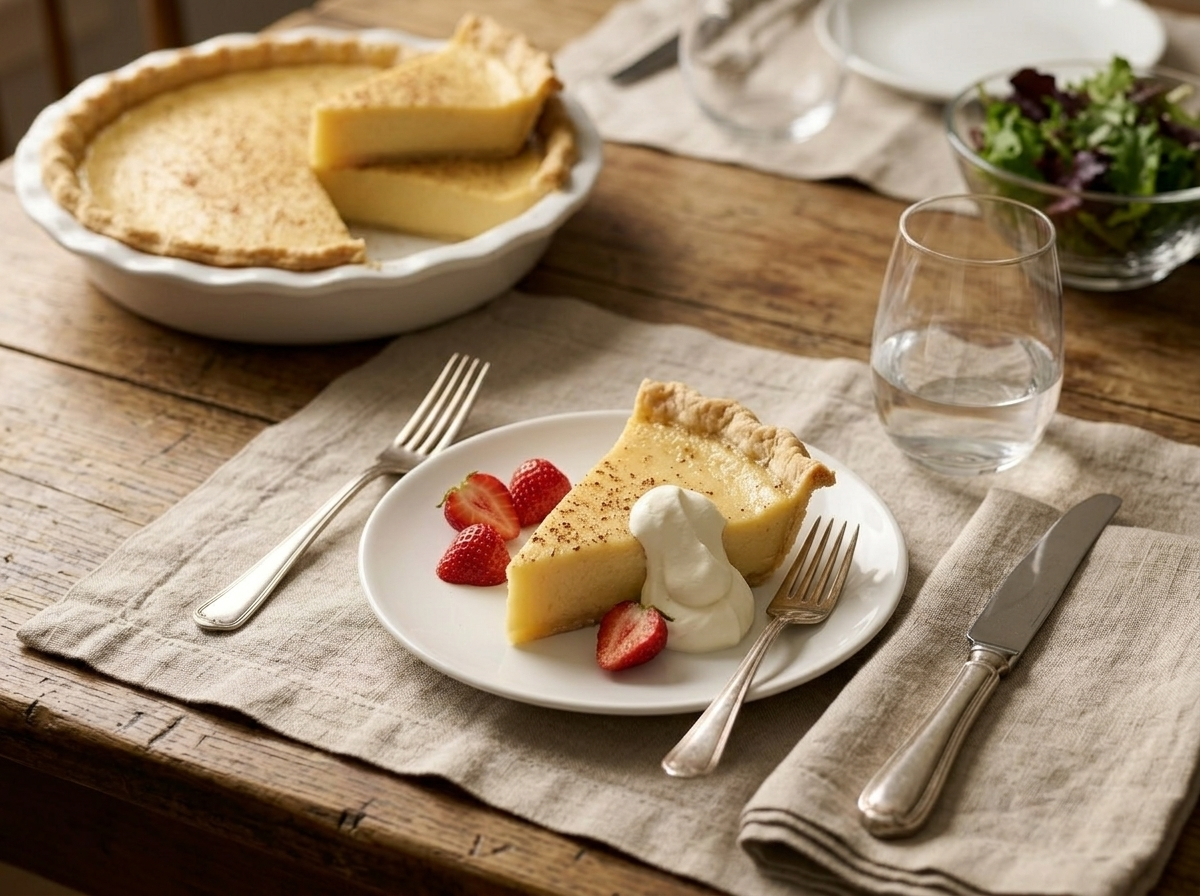
Serve the pie cold or at cool room temperature – straight from the fridge works fine. A light dusting of extra nutmeg just before serving wakes up the aroma.
A spoonful of lightly whipped cream on the side is the classic pairing, much like the cream alongside honey cardamom custard cups – keep it unsweetened or just barely sweetened so it doesn’t compete with the custard.
For a simple contrast, thin slices of fresh strawberry or a few blueberries on the plate add color and a little acidity against the rich, creamy filling.
FAQ
Why did my baked custard pie crack on top?
Cracks usually mean the oven was too hot or the pie baked too long. Pull it while the center still has a gentle wobble – it will finish setting as it cools on the rack.
Can I use evaporated milk instead of whole milk and cream in custard pie?
Yes, one 12-oz can of evaporated milk is a classic substitution that gives a slightly denser, sweeter result. Reduce the added sugar by about one tablespoon to compensate.
How do I know when the custard pie is done baking?
The edges should be fully set and the center 2 inches should still jiggle like soft Jell-O when you nudge the pan. An instant-read thermometer should read 175 to 180 F (80 C) in the center.
Can I make the custard pie filling a day ahead and refrigerate it before baking?
You can mix the filling up to 24 hours ahead and keep it covered in the fridge. Stir it gently before pouring and strain it again if it looks separated or foamy.
What’s the difference between a baked custard pie and a chess pie?
Chess pie contains cornmeal or flour in the filling, which makes it denser and slightly gritty with a firmer set. Baked custard pie uses no starch – just eggs, dairy, and sugar – so the texture is smoother and more delicate, closer to a slow-baked egg custard than any pastry-style filling.
Is classic baked custard pie gluten-free?
The filling itself is naturally gluten-free, but a standard pie crust contains wheat flour. Use a certified gluten-free pie crust to make the whole dessert safe for those avoiding gluten.
More from the kitchen
