
Jump to Recipe
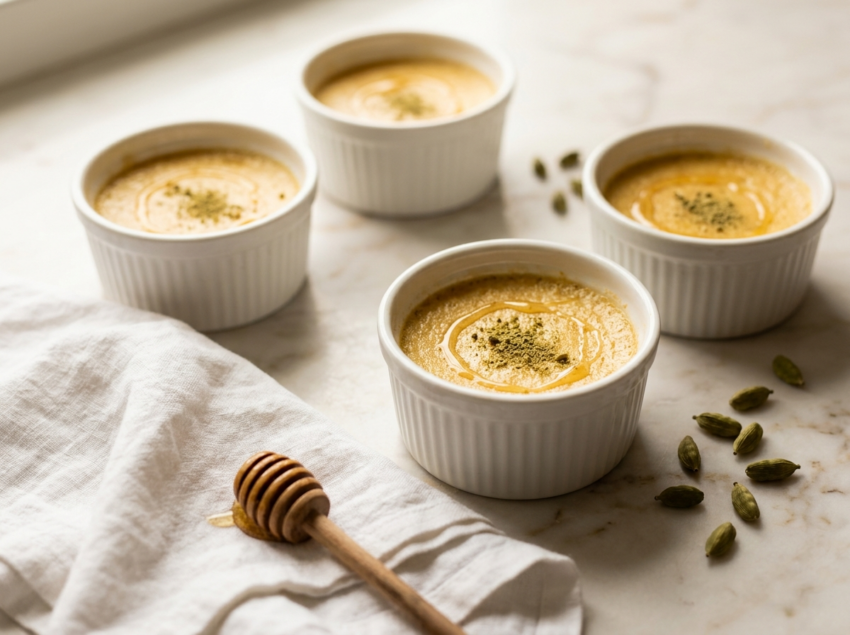
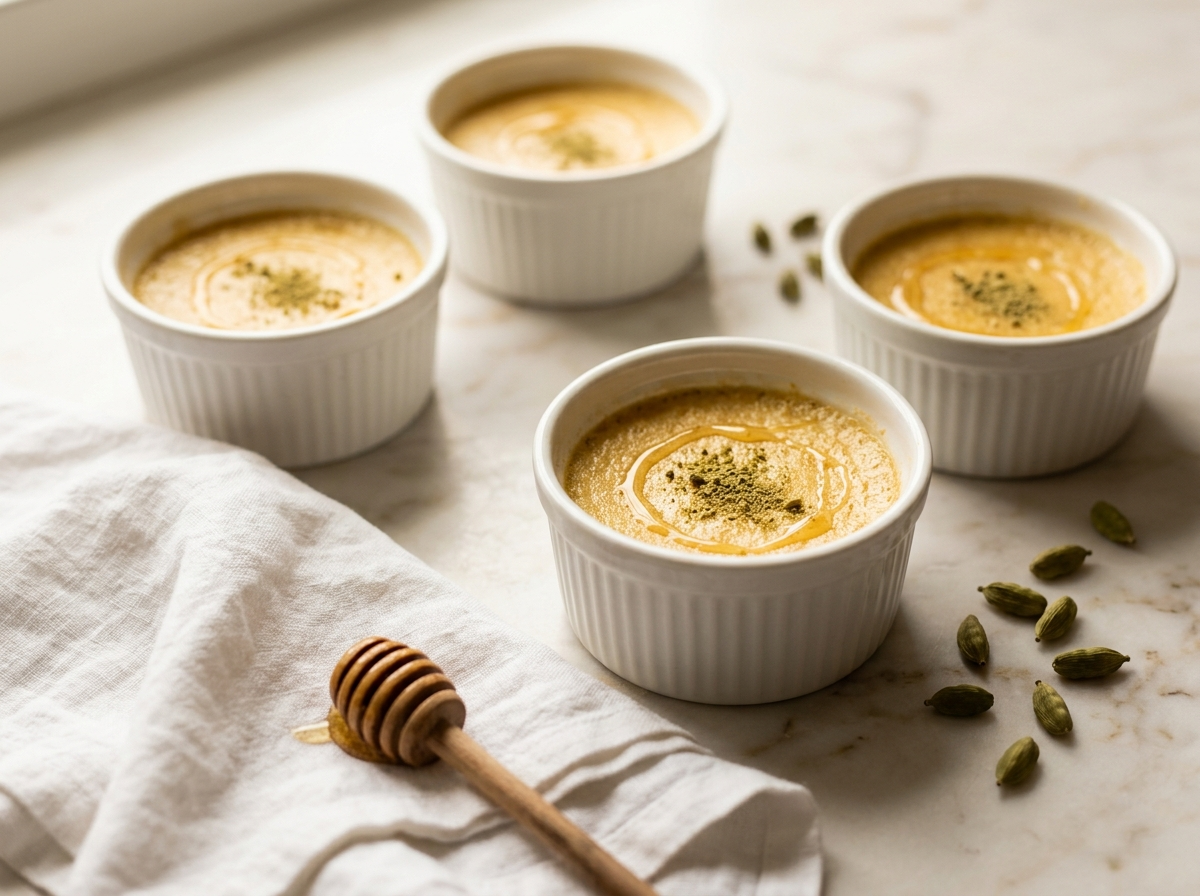
There’s something about a cold custard cup pulled straight from the fridge that feels like a quiet reward. No layers, no garnish required. Just a smooth, amber-tinted surface and a spoon.
I started making these after a trip where I kept ordering cardamom-scented sweets at every stop. The spice has this floral, slightly citrusy quality that pairs with honey in a way that vanilla never quite achieves.
These custard cups use a standard bain-marie method – ramekins set in a hot water bath in the oven. It sounds fussier than it is. The water bath keeps the egg proteins from seizing, which is what gives you that clean, trembling set.
Six ingredients. No cornstarch, no thickener. Just eggs, cream, milk, honey, cardamom, and a pinch of salt — a method not unlike a baked custard with minimal prep. Make them the night before and they’re ready when you are.
Why You’ll Love This Recipe
- Only six ingredients and one mixing bowl needed
- Make-ahead friendly – improves after chilling overnight
- Cardamom and honey give a distinct, non-generic flavor
- Gluten-free with no substitutions required
Ingredient Notes
- Heavy cream: Use full-fat heavy cream (36% fat or higher) for the richest set. Half-and-half works but gives a softer, slightly looser custard.
- Whole milk: Whole milk balances the cream without thinning the custard too much. Avoid skim milk – it produces a watery result.
- Honey: A mild honey like clover or acacia lets the cardamom come through. Stronger varieties like buckwheat will overpower the spice.
- Ground cardamom: Freshly ground cardamom from green pods is noticeably more aromatic. Pre-ground works but use it within six months for best flavor.
- Eggs: You need two whole eggs plus two yolks. The extra yolks add richness and help the custard set firm enough to unmold if you want.
- Fine sea salt: A small pinch sharpens the honey and rounds out the cardamom. Don’t skip it.
Honey Cardamom Custard Cups
Ingredients
Method
- Heat the oven to 160 C / 320 F. Place four 150 ml ramekins in a deep roasting pan and set aside.
- Combine the heavy cream, whole milk, honey, ground cardamom, and salt in a medium saucepan over medium-low heat. Warm gently, stirring occasionally, until the mixture steams and small bubbles appear at the edges. Do not boil. Remove from heat.
- Whisk the two whole eggs and two egg yolks together in a medium bowl until the yolks and whites are fully combined and the mixture looks pale yellow.
- Very slowly pour the warm cream mixture into the egg bowl in a thin stream, whisking constantly. Pouring too fast can scramble the eggs.
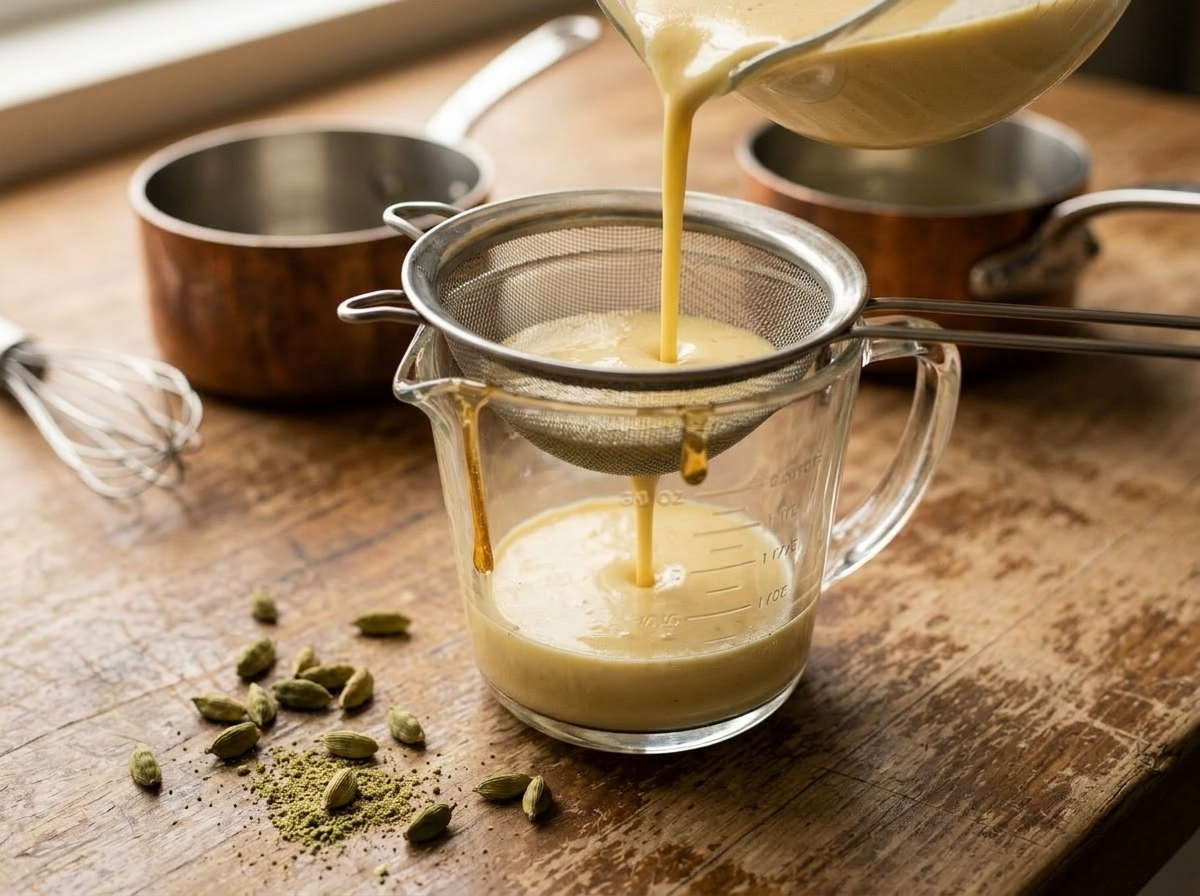
- Pass the custard through a fine-mesh sieve into a liquid measuring jug. Discard any solids caught in the sieve.
- Divide the custard evenly among the four ramekins. Cover each one loosely with a small square of foil.
- Pull the oven rack out slightly and place the roasting pan on it. Pour enough just-boiled water around the ramekins to reach halfway up their sides. Slide the rack back in carefully.
- Bake for 38 to 42 minutes until the edges are fully set and the centers have a slow, jelly-like wobble when you nudge the pan gently.
- Remove the ramekins from the water bath using tongs or a cloth. Set on a wire rack to cool to room temperature, about 30 minutes.
- Cover each ramekin with plastic wrap pressed directly onto the custard surface. Refrigerate for at least 4 hours, or overnight for the best texture.
- Serve cold in the ramekin with a small drizzle of honey and a light dusting of ground cardamom on top.
Notes
Tips for Success
- Warm the cream and milk mixture to just below a simmer before whisking into eggs to avoid scrambling them.
- Strain the custard through a fine-mesh sieve into a jug for a smoother pour and to catch any cooked egg bits.
- Cover each ramekin loosely with foil during baking to prevent a skin from forming on the surface.
- Check doneness by gently nudging the baking dish – custard should wobble like set jelly at the center, not slosh.
- Chill for at least four hours before serving – overnight gives a cleaner, firmer texture and deeper cardamom flavor.
Variations
- Rose cardamom: add 1 tsp rose water to the warm cream mixture before straining for a floral Middle Eastern note.
- Saffron honey: steep a pinch of saffron in the warm milk for 5 minutes before combining with cream and eggs.
- Coconut cardamom: replace heavy cream with full-fat coconut cream for a dairy-free version with a mild tropical undertone.
Storage and Reheating
Store covered ramekins in the fridge for up to three days. Press a small piece of plastic wrap directly onto the custard surface before covering to prevent condensation pooling on top.
These custard cups are not suited to reheating – serve them cold or at cool room temperature. Pulling them from the fridge 10 to 15 minutes before serving takes the chill off without softening the set.
Freezing is not recommended. The egg-based custard separates on thawing and the texture becomes grainy and watery.
Serving Suggestions
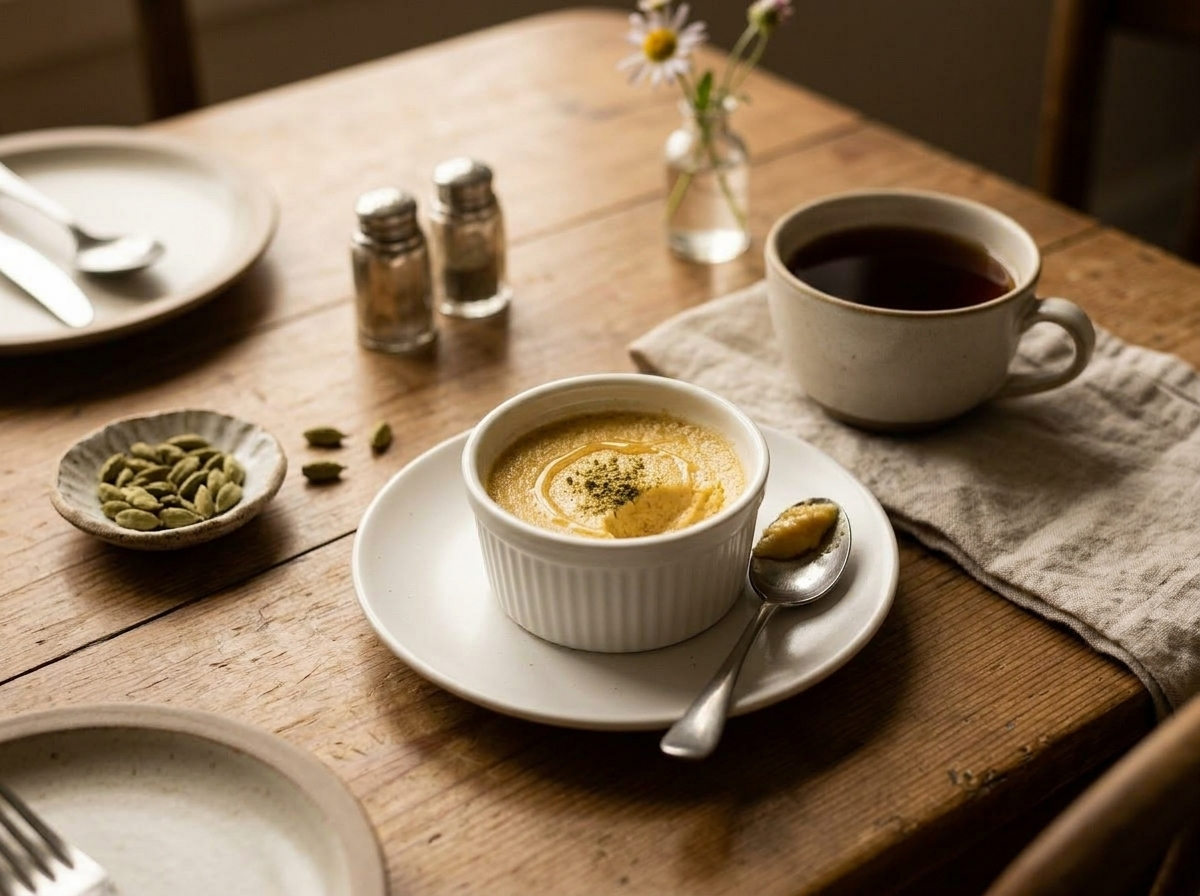
Serve straight in the ramekin with a thin drizzle of honey and a light dusting of ground cardamom on top. A few fresh raspberries or sliced strawberries on the side cut through the richness.
For a composed plating, run a thin knife around the edge and unmold onto a small plate. A crisp tuile or a few toasted pistachios add texture without competing with the custard’s flavor.
These pair well after a spiced dinner — Moroccan lamb, Persian rice dishes, or any menu where warm spices already appear, including spreads that finish with floral, aromatic custard desserts. A small cup of strong black tea alongside is a natural match.
FAQ
Why is my honey cardamom custard still liquid in the center after the listed bake time?
Oven temperatures vary, and custard can take a few extra minutes depending on ramekin depth and how hot your water bath actually gets. Give the pan a gentle nudge – if the center still sloshes rather than wobbles, add five more minutes and check again.
Can I use maple syrup instead of honey in these cardamom custard cups?
Yes, maple syrup works as a one-to-one swap and gives a slightly deeper, earthier sweetness, much like the silky maple custard base used in vanilla bean pudding. The cardamom flavor stays intact, though the color of the custard will be a little darker.
How do I know when the baked custard is fully set without overbaking it?
The edges should be completely set and the center should have a slow, jelly-like wobble when you nudge the dish. If the surface looks cracked or the custard pulls away from the ramekin sides, it’s gone a few minutes too long.
Can I make honey cardamom custard cups two days ahead for a dinner party?
Absolutely – two days ahead is fine and the flavor actually improves as the cardamom infuses further into the cream. Keep them covered in the fridge and add any garnish just before serving.
Are honey cardamom custard cups gluten-free?
Yes, the recipe contains no wheat, flour, or gluten-containing ingredients. Just check that your ground cardamom is packaged in a gluten-free facility if cross-contamination is a concern.
What’s the difference between a custard cup and a creme brulee?
Both are egg-and-cream custards baked in a water bath, but creme brulee uses only yolks and gets a caramelized sugar crust. These custard cups use whole eggs plus yolks, set slightly firmer, and are sweetened with honey rather than sugar – no torch required.
