
Jump to Recipe
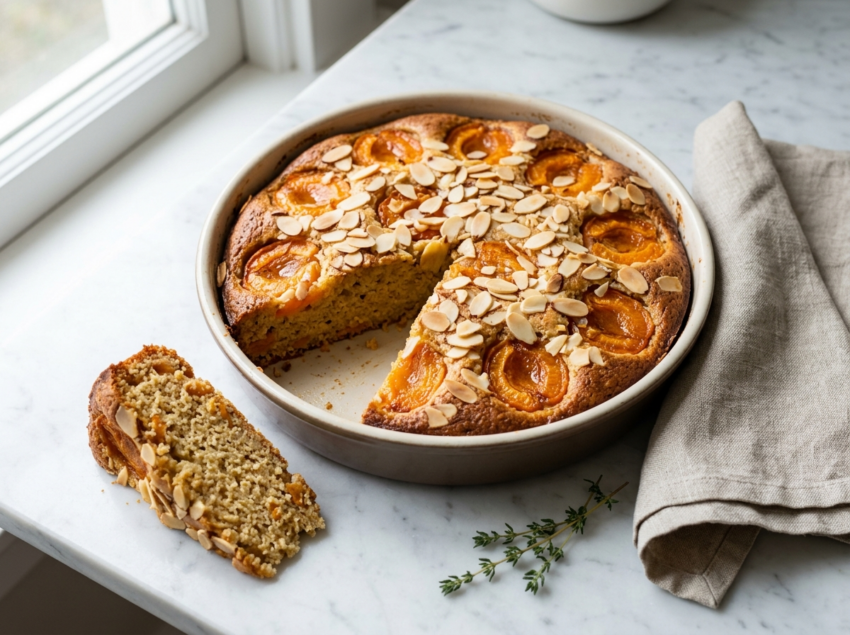
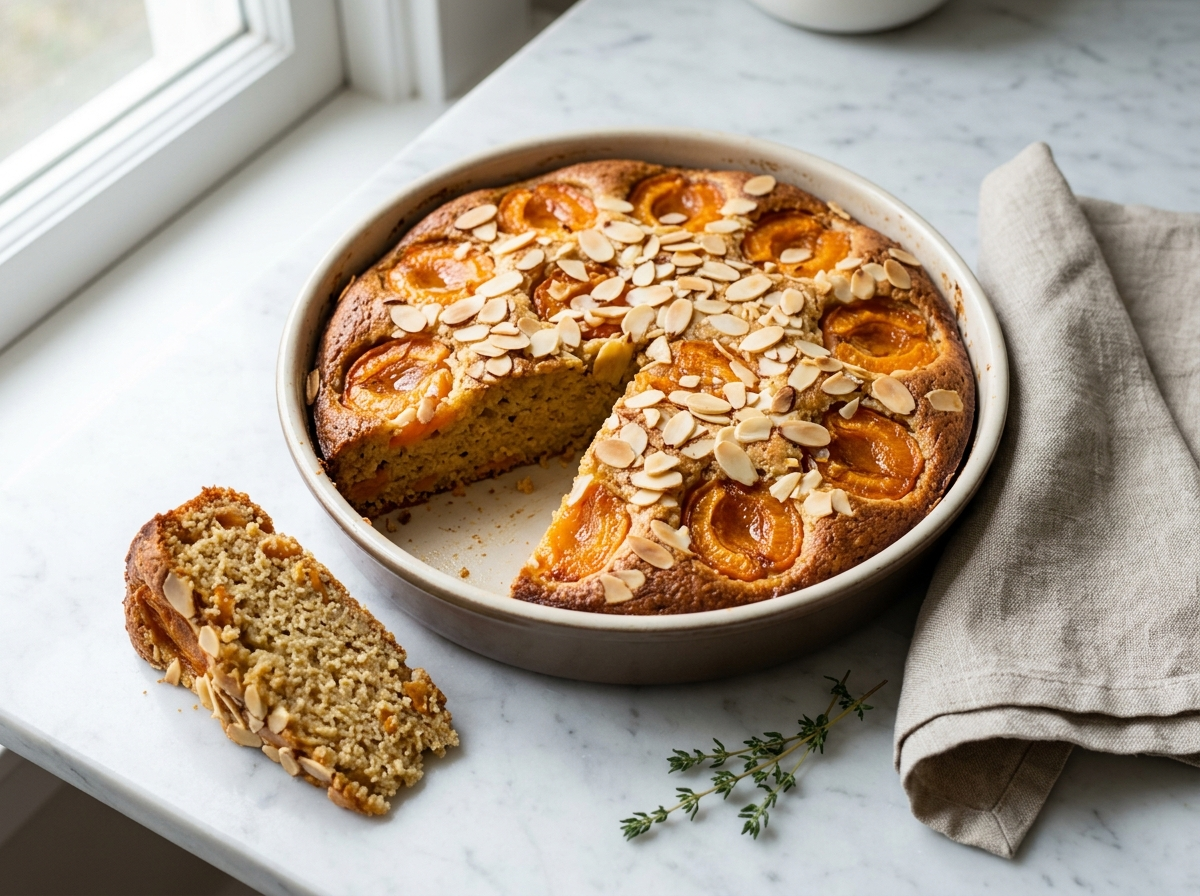
Apricot ricotta cake is a soft, barely sweet cake built on whole-milk ricotta instead of butter, so the crumb stays moist for days.
I first made this in late June when the apricots at the market were still a bit tart. That tartness matters. Sweet, mushy apricots turn the top soggy and the cake loses its contrast.
The batter comes together in one bowl, no mixer with a whisk and a spatula. No mixer, no creaming butter, no waiting for anything to soften.
Bake it at 170 C / 340 F until the edges turn golden and the center barely jiggles, about 45 to 50 minutes. Let it cool fully before slicing or the middle will look underdone even when it’s set.
Why You’ll Love This Recipe
- Comes together in one bowl with no mixer needed
- Ricotta keeps the crumb moist for three or four days
- Tart apricots balance the mild, milky cake base
- Bakes in under an hour with simple pantry staples
Ingredient Notes
- Ricotta: Use whole-milk ricotta and drain it in a sieve for 20 minutes if it looks watery. Part-skim works but gives a slightly wetter crumb.
- Apricots: Pick apricots that are firm with a little give, not overripe. Underripe fruit holds its shape and keeps the top from getting soggy.
- Butter: Melted butter keeps this recipe one-bowl. You can swap in neutral oil for a slightly denser, more pound-cake texture.
- Flour: All-purpose flour keeps the crumb tender. A 1:1 gluten-free blend works fine if you need it gluten free.
- Almonds: Sliced almonds add crunch on top. Leave them off or swap for pistachios if you want a nut-free version instead.
Homemade Apricot Ricotta Cake with Toasted Almonds
Ingredients
Method
- Heat the oven to 170 C / 340 F. Grease an 8-inch springform pan and line the base with parchment.
- In a large bowl, whisk the ricotta, eggs, and sugar together until smooth, about 1 minute.
- Whisk in the vanilla, lemon zest, and melted butter until fully combined.
- Sift the flour, baking powder, and salt over the bowl. Fold in gently until no dry streaks remain, being careful not to overmix.
- Pour the batter into the prepared pan and smooth the top with a spatula.
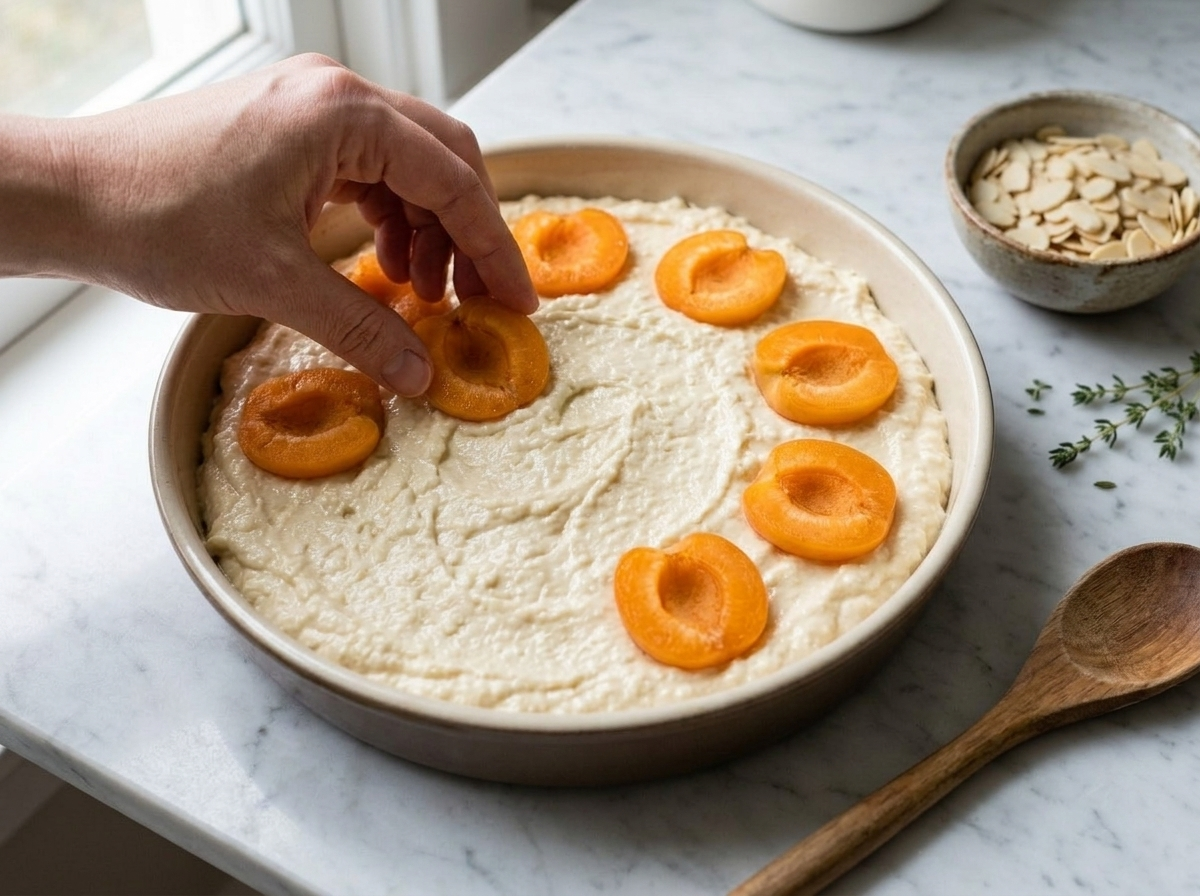
- Arrange the apricot halves cut-side up over the batter, pressing them in slightly. Scatter the sliced almonds and turbinado sugar on top.
- Bake for 45 to 50 minutes, until the edges are golden and the center barely jiggles when you shake the pan. A toothpick inserted 2 inches from the edge should come out with a few moist crumbs, not wet batter.
- Cool the cake in the pan on a wire rack for 15 minutes, then release the springform sides.
- Let the cake cool completely, about 2 hours, before slicing for clean edges.
Notes
- Drain wet ricotta for 20 minutes before mixing to avoid a soupy batter.
- Use firm, slightly underripe apricots so the top doesn't turn soggy.
- Don't skip the full cool-down, about 2 hours, before slicing.
- Check the center with a toothpick 2 inches from the pan edge, not dead center.
Tips for Success
- Drain wet ricotta in a sieve for 20 minutes so the batter doesn’t turn soupy.
- Fold the flour in gently and stop as soon as streaks disappear to keep the crumb light.
- Press apricot halves cut-side up so the juices bake into the top instead of pooling underneath.
- Check doneness at 45 minutes since ovens vary, and pull it before the edges go dark.
- Cool the cake fully, about 2 hours, before slicing for clean edges instead of a crumbly mess.
Variations
- Swap apricots for halved plums or pitted cherries when apricots are out of season.
- Add 1 tsp almond extract to the batter for a stronger almond flavor alongside the topping.
- Stir 1 tbsp poppy seeds into the batter for a lemon-poppy seed spin on the base.
Storage and Reheating
Apricot ricotta cake keeps well at room temperature for one day if your kitchen is cool, covered loosely with a clean towel. After that, move it to the fridge.
In the fridge, store slices in an airtight container for up to 4 days. The ricotta base actually firms up nicely and slices even cleaner on day two.
To serve leftovers warm, microwave a slice for 15 to 20 seconds. Skip reheating the whole cake in the oven, it dries out the ricotta faster than you’d expect.
Serving Suggestions
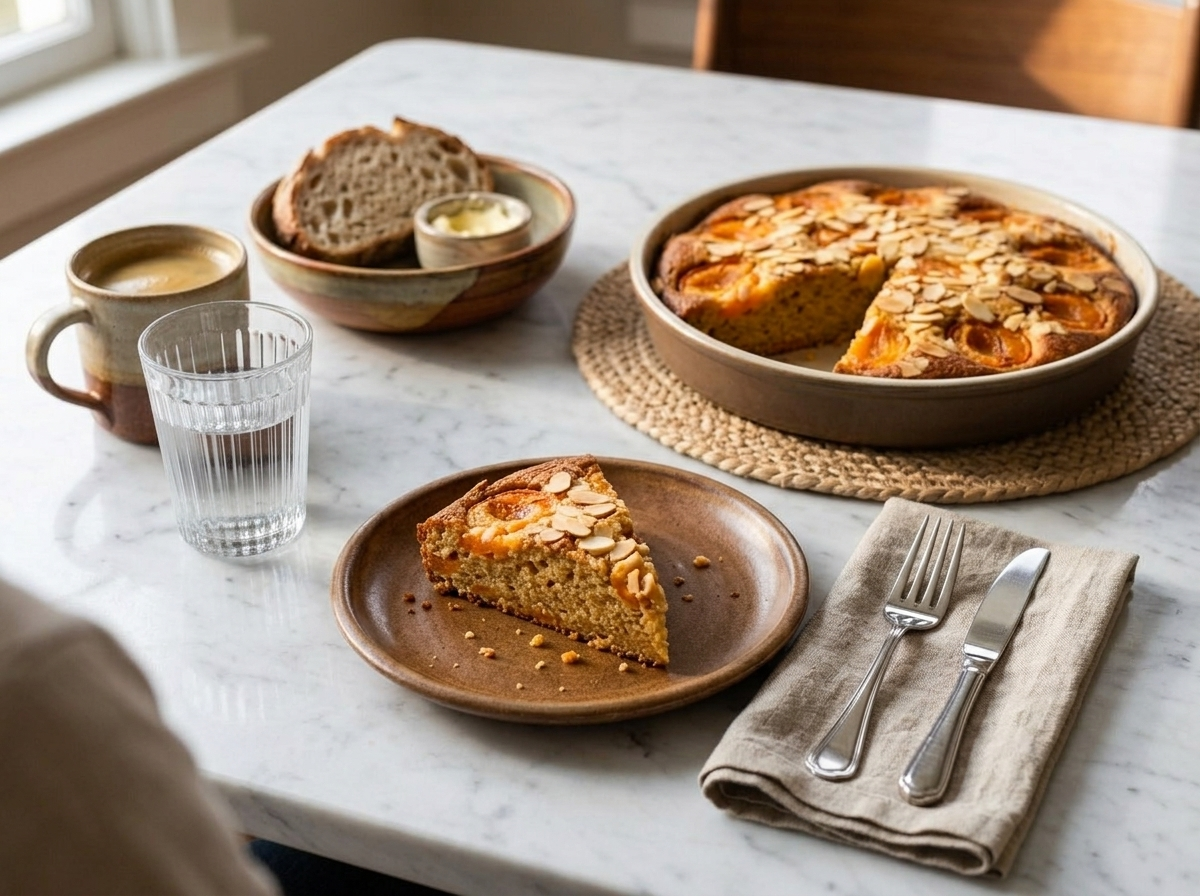
Apricot ricotta cake is good on its own with coffee, but a small dollop of unsweetened whipped cream or crème fraîche on the side rounds out the tartness.
For brunch, I cut it into thin wedges alongside a bowl of fresh berries and a pot of tea. It’s not overly sweet, so it works at 10am as easily as it does after dinner.
A drizzle of warmed honey over each slice right before serving picks up the almonds on top and adds a little shine.
FAQ
Why did my apricot ricotta cake sink in the middle after baking?
It’s usually underbaking or watery ricotta. If the center wasn’t set to a barely-jiggly stage before you pulled it, or you skipped draining the ricotta, the middle collapses as it cools. Check doneness at 45 minutes with a toothpick 2 inches from the edge, and drain wet ricotta in a sieve first.
Can I use canned apricots instead of fresh in this ricotta cake?
Yes, but drain them well and pat dry first, since canned apricots hold more liquid than fresh fruit. Skip the syrup-packed kind and use ones canned in juice or water. The top will bake slightly softer than with fresh apricots, but the flavor still works.
How long does apricot ricotta cake keep in the fridge?
It keeps up to 4 days in an airtight container in the fridge. The ricotta crumb actually firms up and slices more cleanly on the second day. Bring slices to room temperature or give them a short 15-second microwave zap before eating for the best texture.
What pairs well with the tartness of apricot ricotta cake?
Unsweetened whipped cream, crème fraîche, or a spoonful of Greek yogurt all balance the tart apricots without adding much extra sweetness. A drizzle of warmed honey over the top also works if you want a sweeter finish. Coffee or a light black tea rounds it out well.
Is apricot ricotta cake gluten free?
Not as written, since it uses all-purpose flour. Swap in a 1:1 gluten-free baking blend and the texture holds up close to the original, though the crumb turns out slightly more delicate. Check your baking powder too, as some brands add gluten-containing fillers.
How is apricot ricotta cake different from an Italian ricotta torta?
Apricot ricotta cake is lighter and more cake-like, with flour and baking powder for lift, while a classic Italian ricotta torta leans denser and custard-like with little or no flour. This version also bakes fresh fruit right into the top instead of folding it into the batter.
More from the kitchen
