
Jump to Recipe
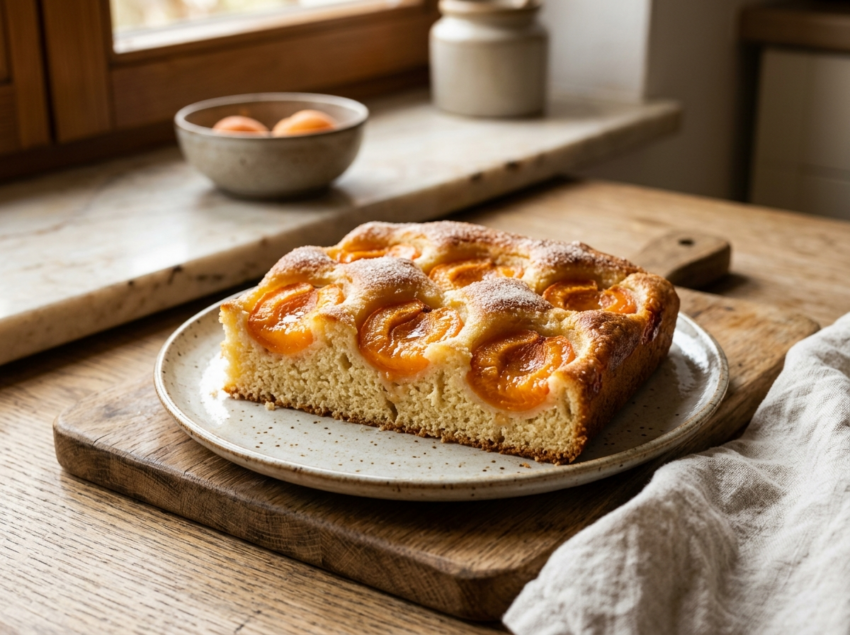
There’s something about a flat pan lined with fruit that feels more honest than a layered cake. No drama. Just good dough and ripe apricots.
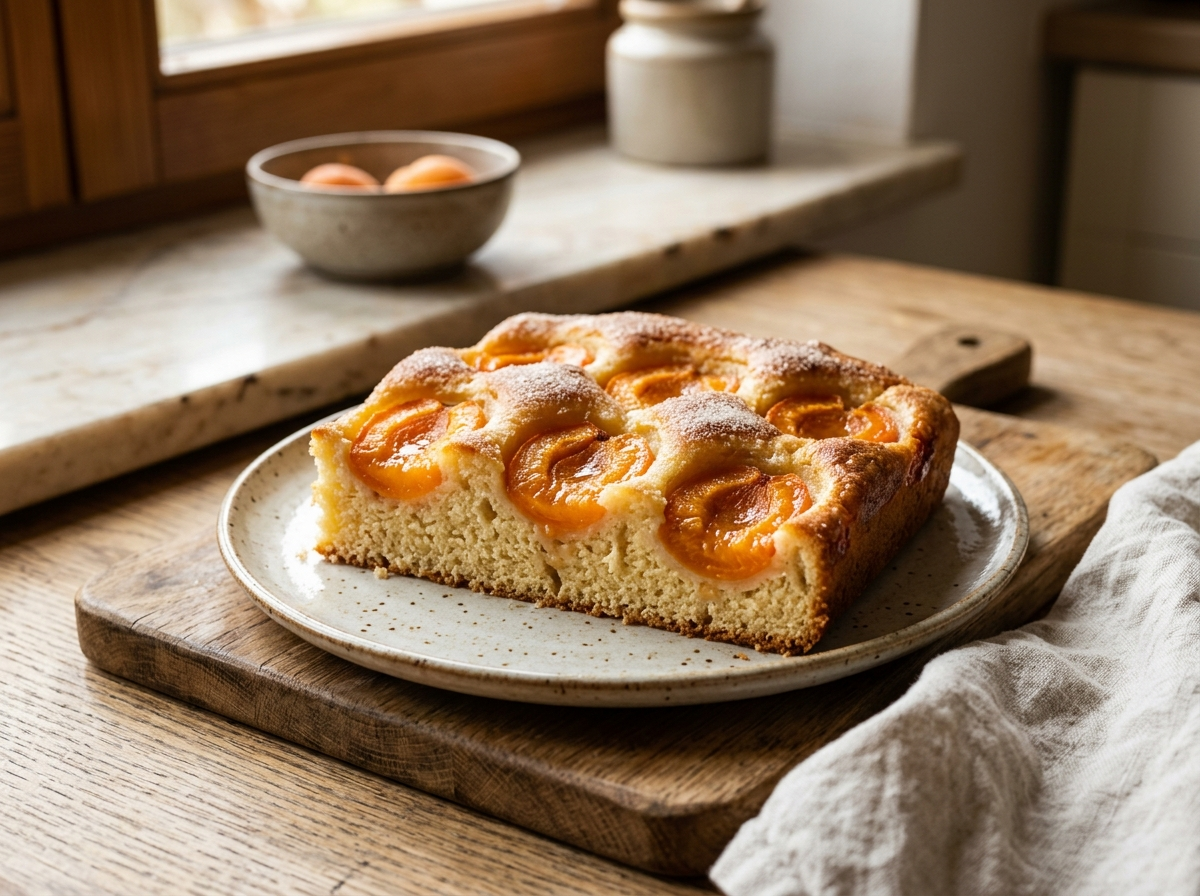
This is the kind of cake Austrian grandmothers pull out of the oven on a Sunday afternoon. The base is a light yeast dough, not too sweet, and the apricot halves sink into it just enough while baking to stay juicy without making the crumb wet.
Fresh apricots are the point here. They turn jammy at the edges where they touch the pan, and tart in the center where they hold their shape. A dusting of vanilla sugar is all they need when they come out hot.
It feeds a crowd, slices cleanly, and keeps for two days at room temperature. That makes it one of the more practical bakes in the Austrian repertoire.
Why You’ll Love This Recipe
- One pan feeds 12 people with minimal effort
- Soft yeast dough that stays moist for two days
- Fresh apricots turn jammy and tart as they bake
- No frosting or filling needed, just vanilla sugar
Ingredient Notes
- Fresh apricots: Use ripe but firm apricots so they hold their shape in the oven. Overripe fruit will collapse and make the dough wet in the center.
- All-purpose flour: Plain all-purpose flour works well here. You can swap up to half with a light spelt flour for a slightly nuttier base.
- Unsalted butter: Use room-temperature butter so it incorporates smoothly into the dough without breaking the yeast activity.
- Dry yeast: One standard 7 g packet of instant dry yeast is enough. If using fresh yeast, double the weight to 14 g and crumble it into the warm milk first.
- Whole milk: Warm the milk to around 38 C / 100 F, warm to the touch but not hot, or you risk killing the yeast.
- Vanilla sugar: Austrian recipes call for Vanillezucker, which is a sachet of vanilla-scented sugar. You can make your own by storing a vanilla bean in a jar of sugar for a week, or substitute with 1 tbsp plain sugar mixed with 1/2 tsp vanilla extract dusted on after baking.
Austrian Apricot Sheet Cake
Ingredients
Method
- Warm the milk in a small saucepan to 38 C / 100 F. It should feel just warm on your wrist, not hot.
- Combine the flour, yeast, sugar, and salt in the bowl of a stand mixer. Add the warm milk, softened butter, eggs, and lemon zest.
- Knead on medium speed for 8 minutes until the dough is smooth, elastic, and pulls away from the sides of the bowl. If mixing by hand, knead on a lightly floured surface for 10 to 12 minutes.
- Shape the dough into a ball, place it back in the bowl, and cover with a clean kitchen towel. Leave in a warm spot for 45 to 60 minutes until the dough has doubled in size.
- Heat the oven to 190 C / 375 F. Brush a 13x18 inch rimmed sheet pan with melted butter and line with parchment paper.
- Halve the apricots and remove the pits. Set aside on a clean cloth.
- Turn the risen dough out onto a lightly floured surface. Press and stretch it evenly across the lined pan to fill the edges. If it springs back, let it rest for 5 minutes and press again.
- Cover the pan loosely with a towel and let the dough rest for 15 minutes while the oven finishes preheating.
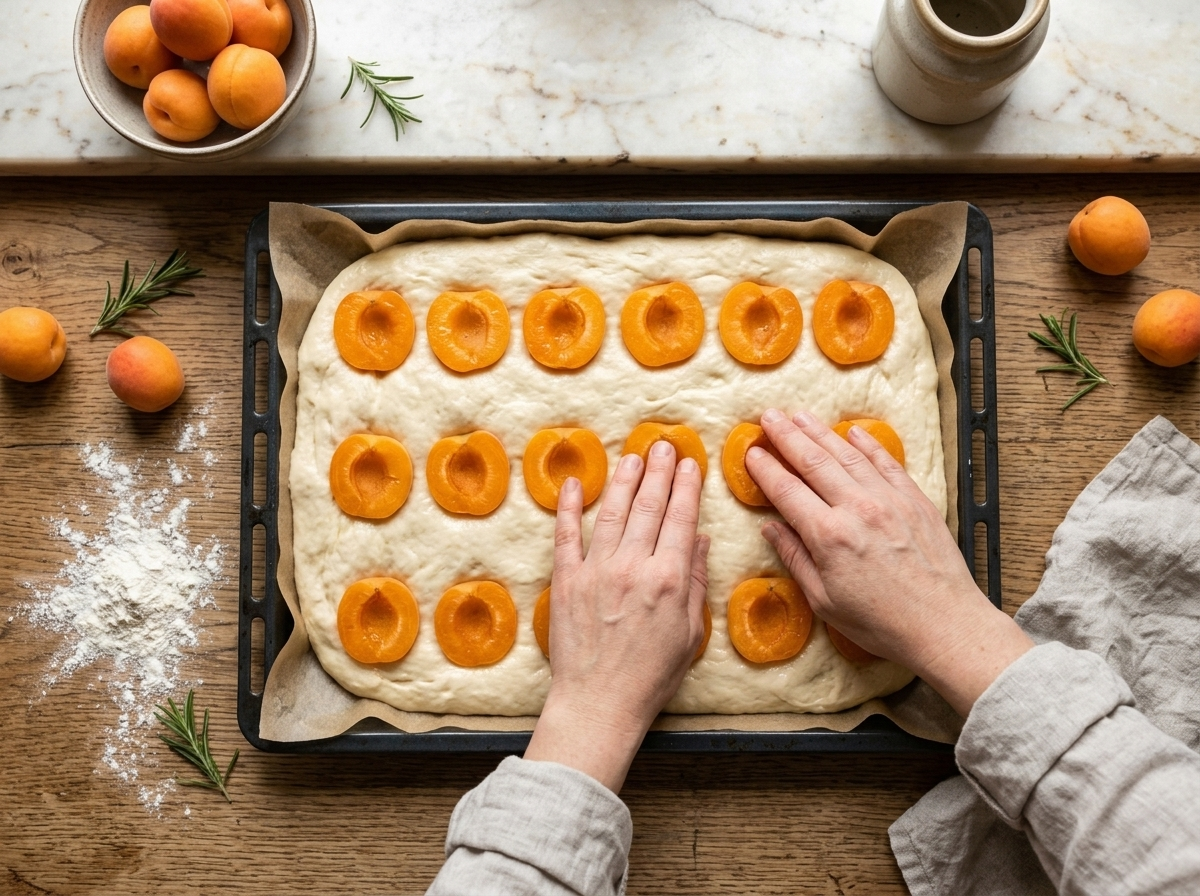
- Press the apricot halves cut-side up firmly into the dough in tight rows, fitting them close together across the entire surface.
- Bake on the middle rack for 28 to 32 minutes until the edges of the dough are deep golden and the apricots have softened and begun to caramelize at the edges.
- Remove from the oven and dust immediately with vanilla sugar while the surface is still hot.
- Cool the cake in the pan on a wire rack for at least 15 minutes before slicing into squares or rectangles.
Notes
Tips for Success
- Let the dough rise in a warm, draft-free spot until it has visibly doubled, about 45 to 60 minutes.
- Press apricot halves cut-side up firmly into the dough so they don’t slide during baking.
- Score the apricot flesh lightly with a knife before placing to help them release juice evenly.
- Dust vanilla sugar over the cake while it is still hot so it melts slightly into the fruit.
- Line the sheet pan with parchment paper, not just greased foil, to prevent sticking on the caramelized fruit edges.
Variations
- Swap apricots for Italian prune plums in fall for a deeper, more jammy result.
- Spread a thin layer of marzipan over the dough before placing apricots for extra almond flavor.
- Add a crumble topping of butter, flour, and sugar over the apricots for a Streusel version.
Storage and Reheating
Store the baked cake loosely covered at room temperature for up to 2 days. The yeast dough stays soft and the apricots hold their texture without going mushy.
For longer storage, wrap individual slices in cling film and refrigerate for up to 4 days. Bring to room temperature before eating or warm briefly in a 150 C / 300 F oven for 5 to 8 minutes.
You can freeze baked slices for up to 2 months. Wrap tightly in cling film, then foil. Thaw overnight in the fridge and reheat in the oven.
Serving Suggestions
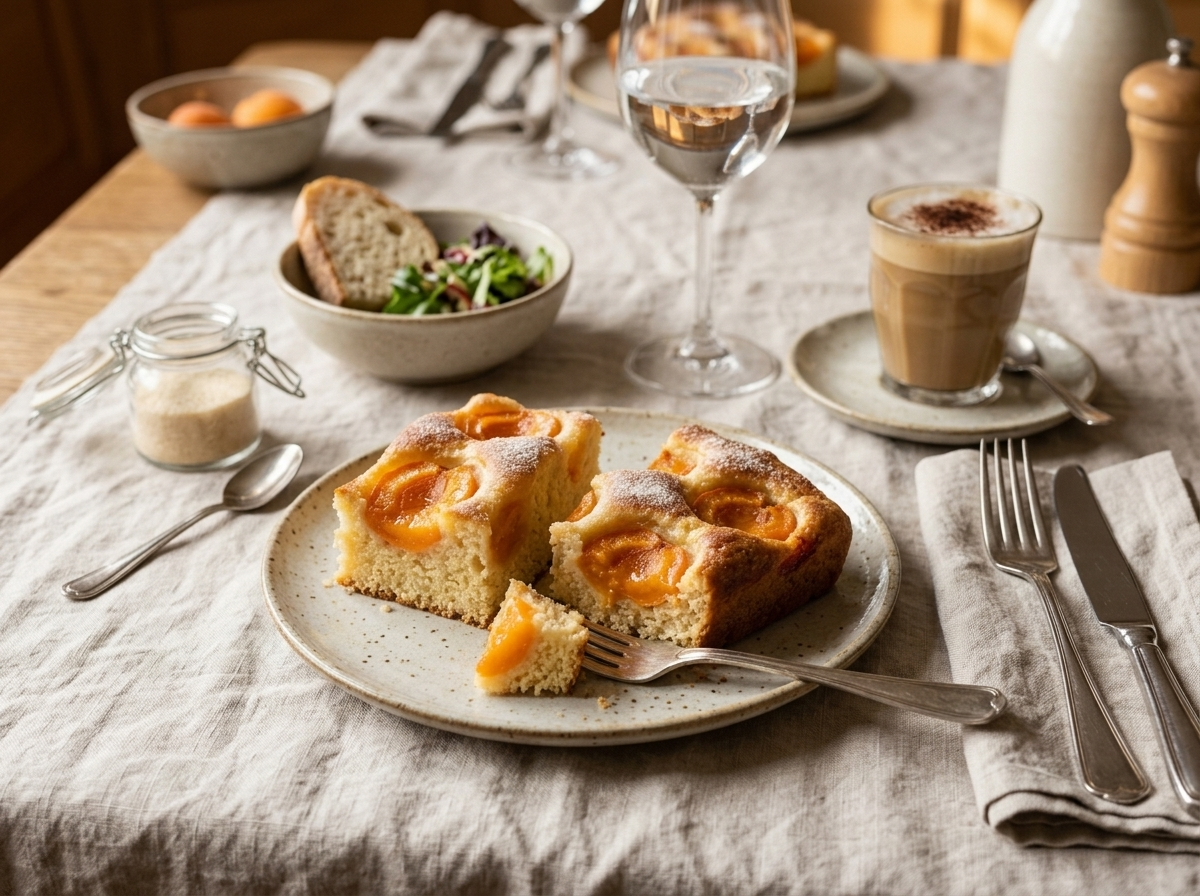
Serve slices slightly warm with a spoonful of lightly whipped cream or a scoop of vanilla ice cream alongside, much like you would with a warm fruit skillet cake. The tartness of the apricots cuts through the richness well.
For an afternoon coffee table in the Austrian style, pair it with a strong filter coffee or a Melange, the Viennese milky espresso drink. A cold glass of milk works just as well for a less formal setting.
If you’re serving a crowd, cut the sheet into small squares and arrange on a board with fresh apricot slices and a small bowl of vanilla sugar for extra dusting.
FAQ
Why is my apricot sheet cake dough not rising?
The most common reason is milk that was too hot and killed the yeast. The milk should feel just warm on your wrist, around 38 C / 100 F. Also check that your yeast is within its use-by date.
Can I use canned apricots instead of fresh in this cake?
You can, but drain them very thoroughly and pat dry with paper towels first. Canned apricots release much more liquid during baking, which can make the center of the dough undercooked.
Can I make the yeast dough the night before and bake it in the morning?
Yes. After the first knead, cover the dough tightly and refrigerate overnight. Let it come back to room temperature for 30 to 45 minutes, then press it into the pan, top with apricots, and bake.
What’s the difference between Austrian apricot sheet cake and a German Pflaumenkuchen?
Pflaumenkuchen traditionally uses Italian plums on the same yeast base and is a little denser in crumb, closer in spirit to a free-form stone fruit bake than to this lighter Austrian version. The Austrian apricot version tends to use a lighter, slightly sweeter dough and is more common in the summer months when apricots are at peak season.
How do I know when the cake is fully baked and not doughy underneath the apricots?
Lift one corner of the cake with a spatula and check that the underside is golden, not pale. The dough directly under the apricots will look slightly moist but should not be sticky or raw when a skewer comes out clean.
Is Austrian apricot sheet cake vegetarian?
Yes, this cake is vegetarian. It contains eggs, butter, and milk, so it is not vegan, but there are no meat or fish ingredients.
If you enjoyed this, try
