
Jump to Recipe
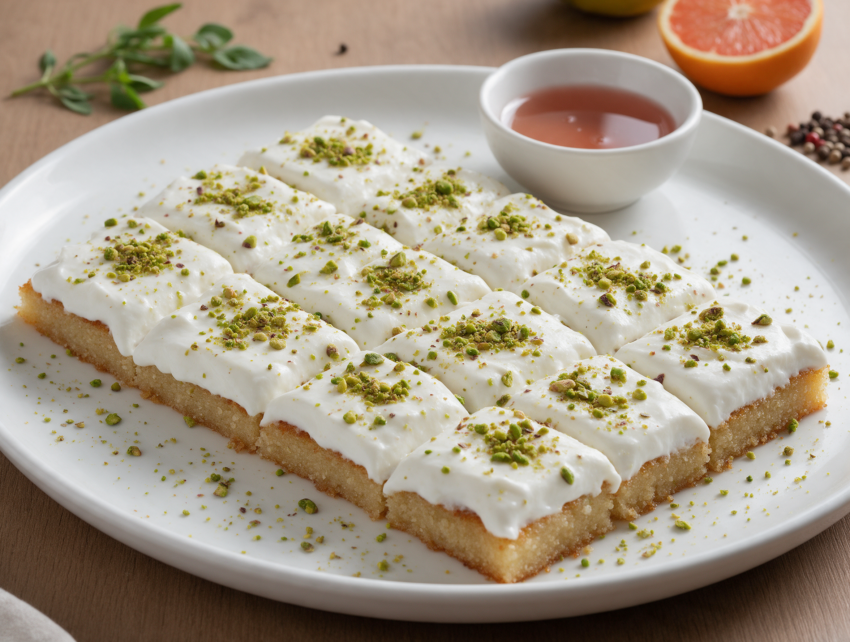
There’s something about a dessert that needs no oven and still takes an afternoon to make right. Mafroukeh is a Lebanese dessert built in layers: toasted semolina soaked in rosewater syrup on the bottom, cold ashta cream on top, crushed pistachios scattered over everything. This mafroukeh Lebanese dessert recipe comes together entirely on the stovetop, in one skillet and one saucepan.
My aunt in Beirut used to make it during Ramadan, pressed flat in a round metal tray and cut into wedges once the cream had set. The semolina layer is firm but not dry, almost like a dense cake. The ashta on top is cool and barely sweet, which keeps the whole thing from tasting like straight sugar.
The one place people go wrong is rushing the semolina toast. Undercook it and the base tastes raw and pasty. Give it the full 10 to 12 minutes and it turns golden and nutty, ready to soak up the syrup.
Everything can be made a day ahead. Just keep the layers separate until you’re ready to serve.
Why You’ll Love This Recipe
- No oven needed, just a skillet and saucepan
- Make-ahead friendly for parties and holidays
- Cool ashta cream balances the sweet semolina base
- Classic Lebanese flavors: rosewater, pistachio, orange blossom
Ingredient Notes
- fine semolina: Use fine semolina, sometimes sold as cream of wheat, not the coarse kind meant for couscous.
- unsalted butter: Ghee works too and gives a slightly nuttier, more traditional flavor.
- rosewater: Start with less if you’re not used to it. It gets stronger as the dessert sits.
- orange blossom water: Swap for extra rosewater if you don’t have it, but don’t skip both.
- heavy cream: Full-fat cream is what gives the ashta its body. Lower-fat cream won’t set the same way.
- cornstarch: This is what thickens the ashta into a spreadable cream instead of a runny sauce.
- pistachios: Crush by hand or pulse briefly in a food processor. Don’t turn them into dust.
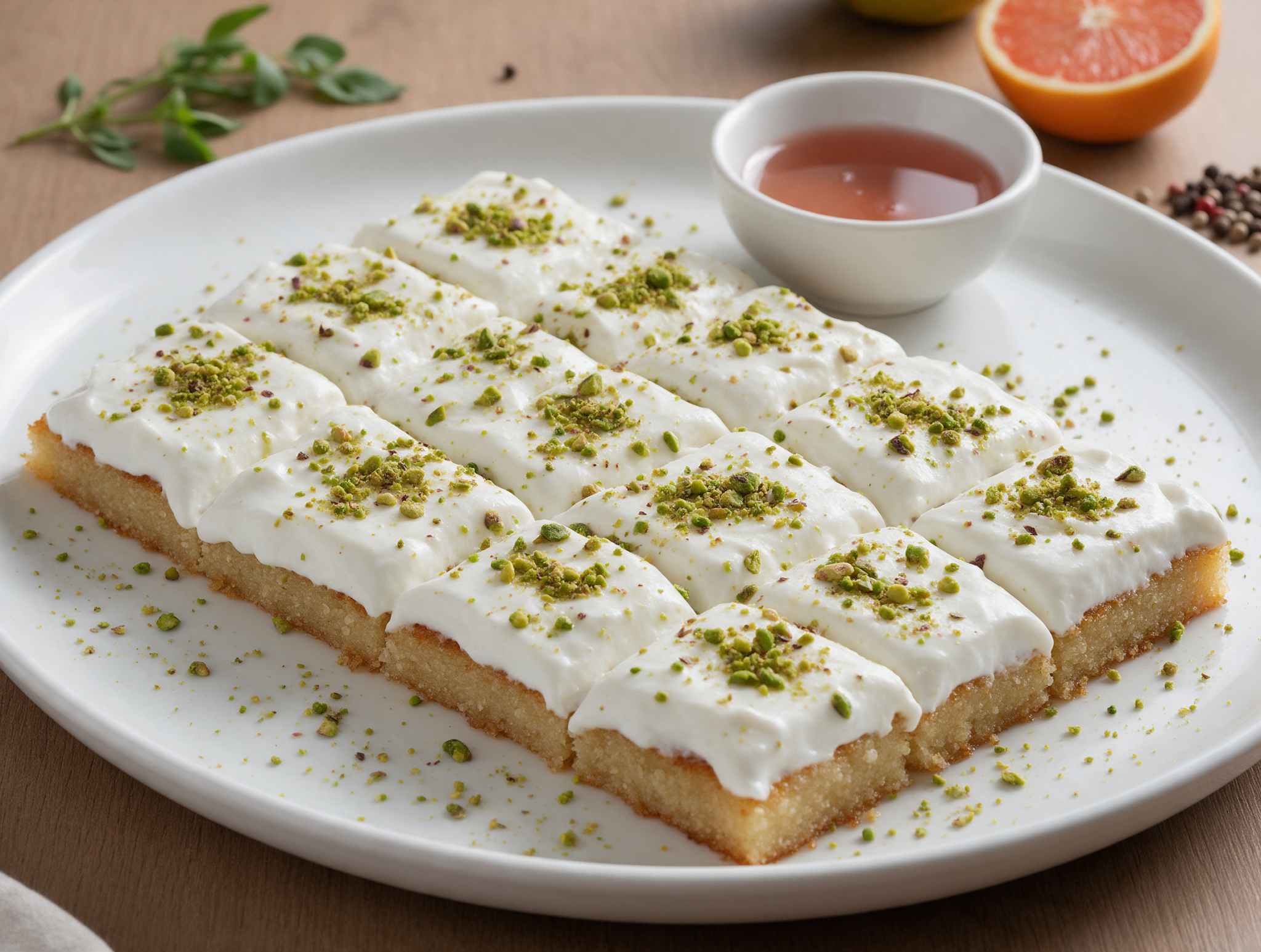
Mafroukeh: Lebanese Semolina Dessert with Ashta Cream
Ingredients
Method
- Combine the sugar, water, and lemon juice in a 1-quart saucepan over medium heat. Simmer for 8 minutes, stirring occasionally, until slightly syrupy and it coats the back of a spoon.
- Remove from heat and stir in the rosewater and orange blossom water. Set aside to cool while you make the ashta.
- Whisk the milk, heavy cream, cornstarch, and 2 tbsp sugar together in a 2-quart saucepan until no lumps remain.
- Set over medium heat and cook, whisking constantly, for 8 to 10 minutes until the mixture thickens to a pudding-like consistency and coats the back of a spoon. Remove from heat and stir in the rosewater.
- Pour into the 8x8-inch dish. Press plastic wrap directly onto the surface to stop a skin forming, then chill for at least 90 minutes until firm enough to spread.
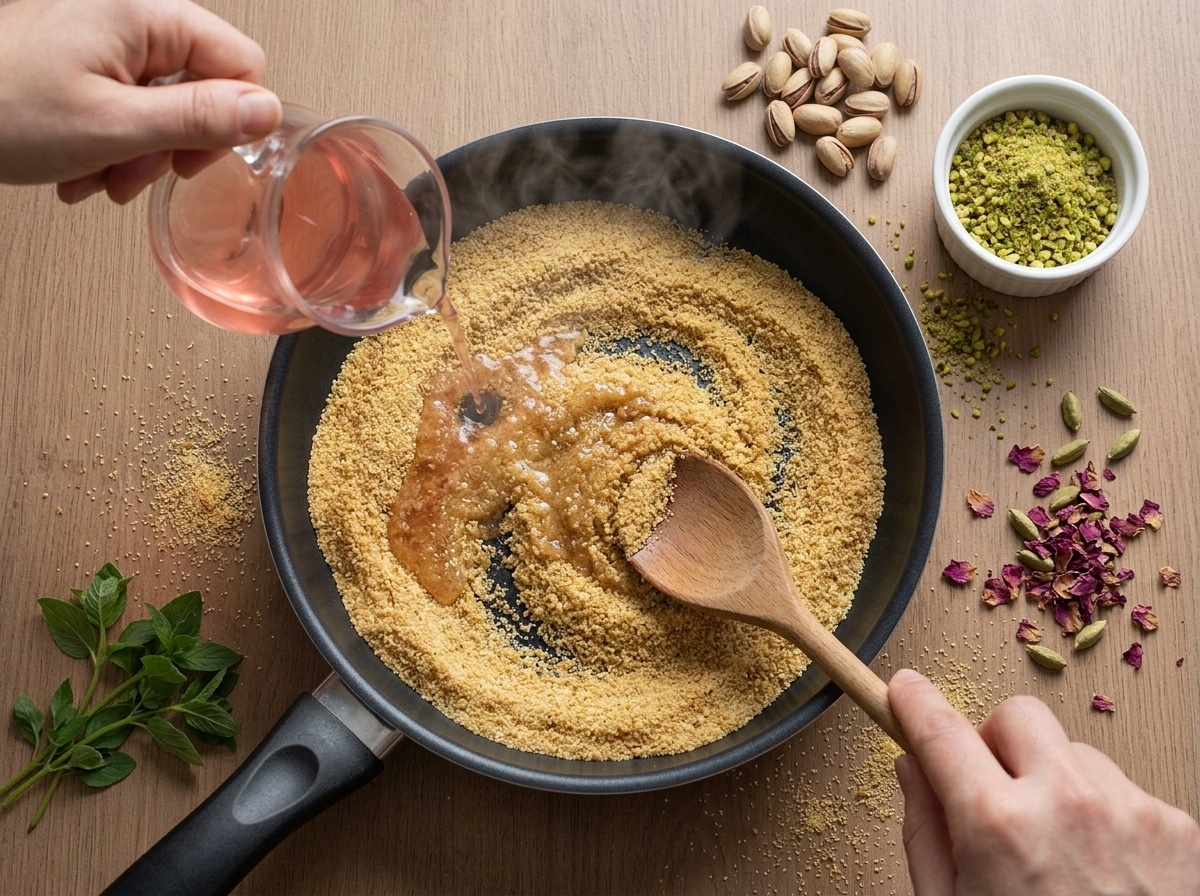
- Melt the butter in the 10-inch skillet over medium heat. Add the semolina and toast, stirring constantly, for 10 to 12 minutes until it turns golden and smells nutty. This is the step you can't walk away from, since semolina goes from golden to scorched in under a minute if the heat runs too high.
- Reduce heat to low and pour in the cooled syrup in a slow stream, stirring constantly. The mixture will bubble and steam. Keep stirring for 3 to 5 minutes until the syrup is fully absorbed and the mixture pulls away from the sides of the pan in a thick, dough-like mass.
- Transfer the semolina mixture to a serving platter and press into an even layer with the back of a spoon or an offset spatula. Let cool at room temperature for 30 minutes.
- Once the semolina base is cool and the ashta is set, spread the chilled ashta evenly over the top.
- Scatter the crushed pistachios over the cream and drizzle with the reserved syrup.
- Slice into squares and serve at room temperature or chilled.
Notes
- Toast semolina over medium heat, not high, to avoid scorching.
- Chill ashta at least 90 minutes before spreading.
- Store base and cream separately if making ahead.
- Crush pistachios coarsely for texture, not a fine powder.
Tips for Success
- Toast the semolina slowly over medium heat so it colors evenly instead of scorching in the last minute.
- Cool the syrup before adding it to the toasted semolina, or the mixture can seize and clump.
- Chill the ashta at least 90 minutes so it’s firm enough to spread without sliding off the base.
- Crush pistachios by hand for uneven texture instead of a fine, powdery topping.
- Assemble mafroukeh no more than a few hours before serving so the base stays firm under the cream.
Variations
- Swap half the pistachios for crushed walnuts or almonds for a different crunch and flavor.
- Add a thin layer of date syrup between the semolina and ashta for extra sweetness and color.
- Use tahini instead of half the butter in the semolina base for a nuttier, slightly bitter edge.
Storage and Reheating
Mafroukeh keeps in the fridge for 2 to 3 days once assembled, covered tightly so the ashta doesn’t pick up other smells.
It’s not a reheat situation. The base is meant to be served room temperature or cold, and warming it turns the ashta runny and the semolina greasy.
For best results, store the semolina base and the ashta separately for up to 2 days, then assemble within an hour of serving so the base stays firm.
Serving Suggestions
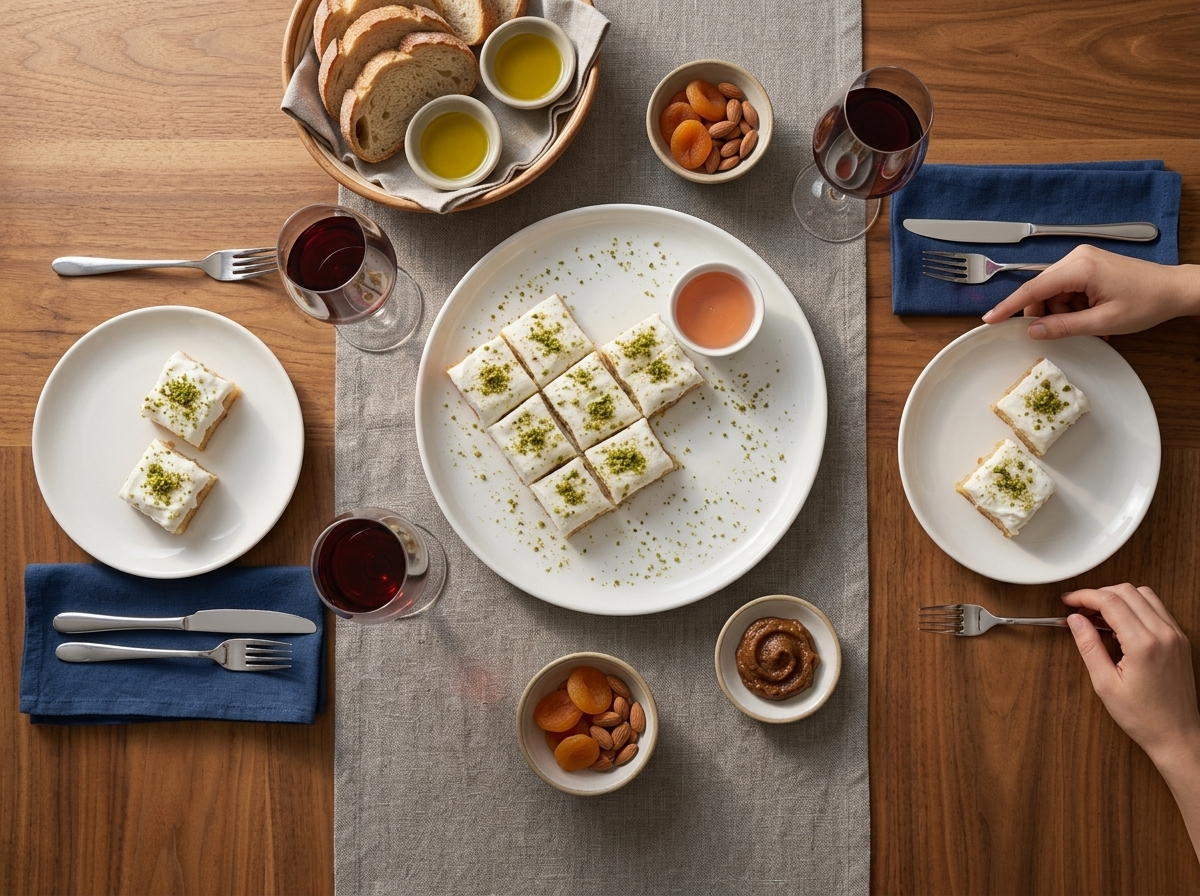
Mafroukeh is rich, so serve it in small squares with strong coffee or mint tea alongside to cut through the sweetness.
Add a plate of fresh fruit like orange slices or pomegranate seeds next to it for something bright.
For a bigger spread, set it out with baklava or knafeh so guests can take a small piece of each.
FAQ
How do I know when the semolina base is toasted enough for mafroukeh?
It should turn a light golden color and smell nutty, not raw or starchy, after about 10 to 12 minutes over medium heat. Stir constantly near the end since it can go from golden to scorched in under a minute. If it still smells like raw flour, keep toasting.
Can I use mascarpone instead of making ashta from scratch?
Yes, mixing mascarpone with a little heavy cream and a splash of rosewater makes a quick stand-in for homemade ashta. It won’t have the same light, milky flavor as the real thing, but it sets up firm enough to spread. Use about 300 g mascarpone loosened with 2 to 3 tbsp cream.
Can I make mafroukeh a day ahead of a party?
Yes, that’s actually the easiest way to serve it. Make the semolina base and the ashta separately, store them covered in the fridge for up to 2 days, then assemble and garnish within an hour of serving so the base stays firm under the cream.
What goes well with mafroukeh besides pistachios?
Strong Arabic coffee or mint tea works well since mafroukeh is sweet and rich. Fresh fruit like orange slices or pomegranate seeds adds a bright contrast on the side. A small drizzle of extra rosewater syrup over each slice also helps at serving time.
Is mafroukeh gluten free?
No, the base is made from semolina, which is milled from wheat, so this dessert isn’t gluten free as written. There isn’t a substitute that gives the same texture, though a fine gluten-free flour blend toasted the same way could work as an experiment.
What’s the difference between mafroukeh and knafeh?
Mafroukeh is a semolina base topped with cool ashta cream, while knafeh is a baked dessert made with shredded phyllo or semolina dough layered around cheese, then soaked in hot syrup after baking. Mafroukeh is served cold or room temperature, knafeh is served warm.
You might also like
