
Jump to Recipe
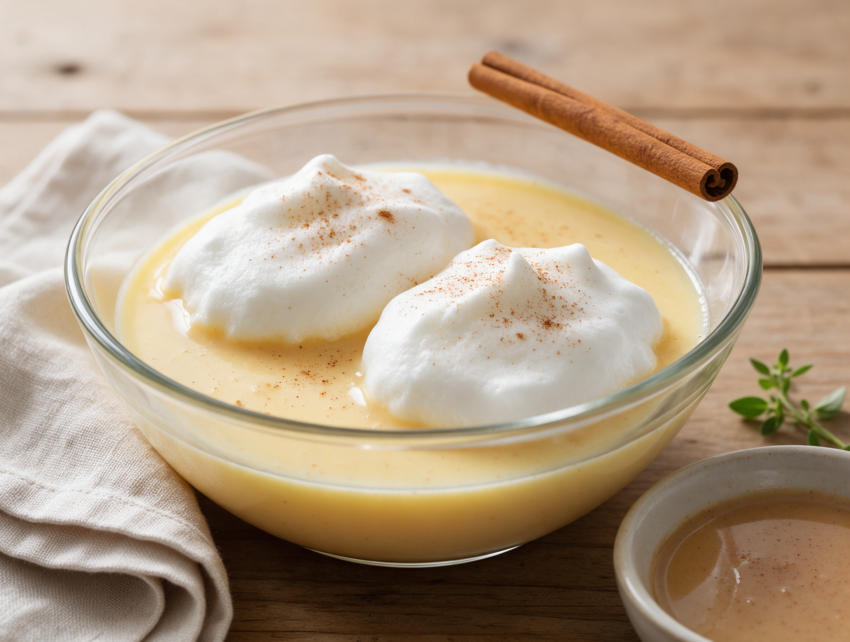
There’s something magical about a dessert that’s mostly air and milk. Leche nevada is Chile’s version of floating islands, soft poached egg white meringues resting in a cool custard.
I first tried it after a long Sunday lunch in Santiago, served in a small glass cup with cinnamon dusted heavy on top. It wasn’t heavy. It wasn’t overly sweet either.
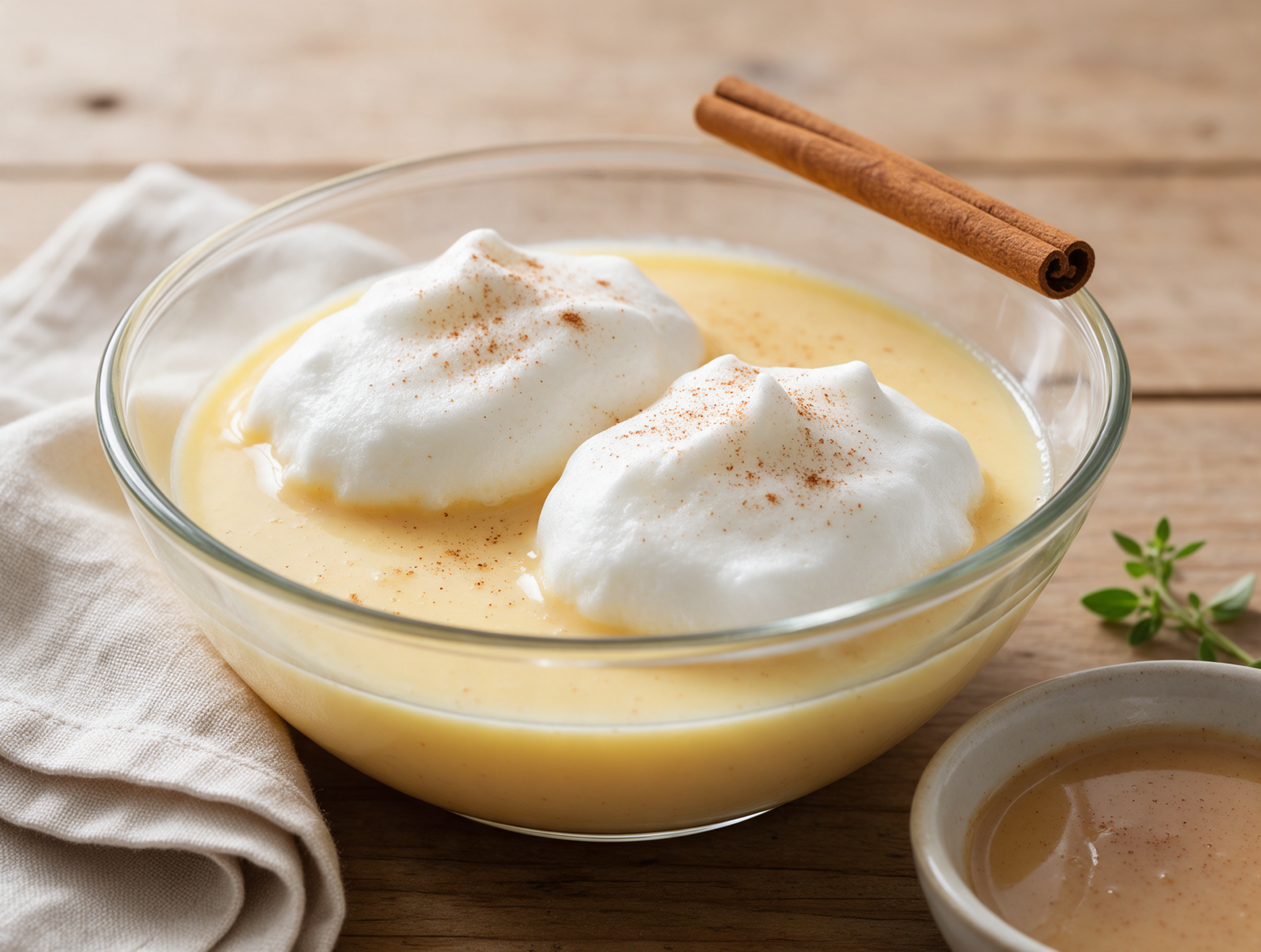
The name means “snowy milk,” and that’s exactly what lands in the bowl. Pale clouds of meringue against a soft yellow custard.
This Chilean dessert comes together in one pot. You poach the egg whites gently in cinnamon-and-lemon milk, then use that same milk to build the custard with the yolks. Chill it, float the meringue back on top, and serve cold.
Why You’ll Love This Recipe
- Light dessert with no cream, butter, or flour needed
- Make-ahead friendly, chills for hours before you serve it
- Just six ingredients, most already sitting in your fridge
- Naturally gluten free and easy to portion for a crowd
Ingredient Notes
- whole milk: Whole milk gives the custard its body. Low-fat works but the result turns thinner and less rich.
- egg whites: Use room-temperature whites, they whip taller and hold their shape better once dropped into the hot milk.
- egg yolks: Save every yolk, they’re what turns plain milk into a real custard.
- granulated sugar: Split between the meringue and custard so neither ends up cloyingly sweet on its own.
- cornstarch: A small amount keeps the custard from splitting if the heat runs a bit high.
- cinnamon stick: Steep it whole in the milk for gentle warmth. Ground cinnamon here would cloud the liquid.
- lemon peel: Use just the peel, no white pith, or the custard turns bitter.
- vanilla extract: Stir it in off the heat so the flavor stays bright instead of cooking off.
- ground cinnamon: Dust it on right before serving so it sits on top instead of sinking into the custard.
Leche Nevada: A Classic Chilean Snow Egg Dessert
Ingredients
Method
- Pour the milk into a 3-quart / 2.8 L saucepan with the cinnamon stick and lemon peel strips. Heat over medium until steaming but not boiling, about 5 minutes, then remove from heat and let it steep 10 minutes.
- Meanwhile, whip the egg whites with the pinch of salt using a stand mixer to soft peaks, about 2 minutes. Add 100 g sugar gradually, a tablespoon at a time, and keep whipping to stiff, glossy peaks, 3 to 4 more minutes.
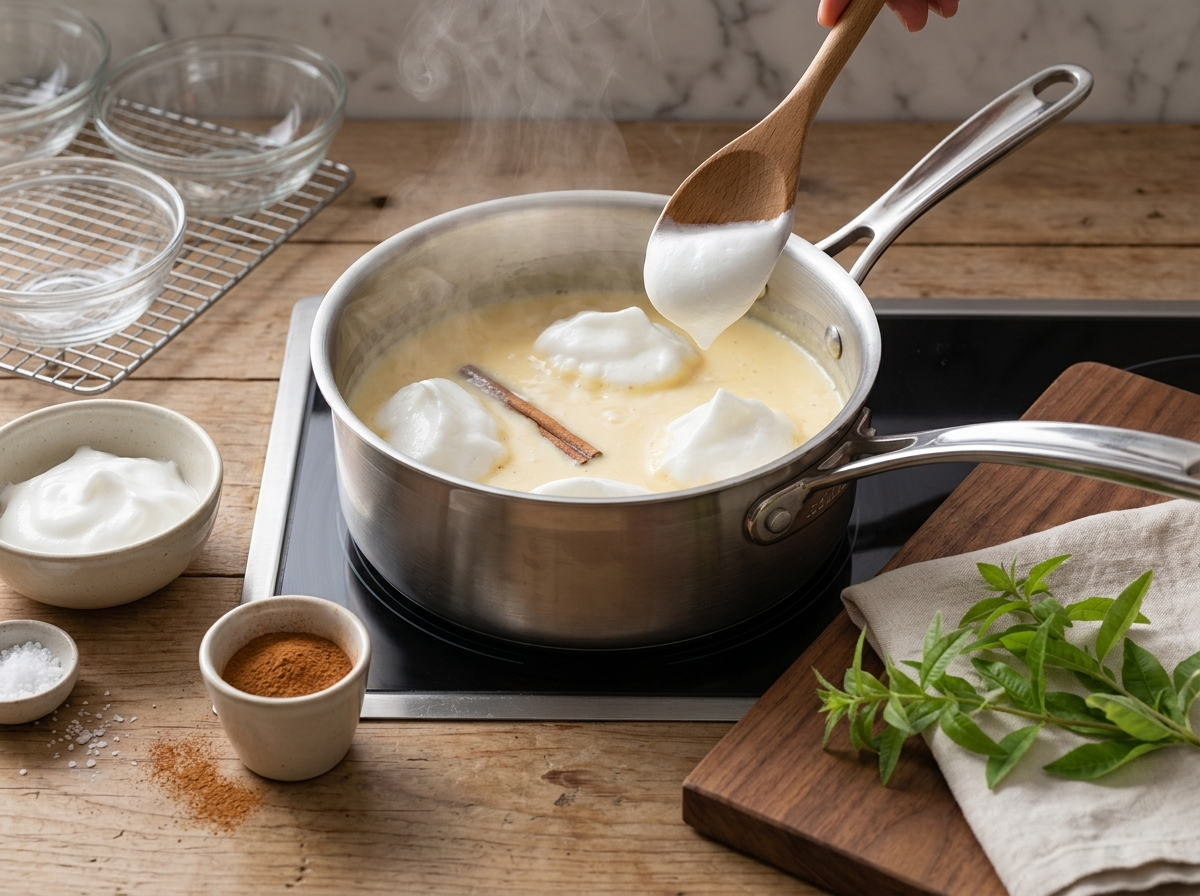
- Return the milk to a bare simmer, just small bubbles at the edges. Using two spoons, scoop the meringue into egg-shaped dollops, about 8 total, and poach in batches of 3 to 4 so they don't touch, 2 to 3 minutes per side, until puffed and springy when pressed.
- Lift the meringues out with a slotted spoon and drain on a clean towel. Strain the poaching milk through a fine-mesh sieve into a bowl and discard the cinnamon stick and lemon peel. You should have about 900 ml milk left.
- Whisk the egg yolks, the remaining 100 g sugar, and the cornstarch together until pale and smooth. Slowly pour in about 1 cup of the warm strained milk, whisking constantly, to temper the yolks.
- Pour the tempered yolk mixture back into the saucepan with the rest of the milk. Cook over low to medium heat, stirring constantly, for 5 to 7 minutes, until the custard coats the back of a spoon and reaches 170 F / 77 C. Do not let it boil or the yolks will curdle.
- Remove from heat and stir in the vanilla extract. Pass the custard through the sieve again if any lumps formed, then cool to room temperature, cover, and chill at least 2 hours.
- Divide the chilled custard among 6 small bowls or glasses. Float 1 to 2 meringues on top of each and dust generously with ground cinnamon before serving.
Notes
- Use room-temperature egg whites, they whip taller and faster.
- Do not let the milk boil while poaching, it turns the meringue rubbery.
- Cook the custard to 170 F / 77 C and no hotter, or the yolks curdle.
- Chill the custard fully before floating the meringue, warm custard melts it.
Tips for Success
- Poach the meringue in batches of 3 to 4 spoonfuls so they have room to puff without touching.
- Keep the milk at a gentle simmer, not a boil, or the meringues turn rubbery and shrink.
- Temper the egg yolks with warm milk slowly, or you’ll end up with sweet scrambled eggs.
- Strain the custard through a fine-mesh sieve if it looks even slightly lumpy after cooking.
- Chill the custard for at least 2 hours before adding the meringue, it thickens more as it cools.
Variations
- Swap the lemon zest for orange zest for a warmer citrus note in the custard base.
- Add a splash of Pisco or dark rum to the cooled custard for a version meant for adults.
- Top with toasted slivered almonds or a drizzle of dulce de leche instead of plain cinnamon.
Storage and Reheating
Leche nevada keeps in the fridge for 2 to 3 days, covered, though the meringue slowly releases a little liquid as it sits.
Store the custard and meringue separately if you’re making this more than a few hours ahead, then float the meringue on top right before serving.
This dessert is meant to be eaten cold, so there’s no reheating step here. Skip the microwave, it deflates the meringue and can split the custard.
Serving Suggestions
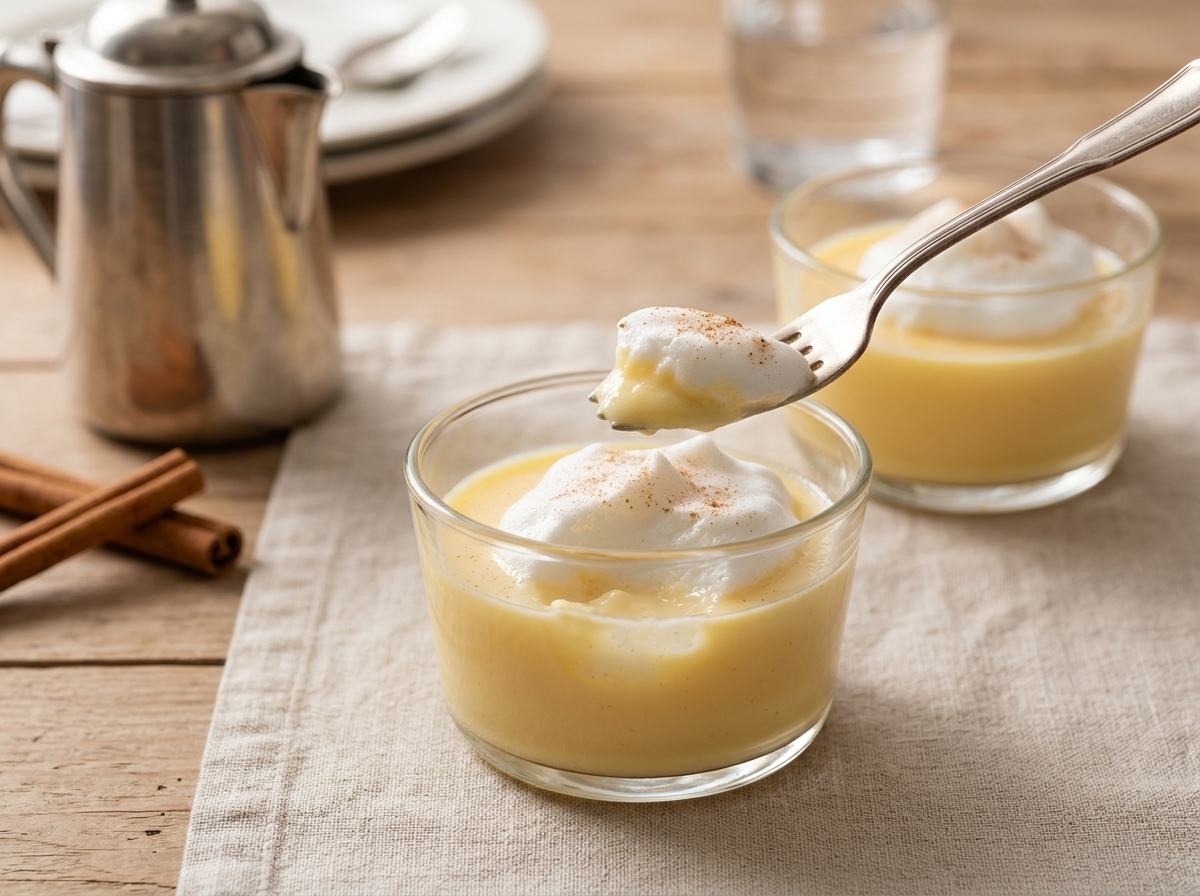
Serve leche nevada in small glass bowls or teacups so the pale layers show through.
A heavy dusting of ground cinnamon on top is traditional, but a few strands of lemon zest or toasted almonds work too.
It’s a good match after a heavier Chilean meal like pastel de choclo or empanadas, since it’s light and not too sweet.
FAQ
Why did my leche nevada meringue shrink or turn rubbery after poaching?
This usually happens when the milk boils instead of simmers. Poach the meringue in milk that’s barely bubbling around the edges, not rolling, and work in batches of 3 to 4 so they aren’t crowded together. Keep it at 2 to 3 minutes per side and they’ll stay soft.
Can I use orange zest instead of lemon zest in leche nevada custard?
Yes, orange zest works well and gives a slightly sweeter, warmer citrus note than lemon. Use the same amount, a few strips steeped with the milk and cinnamon stick, then strain it out before building the custard.
Can I make leche nevada a day ahead of serving it?
Yes, store the custard and meringue separately, both covered in the fridge, for up to 2 days. Float the meringue on top of the chilled custard only right before serving, since it releases liquid the longer it sits.
What goes well with leche nevada after a Chilean meal?
Leche nevada works well after something heavier, like pastel de choclo, cazuela, or empanadas, since it’s light and not overly sweet. A few toasted almonds or fresh berries alongside add a bit of crunch without competing with the custard.
Is leche nevada gluten free?
Yes, leche nevada is naturally gluten free. It’s built from milk, eggs, sugar, cornstarch, and cinnamon, with no wheat flour anywhere in the recipe, so it works for most gluten-free guests without any swaps.
What’s the difference between leche nevada and French floating islands (oeufs a la neige)?
Both are poached meringue over custard, but leche nevada is flavored with cinnamon and lemon peel, giving it a warmer, spiced profile. The French version usually stays plain vanilla and is often finished with caramel instead of ground cinnamon.
More from the kitchen
- our Classic Zuppa Inglese with Vanilla-Chocolate Custard
- Classic Canadian Flapper Pie with Toasted Meringue recipe
