
Jump to Recipe
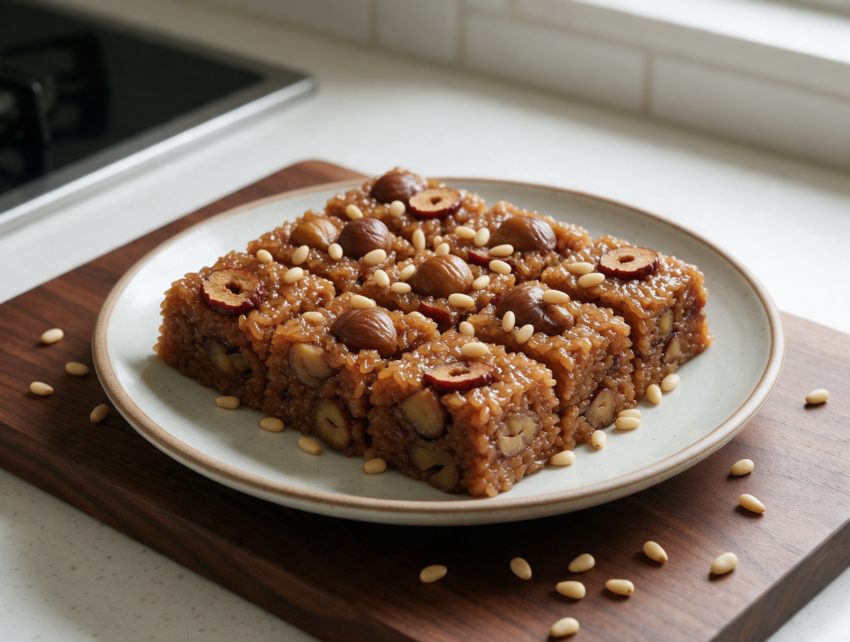
There’s something quietly celebratory about yakbap. This Korean sweet rice cake shows up at Lunar New Year tables, dark and glossy, studded with chestnuts and dried jujubes, much like the syrup-filled Korean hotteok pancakes.
I first tried it at a friend’s family gathering in Seoul, still warm from the steamer, sticky enough to eat straight off a plate with your fingers.
Steamed glutinous rice gets folded into a soy sauce and brown sugar caramel, then steamed again until every grain turns deep mahogany brown and glossy.
The ingredient list looks long. The method isn’t hard, just patient. Soak the rice properly and the rest comes together in one bowl.
Why You’ll Love This Recipe
- Deep caramel color comes from pantry staples, no food coloring needed
- Keeps well for days, so it’s an easy make-ahead snack
- Naturally dairy-free and easy to make egg-free
- Ties into a real Korean holiday tradition worth knowing about
Ingredient Notes
- Glutinous rice: Also labeled sweet rice or sticky rice at Asian grocery stores. Regular long-grain rice will not turn chewy the same way, so don’t swap it in.
- Dried jujubes: Korean red dates, sold dried in most Asian markets. Regular dried dates work as a substitute, just chop them smaller since they’re softer.
- Chestnuts: Fresh peeled chestnuts give the best texture, but vacuum-packed roasted chestnuts save time and work fine here.
- Pine nuts: Traditional garnish with a soft, buttery bite. Slivered almonds or sunflower seeds are a fine substitute if pine nuts are pricey.
- Dark brown sugar: Gives the rice its deep color along with the soy sauce. Light brown sugar works but the color will be a shade paler.
- Soy sauce: Balances the sweetness with salt and umami. Use gluten-free tamari if you need this dish gluten-free.
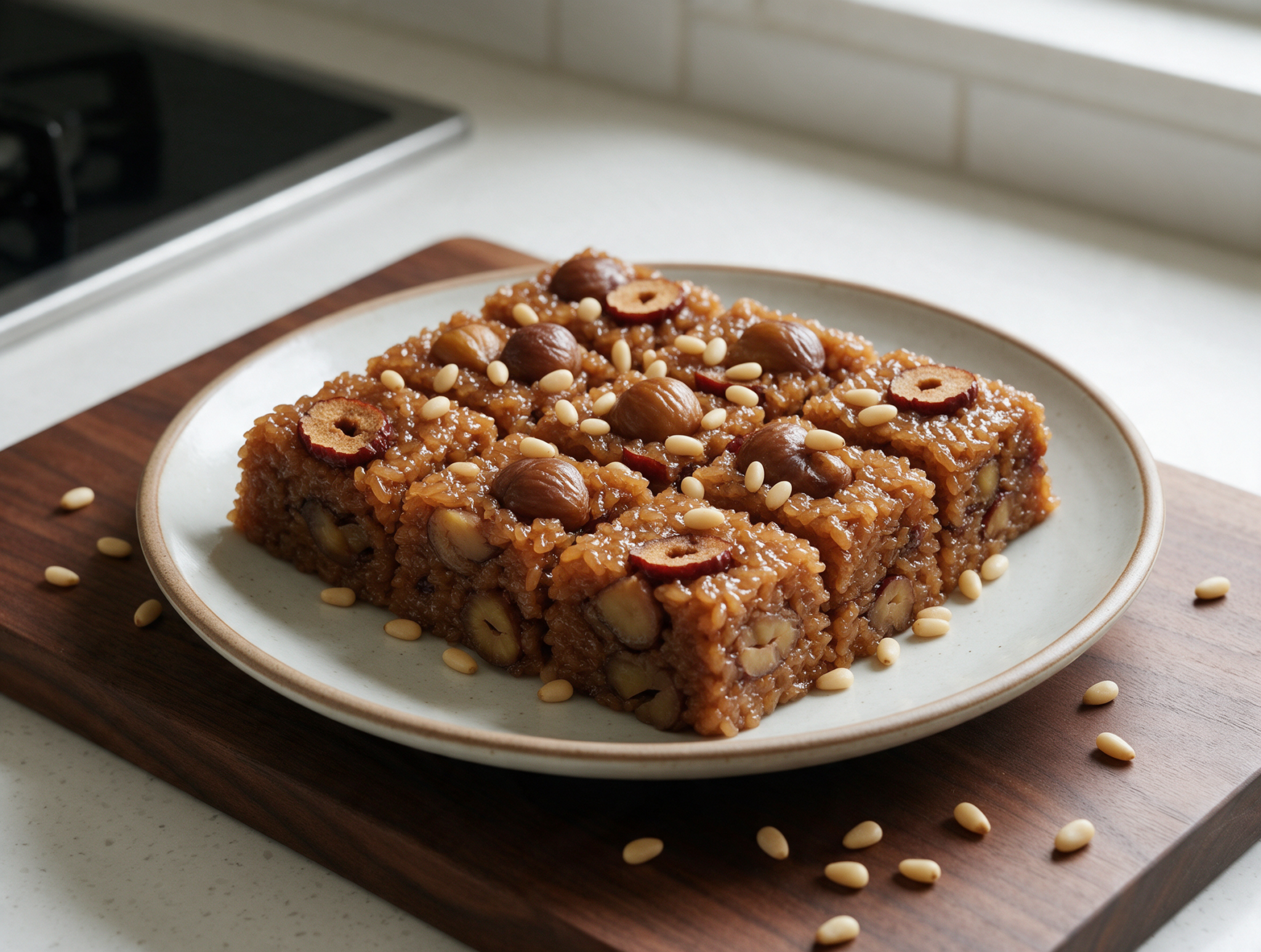
Steamed Yakbap: Korean Sweet Rice Cake with Chestnuts
Ingredients
Method
- Rinse the glutinous rice in a fine-mesh sieve until the water runs mostly clear. Soak in cold water for 4 hours or overnight, then drain well.
- Soak the dried jujubes in warm water for 10 minutes to soften, then pit and halve them. Peel and halve the chestnuts if using fresh.
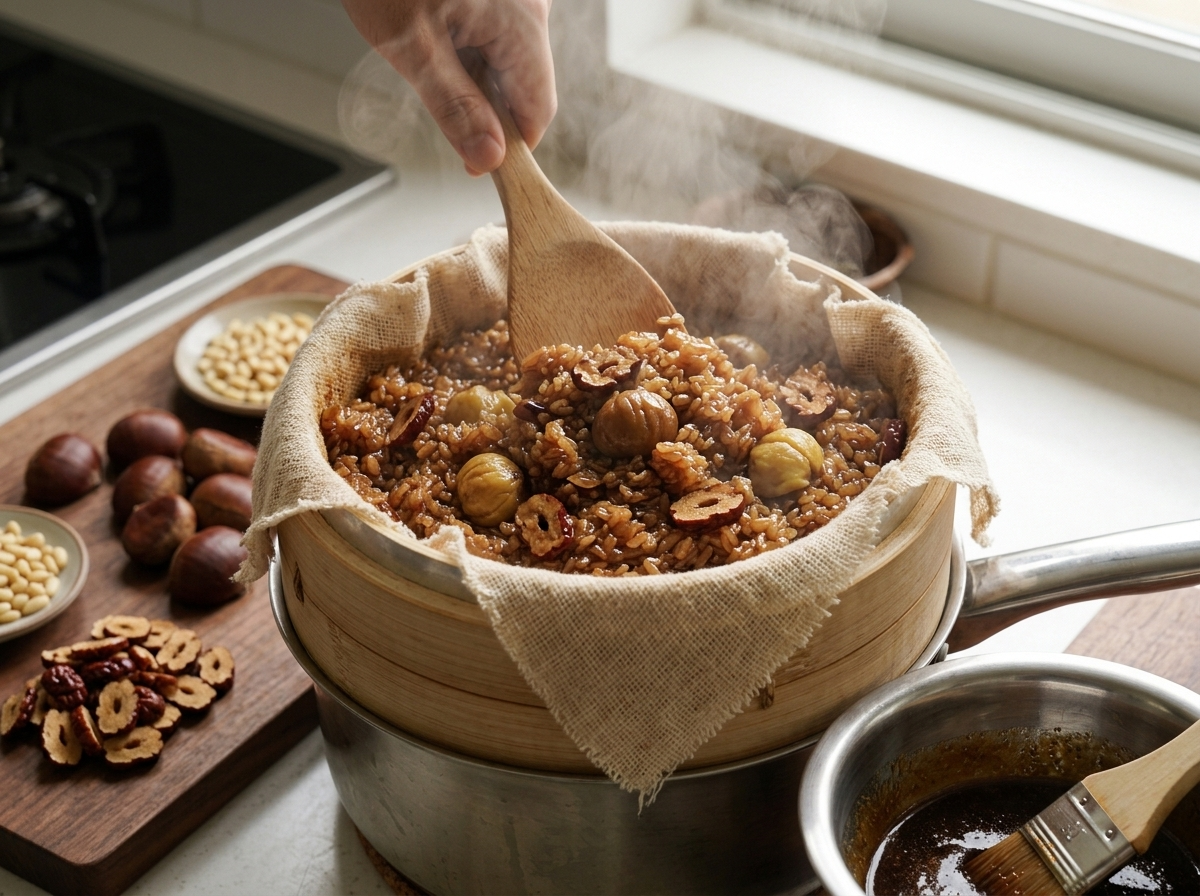
- Line a 26 cm / 10-inch steamer basket with damp cheesecloth and spread the drained rice in an even layer. Steam over boiling water for 20 minutes until the grains look translucent but still slightly firm at the core.
- While the rice steams, whisk together the soy sauce, brown sugar, honey, 1 tablespoon of the sesame oil, cinnamon and water in a bowl until the sugar mostly dissolves.
- Transfer the steamed rice to a large mixing bowl. Pour the caramel sauce over it, then add the chestnuts and jujubes. Fold gently until every grain is coated and the color is even.
- Return the mixture to the steamer, re-lined with fresh cheesecloth. Cover and steam for 45 to 50 minutes, stirring once halfway through, until the rice turns deep mahogany brown and looks glossy and sticky.
- Check doneness by tasting a grain. It should be fully chewy with no white starchy spots left. If it still looks pale or feels chalky, steam another 10 minutes and check again.
- Remove from heat and fold in the pine nuts along with the remaining 1 tablespoon of sesame oil.
- Line a 23 cm / 9-inch square baking dish with plastic wrap. Press the warm rice into the dish firmly and smooth the top with the back of a spoon.
- Let cool to room temperature, then lift out using the plastic wrap and cut into squares to serve.
Notes
- Soak rice at least 4 hours, overnight is better for even hydration
- Fold sauce in gently so grains don't turn mushy or break apart
- Stir halfway through the second steam for even caramel color
- Press rice into the dish while still warm so squares hold their shape
Tips for Success
- Soak the rice for a full 4 hours minimum, or the center stays chalky even after the second steam.
- Line the steamer with damp cheesecloth so grains don’t fall through or stick to the basket.
- Stir the rice halfway through the second steam so the caramel coats every grain evenly.
- Taste one grain around the 45-minute mark. It should be fully chewy with no white starchy spots left.
- Press the warm rice firmly into the dish so the squares hold together once cooled and cut.
Variations
- Swap half the brown sugar for maple syrup for a slightly less sweet, more caramel-forward flavor.
- Add a tablespoon of toasted sesame seeds along with the pine nuts for extra crunch and aroma.
- Steam in individual small bowls instead of a square dish for single-serving portions at a holiday table.
Storage and Reheating
Yakbap keeps in an airtight container in the fridge for 4 to 5 days. The texture stays chewy since it’s already a dense, sticky rice cake.
To reheat, microwave a piece covered with a damp paper towel for 30 to 45 seconds, or steam it for 5 to 7 minutes until warmed through and glossy again.
For longer storage, wrap individual squares tightly and freeze for up to 1 month. Thaw at room temperature for an hour, then reheat as above.
Serving Suggestions
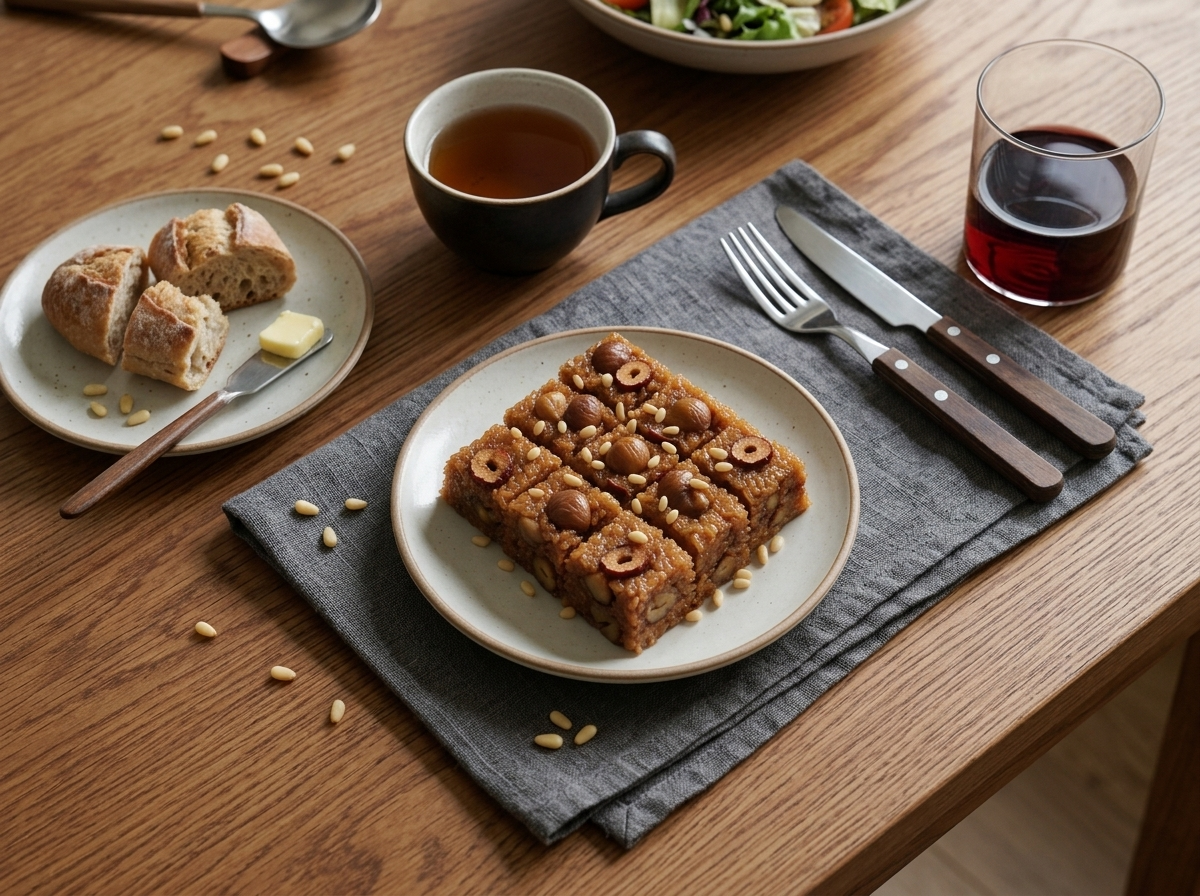
Cut yakbap into small squares and serve at room temperature or slightly warm, the way it shows up on a Korean Lunar New Year table.
A cup of roasted barley tea or citron tea cuts through the sweetness nicely. Plain green tea works too if that’s what you have on hand.
It also travels well wrapped in plastic wrap, so it makes a good lunchbox or potluck sweet, similar to skewered three-color hanami dango.
FAQ
Why is my yakbap dry and crumbly instead of sticky?
Dry, crumbly yakbap almost always means the rice wasn’t soaked long enough before the first steam. Glutinous rice needs at least 4 hours in cold water to fully hydrate. If it’s still firm after the second steam, add a splash of water and steam another 10 minutes.
Can I use regular dried dates instead of Korean jujubes in yakbap?
Yes, regular dried dates work as a substitute for Korean jujubes in yakbap. They’re softer and sweeter, so chop them a bit smaller than you would jujubes and reduce the added sugar slightly to avoid an overly sweet result.
How do I store leftover yakbap and can I freeze it?
Leftover yakbap keeps in the fridge for 4 to 5 days in an airtight container. It also freezes well for up to 1 month if you wrap individual squares tightly. Thaw at room temperature, then warm briefly in the microwave or steamer before serving.
What drinks pair well with yakbap’s sweetness?
Roasted barley tea, known as boricha, is the classic pairing for yakbap because its toasty, unsweetened flavor balances the caramel coating. Citron tea or plain green tea also works if barley tea isn’t available.
Is yakbap gluten free?
Yakbap is not gluten free as written because regular soy sauce contains wheat. Swap in gluten-free tamari in the same amount and the rest of the ingredients, including the glutinous rice, chestnuts and jujubes, are naturally gluten free.
What’s the difference between yakbap and yaksik?
Yakbap and yaksik are the same dish, just different names for it. Yaksik is more common in modern Korean and translates to ‘medicinal food,’ while yakbap uses the word for cooked rice. Both refer to this steamed, chestnut-studded sweet rice cake.
More from the kitchen
