
Jump to Recipe
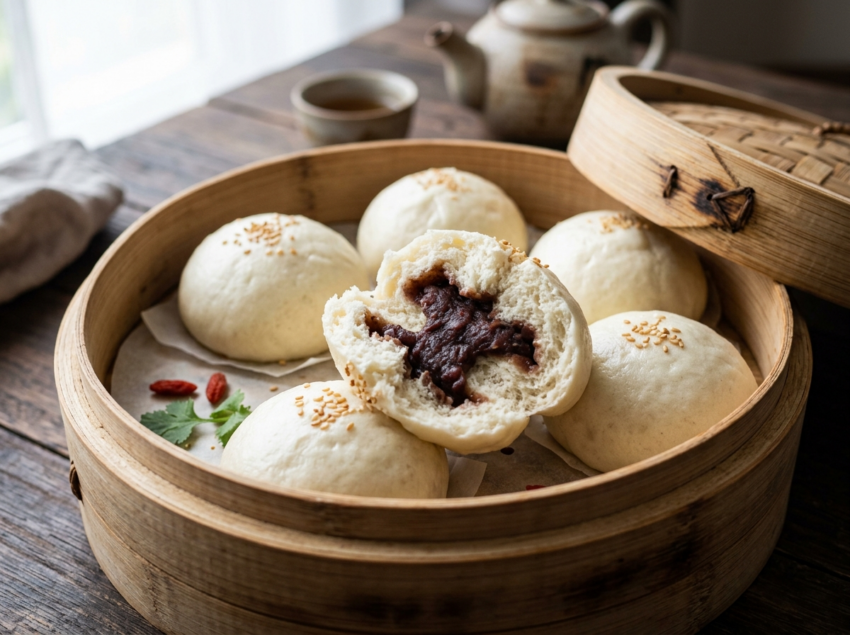
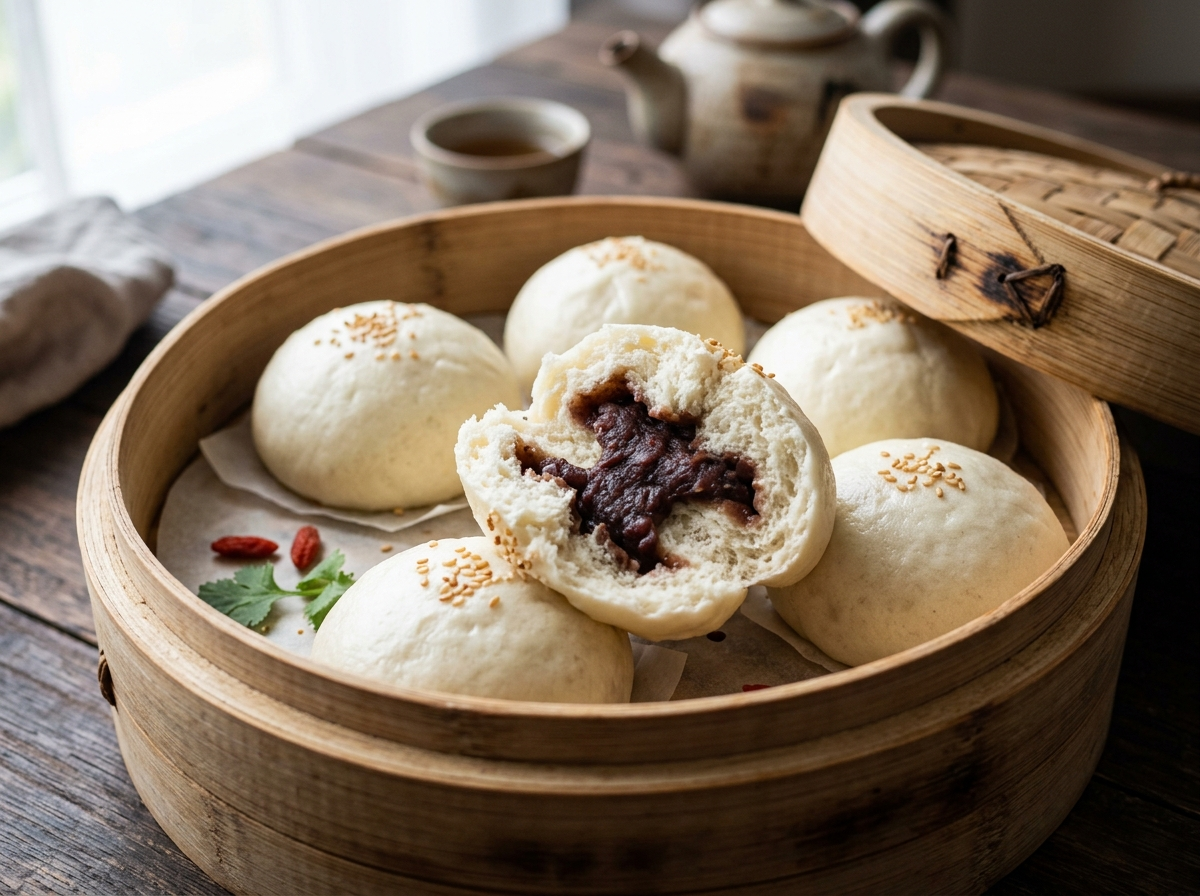
There’s something about a freshly steamed bun that feels like comfort without effort. The outside is white and slightly shiny. The inside is a thick, sweet red bean paste that barely holds its shape when you pull the bun apart.
Dou sha bao are sold from bamboo steamers at dim sum carts and roadside stalls all over China. They’re one of the first things I reach for. Soft dough, earthy-sweet filling, no fuss.
This version uses store-bought red bean paste to keep things practical, but I’ll show you how to adjust the dough so it steams up soft instead of dense. It’s a yeast dough, so there’s rising time, but the hands-on work is short.
Once you get the folding and steaming right, these come together fast. A batch of twelve buns keeps well and reheats in minutes.
Why You’ll Love This Recipe
- Soft, pillowy dough that doesn’t turn dense after steaming
- Smooth red bean filling with just the right sweetness
- Freezer-friendly batch cooking with quick reheat from frozen
- No special equipment beyond a basic steamer basket
Ingredient Notes
- all-purpose flour: Standard all-purpose flour gives the right texture. You can swap half for low-protein cake flour for a slightly softer crumb, but don’t use bread flour – it makes the buns chewy.
- instant yeast: Instant yeast goes straight into the flour with no proofing. If you only have active dry yeast, dissolve it in the warm milk first and let it sit 5 minutes before adding.
- baking powder: A small amount of baking powder added to the dough helps the buns puff and turn white during steaming. Don’t skip it – it makes a visible difference.
- warm milk: Milk gives a slightly richer, softer dough than water. Use whole milk for best results. Oat milk works as a dairy-free swap with minimal difference in texture.
- vegetable oil: A neutral oil keeps the dough pliable and the crumb tender. Any flavorless oil works – sunflower, canola, or light olive oil.
- sweet red bean paste (dou sha): Store-bought smooth red bean paste saves time and is consistently good. I use Koshi-an (smooth) over Tsubu-an (chunky) for these buns. Check Asian grocery stores or order online.
Red Bean Steamed Buns (Sweet Dou Sha Bao)
Ingredients
Method
- Combine the flour, instant yeast, and sugar in a large mixing bowl and stir briefly to mix.
- Pour in the warm milk and vegetable oil. Mix with a wooden spoon until a shaggy dough forms, then turn out onto a lightly floured surface.
- Knead by hand for 8 to 10 minutes until the dough is smooth, soft, and no longer sticky. It should not tear when you stretch a small piece thin.
- Shape into a ball, return to the bowl, cover with a damp cloth, and leave to rise at room temperature for 60 minutes until roughly doubled in size.
- Once the dough has doubled, punch it down and flatten it on the work surface. Sprinkle the baking powder over the surface.
- Fold the dough over the baking powder and knead for 3 to 4 minutes until the powder is fully incorporated and the dough is smooth again.
- Divide the red bean paste into 12 equal portions of about 25 g each and roll each into a ball. If the paste is soft, refrigerate for 20 minutes to firm it up.
- Divide the dough into 12 equal pieces (about 40 g each). Roll each piece into a ball, then flatten and roll into a circle about 9 cm wide, keeping the center slightly thicker than the edges.
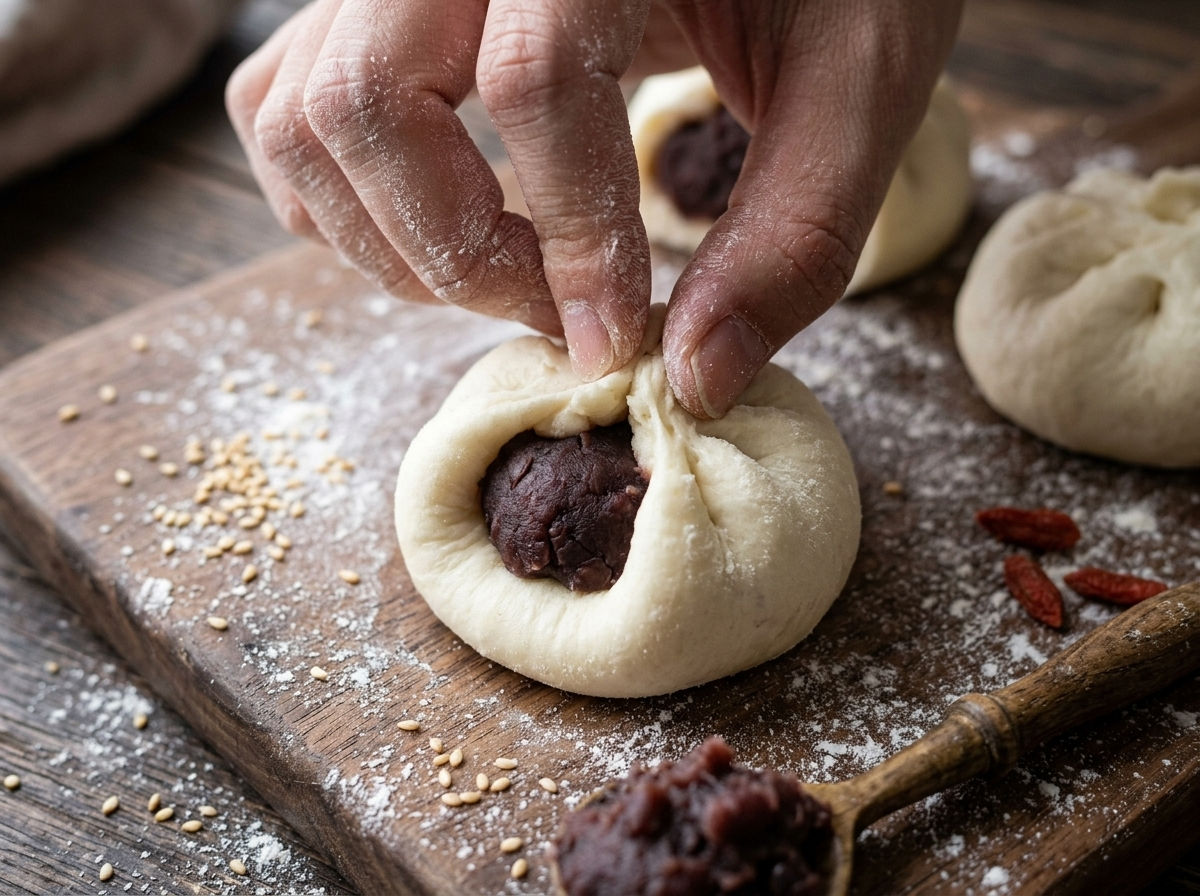
- Place one ball of red bean paste in the center of each wrapper. Gather the edges up and around the filling, pleating as you go, and pinch firmly to seal. Place seam-side down on a small square of parchment paper.
- Arrange the shaped buns in a steamer basket, spaced at least 3 cm apart to allow for expansion. Let them rest uncovered for 15 minutes.
- Fill the wok or saucepan with 5 cm of water and bring to a rolling boil over high heat. Set the steamer basket over the boiling water.
- Steam on high heat for 12 minutes. Do not lift the lid during this time.
- After 12 minutes, crack the lid slightly for 2 minutes to let steam escape gradually, then remove the lid fully. The buns should be white, puffed, and firm to a gentle touch.
- Lift the buns off the parchment and serve warm. Steam remaining batches in the same way.
Notes
Tips for Success
- Roll each dough wrapper thicker in the center than at the edges so the bottom doesn’t tear when folded.
- Chill the red bean paste for 20 minutes before portioning – cold paste is firmer and much easier to wrap.
- Let the shaped buns rest on parchment squares for 15 minutes before steaming so they puff slightly.
- Steam over high heat with the lid slightly cracked for the last 2 minutes to prevent condensation drips from marking the tops.
- Don’t lift the lid during the first 10 minutes of steaming – the sudden temperature drop causes the buns to deflate and wrinkle.
Variations
- Use black sesame paste instead of red bean for a nuttier, slightly bitter filling.
- Add 1 tsp matcha powder to the dough for pale green buns with a subtle earthy note.
- Swap red bean paste for lotus seed paste for a lighter, less earthy sweetness traditional in Cantonese dim sum.
Storage and Reheating
Store cooled buns in an airtight container at room temperature for up to 1 day, or refrigerate for up to 3 days. They firm up in the fridge but reheat well.
To reheat, steam for 5 to 6 minutes from refrigerated, or 8 to 10 minutes from frozen, until warmed through. A microwave with a damp paper towel draped over the bun works in a pinch – 45 to 60 seconds on medium.
To freeze, place cooled buns on a tray in a single layer for 1 hour, then transfer to a zip-lock bag. They keep for up to 2 months. Steam directly from frozen – no need to thaw.
Serving Suggestions
Serve the buns fresh from the steamer as part of a dim sum spread alongside har gow, siu mai, and turnip cake. They work as a sweet note at the end of the savory dishes.
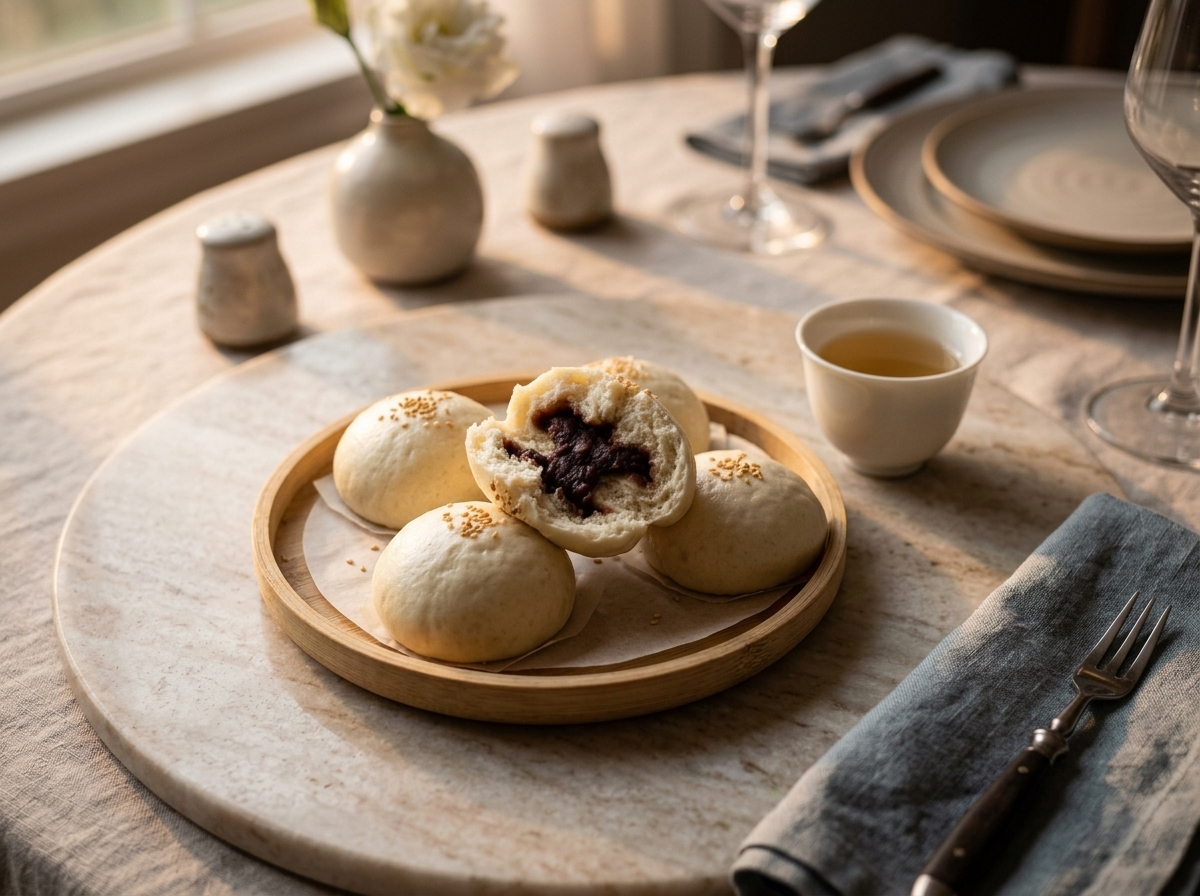
For a simpler setup, pair two or three buns with a pot of jasmine tea or pu-erh tea as an afternoon snack. The slight earthiness of the tea balances the sweet filling.
These also work as a lunchbox treat for kids. Pack them in a container with a small ice pack – they hold up well at room temperature for a few hours.
FAQ
Why are my steamed buns coming out wrinkled instead of smooth?
Wrinkling usually happens when the buns cool too fast inside the steamer. Keep the lid on for 2 to 3 minutes after turning off the heat before lifting it. A sudden rush of cold air contracts the dough and pulls the surface.
Can I use chunky red bean paste instead of smooth paste in these buns?
Yes, chunky (tsubu-an) paste works fine. It’s slightly harder to fold neatly because the texture is less uniform, so keep the filling ball small – around 25 g – to avoid tearing the dough.
Can I shape and refrigerate these red bean buns overnight before steaming?
Yes. Place shaped buns on parchment in the steamer tray, cover loosely with plastic wrap, and refrigerate overnight. Take them out 20 minutes before steaming to let them come back to room temperature.
What’s the difference between dou sha bao and nai huang bao?
Dou sha bao is filled with sweet red bean paste, while nai huang bao (custard bun) is filled with a rich egg yolk and milk custard. Both are steamed, but the custard filling is much richer and has a flowing texture when warm.
Are sweet red bean steamed buns vegan?
They can be. Swap the whole milk in the dough for oat milk or soy milk, and check your red bean paste label – most store-bought smooth red bean paste contains only beans, sugar, and oil, making it vegan. No eggs or butter are used in the dough.
How do I know when the dough has proofed enough for steamed buns?
The dough should roughly double in size and feel soft and slightly tacky, not springy. Press one finger 1 cm deep into the dough – if the indent slowly springs back halfway, it’s ready. If it springs back immediately, give it another 15 minutes.
You might also like
