

Jump to Recipe
There’s something about a small cake that gets eaten immediately. No slicing, no serving, just reach and go.
These mini lemon tea cakes are the kind of thing I make when I want something proper but not fussy. One bowl of batter, a mini muffin tin, and about 40 minutes start to finish.
The lemon flavor here is real, closer in spirit to a bright one-bowl lemon snack cake than anything artificially flavored. Zest goes into the batter, juice goes into the glaze. You get it in every bite, not just as an afterthought.
They’re good with afternoon tea, good on a party plate, and honestly good straight off the cooling rack.

Why You’ll Love This Recipe
- Ready in 40 minutes with one bowl of batter
- Real lemon flavor from both zest and fresh juice
- Glaze sets firm so they pack and travel well
- Makes 24 pieces, great for sharing or gifting
Ingredient Notes
- All-purpose flour: Standard plain flour works well here. Cake flour makes them slightly more tender if you have it, but it’s not necessary.
- Unsalted butter: Use room-temperature butter so it creams properly. Salted butter works too, just skip the added salt in the recipe.
- Fresh lemons: You need about 2 medium lemons for both the zest and juice. Bottled lemon juice won’t give you the same bright flavor, so fresh really matters here.
- Whole milk: Full-fat milk keeps the crumb moist. You can swap in buttermilk for a slightly tangier cake, which pairs well with the lemon.
- Powdered sugar: Used for the glaze. Sift it first to avoid lumps, and add lemon juice a teaspoon at a time until you hit a thick but pourable consistency.
- Eggs: Two large eggs at room temperature. Cold eggs can cause the batter to curdle slightly when added to creamed butter.
Mini Lemon Tea Cakes with Lemon Glaze
Ingredients
Method
- Heat the oven to 180 C / 355 F. Grease a 24-cup mini muffin tin with butter, then dust lightly with flour and tap out the excess.
- Zest and juice the lemons. Set aside the measured amounts for the batter and glaze separately.
- Whisk together the flour, baking powder, and salt in a medium bowl. Set aside.
- In a large bowl, beat the softened butter and sugar together on medium speed for 2 to 3 minutes until pale and fluffy.
- Add the eggs one at a time, beating well after each addition. Mix in the vanilla extract and lemon zest.
- Add the flour mixture in three additions, alternating with the milk and lemon juice, beginning and ending with flour. Mix until just combined - a few streaks are fine at this stage.
- Give the batter a final gentle fold with a spatula to make sure no dry flour remains at the bottom of the bowl.
- Spoon the batter into the prepared mini muffin cups, filling each about two-thirds full.
- Bake for 11 to 13 minutes, until the tops are lightly golden and a toothpick inserted in the center comes out clean.
- Let the cakes cool in the tin for 5 minutes, then transfer to a wire rack and cool completely, about 20 to 25 minutes.
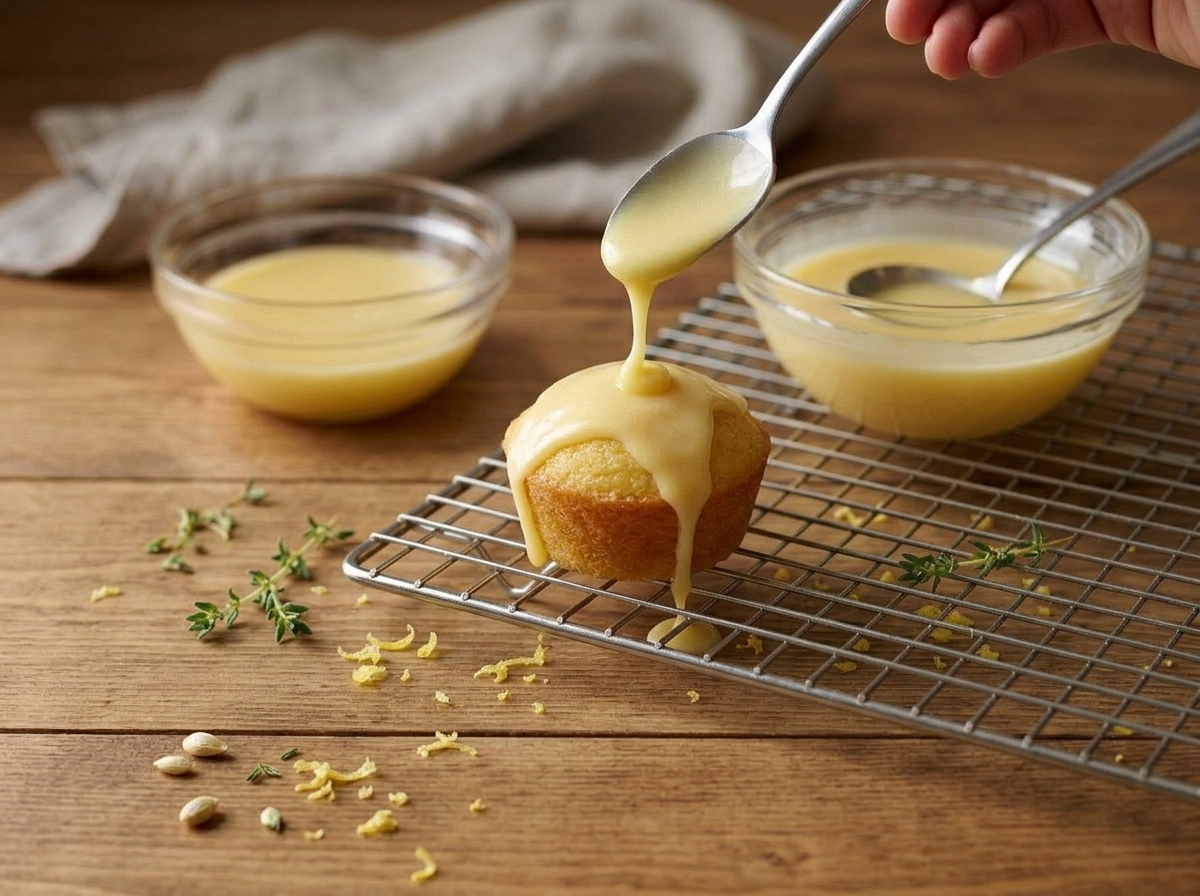
- Whisk together the sifted powdered sugar and lemon juice, starting with 2 tablespoons and adding more a teaspoon at a time until the glaze is thick but pourable.
- Spoon about half a teaspoon of glaze over each cooled cake and let it drip slightly down the sides.
- Allow the glaze to set for 10 to 15 minutes at room temperature before serving or packing.
Notes
Tips for Success
- Zest the lemons before juicing them – it’s nearly impossible to zest a juiced lemon.
- Don’t overfill the mini muffin cups – two-thirds full is enough or they puff over the edges.
- Let the cakes cool completely before glazing or the glaze will slide straight off.
- Grease the tin generously with butter and a light flour dusting so the cakes release cleanly.
- Mix the batter just until combined after adding the flour – overworking it makes the crumb tough.
Variations
- Add 1 tsp poppy seeds to the batter for classic lemon poppy seed mini cakes.
- Swap lemon for lime zest and juice for a sharper, slightly more floral glaze.
- Fold in 2 tbsp finely chopped fresh thyme for an herby lemon version that pairs well with tea.
Storage and Reheating
Store the glazed cakes in an airtight container at room temperature for up to 3 days. Keep them in a single layer or separate layers with parchment so the glaze doesn’t stick.
In the fridge they’ll last up to 5 days, though the crumb firms up a bit when cold. Let them sit at room temperature for 20 minutes before serving.
To freeze, skip the glaze and freeze the plain cakes in a zip bag for up to 2 months. Thaw at room temperature, then glaze fresh before serving.
Serving Suggestions
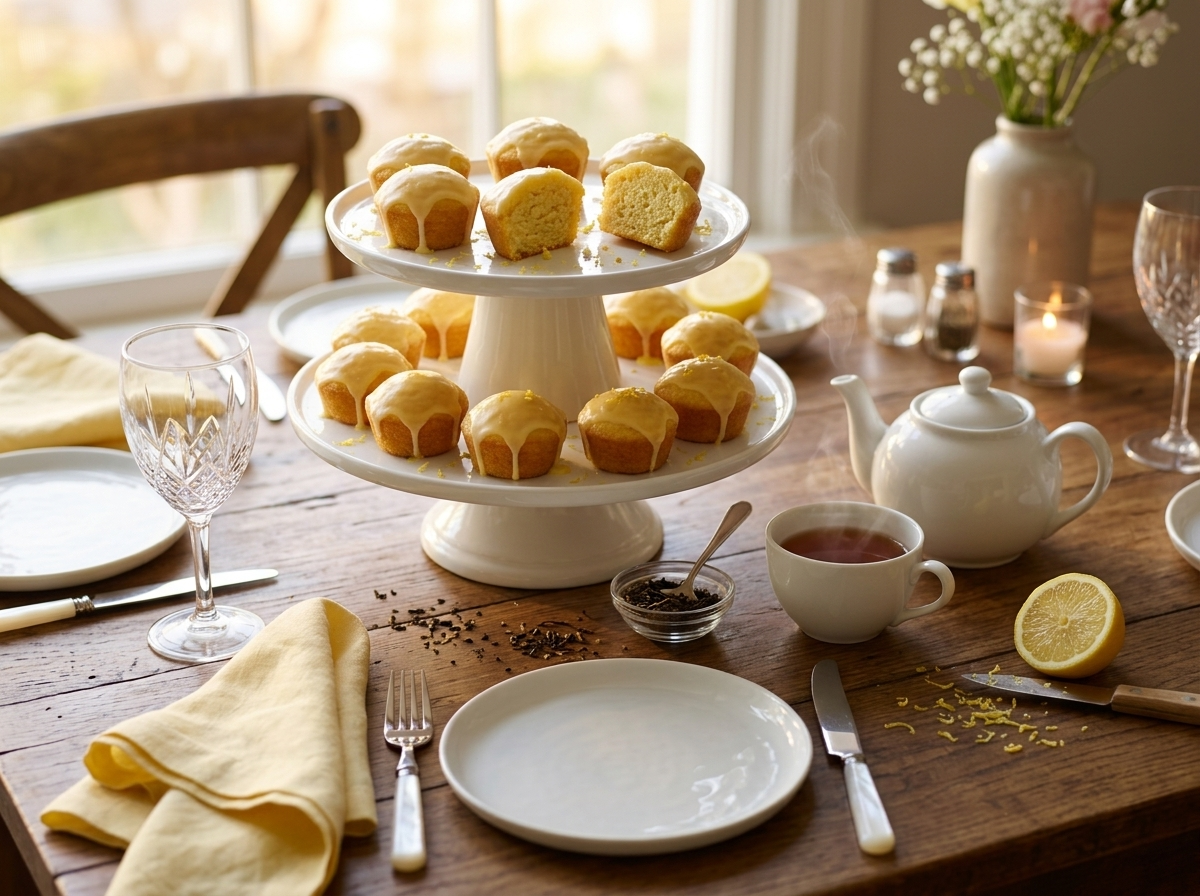
These work on a tiered cake stand for afternoon tea alongside a pot of Earl Grey or a mild green tea, the way you might serve them next to a jasmine honey panna cotta. Their small size means guests can take two without feeling guilty about it.
For a brunch spread, arrange them on a wooden board next to fresh berries and a small pot of clotted cream or creme fraiche. The tartness cuts through the richness nicely.
If you’re giving them as a gift, stack them in a small bakery box with a sheet of parchment between layers. They hold their shape well and the glaze protects the surface.
FAQ
Why did my mini lemon tea cakes sink in the middle?
This usually happens when the batter is overmixed or the oven runs too cool. Make sure your baking powder is fresh and don’t open the oven door in the first 10 minutes of baking.
Can I use lime juice instead of lemon juice in the glaze?
Yes, lime juice works well and gives the glaze a slightly sharper flavor. Use the same quantity and add lime zest to the batter instead of lemon zest for a consistent flavor throughout.
Can I bake the mini lemon tea cake batter in a standard muffin tin instead?
You can, but the bake time increases to around 18 to 22 minutes and you’ll get about 10 to 12 regular-sized cakes instead of 24 mini ones. Check with a toothpick for doneness.
How do I know when the mini lemon tea cakes are done?
They should be lightly golden on top and a toothpick inserted in the center should come out clean with no wet batter. The edges will also pull slightly away from the tin walls.
Are mini lemon tea cakes gluten-free?
Not with this recipe as written, since it uses all-purpose flour, though recipes like gluten-free teff banana muffins show how alternative flours can work in small baked goods. To make them gluten-free, swap in a 1:1 gluten-free baking flour blend, though the crumb may be slightly denser.
What’s the difference between a tea cake and a cupcake?
Tea cakes are typically denser and less sweet than cupcakes, and they’re glazed rather than frosted. They’re designed to pair with tea rather than stand alone as a dessert.
