
Jump to Recipe
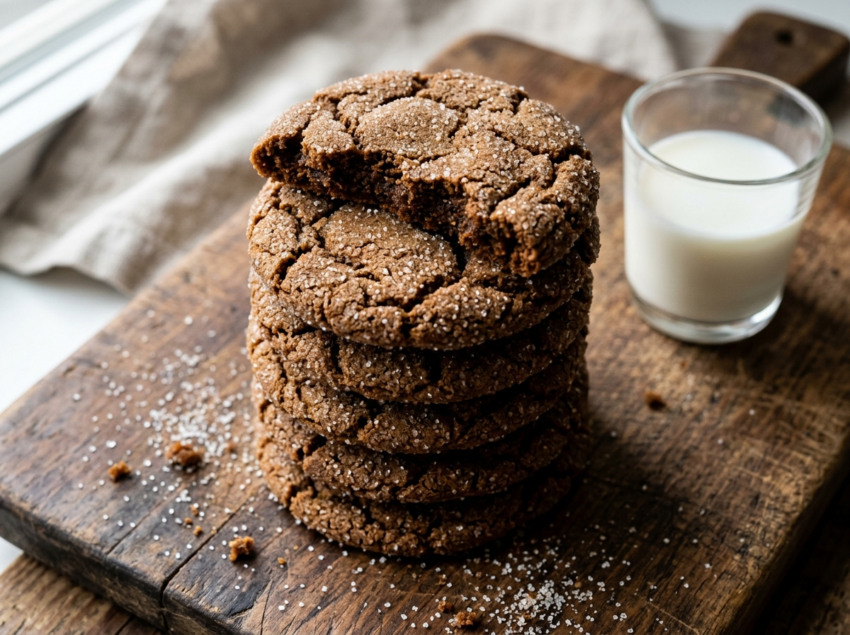
There’s something about the smell of molasses and warm spices hitting a hot oven that stops you mid-task. It’s one of those old-fashioned baking smells that feels genuinely familiar, even if you’ve never made these before.
This recipe pulls from the kind of handwritten card you’d find tucked in a church cookbook from the 1960s. Simple pantry ingredients. No electric mixer required. Just a wooden spoon and a bowl.
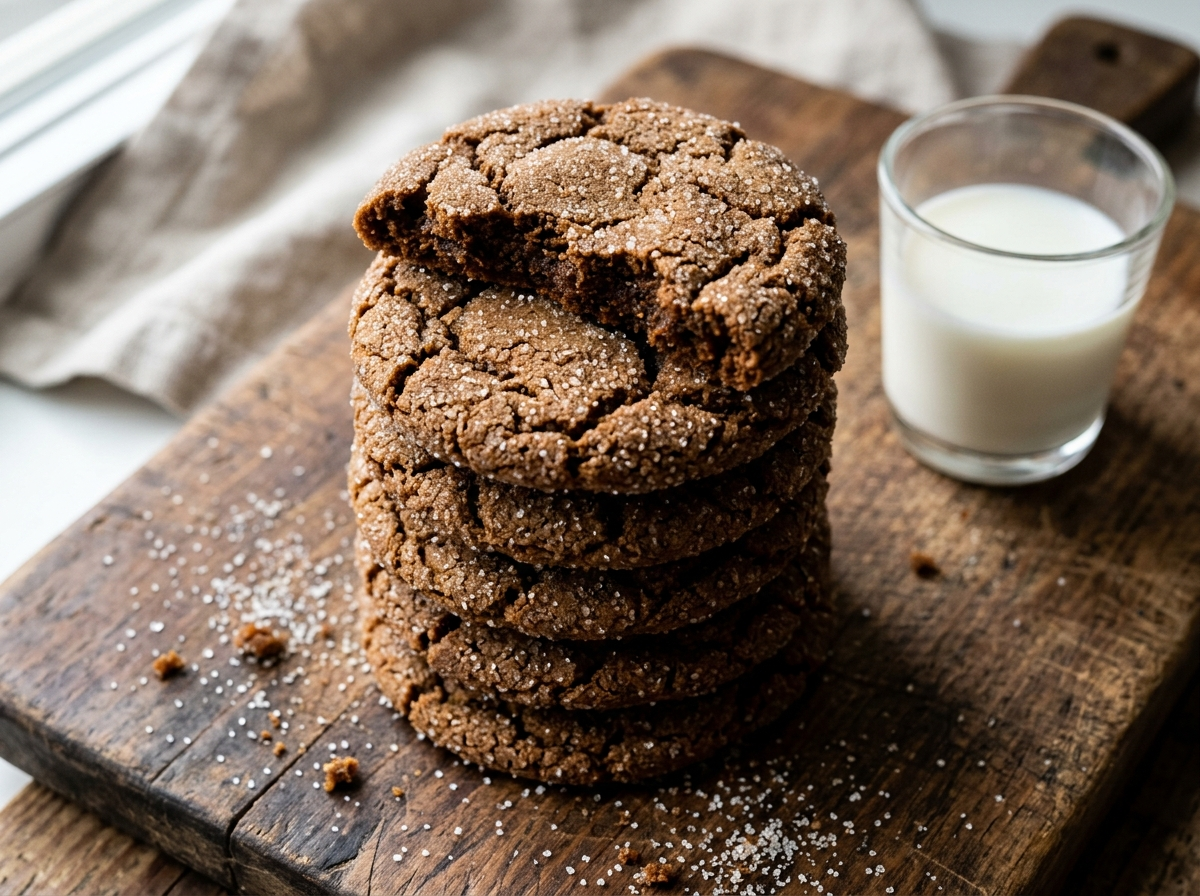
The cookies come out with a soft, almost fudgy center and a thin crackled shell from the sugar coating. They stay chewy for days, which is rare.
Ginger, cinnamon, and cloves do the spice work here. Not too much, not too little. The molasses flavor is front and center, with a slight bitterness that keeps them from being cloying.
Why You’ll Love This Recipe
- Stays soft and chewy for up to five days
- One bowl, no mixer, minimal cleanup
- Deep molasses flavor balanced by warm spices
- Freezer-friendly dough you can bake anytime
Ingredient Notes
- Unsulphured dark molasses: This is the flavor foundation. Blackstrap works but gives a sharper, more bitter result. Grandma’s Molasses or Brer Rabbit dark are the classic choices here.
- Shortening: Traditional recipes use vegetable shortening for that specific soft, pillowy texture. You can swap in softened butter 1:1, but the cookies will spread slightly more and have a crisper edge.
- Ground ginger: Use a fresh jar if you can. Old ground ginger loses its bite fast and the spice flavor will fall flat.
- Ground cloves: A small amount goes a long way. Don’t increase the quantity or it will overpower the molasses. Allspice is a workable substitute.
- Baking soda: Fresh baking soda is critical for the dough to puff and crack correctly. Test yours in warm water if it’s been open more than three months.
- Granulated sugar for rolling: Roll the dough balls generously just before baking. This creates the crackled top and a slight crisp shell. Coarse sugar gives a more dramatic crunch.
Vintage Molasses Cookies
Ingredients
Method
- Heat the oven to 190 C / 375 F. Line two sheet pans with parchment paper.
- In a large mixing bowl, beat the shortening and sugar together with a wooden spoon until combined and slightly fluffy, about 2 minutes.
- Add the egg and molasses to the bowl and stir until the mixture is smooth and uniform in color.
- Add the flour, baking soda, cinnamon, ginger, cloves, and salt directly to the bowl. Stir until a soft, cohesive dough forms with no dry streaks.
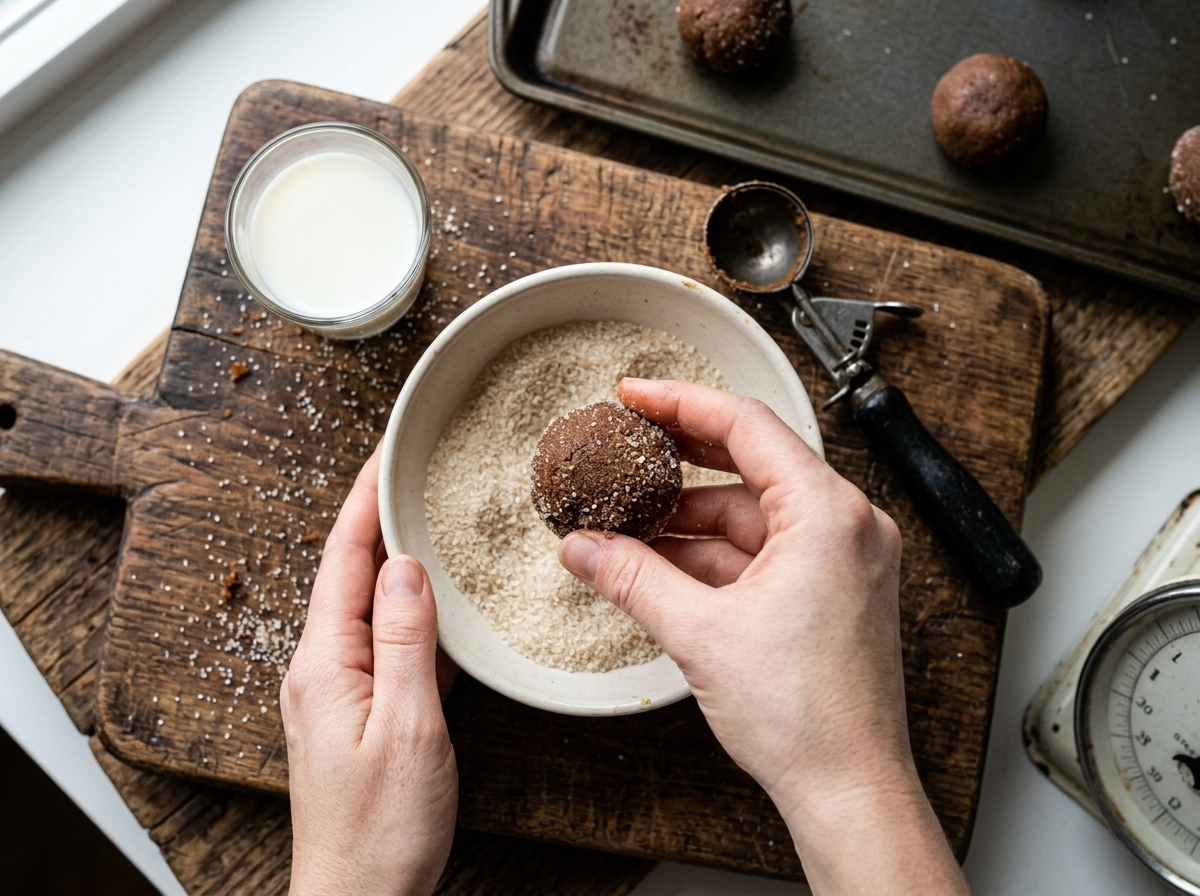
- Pour about 50 g (1/4 cup) of granulated sugar into a small bowl. Scoop the dough into 1.5-tablespoon portions and roll each into a smooth ball.
- Roll each dough ball generously in the sugar to coat all sides, then place on the prepared sheet pan spacing 5 cm (2 inches) apart.
- Bake for 9 to 11 minutes until the edges are set and the tops show cracks but the centers still look slightly soft.
- Remove from the oven and let cookies rest on the pan for 5 minutes. They will firm up as they cool. Transfer to a wire rack to cool completely.
Notes
Tips for Success
- Use a cookie scoop to portion dough evenly so cookies bake at the same rate.
- Roll each ball in sugar right before baking, not in advance, to prevent the coating from dissolving.
- Pull cookies from the oven when centers still look slightly underdone. They firm up as they cool.
- Space cookies at least 2 inches apart on the sheet pan. They spread more than they look like they will.
- Let cookies cool on the pan for 5 minutes before transferring. Moving them too early breaks the crackled top.
Variations
- Add 1 tsp orange zest to the dough for a citrus-spice version with a brighter finish.
- Mix 1/2 tsp black pepper into the dry ingredients for a molasses-pepper cookie with real heat.
- Sandwich two cooled cookies with cream cheese frosting for a filling that cuts the spice.
Storage and Reheating
Store cooled cookies in an airtight container at room temperature for up to 5 days. They actually get chewier on day two as the moisture redistributes.
For longer storage, freeze baked cookies in a single layer, then transfer to a zip bag. They keep for up to 3 months and thaw at room temperature in about 20 minutes.
You can also freeze the raw dough balls before rolling in sugar. Arrange on a sheet pan, freeze solid, then bag them. Bake straight from frozen at the same temperature, adding 2 to 3 extra minutes.
Serving Suggestions
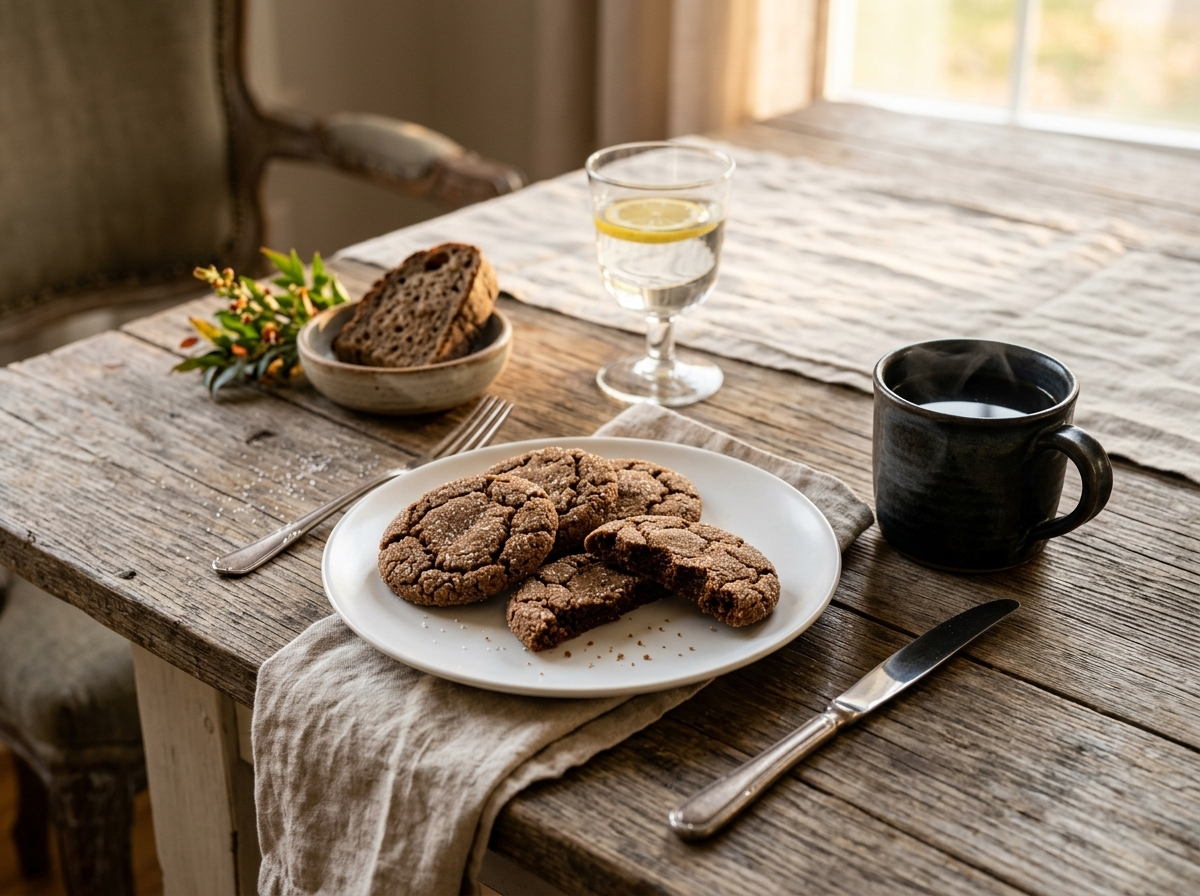
These cookies work on their own with a glass of cold milk or a black coffee. The bitterness of the molasses plays well against both.
For a simple dessert plate, serve three cookies alongside a small scoop of vanilla ice cream, the way you might plate them next to chewy brown butter toffee cookies for a contrast of flavors. The warm spice against cold cream is a good pairing.
At a holiday cookie swap, these stand out next to the butter-based options. The dark color, crackled top, and spiced aroma make them easy to identify and they hold up well at room temperature for several hours.
FAQ
Why did my molasses cookies come out flat instead of crackled?
Flat cookies usually mean the dough was too warm when it hit the oven. Chill the portioned dough balls for 10 minutes in the fridge before rolling in sugar and baking. Also check that your baking soda is fresh.
Can I use blackstrap molasses instead of dark molasses in this recipe?
Yes, but expect a sharper, more bitter flavor. Blackstrap has a higher mineral content and less sugar than dark or unsulphured molasses. Start with 3 tbsp instead of a full 1/4 cup if you’re sensitive to bitterness.
How do I know when vintage molasses cookies are done baking?
The edges should look set and the tops should show visible cracks, but the centers will still look slightly soft and underbaked. They continue cooking on the hot pan for another 3 to 5 minutes after you pull them out.
Can I make the molasses cookie dough ahead and refrigerate it overnight?
The dough holds well in the fridge for up to 48 hours, tightly wrapped. Cold dough actually produces a slightly thicker, chewier cookie. Roll in sugar just before baking, not before refrigerating.
What’s the difference between vintage molasses cookies and ginger snaps?
Ginger snaps are thin and crisp with a pronounced ginger-forward flavor, whereas vintage molasses cookies are thicker and spiced more like an orange cinnamon baked dessert in their balance of warm notes. Vintage molasses cookies are thicker, soft-centered, and balanced across multiple spices with molasses as the dominant flavor rather than ginger.
Are these molasses cookies dairy-free?
Yes, when made with vegetable shortening they contain no dairy. If you substitute butter, they’re no longer dairy-free. Check your molasses label too, though dairy is not a standard ingredient in commercial molasses.
If you enjoyed this, try
