
Jump to Recipe
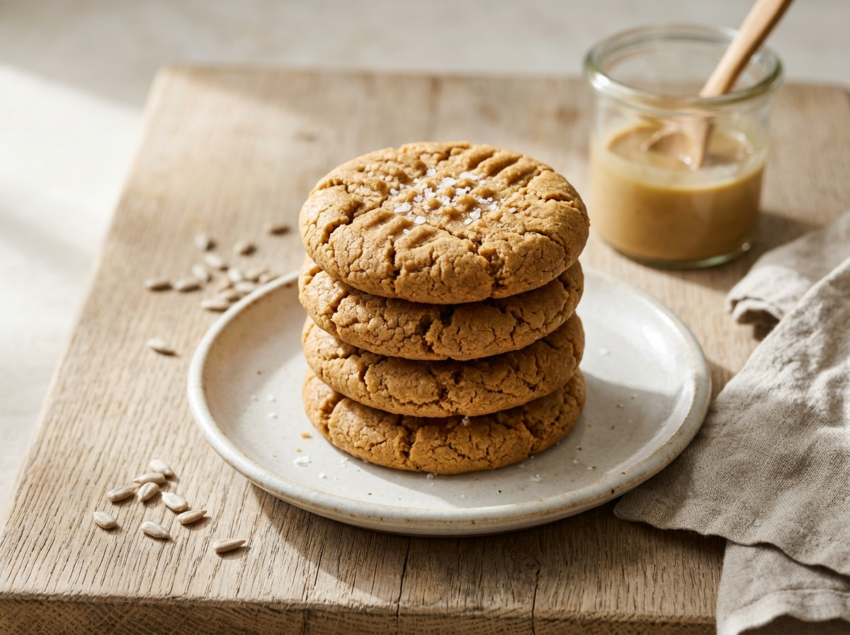
There’s something almost magical about a cookie that looks humble but tastes like it took serious effort. These sunflower tahini cookies have that quality.
The combination of sunflower seed butter and tahini gives you a deep, roasted, slightly bitter-sweet flavor that plain peanut butter cookies never quite reach. No nuts, no dairy, no complicated steps.
I started making these when a friend with a nut allergy came to visit. I wanted something that didn’t feel like a compromise. These are not a compromise.
One bowl. About 30 minutes. Cookies with real character.
Why You’ll Love This Recipe
- Naturally nut-free but packed with deep, roasted flavor
- One bowl and 30 minutes from start to finish
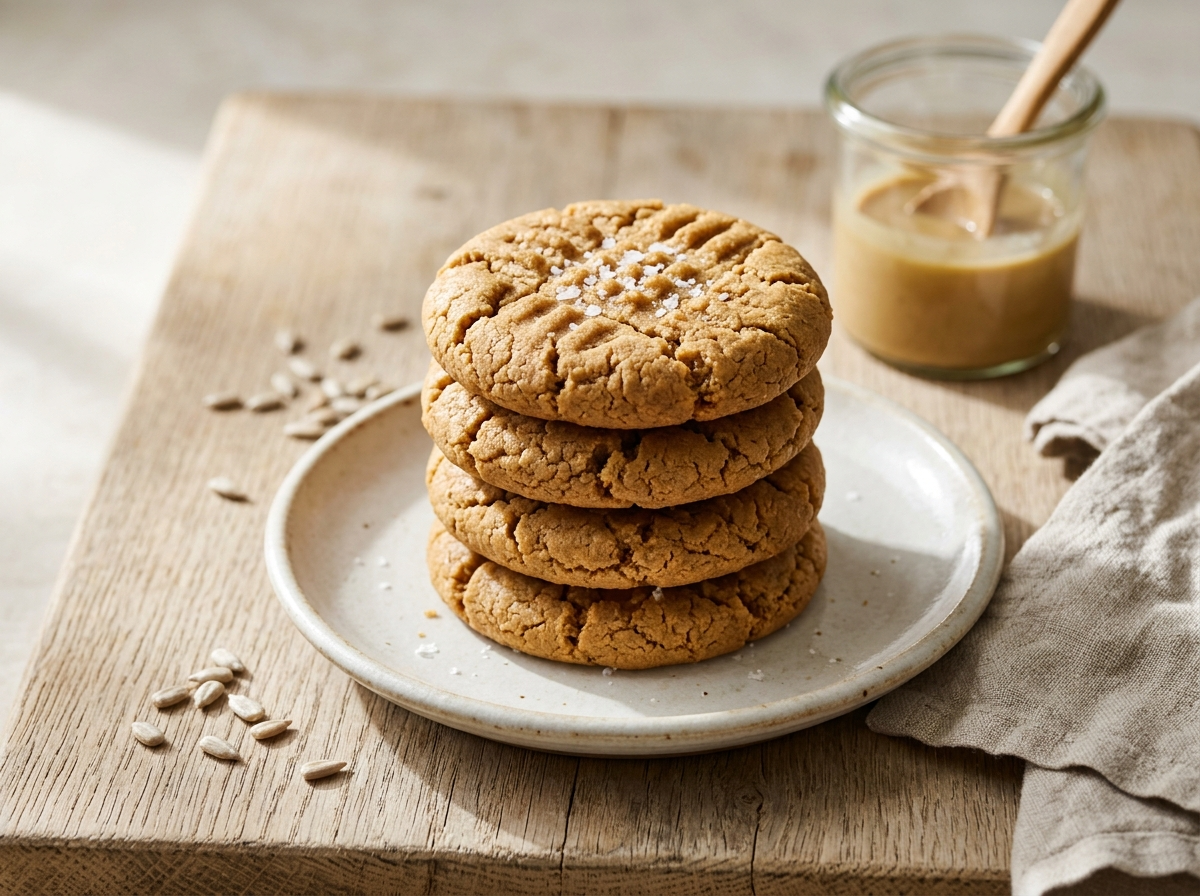
- Chewy center with a crackled, slightly crisp edge
- Dairy-free and easily made vegan with a flax egg
Ingredient Notes
- sunflower seed butter: Use a natural, no-stir variety with just sunflower seeds and salt for the cleanest flavor. If yours is sweetened, reduce the sugar by 1 tablespoon.
- tahini: Go for a runny, well-stirred tahini – I use Soom or Seed + Mill. Thick, seized tahini will make the dough too stiff and the cookies dry.
- brown sugar: Brown sugar adds moisture and a faint molasses note that balances the bitterness of tahini. Light or dark both work.
- egg: One large egg binds the dough. For a vegan version, use 1 flax egg (1 tablespoon ground flaxseed mixed with 3 tablespoons water, rested 5 minutes).
- baking soda: A small amount helps the cookies spread and crack on top. Don’t skip it – that crackle is part of the texture.
- vanilla extract: Pure vanilla rounds out the nuttiness. Imitation works but the flavor is flatter.
- flaky sea salt: A pinch on top before baking is not optional in my kitchen. It sharpens every other flavor in the cookie.
Sunflower Tahini Cookies
Ingredients
Method
- Heat the oven to 175 C / 350 F. Line two sheet pans with parchment paper.
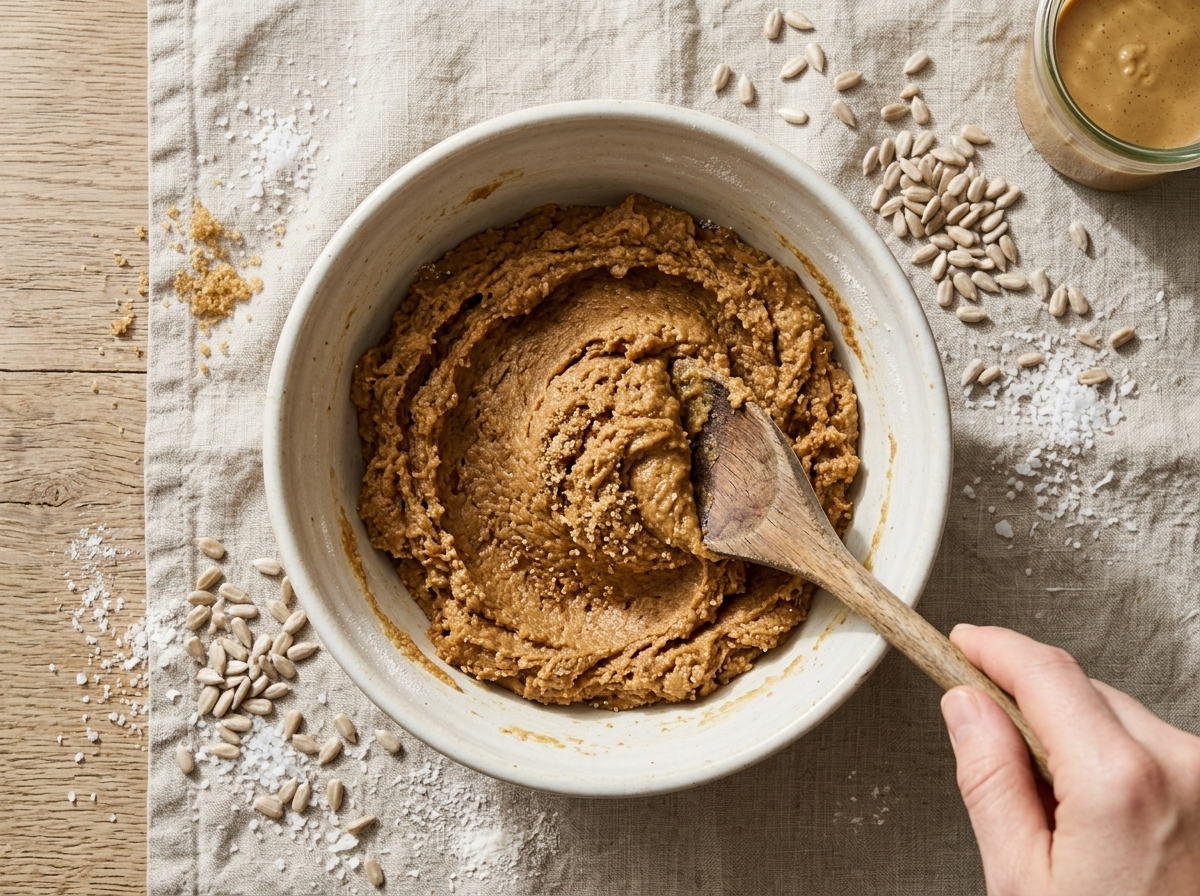
- Combine the sunflower seed butter, tahini, brown sugar, and granulated sugar in a large bowl. Stir until smooth and the sugars are fully incorporated.
- Add the egg and vanilla extract. Stir vigorously until the mixture looks glossy and pulls together, about 1 minute.
- Add the flour, baking soda, and fine salt. Mix until no dry flour remains - the dough will be thick and slightly sticky.
- Cover the bowl and refrigerate for 20 minutes. This helps the dough firm up so the cookies hold their shape.
- Scoop the dough into balls of about 30 g each (roughly 1.5 tablespoons) and place them 5 cm apart on the prepared pans.
- Press each ball gently with a fork in a crosshatch pattern to flatten to about 1.5 cm thick. Sprinkle a few flakes of sea salt on top of each cookie.
- Bake one tray at a time for 10 to 12 minutes, until the edges look set and lightly golden but the centers still appear soft.
- Let cookies cool on the pan for 8 minutes before transferring to a wire rack. They firm up considerably as they cool.
Notes
Tips for Success
- Chill the dough for 20 minutes before baking to prevent excessive spreading and keep the cookies thick.
- Use a cookie scoop for uniform portions – uneven balls bake unevenly and some will burn before others set.
- Press a fork crosshatch into each ball gently; it flattens them to even thickness so the center cooks through.
- Pull cookies from the oven when the edges are set but the center still looks underdone – they firm up as they cool.
- Stir your tahini and sunflower seed butter thoroughly before measuring so the fat is fully incorporated.
Variations
- Add 60 g dark chocolate chips to the dough for a sunflower tahini chocolate chip cookie with bittersweet pockets.
- Roll dough balls in sesame seeds before baking for extra crunch and a more pronounced sesame flavor.
- Swap brown sugar for coconut sugar and add half a teaspoon of cinnamon for a warmer, caramel-toned version.
Storage and Reheating
Store cooled cookies in an airtight container at room temperature for up to 5 days. They actually improve on day two as the flavors settle and the texture becomes more fudgy.
For longer storage, freeze baked cookies in a single layer, then transfer to a zip bag. They keep well for up to 2 months. Thaw at room temperature for 20 minutes.
You can also freeze unbaked dough balls on a tray, then bag them. Bake straight from frozen at 175 C / 350 F for 13 to 14 minutes.
Serving Suggestions
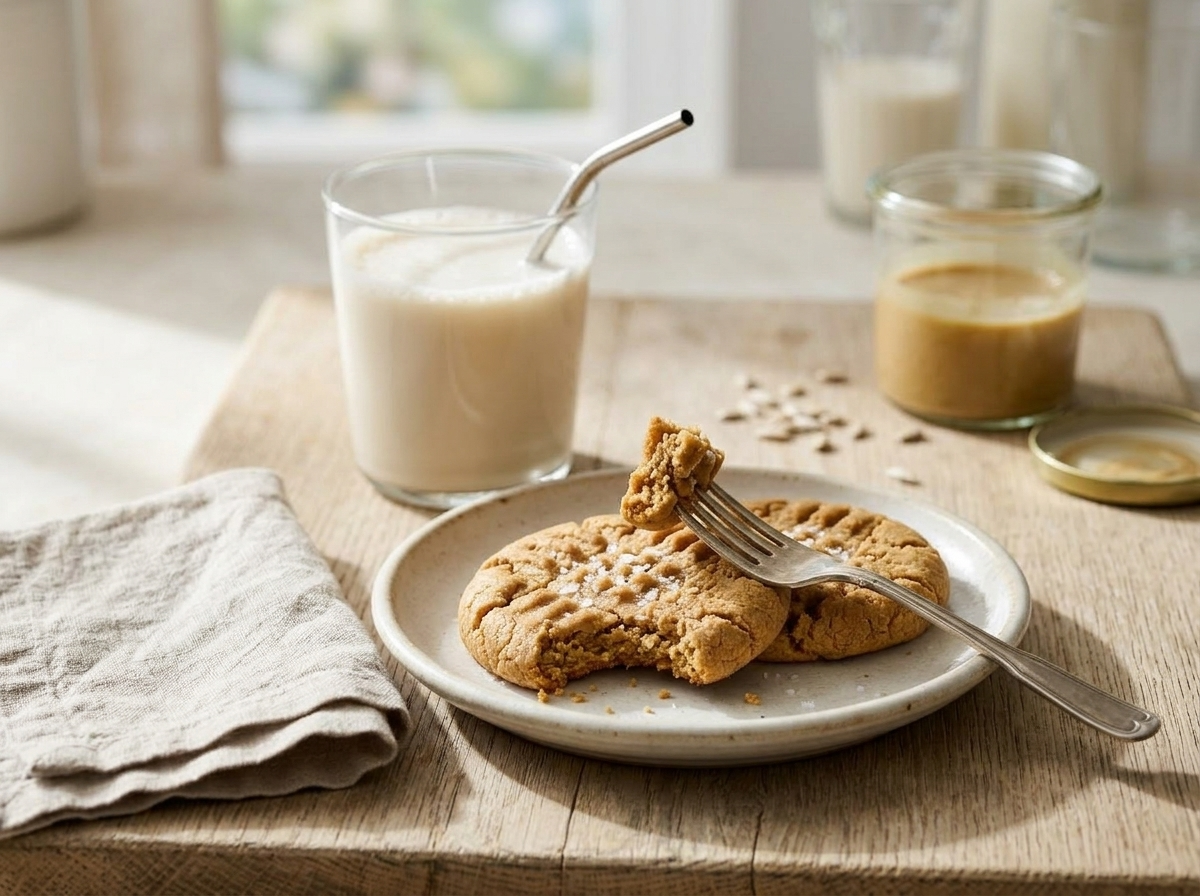
These cookies stand well on their own with a glass of cold oat milk or black coffee. The slight bitterness of the tahini pairs well with something cold and creamy.
For a more composed dessert, sandwich two cookies around a scoop of vanilla or halva ice cream, the way you might layer flavors in a dairy-free coconut dessert. The sesame notes in the cookie pull the halva flavor forward in an interesting way.
They also work on a dessert spread alongside dried apricots and a mild soft cheese, much like soft decorated sugar cookies do when you want something less intense on the table.
FAQ
Why did my sunflower tahini cookies turn green inside?
Sunflower seeds contain chlorogenic acid, which reacts with baking soda in the presence of heat and turns greenish. It’s completely harmless and doesn’t affect flavor. Adding a small amount of cream of tartar or using less baking soda can reduce the reaction.
Can I use tahini only and skip the sunflower seed butter?
You can, but the cookies will be thinner and slightly more bitter. Sunflower seed butter adds body and a mild sweetness that balances the tahini. If you go tahini-only, reduce the amount by about 20 percent and add an extra tablespoon of sugar.
Can I freeze sunflower tahini cookie dough and bake later?
Yes, and it works well. Scoop the dough into balls, freeze on a tray until solid, then bag them. Bake from frozen at 175 C / 350 F for 13 to 14 minutes – add 2 extra minutes if they look underdone.
What goes well with sunflower tahini cookies on a dessert platter?
Dried apricots, halva pieces, and dark chocolate chunks complement the sesame and sunflower flavors without competing. A small pot of honey for dipping alongside works nicely for guests who want something sweeter.
Are sunflower tahini cookies gluten-free?
This recipe uses all-purpose flour, so it contains gluten. To make them gluten-free, swap in a 1-to-1 gluten-free flour blend – I’ve tested this with Bob’s Red Mill 1-to-1 and the texture holds well. Make sure your tahini and sunflower seed butter are certified gluten-free if cross-contamination is a concern.
How do I know when sunflower tahini cookies are done baking?
The edges should look set and lightly golden while the center still appears slightly underdone and soft. They firm up significantly as they cool on the tray, so pulling them early is the right call – overbaked cookies lose the chewy center.
