
Jump to Recipe
There’s something quietly satisfying about pulling a tray of plum dumplings from a pot of simmering water and watching them land soft and glossy on a plate.
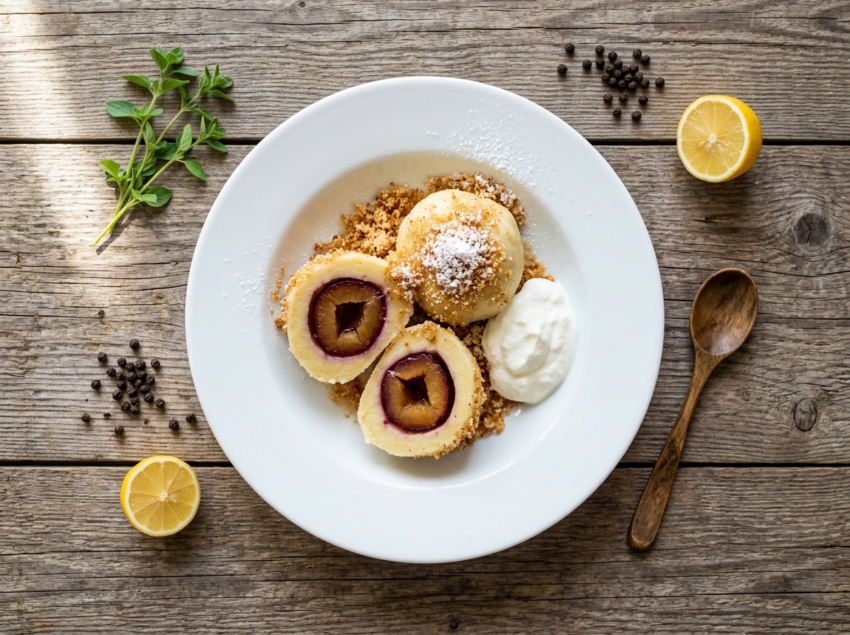
Slovak slivkové knedlíky are a late-summer tradition. Small Italian plums go into the center of each dumpling, still whole, still with the pit (or without, your call), and the dough is potato-based – dense enough to hold its shape, light enough to bite through cleanly, not unlike the soft potato dough used in Nepalese yomari sweet dumplings.
The finish is what makes them. Browned breadcrumbs in butter, a dusting of powdered sugar, and a spoonful of curd cheese or sweet farmer’s cheese on the side. It’s eaten as a main meal in Slovak homes, not a side dish or dessert.
I first had these at a kitchen table in Bratislava in September. They were served in a deep bowl with nothing else. That was enough.
Why You’ll Love This Recipe
- Tender potato dough that holds together without cracking
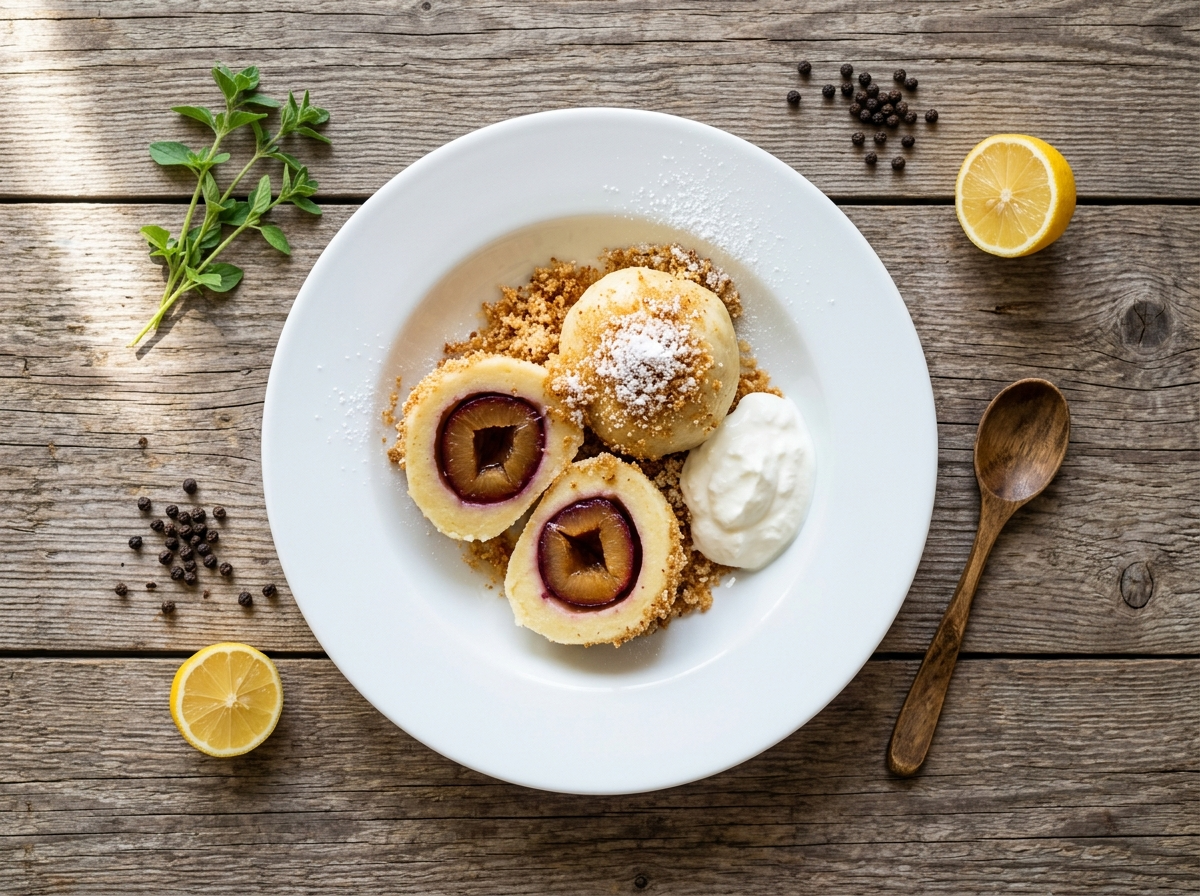
- Whole plum center bursts with juice when you cut in
- Ready in under an hour with simple pantry staples
- Serves as a full meal the way Slovak families eat it
Ingredient Notes
- floury potatoes: Use starchy varieties like Russet or Yukon Gold. They give the dough its soft, cohesive texture. Waxy potatoes hold too much moisture and make the dough sticky and hard to shape.
- small Italian plums (slivky): The traditional choice is small damson-type or Italian prune plums. They’re firm enough to hold their shape inside the dumpling. If you use larger plums, halve them and remove the pit before wrapping.
- plain flour: All-purpose flour works well. Start with the lower end of the flour range and add more only if the dough is too sticky to handle – overworking with too much flour makes the dumplings tough.
- egg yolk: One yolk adds richness and helps bind the potato dough without making it dense. Whole egg adds too much liquid and can cause the dough to split during boiling.
- white breadcrumbs: Dry, fine breadcrumbs toasted in butter are the classic topping. Panko works too but gives a coarser texture. Skip the topping if you prefer just powdered sugar and farmer’s cheese.
- tvaroh or quark: Slovak farmer’s cheese or quark is the traditional accompaniment, served on the side or spooned over. Full-fat ricotta is the closest substitute if you can’t find either.
Slovak Plum Dumplings: Soft Potato Dough with a Sweet Fruit Center
Ingredients
Method
- Rice the hot boiled potatoes directly onto a clean work surface or into a large bowl. Spread them out and let steam escape for 5 minutes until no longer wet-looking.
- Add the egg yolk and salt to the riced potatoes and mix briefly with a fork.
- Add the flour (and semolina if using) and bring everything together with your hands until a smooth, soft dough forms. Do not overwork. If the dough sticks to your hands, add flour 1 tbsp at a time.
- Wrap the dough in cling film and refrigerate for 20 minutes.
- Bring a large wide pot of salted water to a gentle simmer.
- Lightly flour your hands and the work surface. Divide the dough into 16 equal pieces, roughly 50 g each.
- Flatten each piece into a round disc about 8 cm across. Place one plum in the center.
- Fold the dough up around the plum and pinch the seam firmly closed, rolling the dumpling gently between your palms to form a smooth ball. No gaps.
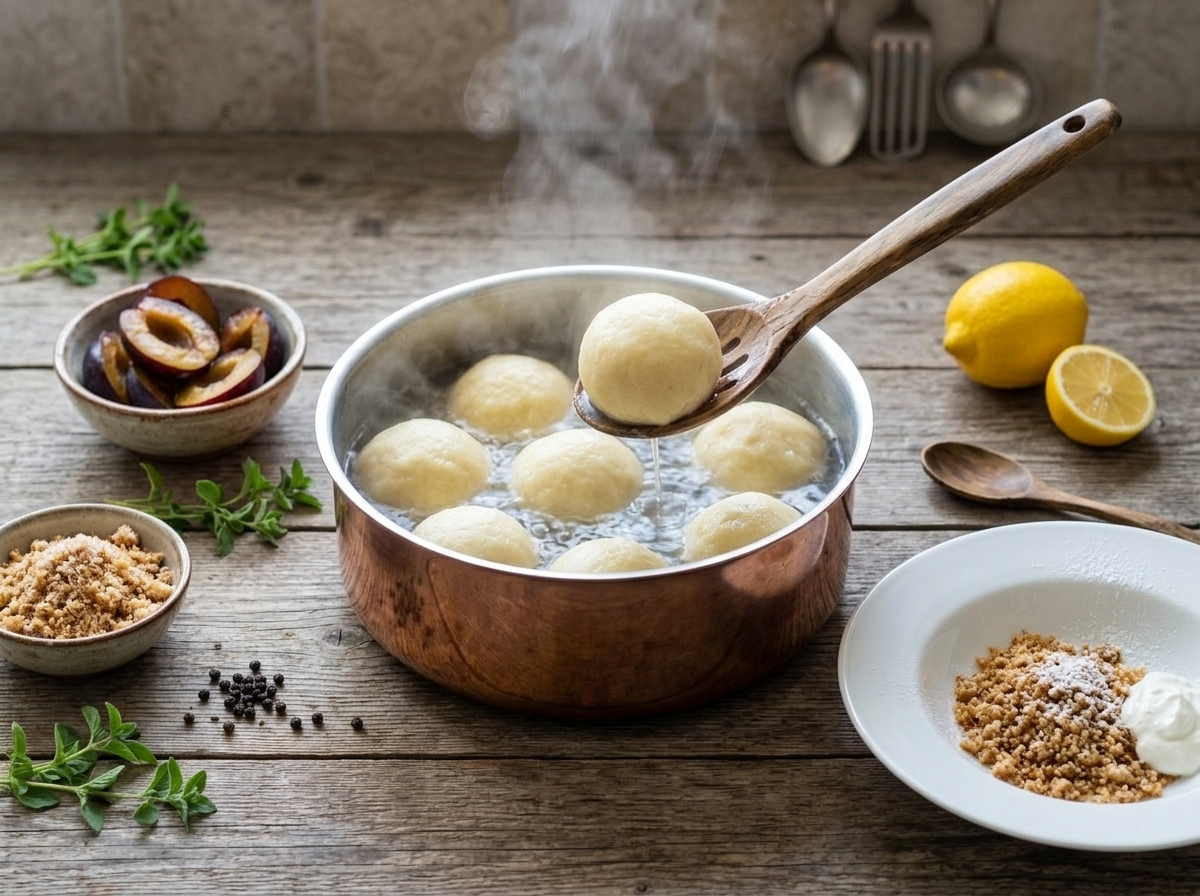
- Lower the dumplings into the simmering water in batches of 6 to 8. Do not crowd the pot.
- Cook for 12 to 14 minutes total, until the dumplings float and then continue cooking for 3 to 4 minutes after surfacing.
- Remove with a slotted spoon and drain briefly on a clean cloth.
- Melt the butter in a frying pan over medium heat. Add the breadcrumbs and stir constantly for 3 to 5 minutes until deep golden brown and fragrant.
- Remove from heat immediately so they don't burn.
- Place 4 dumplings per person in a deep bowl or plate. Spoon the toasted breadcrumbs generously over the top.
- Dust with powdered sugar and serve with a dollop of quark or tvaroh on the side.
Notes
Tips for Success
- Rice the potatoes while still hot so steam escapes and the dough stays dry and workable.
- Chill the potato dough for 20 minutes before shaping – cold dough is firmer and wraps cleanly around the plum.
- Seal each dumpling firmly by pressing the seam with dry hands; any gap will let water in and make the center watery.
- Boil in a wide pot with plenty of salted water and don’t crowd the pot – dumplings need room to float freely.
- Toast breadcrumbs in butter over medium heat until deep golden brown before spooning over; pale crumbs add no flavor.
Variations
- Use fresh apricots instead of plums when in season – same dough, same method, slightly more tart center.
- Add a cube of sugar inside the plum cavity with the pit removed for extra sweetness in the center.
- Roll finished dumplings in poppy seeds mixed with powdered sugar instead of buttered breadcrumbs for a nutty finish.
Storage and Reheating
Store leftover boiled dumplings in an airtight container in the fridge for up to 2 days. They firm up overnight, which is normal.
Reheat by placing them in a steamer basket over simmering water for 5 to 7 minutes until warmed through. Microwaving works in a pinch – cover with a damp paper towel and heat in 45-second bursts.
Freezing raw, shaped dumplings works well. Arrange on a lined tray, freeze until solid, then transfer to a bag. Boil from frozen for 18 to 20 minutes without thawing first.
Serving Suggestions
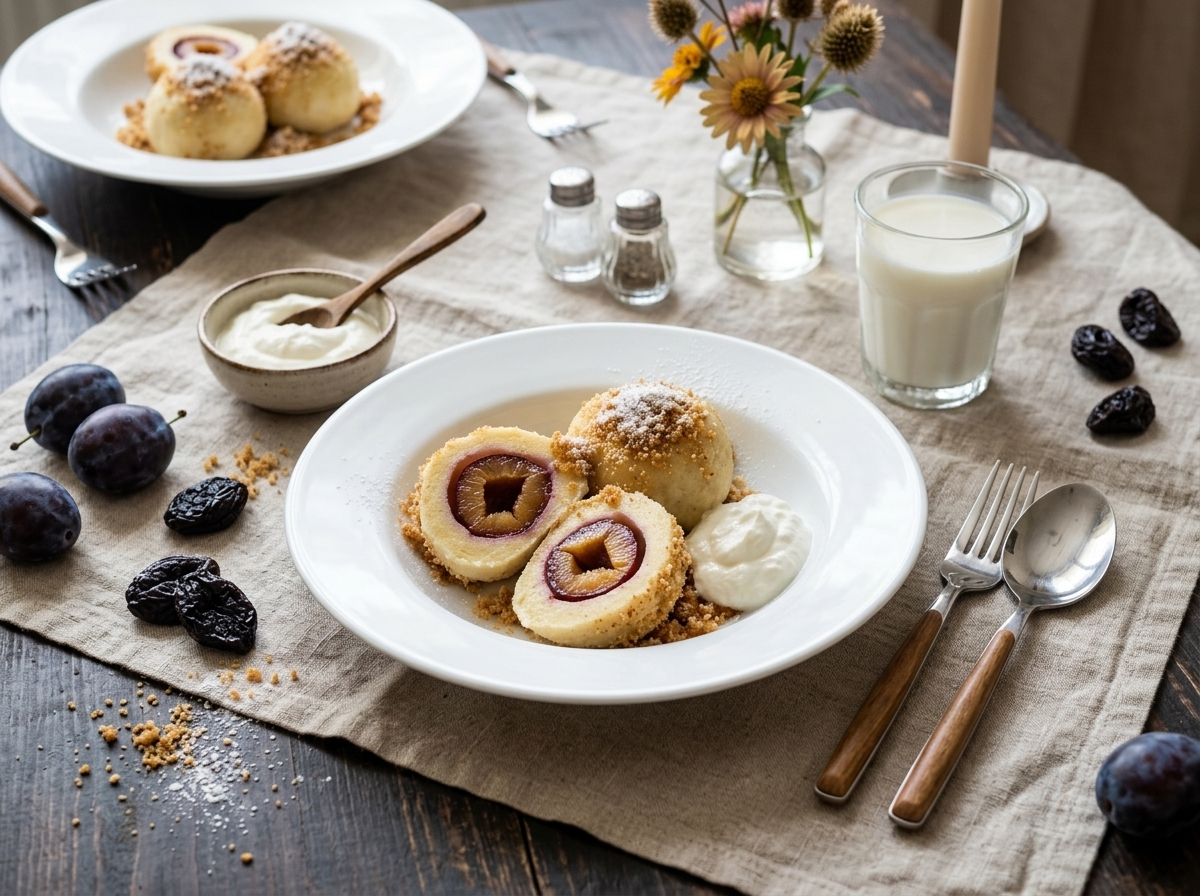
In Slovak homes, plum dumplings are the meal. Serve 4 to 5 per person in a deep plate with buttered breadcrumbs spooned over and a generous dusting of powdered sugar. A dollop of quark or tvaroh on the side is standard.
For a more filling spread, add a small bowl of sour cream on the table. Some families also serve a light cucumber salad alongside to cut through the richness of the butter and cheese.
If you’re making these for children, skip the quark and add a pinch of cinnamon to the breadcrumbs while toasting. The warm spice works well with the plum filling.
FAQ
Why do my plum dumplings split open during boiling?
The most common reason is a gap in the seam when you sealed the dough around the plum. Make sure to press the edges firmly together with dry hands before the dumpling goes into the water. Also avoid boiling too aggressively – a gentle simmer rather than a rolling boil keeps them intact.
Can I use regular large plums instead of small Italian prune plums in these dumplings?
Yes, but cut them in half and remove the pit first. Large plums have more juice inside and can make the dough soggy if left whole. Halving them also makes the dumplings easier to seal.
Can I make the potato dough the night before and refrigerate it?
You can refrigerate the riced potatoes overnight, but mix in the flour and egg yolk on the day you plan to cook. Rested potato dough tends to release extra moisture overnight, which throws off the flour ratio and makes it hard to shape.
What’s the difference between Slovak plum dumplings and Czech svíčková knedlíky?
Slovak plum dumplings use a potato-based dough and a sweet fruit filling – they’re a standalone sweet dish. Czech svíčková knedlíky are bread dumplings served savory alongside roast beef in cream sauce. Completely different dough, filling, and occasion.
Are Slovak plum dumplings gluten free?
Not in the traditional recipe, which uses plain wheat flour. To make them gluten free, replace the flour with a 1:1 gluten-free baking flour blend. The dough will be slightly stickier, so chill it well before shaping.
How do I know when the plum dumplings are fully cooked?
They’re done when they float to the surface and have been boiling for 3 to 4 minutes after floating. Cut one open to check – the dough should look uniform and cooked through with no raw, gummy center.
