
Jump to Recipe
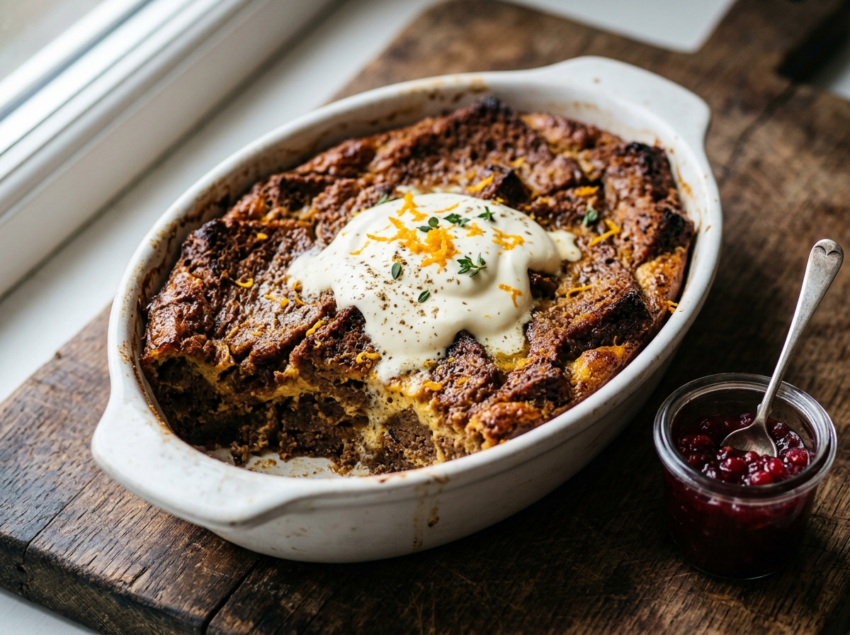
There’s something deeply satisfying about a bread pudding made with dark rye. The earthy, slightly sour crumb soaks up custard in a way that soft white bread never quite manages.
This recipe draws from the Nordic tradition of using leftover rugbrød – dense, seeded rye loaves – in simple baked desserts. Nothing wasted. Everything richer for it.
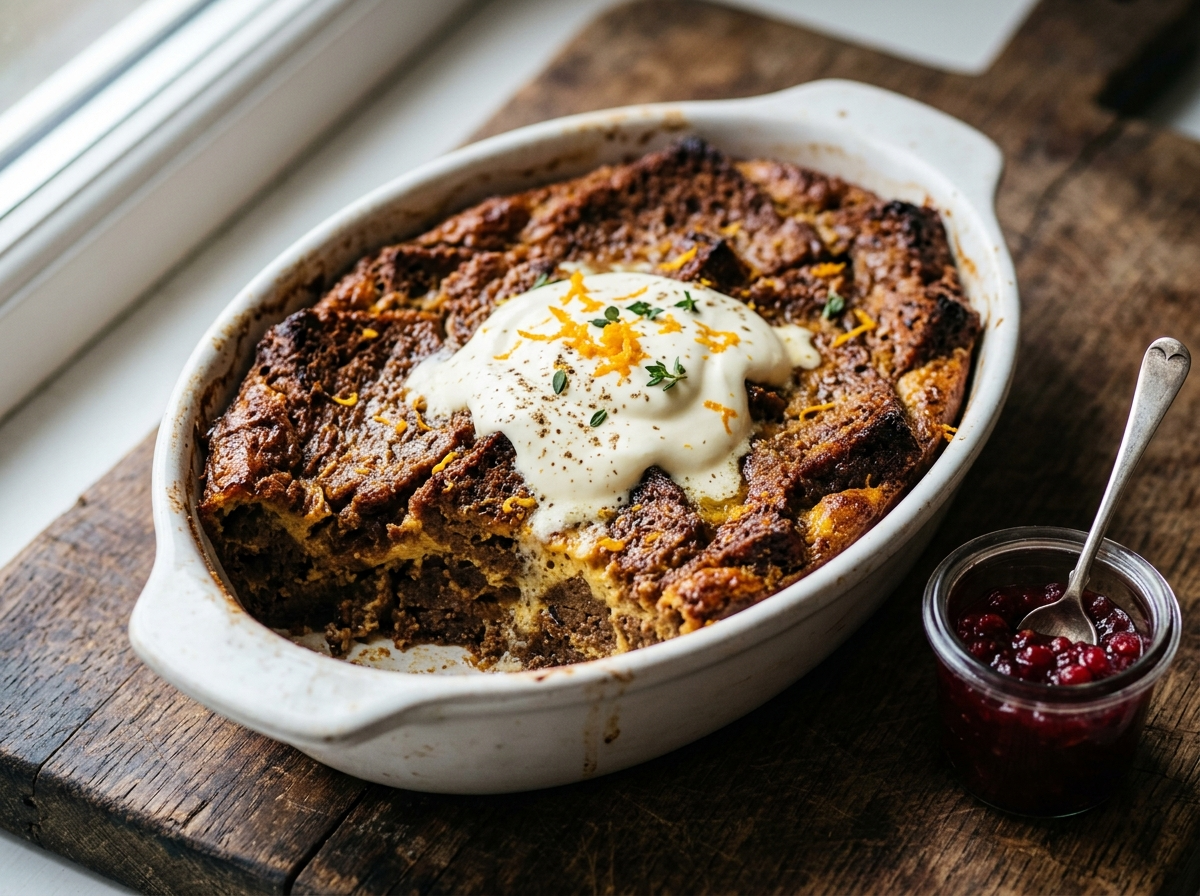
Cardamom and orange zest lift the custard without making it feel fussy. The result is firm, sliceable, and just sweet enough. More dessert than breakfast, though I won’t judge either way.
Day-old rye works best here. Fresh bread turns too soft in the custard and loses that slightly chewy texture that makes this worth making.
Why You’ll Love This Recipe
- Uses up stale rye bread with no waste
- Cardamom custard adds warmth without overpowering
- Slices cleanly, holds shape well for serving
- Make-ahead friendly, tastes better the next day
Ingredient Notes
- dark rye bread (rugbrød): Day-old or slightly stale bread works best – it absorbs the custard without going mushy. A seeded rye loaf adds texture, but plain rye works fine too.
- whole milk: Full-fat milk gives the custard a richer set. You can swap half the milk for single cream if you want a denser, creamier result.
- eggs: Four large eggs give structure and a firm but yielding texture. Don’t reduce the eggs or the pudding won’t hold together when sliced.
- ground cardamom: Freshly ground cardamom from pods is noticeably more fragrant than pre-ground. Use 1 tsp pre-ground if that’s what you have.
- brown sugar: Dark brown sugar adds a mild molasses note that pairs well with the rye. Light brown or caster sugar both work as substitutes.
- orange zest: One medium orange is plenty. Lemon zest works too and gives a slightly brighter, sharper flavour.
- unsalted butter: Used to grease the dish and dotted on top for a crisp, golden surface. Salted butter is fine if that’s all you have.
Scandinavian Rye Bread Pudding with Cardamom Custard
Ingredients
Method
- Heat the oven to 170 C / 340 F. Butter a 20 x 28 cm baking dish generously.
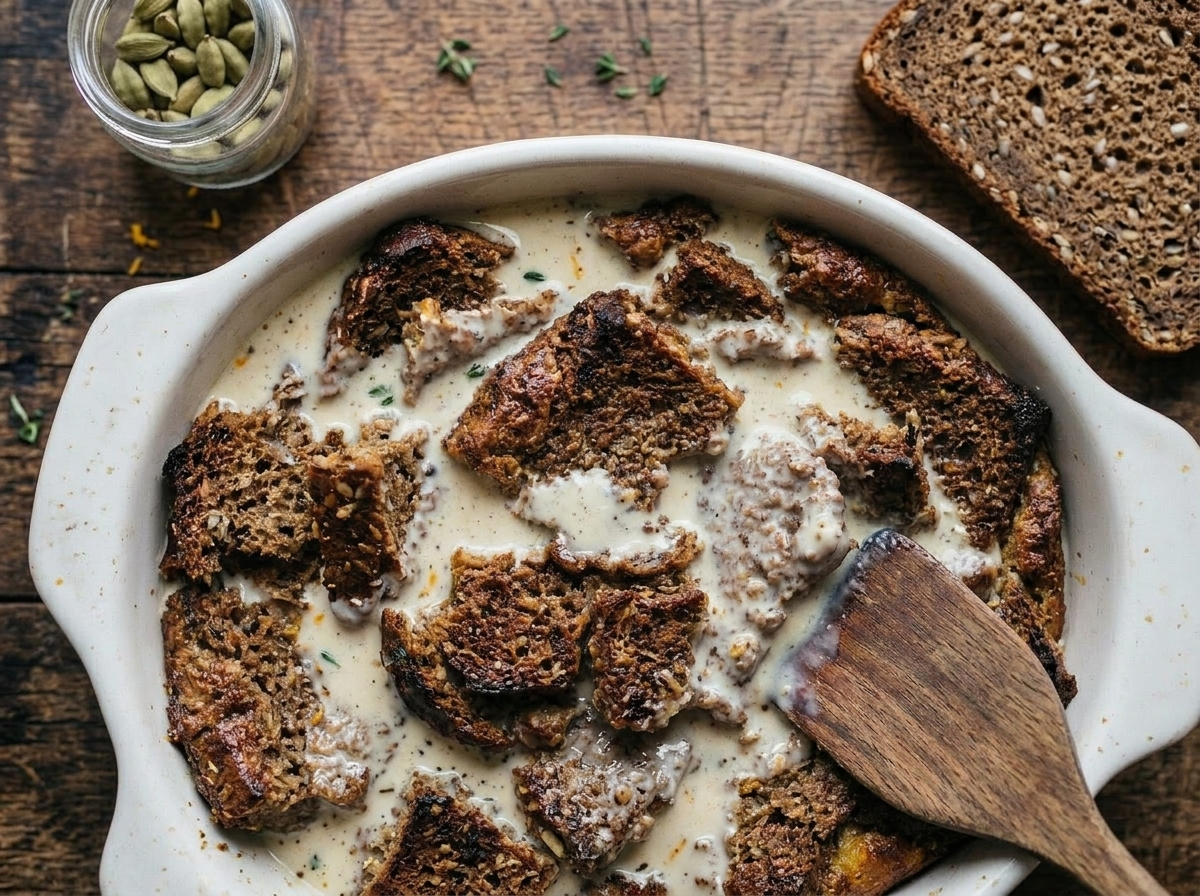
- Tear the rye bread into rough 3 cm chunks and scatter them evenly across the prepared dish.
- Whisk together the eggs, brown sugar, cardamom, cinnamon, orange zest, vanilla extract, and salt in a large bowl until the sugar has dissolved and the mixture looks uniform.
- Pour in the milk and cream and whisk again until fully combined.
- Pour the custard evenly over the bread chunks, making sure every piece is coated. Press the bread down gently with your hands or a spatula so it sits submerged in the custard.
- Leave to soak for 15 minutes at room temperature so the custard fully penetrates the rye bread.
- Dot the top with small pieces of butter and scatter the reserved tablespoon of brown sugar across the surface.
- Cover the dish tightly with foil and bake for 25 minutes.
- Remove the foil and bake for a further 20 minutes until the top is golden brown and the centre feels firm with only a slight spring when pressed.
- Remove from the oven and rest for 10 minutes before slicing and serving.
Notes
Tips for Success
- Tear the rye bread into rough chunks rather than slicing for better custard absorption.
- Press the bread down firmly after pouring custard so every piece is coated before baking.
- Let the soaked bread rest 15 minutes before it goes into the oven so the custard fully penetrates.
- Cover the dish with foil for the first 25 minutes to prevent a burnt top before the centre sets.
- Test doneness by pressing the centre – it should feel firm with only a slight spring, not liquid.
Variations
- Stir 2 tbsp dark rum into the custard and top with raisins for a Nordic-style Christmas version.
- Add 50 g of chopped dark chocolate to the bread layer for a bitter contrast to the sweet custard.
- Use aquavit instead of vanilla and scatter caraway seeds on top for a more savoury Scandinavian flavour.
Storage and Reheating
Store cooled pudding in the baking dish, covered tightly with cling film or a lid, in the fridge for up to 3 days. The flavour deepens overnight, so making it a day ahead is a genuine improvement.
To reheat, cover the dish with foil and warm in a 160 C / 320 F oven for 15 to 20 minutes until heated through. Individual slices can be microwaved for 60 to 90 seconds on medium power.
This pudding freezes well. Wrap individual portions in cling film and freeze for up to 2 months. Thaw overnight in the fridge before reheating.
Serving Suggestions
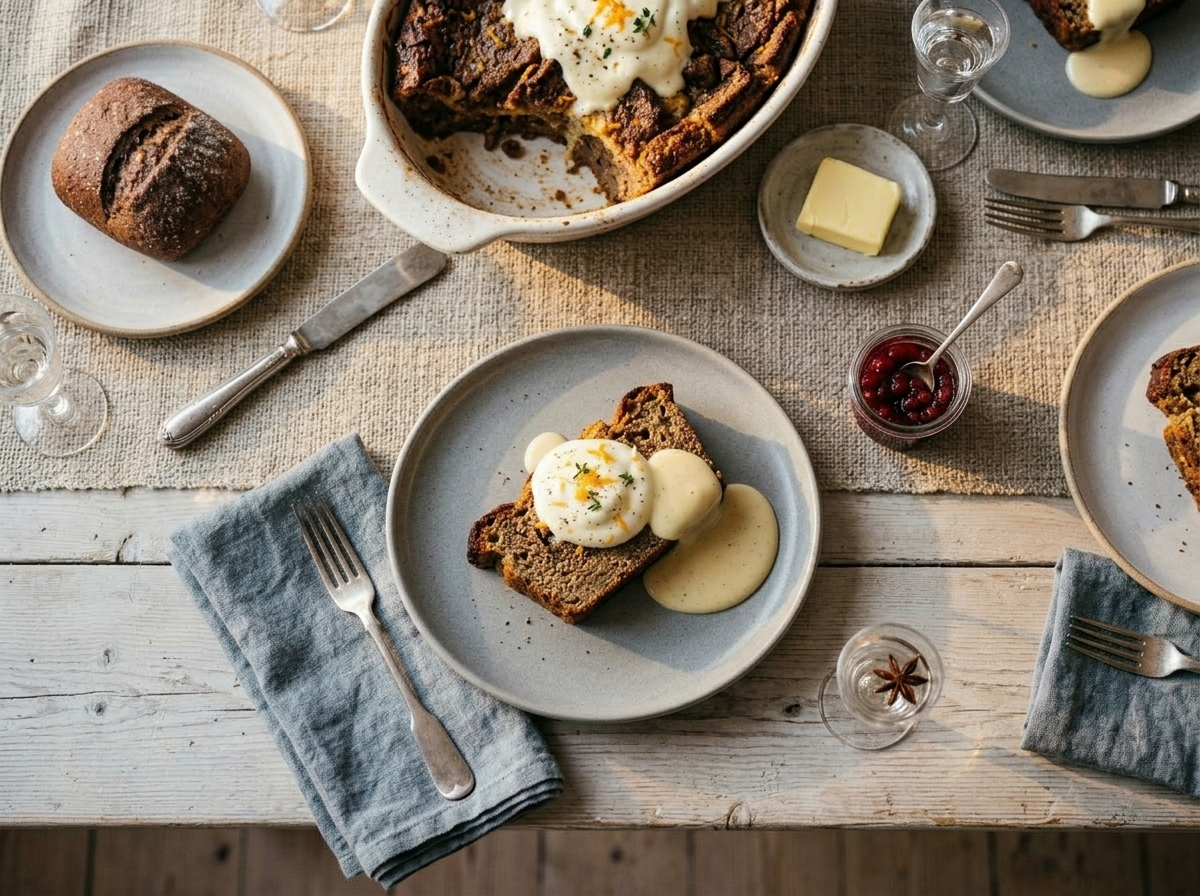
Serve warm with a spoonful of cold crème fraîche or lightly whipped cream. The cool dairy against the warm custard is a straightforward contrast that works every time.
A drizzle of dark berry jam – lingonberry or blackcurrant – across the top ties the Nordic angle together and adds a tart note. Warm the jam slightly so it pours rather than sits in a blob.
For a lighter finish, dust with powdered sugar and serve with thin slices of cold butter on the side, the way some Danish households do with baked goods. Odd if you haven’t tried it, but genuinely good.
FAQ
Why is my rye bread pudding soggy in the middle after baking?
The custard ratio is likely too high for the amount of bread used, or the pudding needed more time. Cover with foil and bake an additional 10 minutes, then press the centre to check – it should feel firm. Using denser, day-old rye bread also helps absorb the custard more evenly.
Can I use pumpernickel instead of rugbrød in this rye bread pudding?
Yes, pumpernickel works well and gives an even darker, more intense flavour. It’s slightly denser than rugbrød so cut or tear it into smaller pieces to help it absorb the custard.
Can I assemble this Scandinavian rye bread pudding the night before baking?
You can pour the custard over the bread, cover the dish, and refrigerate it overnight before baking. This actually improves the texture because the bread fully absorbs the custard. Add 5 minutes to the baking time if going in cold from the fridge.
What pairs well with Scandinavian rye bread pudding for a dinner party dessert?
A glass of Swedish glögg or a light aquavit on the side keeps the Nordic theme going. Crème fraîche, lingonberry compote, or a simple vanilla sauce all work well as accompaniments at the table.
Is this rye bread pudding dairy free if I swap the milk?
You can use oat milk or full-fat coconut milk in place of whole milk with reasonable results. Oat milk keeps the flavour neutral while coconut milk adds a subtle sweetness that works with the cardamom.
What is the difference between Scandinavian rye bread pudding and a traditional British bread and butter pudding?
British bread and butter pudding typically uses soft white bread, butter spread between layers, and a straightforward vanilla custard, a tradition not unlike the day-old bread turned rich approach found in French pain perdu. The Scandinavian version uses dense, seeded rye bread with spices like cardamom, giving it a firmer texture and a more complex, slightly sour-sweet flavour.
