
Jump to Recipe
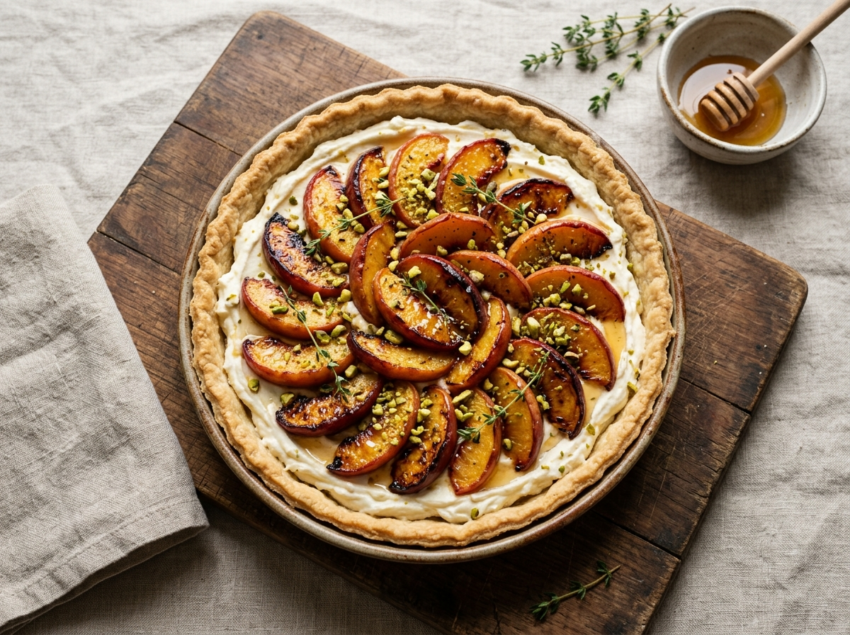
There’s something about a peach that’s been roasted just past the point of raw sweetness. The edges catch and turn amber, the juices pool and thicken, and the whole thing smells like late August even in a January kitchen.
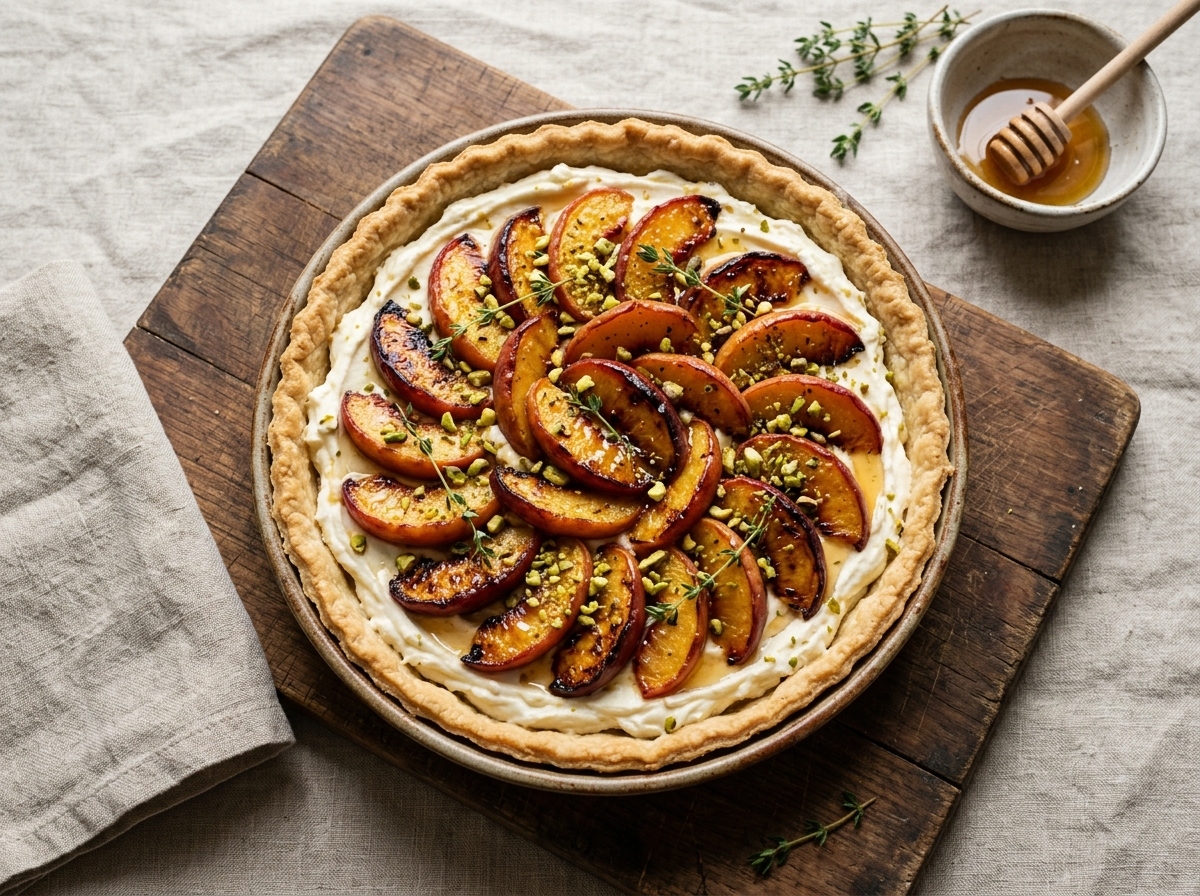
I built this tart around that idea. A plain shortcrust base, blind baked until it’s sturdy enough to hold its own, gets filled with mascarpone whipped soft with cream and a little sugar. Then the roasted peaches go on top, still warm, with their syrupy juices spooned over.
The peaches are the part people ask about. Ripe but firm ones hold their shape in the oven. Soft, overripe ones turn to mush, so pick fruit that still gives a little resistance when you press it.
This isn’t a fussy dessert. The dough takes ten minutes to pull together, the peaches roast on their own, and the mascarpone filling is just whisking. It comes together in about 90 minutes including a dough chill.
Why You’ll Love This Recipe
- Roasted peaches caramelize into their own glaze, no extra syrup needed
- Mascarpone filling comes together with a whisk, no gelatin or eggs
- Shortcrust base can be made a day ahead and stored at room temp
- Looks like a bakery dessert but uses five basic pantry staples
Ingredient Notes
- Peaches: Pick peaches that give slightly under your thumb but aren’t soft. Overripe fruit collapses in the oven instead of holding its shape.
- Mascarpone: Bring it to room temperature before whipping so it blends smoothly with the cream. Full-fat cream cheese works in a pinch but tastes tangier.
- Heavy cream: This loosens the mascarpone so it spreads easily. Whole milk yogurt can replace it for a lighter, slightly tangier filling.
- Unsalted butter: Keep it cold and cubed until the moment you cut it into the flour. Cold butter is what makes the crust flaky.
- Honey: Use a mild honey like clover so it doesn’t overpower the peach flavor. Maple syrup is a fine substitute.
- Pistachios: Crushed and scattered at the end for crunch and color. Sliced almonds or candied pecans work just as well.
Roasted Peach Mascarpone Tart with Honey and Thyme
Ingredients
Method
- Whisk flour, sugar, and salt together in a large bowl.
- Cut in cold butter with your fingers or a pastry cutter until the mixture looks like coarse crumbs.
- Mix egg yolk with 2 tbsp ice water, add to the flour, and stir until the dough just comes together. Add more water, 1 tsp at a time, if it's too dry.
- Shape into a disc, wrap in plastic, and chill 30 minutes in the fridge.
- Heat the oven to 200 C / 400 F.
- Roll the chilled dough into a 11-inch circle and fit it into a 9-inch tart pan. Prick the base all over with a fork.
- Line with parchment paper and fill with pie weights or dried beans. Bake 15 minutes.
- Remove the weights and parchment, then bake 5 to 8 minutes more until the base is golden and dry to the touch. Cool completely before filling.
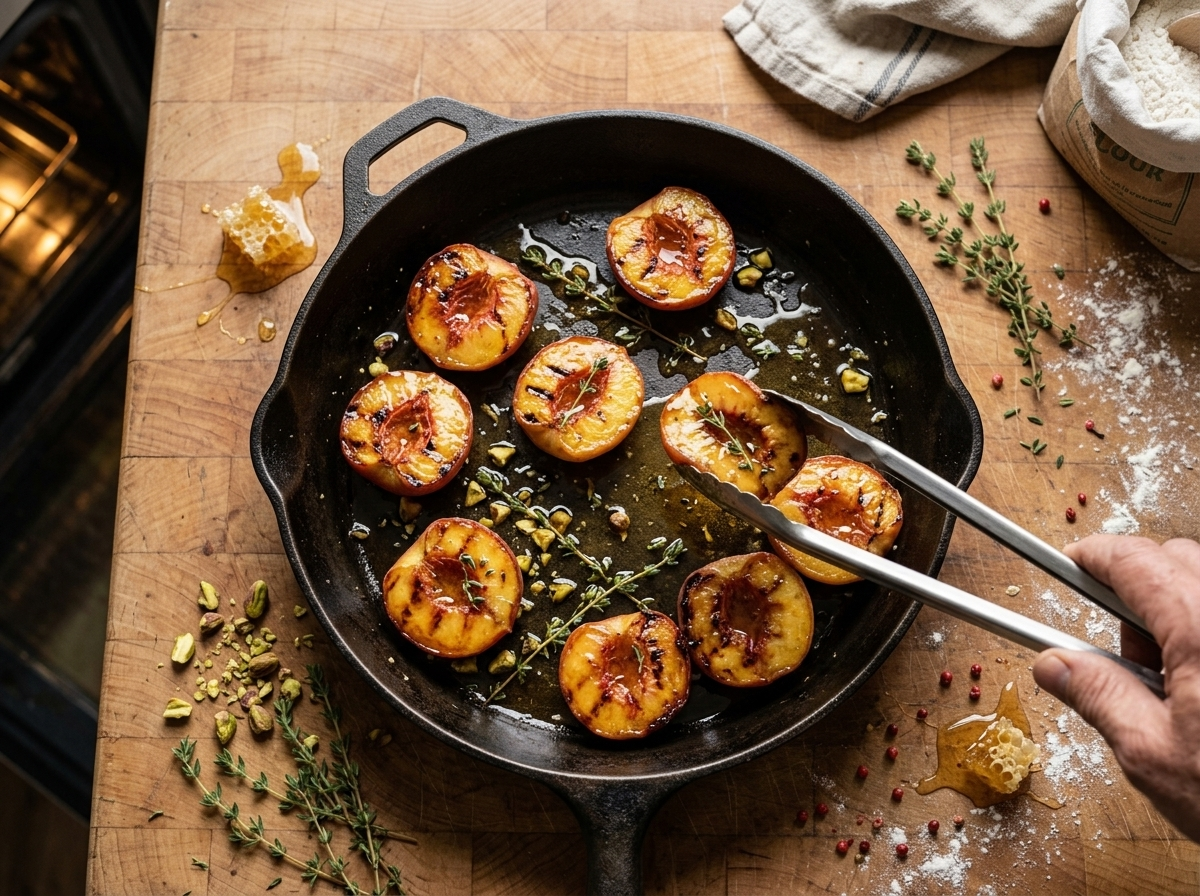
- Toss peach halves with honey, melted butter, cinnamon, and a pinch of salt. Arrange cut side up on a sheet pan.
- Roast at 200 C / 400 F for 20 to 22 minutes, until the edges caramelize and the peaches are tender but still hold their shape when lifted with a spatula. Set aside to cool slightly, reserving the pan juices.
- Whisk mascarpone, heavy cream, powdered sugar, vanilla, and lemon zest together until smooth and it holds soft peaks, about 2 minutes. Stop before it looks stiff or grainy.
- Spread the mascarpone filling evenly into the cooled tart shell.
- Slice the roasted peaches and arrange them over the filling.
- Drizzle with the reserved pan juices and scatter pistachios and thyme on top.
- Slice and serve, or chill 15 minutes for cleaner slices.
Notes
- Use peaches that are ripe but still firm, soft fruit turns to mush when roasted
- Chill dough 30 minutes minimum before rolling for a flakier crust
- Whip mascarpone filling only to soft peaks, never stiff
- Cool the crust fully before adding filling or it will melt and slide
- Assemble the tart within a few hours of serving for the crispest base
Tips for Success
- Choose peaches that yield slightly to pressure but stay firm, they’ll hold their shape after roasting instead of collapsing.
- Chill the dough a full 30 minutes so the butter stays cold and the crust bakes up flaky, not tough.
- Blind bake with pie weights or dried beans to stop the base from puffing up or shrinking at the edges.
- Whip the mascarpone filling only until it holds soft peaks, overwhipping turns it grainy and thin fast.
- Save the peach roasting juices in the pan and drizzle them over the finished tart right before serving.
Variations
- Swap peaches for nectarines or plums when peaches are out of season, the roasting time stays about the same.
- Swirl a spoonful of raspberry or blackberry puree over the mascarpone before adding peaches for a tart contrast.
- Use a graham cracker crust instead of shortcrust pastry for a faster, press-in base with no rolling required.
Storage and Reheating
Cover the tart loosely and refrigerate for up to 3 days. The mascarpone filling stays firm and cool, though the crust softens a bit by day two.
This tart is meant to be served cold or at room temperature, so there’s no reheating step. If the crust edges feel soft after a day in the fridge, a few minutes uncovered at room temp before serving helps.
Freezing isn’t a good idea here. Mascarpone separates and turns grainy once thawed, and the roasted peaches lose their texture completely.
Serving Suggestions
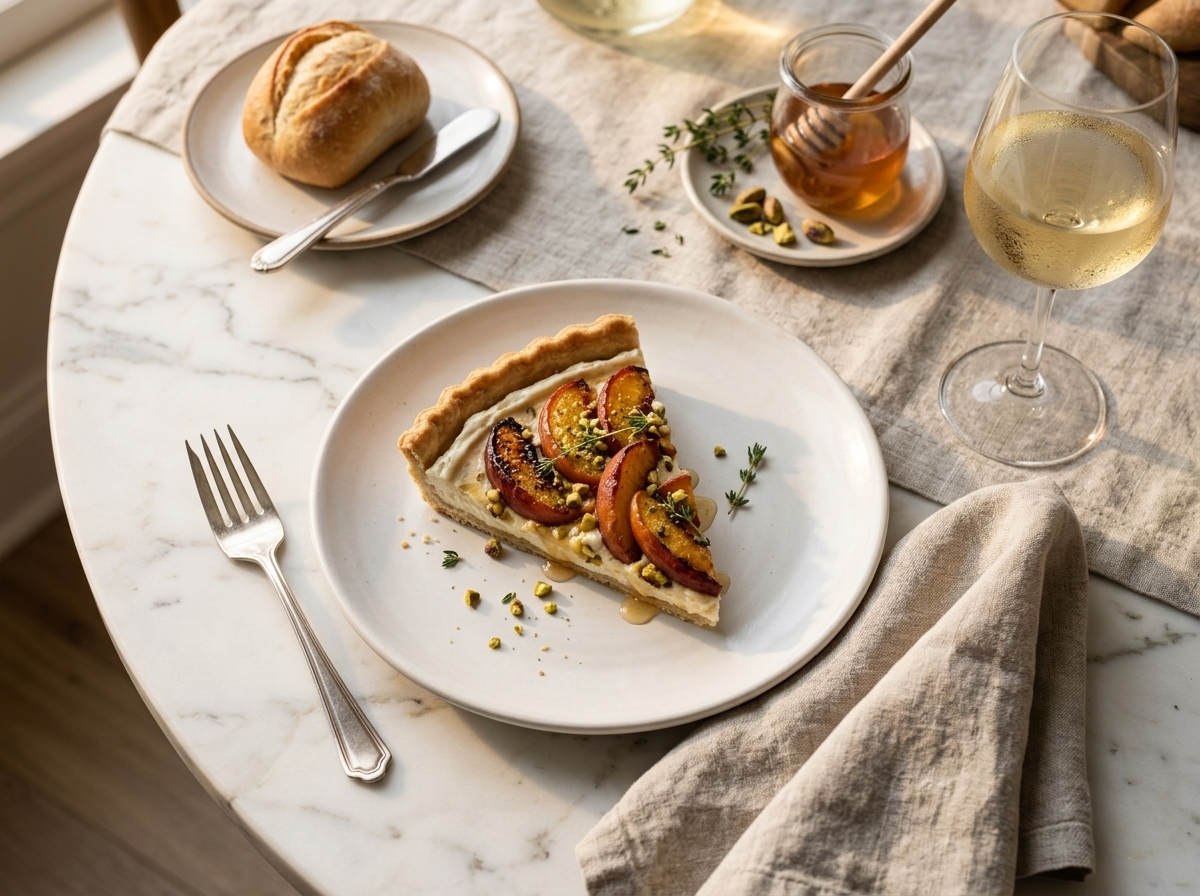
Slice this tart cold, straight from the fridge, with a scoop of vanilla bean ice cream melting slightly against the warm-toned peaches. A glass of chilled moscato or a late-harvest riesling matches the honeyed sweetness well.
For a simpler plate, a spoonful of the leftover roasting juices drizzled over each slice adds shine and extra peach flavor without any extra work.
This works as a light finish after a grilled dinner, or set out on a brunch table alongside coffee and fresh berries.
FAQ
Why is my mascarpone filling runny instead of holding its shape on the tart?
Runny filling usually means the mascarpone or cream was too warm when whipped, or it got overwhipped and started to break. Keep both cold going in and whip just until soft peaks form, about a minute or two. If it’s already loose, chilling the filled tart for 20 minutes in the fridge firms it back up.
Can I use ricotta instead of mascarpone in this peach tart?
Ricotta works but changes the texture, it’s grainier and less rich than mascarpone. Blend it smooth in a food processor first and add an extra tablespoon of cream to soften it. The flavor turns slightly tangier, which actually pairs well with the sweet roasted peaches.
Can I make this roasted peach mascarpone tart ahead for a dinner party?
Yes, bake the crust up to a day ahead and store it at room temperature in an airtight container. Roast the peaches and whip the filling the same day you serve, then assemble within an hour or two of guests arriving so the crust stays crisp.
What wine pairs well with a roasted peach mascarpone tart?
A late-harvest riesling or a chilled moscato d’Asti works well since both echo the honeyed peach flavor without competing with it. If you’d rather stick to something dry, a light prosecco cuts through the richness of the mascarpone nicely.
Is this roasted peach mascarpone tart gluten free?
Not as written, since the shortcrust base uses regular all-purpose flour. Swap in a 1:1 gluten-free flour blend for the crust and it works fine, just chill the dough a bit longer since gluten-free doughs tend to be softer and stickier.
What’s the difference between roasting and grilling the peaches for this tart?
Roasting in the oven at 200 C / 400 F lets the peaches cook evenly in their own honey glaze, which pools in the pan and gets spooned back over the tart. Grilling adds a smoky char instead but dries the peaches out faster, so you’d need to watch them closely to avoid overcooking.
Related recipes
