
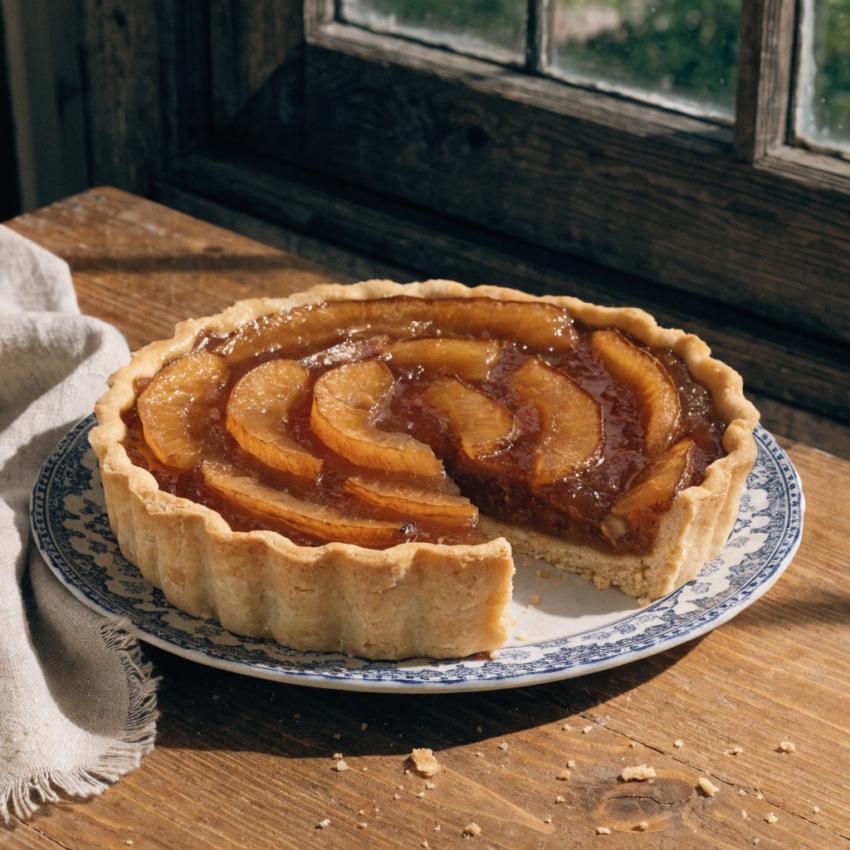
There’s something quietly magical about a tart that doesn’t try too hard.
This Portuguese quince marmalade tart is simple. Rustic. Comforting. It leans on buttery pastry shells and a thick, fragrant quince filling that feels like sunshine trapped in a jar. If you love custard tarts, Portuguese tarts, or even a classic crostata Italian jam tart recipe, this one will slide right into your baking rotation.
I first tasted something similar during a slow afternoon café stop. No fancy plating. Just a slice, slightly warm, with a crumbly edge and sticky center. That memory stuck. So here we are.
What Is a Portuguese Quince Marmalade Tart?
Think of it as a cousin to Portuguese custard tart dessert and jam-filled European pastries.
Instead of the silky filling found in pastel de nata, this tart uses quince marmalade—thick, floral, slightly tangy. The base is a buttery pastry crust. Sometimes lattice. Sometimes flat and rustic.
It sits somewhere between:
- Portuguese dessert recipes Portugal loves
- A classic jam tart
- And even a softer take on British desserts
It’s less flashy than Portuguese egg custard tarts, but it has depth. Real flavor. No shortcuts.
Why You’ll Love This Tart
- Simple ingredients, big flavor
- Works with homemade or store-bought marmalade
- A great alternative to custard tarts recipe classics
- Keeps well for days
- Perfect with tea, coffee, or a quiet moment
And honestly? It’s hard to mess up.
Ingredients You’ll Need
For the Pastry Crust
- 2 cups all-purpose flour
- ½ cup cold unsalted butter (cubed)
- ¼ cup sugar
- 1 egg
- 1–2 tbsp cold water
- Pinch of salt
For the Filling
- 1½ cups quince marmalade
- 1 tbsp lemon juice
- 1 tsp orange zest (optional but lovely)
How to Make Portuguese Quince Marmalade Tart
Step 1: Prepare the Dough
In a bowl, mix flour, sugar, and salt.
Add butter. Rub it in with your fingers until it looks like rough crumbs. Don’t overthink it. A few lumps are fine.
Crack in the egg. Mix gently. Add cold water if needed.
Bring it together into a dough. Wrap and chill for 30 minutes.
Step 2: Roll and Shape
Roll out the dough on a lightly floured surface.
Press it into your tart pan. Trim the edges.
You can:
- Leave it open
- Add a lattice top
- Or go rustic and fold edges inward
All work.
Step 3: Add the Filling
Stir the quince marmalade with lemon juice and zest.
Spread evenly over the pastry crust.
Don’t overload it. A thick but even layer is perfect.
Step 4: Bake
Bake at 180°C (350°F) for 30–35 minutes.
The crust should turn golden. The filling should bubble slightly.
Let it cool before slicing. This matters. It sets as it rests.
Tips for the Best Tart
Use cold butter. Always. It gives that flaky bite you want in pastry shells.
Don’t stretch the dough when placing it in the pan. It’ll shrink later. Annoying, right?
If your marmalade is too thick, warm it slightly. Makes spreading easier.
Want a deeper flavor? Add a pinch of cinnamon.
How This Differs from Portuguese Custard Tarts
Let’s clear this up.
Portuguese custard tarts (aka pastéis de nata) are creamy. Egg-based. Slightly caramelized on top.
This tart? Completely different mood.
- No custard
- No milk
- No egg filling
Still, if you love homemade Portuguese custard tarts, this is a fun switch. Same comfort, new texture.
Variations You Can Try
1. Add Custard Layer
Spread a thin layer of Portuguese custard with milk under the marmalade.
Now you’ve got a hybrid. Somewhere between a Portuguese custard tart recipe and a jam tart.
2. Swap the Fruit
No quince? No problem.
Try:
- Apricot
- Fig
- Plum
You’ll get a result closer to an Italian jam tart filling style.
3. Mini Tarts Version
Use muffin tins.
Now you’ve got bite-sized treats similar in shape to easy Portuguese custard tarts.
Great for sharing. Or not sharing.
4. Almond Twist
Add ground almonds to the base.
It adds texture and richness. Slightly nutty. Very good.
Serving Ideas
Serve slightly warm or at room temperature.
Pair it with:
- Black coffee
- Light tea
- A dusting of powdered sugar
If you want to dress it up, add whipped cream. Or a scoop of vanilla ice cream.
Storage Tips
- Keep at room temp for 2 days
- Refrigerate up to 5 days
- Freeze slices for up to 1 month
Warm before serving. It wakes everything up again.
A Quick Note on Quince
Quince isn’t as common as apples or pears. But it should be.
It’s fragrant. Slightly floral. Almost honey-like once cooked.
That’s why it shows up in many traditional Portuguese sweet recipe ideas. It brings depth without needing much sugar.
Is This an Authentic Portuguese Recipe?
It leans traditional but with a home-baker twist.
You’ll find quince used across Portuguese pastries recipes. This tart fits right into that family, even if every region does it a bit differently.
Think of it as a relaxed version of traditional Portuguese dessert recipes.
Common Mistakes to Avoid
Overfilling the tart
It spills. It burns. It’s messy.
Skipping the chill time
Your dough will fight back. Chill it.
Cutting too early
Let it cool. The filling needs time to settle.
If You Love This, Try These Next
- Pastel de nata recipe
- Portuguese milk tart recipe
- Classic custard tarts
- Fruit-filled sweet pastries
Each one brings a different texture. Same cozy feeling.
FAQs
What is quince marmalade?
It’s a thick fruit preserve made from quince. Firmer than jam. Slightly tangy. Very aromatic.
Can I use store-bought marmalade?
Yes. Works perfectly. Just pick a good-quality one.
Can I turn this into Portuguese custard tarts?
Not exactly. For that, you need an egg and cream filling. This recipe is closer to a jam tart than Portuguese egg custard tarts.
What pastry works best?
A shortcrust pastry. But you can experiment with puff pastry if you want something closer to Portuguese pastries recipes.
Can I make it gluten-free?
Yes. Use a gluten-free flour blend. The filling is naturally gluten-free.
Is this similar to British jam tarts?
A little. But the quince flavor gives it more depth. It feels richer than typical British desserts of that style.
Final Thoughts
This Portuguese quince marmalade tart is the kind of dessert you make once… and then again next week.
It doesn’t shout. It doesn’t try to impress.
But one bite in, and you’ll get it.
