
Jump to Recipe
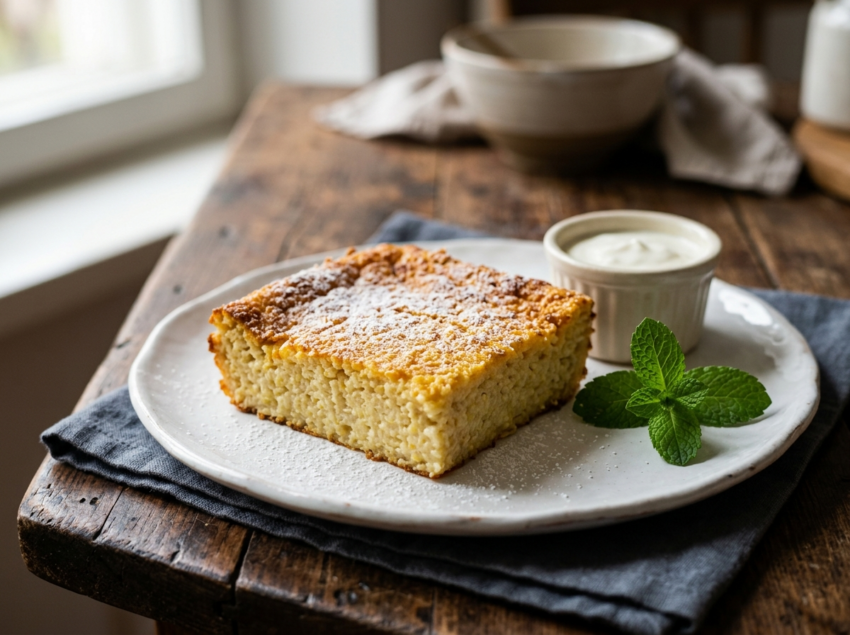
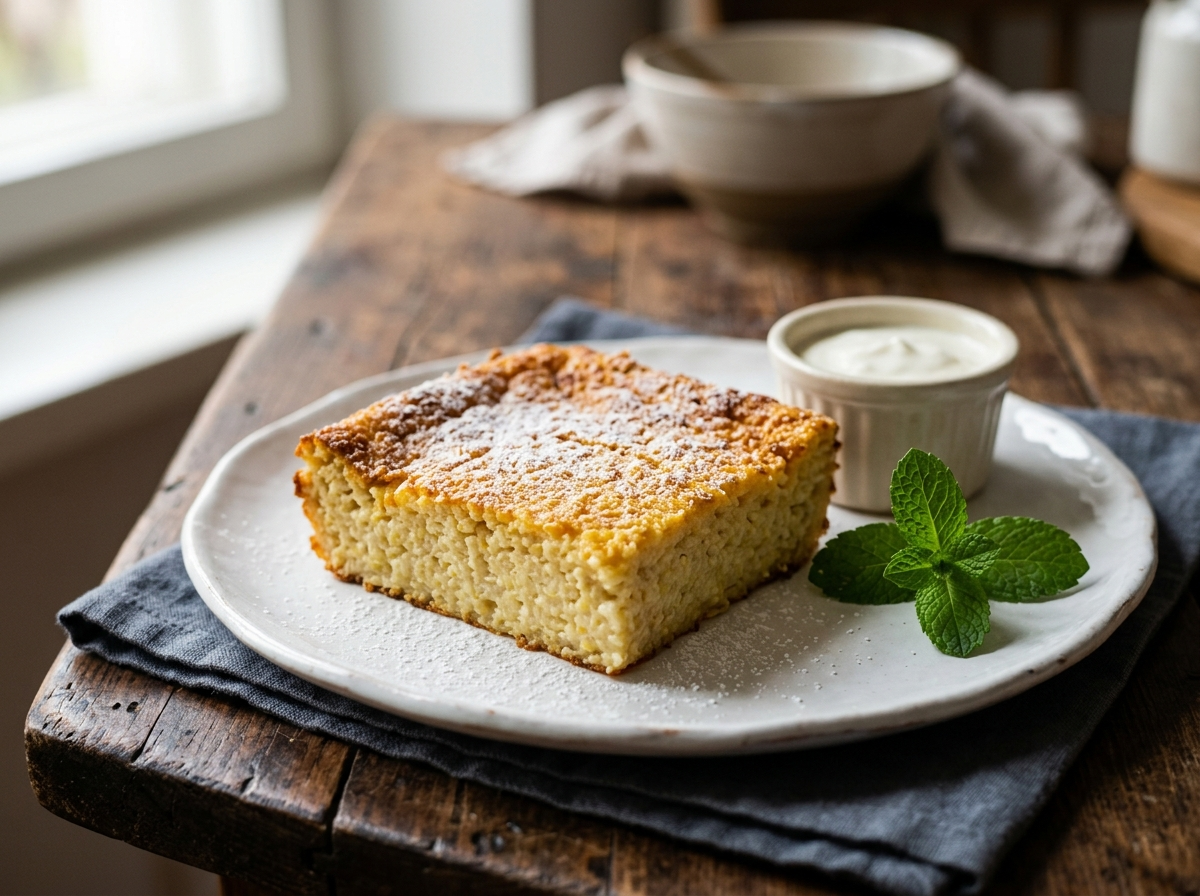
There’s something quietly satisfying about millet cooked low and slow in the oven until it sets into a firm, golden slab with a soft, almost custardy center.
This is kasza jaglana zapiekana, a traditional Polish baked pudding made from hulled millet, eggs, and milk. It shows up at family tables as a simple weekday dessert or a filling breakfast. Not flashy. Just honest and good.
Millet doesn’t get enough credit. It cooks up creamy, holds its shape after baking, and has a mild, slightly nutty flavor that pairs well with vanilla, fruit, or a spoonful of jam.
I first made this after visiting a small milk bar in Kraków that served thick squares of it with a drizzle of sour cream. I’ve been testing it at home ever since.
Why You’ll Love This Recipe
- Naturally gluten free with no swaps needed
- Works warm from the oven or cold the next day
- Simple pantry ingredients, no special equipment
- Mild flavor takes sweet or savory toppings equally well
Ingredient Notes
- hulled millet: Rinse millet thoroughly under cold water before cooking to remove any bitterness. Avoid buying pre-toasted millet for this recipe as it changes the texture.
- whole milk: Full-fat milk gives the pudding a richer, creamier texture. Plant-based oat milk or almond milk works as a substitute but produces a slightly firmer result.
- eggs: Eggs are what bind and set the pudding in the oven. Three large eggs give a firm but tender slice. Using two makes it softer and harder to cut cleanly.
- butter: Unsalted butter is stirred into the cooked millet for richness. Coconut oil makes a fine dairy-free substitute and adds a faint coconut note.
- sugar: I use white sugar for a neutral sweetness. Light brown sugar or honey both work and add a subtle caramel depth to the finished pudding.
- vanilla extract: Pure vanilla extract or a split vanilla bean pod simmered in the milk both work well. Vanilla paste is a good middle-ground option.
Polish Baked Millet Pudding (Kasza Jaglana Zapiekana)
Ingredients
Method
- Heat the oven to 180 C / 355 F. Grease a 20 x 20 cm baking dish with butter and dust with breadcrumbs or line with parchment paper.
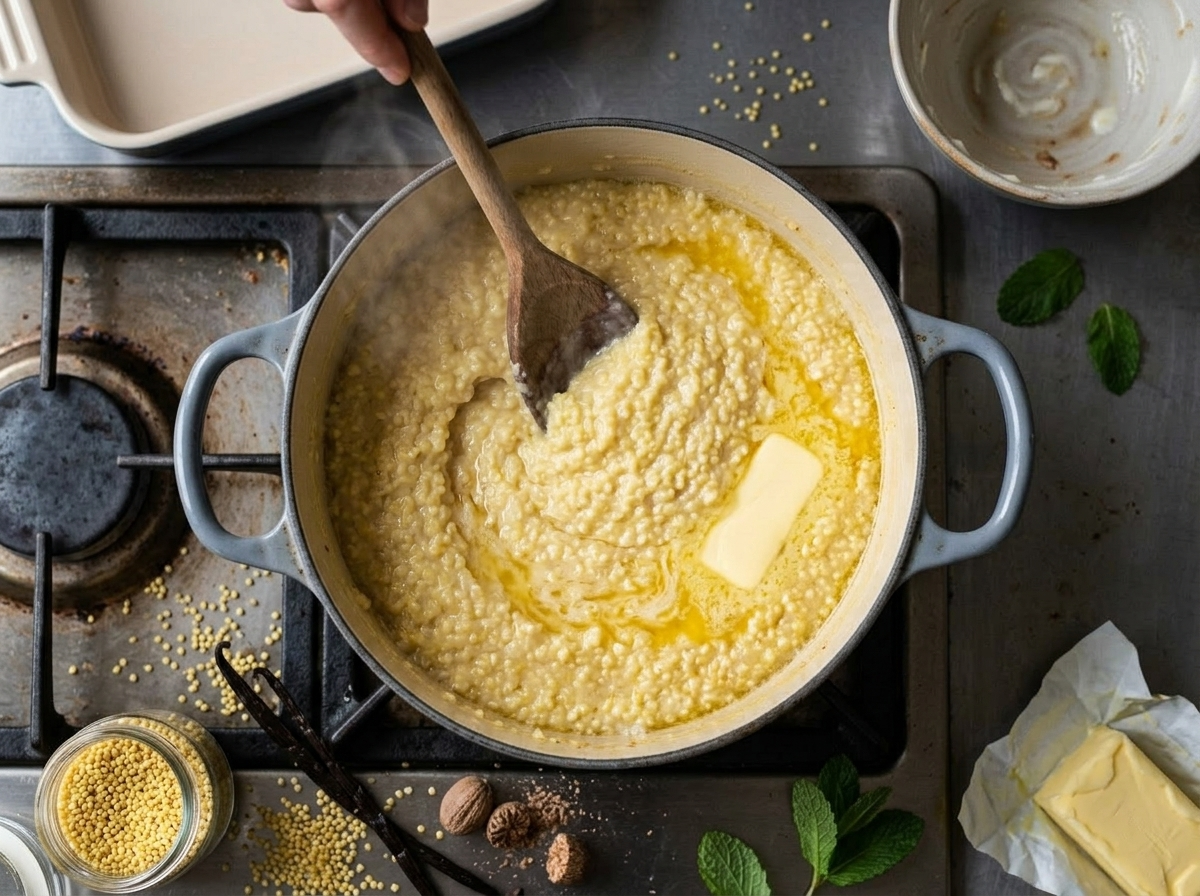
- Combine the rinsed millet, 500 ml milk, and 250 ml water in a medium saucepan. Add a pinch of salt and bring to a gentle boil over medium heat.
- Reduce heat to low, cover, and simmer for 20 to 25 minutes, stirring occasionally, until the millet has absorbed all the liquid and is soft with a creamy, porridge-like consistency.
- Remove from heat and stir in the butter until melted and fully incorporated. Set aside to cool for 10 to 15 minutes.
- Separate the eggs. Beat the yolks with the sugar and vanilla extract in a bowl until pale and slightly thickened, about 2 minutes.
- Stir the egg yolk mixture into the cooled millet until evenly combined.
- In a clean bowl, whisk the egg whites with a pinch of salt until stiff peaks form.
- Fold the egg whites into the millet mixture in two additions using a spatula, working gently to keep as much air as possible.
- Pour the mixture into the prepared baking dish and smooth the top with a spatula.
- Bake for 30 minutes covered with foil, then remove the foil and bake for a further 10 minutes until the top is golden and a skewer inserted into the center comes out clean.
- Remove from the oven and let the pudding cool in the dish for at least 20 minutes before slicing and serving.
Notes
Tips for Success
- Rinse the millet under cold running water for a full 60 seconds to wash off saponins that cause bitterness.
- Cook the millet in milk rather than water for a creamier base that absorbs flavor from the start.
- Let the cooked millet cool for 10 minutes before beating in the eggs to avoid scrambling them.
- Grease the baking dish generously and line with parchment so the pudding releases cleanly when sliced.
- Bake uncovered for the final 10 minutes to develop a dry, golden top that holds its shape after slicing.
Variations
- Stir 100 g of fresh blueberries or pitted cherries into the millet mixture before baking for a fruit version.
- Add 2 tbsp of cocoa powder and a handful of dark chocolate chips for a chocolate millet pudding.
- Mix in 150 g of drained farmer’s cheese (twaróg) with the eggs for a richer, cheesecake-style texture.
Storage and Reheating
Store leftover millet pudding in an airtight container in the fridge for up to 4 days. It slices cleanest when fully cold, so cut portions straight from the fridge.
To reheat, place a slice in a dry skillet over medium-low heat for 2 to 3 minutes per side until warmed through and lightly crisp on the outside. The oven at 160 C / 320 F for 10 minutes also works well.
This pudding freezes well. Wrap individual slices in plastic wrap and freeze for up to 2 months. Thaw overnight in the fridge before reheating.
Serving Suggestions
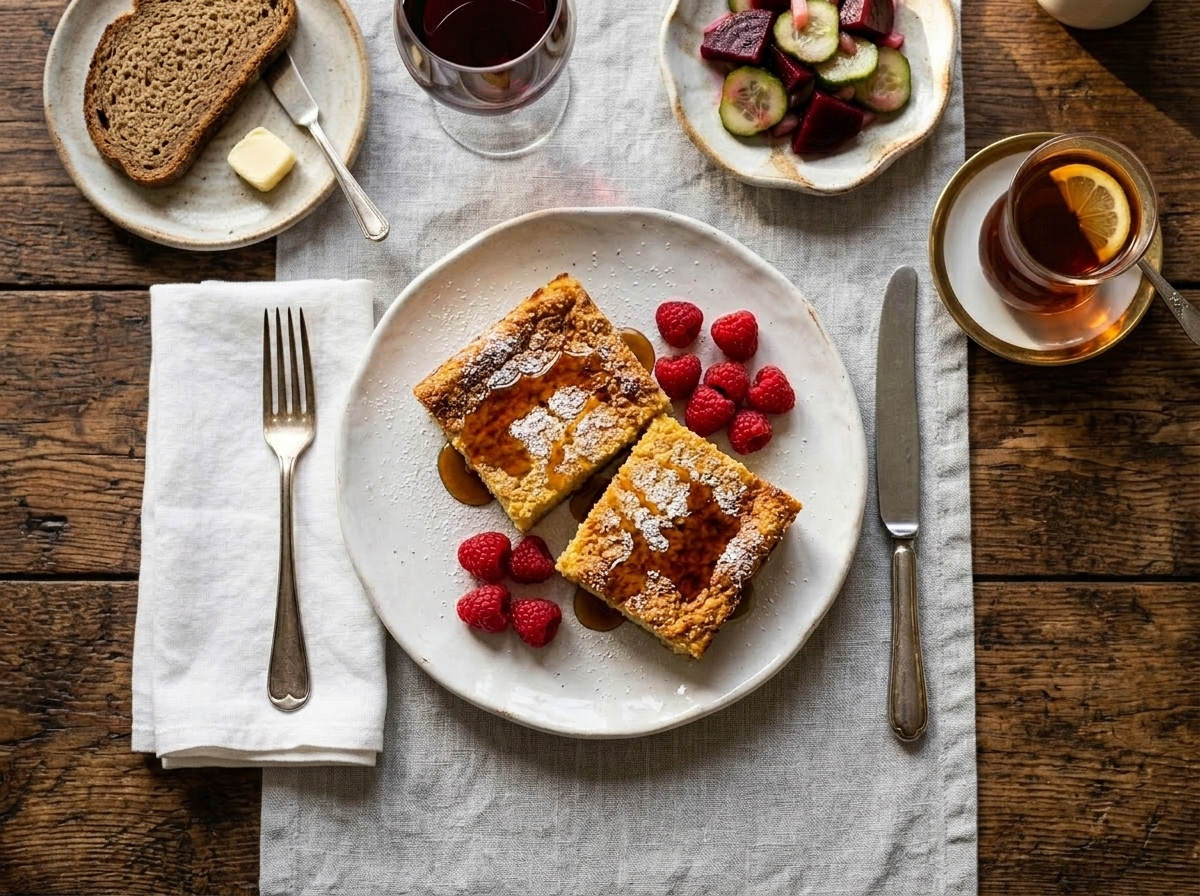
Warm slices go well with a spoonful of Polish sour cream (smietana) and a drizzle of forest honey. A handful of fresh raspberries on the side cuts the mild richness cleanly.
For breakfast, serve at room temperature with plain yogurt and a pinch of cinnamon. It’s filling enough to carry you through to lunch without being heavy.
As a dessert, try it with a simple fruit compote, stewed plums work especially well, or pair it with something like this warm berry pudding on the side while the millet is still hot from the oven.
FAQ
Why is my baked millet pudding too soft and falling apart when I slice it?
The pudding needs to cool completely before slicing or it won’t hold its shape. If it’s still crumbling after cooling, the millet may have been undercooked before baking or you used too few eggs.
Can I use buckwheat instead of millet in this Polish pudding?
Buckwheat has a much stronger, earthier flavor and a denser texture, so it changes the character of the dish significantly. Millet is the traditional base and gives the soft, mild result the recipe is built around.
Can I freeze baked millet pudding before baking instead of after?
Freezing the raw mixture before baking isn’t reliable because the eggs don’t freeze well in an uncooked custard. It’s much better to bake first, then freeze individual slices once fully cooled.
What toppings are traditionally served with kasza jaglana zapiekana in Poland?
In Poland it’s most often served with smietana (Polish sour cream) and a fruit-based cream dessert or compote, especially plum or rose hip. Honey over the top is also common in home kitchens.
Is Polish baked millet pudding gluten free?
Yes, millet is naturally gluten free, and this recipe contains no flour or other gluten-containing ingredients. If you’re cooking for someone with celiac disease, just check that your millet is certified gluten free to rule out cross-contamination.
How do I know when the millet pudding is fully baked and ready to come out of the oven?
The top should be golden and dry with no wet sheen, and the edges will pull slightly away from the sides of the dish. Insert a skewer into the center and it should come out clean with no wet batter clinging to it.
