
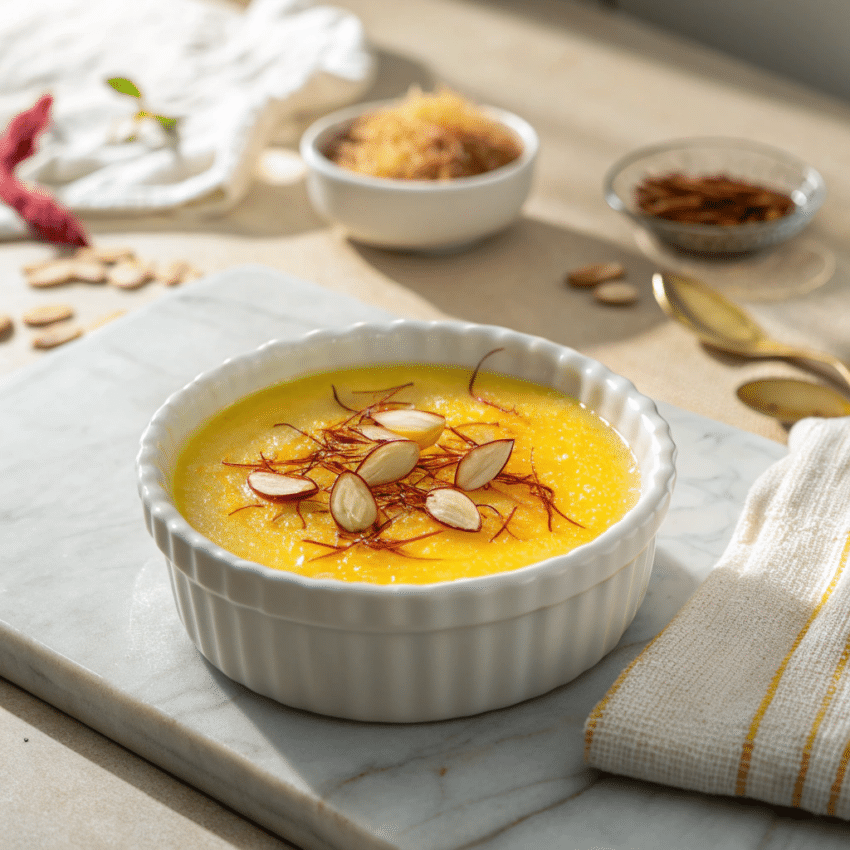
There’s something deeply comforting about a bowl of warm rice pudding. It reminds me of slow Sundays, quiet kitchens, and that first spoonful that makes you pause.
Today, I’m sharing Persian sholeh zard saffron pudding. It’s golden, fragrant, and gently sweet. If you love a classic rice pudding recipe, especially something like Portuguese rice pudding or Portuguese arroz doce, you’ll adore this version.
It’s simple. Honest. And full of soul.
Let’s get straight to it.
What Is Persian Sholeh Zard?
Sholeh zard is a traditional Iranian saffron rice pudding. It’s usually served chilled and decorated with cinnamon patterns and slivered almonds.
Unlike a traditional rice pudding with cinnamon, this one doesn’t use milk. That’s the twist. It’s dairy-free and relies on saffron, rose water, and slow-cooked rice for its velvety texture.
Think of it as a cousin to Portuguese sweet rice. Both are soft, spoonable, and deeply comforting. But sholeh zard carries floral notes and a bright golden color that feels almost festive.
It’s often served during gatherings, holidays, and special occasions. But honestly? You don’t need an excuse.
Why You’ll Love This Recipe
- It uses pantry staples.
- No dairy required.
- Naturally gluten-free.
- Incredibly aromatic.
- Perfect for make-ahead desserts.
If you’ve ever searched for how to make Portuguese rice pudding, you’ll notice the technique feels familiar. Gentle simmering. Patience. Stirring with care.
Rice pudding teaches you to slow down.
Ingredients You’ll Need
Here’s everything for a generous batch:
- 1 cup basmati rice
- 6 cups water
- 1 1/2 cups granulated sugar
- 1/4 teaspoon ground saffron (steeped in 2 tablespoons hot water)
- 2 tablespoons rose water
- 2 tablespoons unsalted butter
- 1/4 cup slivered almonds
- 1/4 teaspoon ground cardamom (optional)
- Cinnamon, for garnish
If you’ve worked with traditional Portuguese dessert ingredients before, you’ll recognize the rice and sugar base. But saffron and rose water take this in a different direction.
Saffron is the star. Don’t skip it.
Step-by-Step: How To Make Persian Sholeh Zard Saffron Pudding
1. Wash the Rice
Rinse the basmati rice under cold water until the water runs clear. This removes excess starch.
Drain well.
2. Cook the Rice
In a large heavy-bottomed pot, combine the rice and 6 cups of water.
Bring to a boil. Then reduce to low heat.
Let it simmer for about 30–40 minutes. Stir occasionally. The rice should become very soft. Almost mushy.
You’re not aiming for fluffy grains like lemon rice. You want it tender and broken down.
3. Add Saffron
Stir in the bloomed saffron with its water.
Watch the color change. It turns a deep golden yellow. That’s when you know magic is happening.
4. Sweeten It
Add the sugar. Stir well.
Let it cook for another 15–20 minutes on low heat. Stir often so it doesn’t stick.
The mixture will thicken gradually. Think of a home-style rice pudding recipe texture. Soft. Creamy. Spoon-coating.
5. Finish With Flavor
Add butter, rose water, almonds, and cardamom.
Cook for 5 more minutes.
Turn off the heat.
The pudding will thicken further as it cools.
Texture Tips That Matter
If it feels too thick while cooking, add a splash of hot water. Not cold. Hot keeps the texture smooth.
If it looks thin, let it simmer longer. Rice releases starch slowly.
Stirring prevents scorching. A burnt base can ruin the whole pot. I learned that the hard way years ago.
Patience pays off here.
How It Compares to Portuguese Rice Pudding
Let’s talk about the elephant in the kitchen.
Portuguese rice pudding recipe traditions usually use milk, egg yolks, and lemon peel. The result is creamy and rich.
Sholeh zard is lighter. No eggs. No milk. Yet it still feels lush.
Portuguese arroz doce often features cinnamon on top. So does this. That dusting of cinnamon creates familiarity.
If you enjoy Portuguese pudding desserts, this is a fresh spin worth trying.
Different roots. Same comfort.
Decorating Like a Pro
Pour the pudding into shallow serving bowls while warm.
Smooth the top with the back of a spoon.
Once cooled slightly, sprinkle cinnamon in delicate patterns. Lines. Swirls. Diamonds.
Add extra slivered almonds or crushed pistachios.
Let it chill in the fridge for at least 2 hours before serving.
Cold sholeh zard has a firmer set. Warm is softer and silkier. Both are lovely.
Storage and Make-Ahead Tips
Store in an airtight container in the fridge for up to 4 days.
It thickens as it sits. If needed, stir in a tablespoon of hot water before serving.
This makes a beautiful dessert for gatherings. It travels well. No reheating stress.
If you love prepping Portuguese recipes for holidays, add this to your rotation. It fits right in beside Portuguese rice cake or Christmas arroz con leche.
Flavor Variations
Want to experiment? Here are a few ideas:
- Add orange zest for brightness.
- Top with dried rose petals for fragrance.
- Replace almonds with pistachios.
- Reduce sugar slightly for a lighter sweetness.
Rice pudding adapts easily. Whether it’s a Portuguese-style rice dish recipe or this Persian version, small tweaks can shift the flavor profile beautifully.
Serving Ideas
Serve in small glass cups for an elegant touch.
Pair with strong coffee or tea.
Layer it in dessert glasses with whipped cream for a fusion twist inspired by Portuguese sweet rice recipe styles.
Or enjoy it straight from the bowl. I won’t judge.
Common Mistakes to Avoid
Cooking on high heat.
This causes uneven texture.
Skipping the saffron bloom.
Dry saffron won’t release full color or aroma.
Adding sugar too early.
It slows rice softening. Wait until the grains are tender.
Overloading rose water.
Too much can taste soapy. Measure carefully.
Why This Recipe Works
Long simmering breaks down the rice starch.
Saffron adds warmth and complexity.
Rose water lifts the sweetness.
Butter gives subtle richness.
It’s simple chemistry. Gentle heat plus time equals creamy pudding.
If you’ve mastered a classic rice pudding with cinnamon, you’ll find this process familiar. Just different flavors. Same comfort.
A Little Kitchen Story
The first time I made sholeh zard, I worried it wouldn’t thicken. I kept peeking into the pot. Stirring. Waiting.
Then suddenly, it transformed. The rice softened completely. The color deepened. The aroma filled the kitchen.
That’s the moment I fell for it.
Sometimes dessert is therapy in a saucepan.
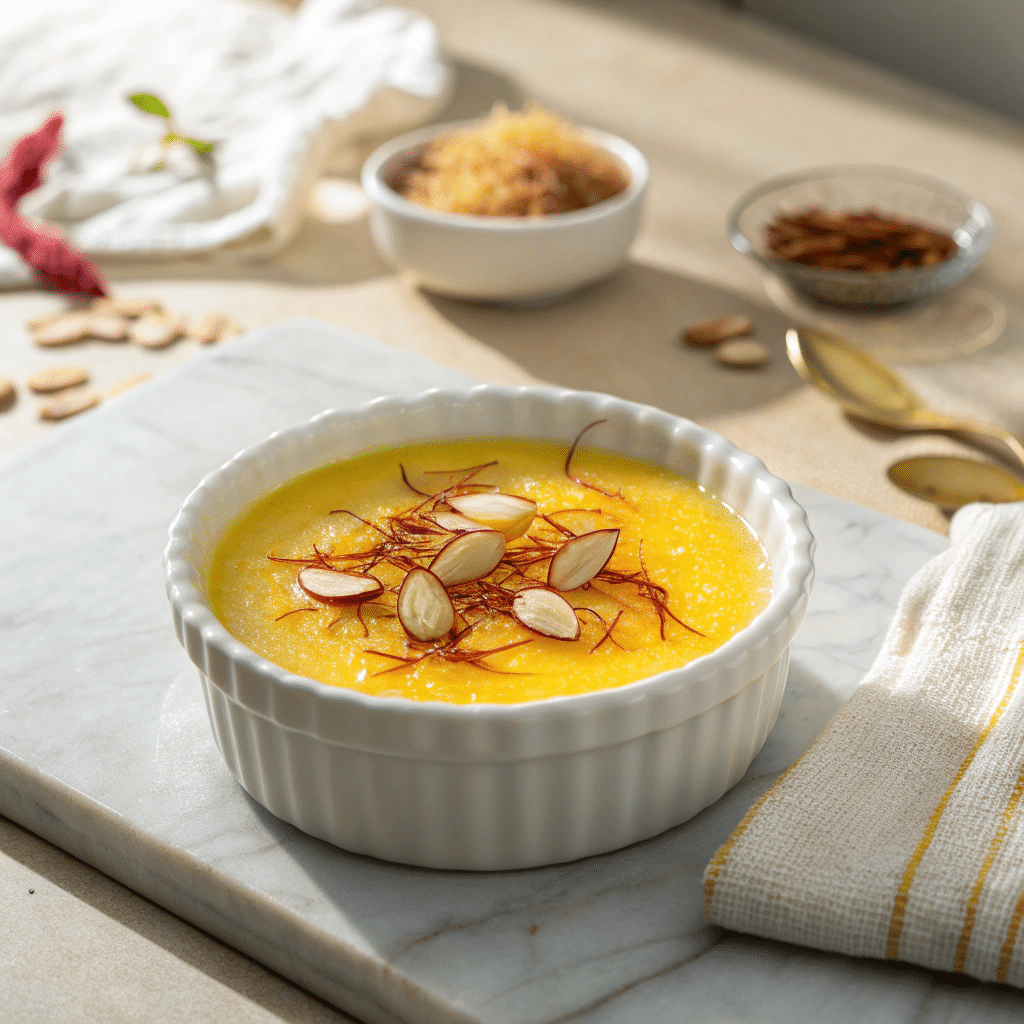
Persian Sholeh Zard Saffron Pudding
Ingredients
Method
- Wash the basmati rice under cold water until the water runs clear. Drain well.
- Add rice and 6 cups of water to a large pot. Bring to a boil. Lower the heat and simmer for 30–40 minutes. Stir now and then. The rice should be very soft and slightly broken down.
- Stir in the saffron with its soaking water. The pudding will turn deep golden.
- Mix in the sugar. Cook on low heat for another 15–20 minutes. Stir often so it does not stick. The texture should be thick and creamy.
- Add butter, rose water, almonds, and cardamom. Cook for 5 more minutes.
- Pour into serving bowls. Smooth the tops. Sprinkle cinnamon in simple lines or patterns. Let cool, then chill for at least 2 hours before serving.
Notes
- Always soak saffron in hot water before adding. It gives better color and flavor.
- Add sugar only after the rice is soft. Sugar slows down the softening process.
- The pudding thickens as it cools. If it feels loose while cooking, that’s normal.
- Store in the fridge up to 4 days. Stir before serving if needed.
- If it becomes too thick, mix in 1–2 tablespoons hot water to loosen it.
Frequently Asked Questions
Is Persian sholeh zard the same as rice pudding?
It’s a type of rice pudding, yes. But unlike many rice pudding recipes, it doesn’t contain milk or eggs. It relies on water, saffron, and rose water for flavor.
Can I use jasmine rice instead of basmati?
You can, but basmati gives a softer, slightly elongated texture. Jasmine works in a pinch.
How is this different from Portuguese arroz doce?
Portuguese arroz doce uses milk, egg yolks, and often lemon peel. Sholeh zard is dairy-free and flavored with saffron and rose water instead.
Can I make it less sweet?
Yes. Reduce the sugar by 1/4 cup. Taste and adjust. Keep in mind it tastes less sweet once chilled.
Can I serve it warm?
Absolutely. Warm is comforting and softer. Chilled is firmer and traditional.
Does it freeze well?
Freezing isn’t ideal. The texture can turn grainy after thawing. It’s best enjoyed fresh within a few days.
What other desserts pair well with this?
It sits beautifully beside Portuguese desserts like Portuguese rice cake or a simple sweet rice pudding recipe. A small dessert spread with different rice-based sweets feels cozy and nostalgic.
